
น้ำตาลส่งผลต่อ Gut Dysbiosis อย่างไร
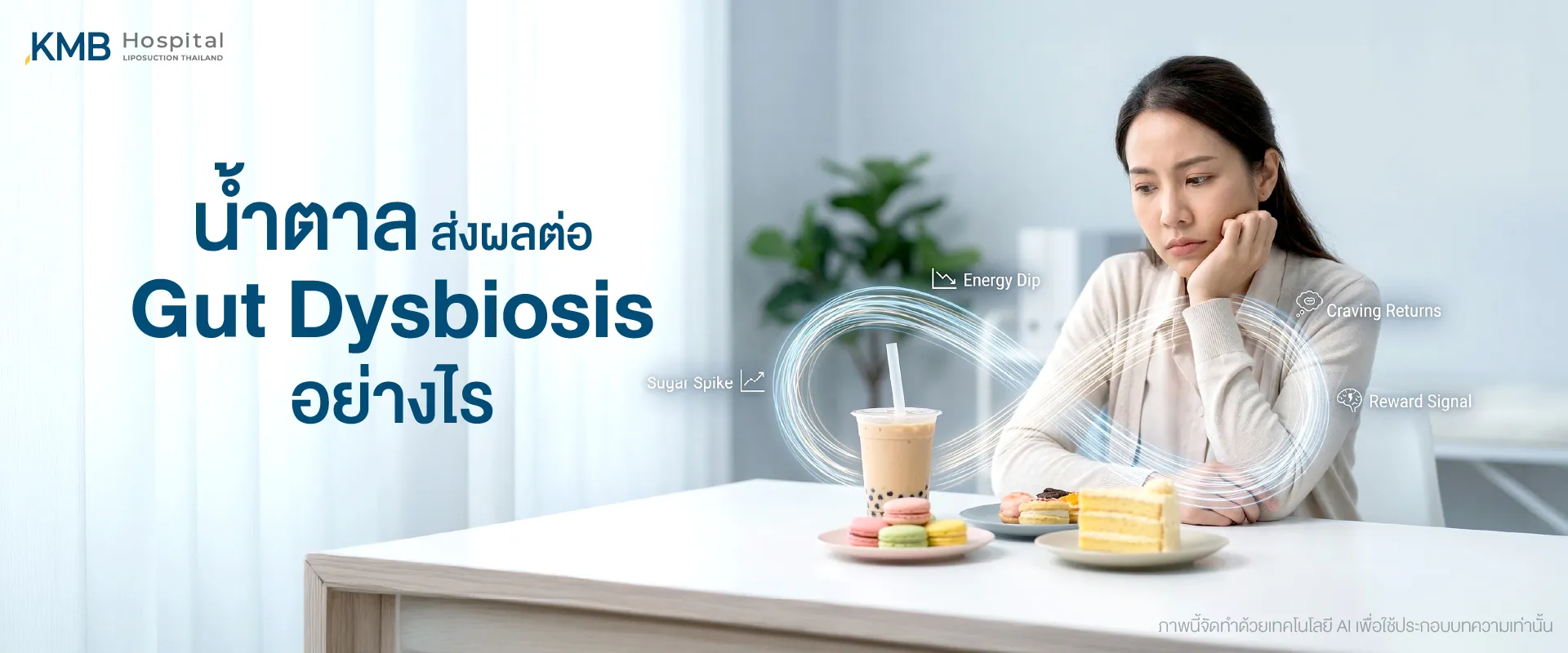
น้ำตาลกับ Dysbiosis: วงจรที่ทำให้ Sugar Craving กลับมาเรื่อย ๆ จริงหรือไม่?
ความอยากของหวานซ้ำ ๆ อาจเกี่ยวข้องกับหลายระบบในร่างกาย โดยเฉพาะ glucose–insulin variability, reward circuitry ในสมอง และพฤติกรรมการกินซ้ำ อย่างไรก็ตาม แม้ว่าอาหารแบบ Western diet (น้ำตาลสูง ไฟเบอร์ต่ำ และ ultra-processed food สูง) จะสัมพันธ์กับการเปลี่ยนแปลงของ gut microbiome แต่ปัจจุบันยังไม่มีหลักฐานในมนุษย์ที่ยืนยันว่า dysbiosis เป็นสาเหตุโดยตรงของ sugar craving
สารบัญ
บทนำ
หลายคนรู้สึกว่า:
- ยิ่งกินหวาน → ยิ่งอยากหวาน
- คุมได้ช่วงหนึ่ง → craving กลับมา
- บางวันอยากของหวานแรงผิดปกติ
คำถามคือ: น้ำตาลทำให้ลำไส้เสียสมดุล (dysbiosis) แล้วกระตุ้นความอยากซ้ำจริงหรือไม่?
หลักฐานในมนุษย์ปัจจุบันชี้ว่า Western-type dietary pattern (refined sugar สูง + fiber ต่ำ + ultra-processed food สูง) สัมพันธ์กับการเปลี่ยนแปลง microbiome และ inflammatory tone แต่แนวคิดว่า dysbiosis ทำให้ sugar craving โดยตรง ยังไม่มีหลักฐานเชิงสาเหตุยืนยันในมนุษย์
1️⃣ น้ำตาลสูงกับ Microbiome: สิ่งที่พูดได้แน่
รีวิวหลังปี 2020 รายงานว่า Western-type diet สัมพันธ์กับ:
- ความหลากหลายของจุลินทรีย์ (α-diversity) ลดลง
- การเปลี่ยน microbial composition
- การเปลี่ยนแปลงการผลิต SCFAs
- pro-inflammatory microbial profile ในบางบริบท
อย่างไรก็ตาม ในมนุษย์การแยกผลของ น้ำตาลเพียงอย่างเดียว ออกจากปัจจัยอื่น เช่น
- fiber ต่ำ
- ultra-processed food
- lifestyle
ทำได้ยาก ดังนั้นข้อสรุปที่แม่นยำคือ
น้ำตาลสูงในบริบท Western diet สัมพันธ์กับ dysbiosis แต่ยังไม่สามารถสรุปว่าน้ำตาลเพียงอย่างเดียวเป็นสาเหตุโดยตรง
2️⃣ Dysbiosis → Inflammatory Background → Craving (Hypothesis)
หนึ่งในโมเดลที่เสนอคือ
Western diet
→ microbiome shift
→ gut barrier modulation
→ low-grade inflammation
→ insulin sensitivity เปลี่ยน
→ glucose variability ↑
→ craving ↑
รีวิวด้าน microbiome และ ultra-processed foods สนับสนุนความเป็นไปได้ของ inflammatory modulation แต่ chain นี้ในมนุษย์ยังเป็นเพียง mechanistic hypothesis ไม่ใช่ causal confirmation
3️⃣ Sugar กับ Reward Circuitry
อาหารหวานสามารถกระตุ้น:
- dopamine release
- mesolimbic reward pathway
การได้รับซ้ำอาจ:
- เพิ่ม reward salience
- เสริม behavioral reinforcement
อย่างไรก็ตาม
reward activation ≠ addiction syndrome
การกล่าวว่า “น้ำตาลคือสารเสพติด” ในประชากรทั่วไปจึงเกินหลักฐานทางวิทยาศาสตร์
4️⃣ Microbiome กับ Reward System
รีวิว gut–brain axis เสนอว่า microbiota อาจปรับ:
- neuroinflammation
- mood regulation
- satiety signaling
- reward sensitivity
แต่จนถึงปัจจุบันยังไม่มี RCT ในมนุษย์ที่ยืนยันว่า dysbiosis ทำให้ sugar craving โดยตรง
ดังนั้น microbiome จึงอาจเป็น background modulator มากกว่าตัวจุดชนวนหลัก
5️⃣ Artificial Sweeteners ทำให้ภาพซับซ้อนขึ้น
งานวิจัยเกี่ยวกับ artificial sweeteners รายงานผลที่ heterogenous:
- บางงานพบผลต่อ glucose handling
- บางงานไม่พบ
- ผลต่อ microbiome ไม่สม่ำเสมอ
สิ่งนี้สะท้อนว่า
ระบบ gut–metabolism–reward มีความซับซ้อน และไม่สามารถอธิบายด้วยปัจจัยเดียว
6️⃣ วงจรที่เป็นไปได้ (Craving Loop Model)
High sugar intake
→ Glucose spike
→ Insulin spike
→ Energy dip
→ Hunger
→ Reward drive
→ High sugar intake ซ้ำ
Microbiome อาจปรับ inflammatory background แต่ยังไม่ใช่ trigger หลักที่พิสูจน์แล้ว
7️⃣ ใครเสี่ยง craving loop มากกว่า?
- Sleep deprivation
- Stress สูง
- Fiber intake ต่ำ
- Ultra-processed food intake สูง
- Insulin sensitivity ลดลง
- Circadian misalignment
Sugar craving จึงเป็น multi-factorial phenomenon ไม่ใช่ gut-only mechanism
FAQ
น้ำตาลทำให้ลำไส้เสียสมดุลไหม?
น้ำตาลสูงในบริบท Western diet สัมพันธ์กับ microbiome diversity ลดลง แต่ยังไม่มี causal proof แยกน้ำตาลเดี่ยว ๆ
Dysbiosis ทำให้ติดหวานไหม?
ยังไม่มีหลักฐานเชิงสาเหตุในมนุษย์ยืนยัน
ทำไมกินหวานแล้วอยากต่อ?
เกี่ยวข้องกับ glucose variability และ reward signaling มากกว่าปัจจัยเดียว
Microbiome ควบคุมความอยากอาหารไหม?
อาจปรับพื้นฐานของระบบ แต่ยังไม่มี causal confirmation สำหรับ sugar craving
Key Takeaway
Sugar craving มักเป็นผลจากหลายระบบร่วมกัน
- ✔ Glucose–insulin variability
- ✔ Reward circuitry activation
- ✔ Behavioral reinforcement
- ✔ Inflammatory/metabolic background
Microbiome อาจปรับพื้นฐานของระบบ แต่ยังไม่มีหลักฐานเชิงสาเหตุว่าเป็นตัวกระตุ้นหลักในมนุษย์
Hospital Authority
KMB Hospital มุ่งเน้นการประเมินผลลัพธ์หลังทำโปรแกรมดูดไขมันอย่างเป็นธรรมตามเวลา เพื่อการดูแลที่ปลอดภัย สบายใจ และเคารพร่างกายของคนไข้
Content Information
เขียนโดย: Medical Content Team, KMB Hospital
ทบทวนโดย: Clinical Governance Committee, KMB Hospital
เผยแพร่: 24 มีนาคม 2569
อัปเดตล่าสุด: 24 มีนาคม 2569
References
- Patloka O, Komprda T, Franke G. Review of the Relationships Between Human Gut Microbiome, Diet, and Obesity. Nutrients. 2024.
- Fardet A, Drieu K, Calvez J. Added sugars, gut microbiota, and host health. Gut Microbes. 2025.
- Ramne S, et al. Gut microbiota composition in relation to intake of added sugar and sugar-sweetened beverages. Eur J Nutr. 2021.
- Safarchi A, et al. Understanding dysbiosis and resilience in the human gut microbiome. Front Microbiol. 2025.