
How do doctors evaluate the GLAM Liposculpt™ knee liposuction program?
KMB KNOWLEDGE BLUEPRINT™
DOMAIN D — GLAM Treatment by Body Area | Article Code: GL-E-K02
Category: GLAM Treatment by Body Area | GLAM Liposculpt™ | Pre-Liposuction Assessment
How do doctors evaluate the GLAM Liposculpt™ knee liposuction program?
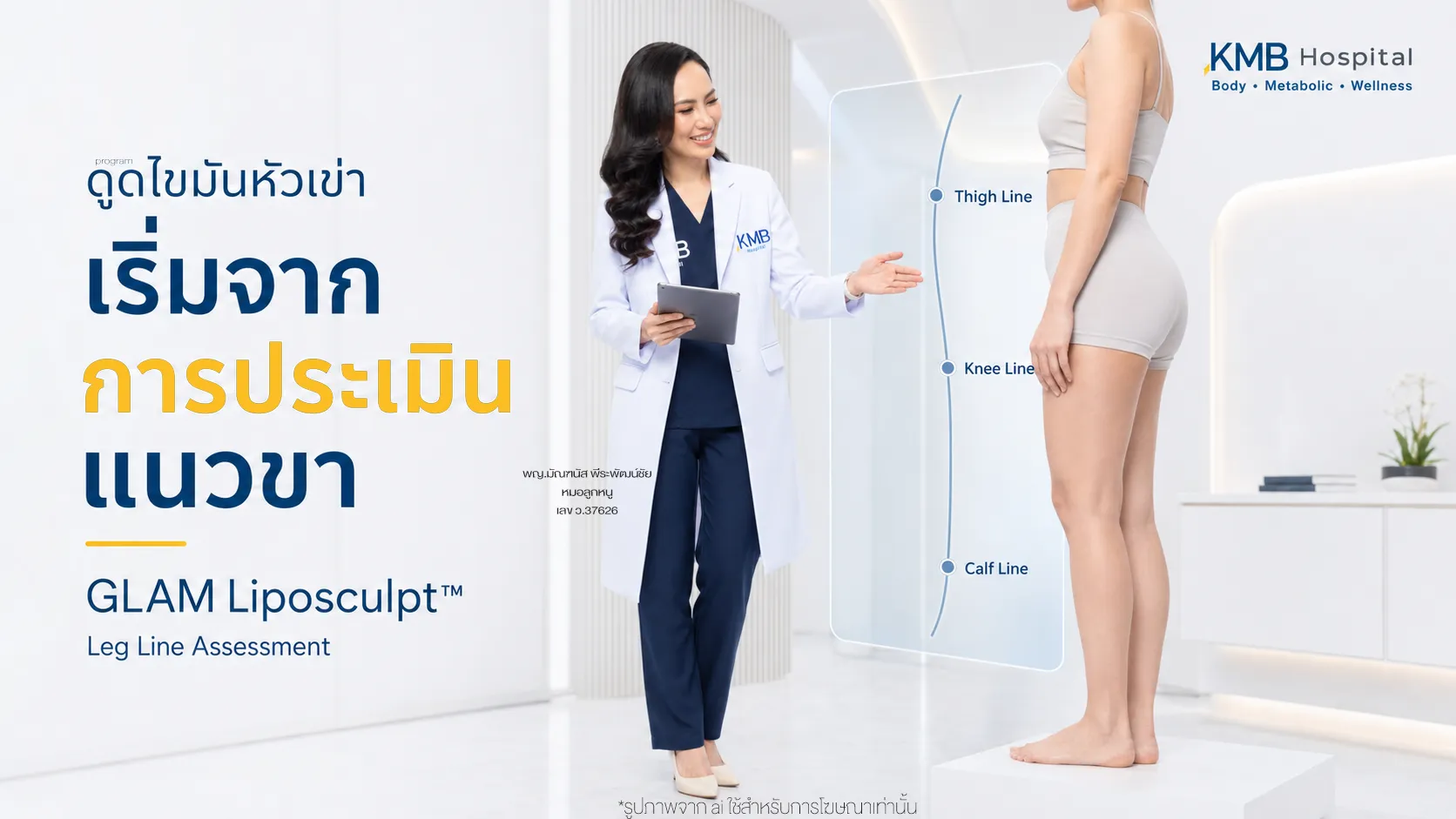
Before undergoing the GLAM Liposculpt™ knee liposuction program, doctors evaluate the fat distribution around the knees combined with data from FAT Mapping™ and analyze the relationship between the thighs, knees, and calves to design a leg contour that is balanced with the overall body shape.
GLAM believes that an effective knee liposuction program should not just aim to reduce fat in the knee area but should also make the entire leg contour look harmonious and natural.
Small knees can affect the overall look of the entire leg
Many people focus on their thighs and calves but overlook the knee area.
In reality, the knee is the connective point of the leg.
If there is fat accumulation around the knees, the leg contour may look disconnected, even if the thighs and calves are well-proportioned.
For this reason, GLAM Liposculpt™ prioritizes assessing the knees in conjunction with the entire leg, rather than considering only the area around the knees.
FAT Mapping™ makes knee assessment more precise
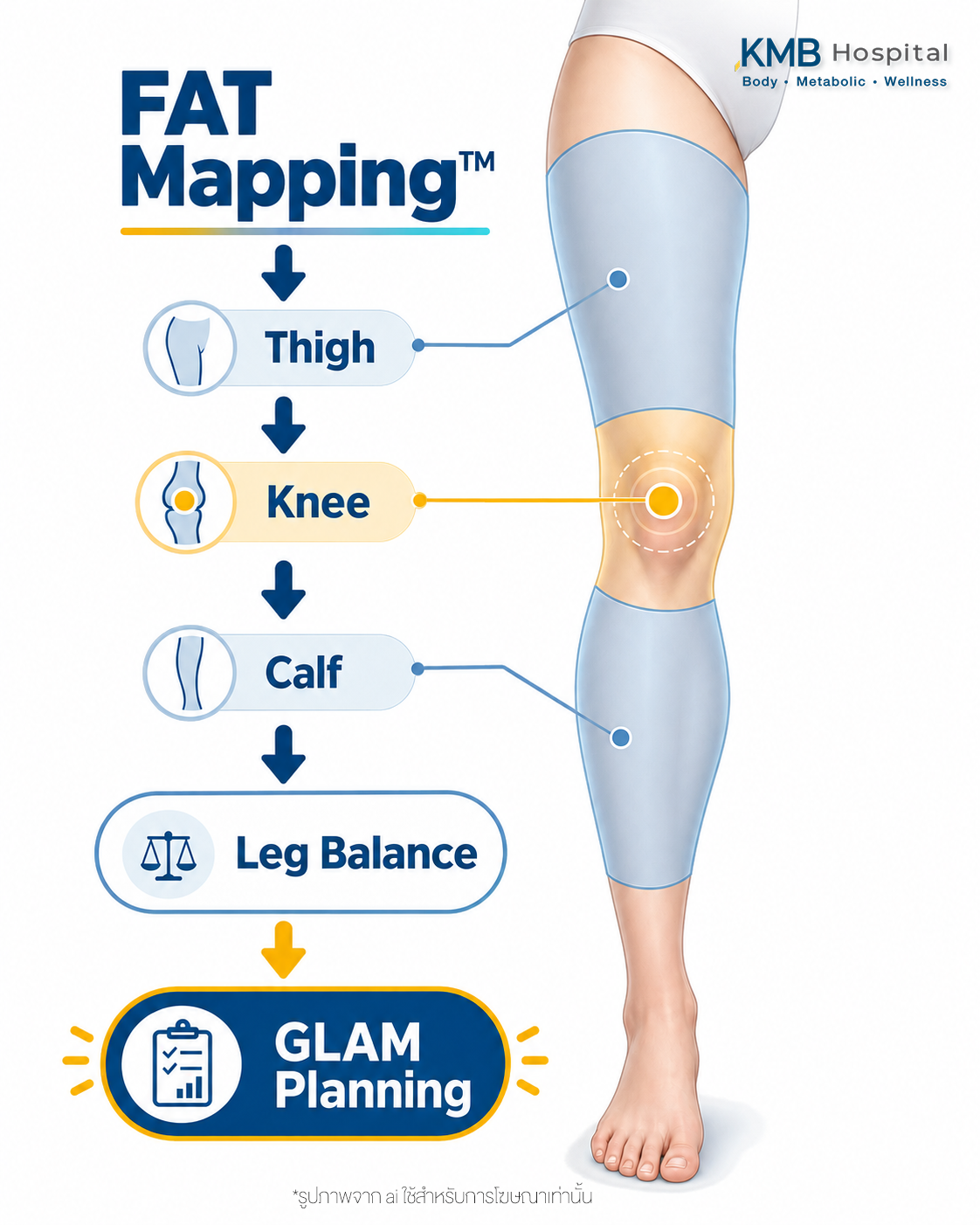
Before a knee liposuction program, doctors use data from FAT Mapping™ to assess the position of fat and its relationship with the thighs and calves.
This data helps provide a complete picture of the leg contour and ensures that the design of the liposuction program is more continuous.
When FAT Mapping™ data is combined with a physical examination, doctors can plan treatment tailored to each individual.
| Assessment Data | Considerations | Design Goal |
|---|---|---|
| FAT Mapping™ | Position and distribution of fat around the knees | Seeing the continuity of fat from the thighs down to the calves |
| Physical Exam | Knee characteristics, body structure, and leg proportions | Selecting an approach suitable for each individual |
| Overall Leg Contour | Relationship between thighs, knees, and calves | Designing a continuous and balanced leg shape |
Knee assessment requires looking at the entire leg
GLAM Liposculpt™ does not view the knee as just a small point on the body.
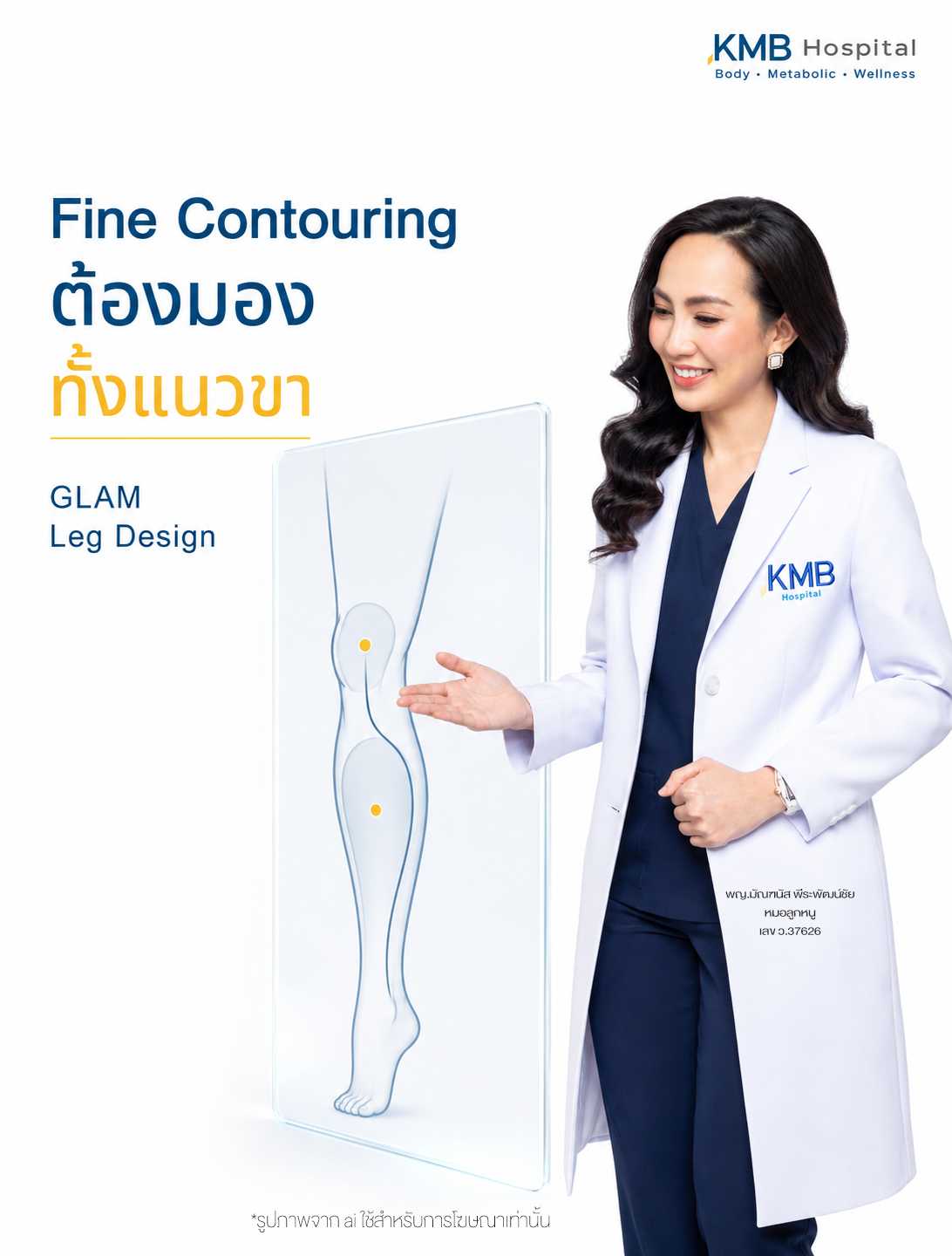
Before liposuction, doctors evaluate the relationship between the thighs, knees, and calves so that the leg contour looks continuous when viewed from the front and side.
This concept helps make knee liposuction part of the entire lower body design rather than just a localized treatment.
The GLAM goal is leg contour continuity
For GLAM Liposculpt™, the knee liposuction program does not just aim to make the knees look smaller.
It focuses on creating a slim, elongated leg contour with balance from the thighs to the calves.
When doctors start with a detailed assessment and design a personalized treatment, the result helps the overall leg look more natural.
Key points to know
The GLAM Liposculpt™ knee liposuction program starts by assessing the entire leg, not just the area around the knee.
FAT Mapping™ helps doctors understand fat distribution and the relationship between thighs, knees, and calves.
The knee is a critical connective point of the lower body; effective design must account for the continuity of the leg line.
Each patient may receive a different knee liposuction plan, even if they have similar external appearances.
The goal of GLAM is to make the leg contour balanced and natural, not just to make the knees smaller.
Detailed assessment leads to a more continuous leg contour
The knee is an area with little space but has a clear impact on the overall appearance of the lower body.
When doctors evaluate data from FAT Mapping™ combined with a physical examination, they can see the full relationship between the thighs, knees, and calves.
This information helps in planning the liposuction program so it is not focused only on reducing fat around the knees but considers the continuity of the entire leg contour, ensuring that the results look harmonious when standing, walking, or viewed from any angle.
Frequently Asked Questions
What do doctors evaluate before the GLAM Liposculpt™ knee liposuction program?
Before knee liposuction, doctors evaluate data from FAT Mapping™, the physical examination, fat distribution around the knees, and the relationship between the thighs and calves.
All data is analyzed together to design a knee liposuction program tailored to each individual and to help make the leg contour more balanced.
How does FAT Mapping™ help plan the GLAM Liposculpt™ knee liposuction program?
FAT Mapping™ helps doctors understand the position of fat around the knees and see the continuity of fat from the thighs down to the calves.
This information ensures that the liposuction planning doesn't just look at the knee area but can design the overall leg contour to look more natural.
Are big knees always caused by fat? What must be evaluated before liposuction?
Not always.
The appearance of the knee can be influenced by many factors, including fat distribution, body structure, and leg proportions.
Before liposuction, doctors must evaluate all information together to select a treatment approach suitable for each individual.
Why does the GLAM Liposculpt™ knee liposuction program also evaluate the thighs and calves?
Because the knee is the connection point of the leg.
If only the knee area is evaluated, the overall picture of the entire leg contour may not be visible.
GLAM Liposculpt™ evaluates the thighs, knees, and calves together so that the body shape design is continuous and the results look more balanced.
Will two patients with similarly thick knees use the same knee liposuction plan?
Not necessarily.
Even if they have similar external appearances, data from FAT Mapping™, fat distribution, and lower body structure may differ.
GLAM Liposculpt™ designs personalized liposuction programs to suit each patient's body shape.
What is the goal of designing a GLAM Liposculpt™ knee liposuction program?
The goal of GLAM is to create a leg contour with continuity from the thighs to the calves.
The knee liposuction program is therefore not just about reducing fat around the knees but is part of an overall lower body design to ensure the body shape looks balanced and natural.
Summary
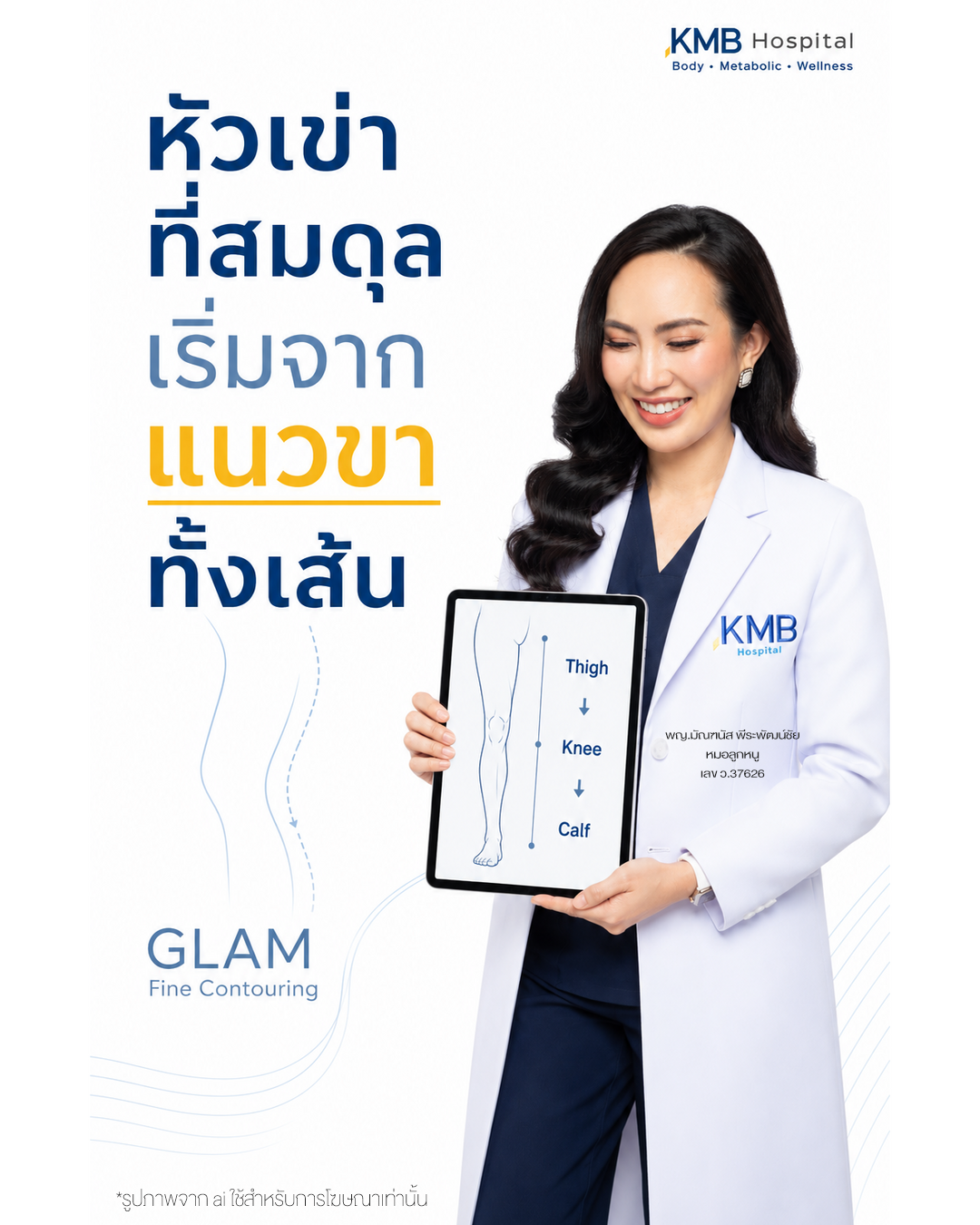
The GLAM Liposculpt™ knee liposuction program starts by assessing the entire leg, not just the knee area.
Data from FAT Mapping™, physical exams, and analysis of the relationship between thighs, knees, and calves are combined to design personalized treatment plans.
For GLAM, the beauty of the leg is not achieved by reducing fat in just one area, but by designing the continuity of the entire lower body shape so that the result is harmonious and suitable for each individual.
About this article
This article explains the assessment principles before the GLAM Liposculpt™ knee liposuction program by linking data from FAT Mapping™, physical examination, and leg contour analysis to design a treatment plan suitable for each patient and create results with lower body continuity.
Article Information
Written by: Medical Content Team, KMB Hospital
Medically reviewed by:
Dr. Mantanas Peerapatchai, Dr. Looknuu, Medical License No. 37626
Medical Disclaimer
The information in this article is for educational purposes for the general public and cannot replace professional examination, diagnosis, or personalized medical advice from a doctor.
Start with an assessment tailored to you
If you are concerned about thick knees or a disconnected leg contour, you should have a doctor evaluate your fat distribution, structure, and leg proportions to consider suitability and individual limitations.