
How does GLAM Liposculpt™ plan multi-area liposuction procedures in a single session?
GLAM Liposculpt™ Knowledge Library
DOMAIN E — GLAM Safety & Patient Care | Article ID: GL-E-K04
Category: GLAM Treatment by Body Area | Liposuction Program Principles | Medical Knowledge
How GLAM Liposculpt™ Plans Multiple Area Liposuction in a Single Program
First Published: September 23, 2026 | Last Updated: September 23, 2026 | Reading Time: 8 minutes
Author: Medical Content Team, KMB Hospital
Medically Reviewed by: Dr. Mantanas Peerapatchai (Dr. Looknuu), License No. 37626
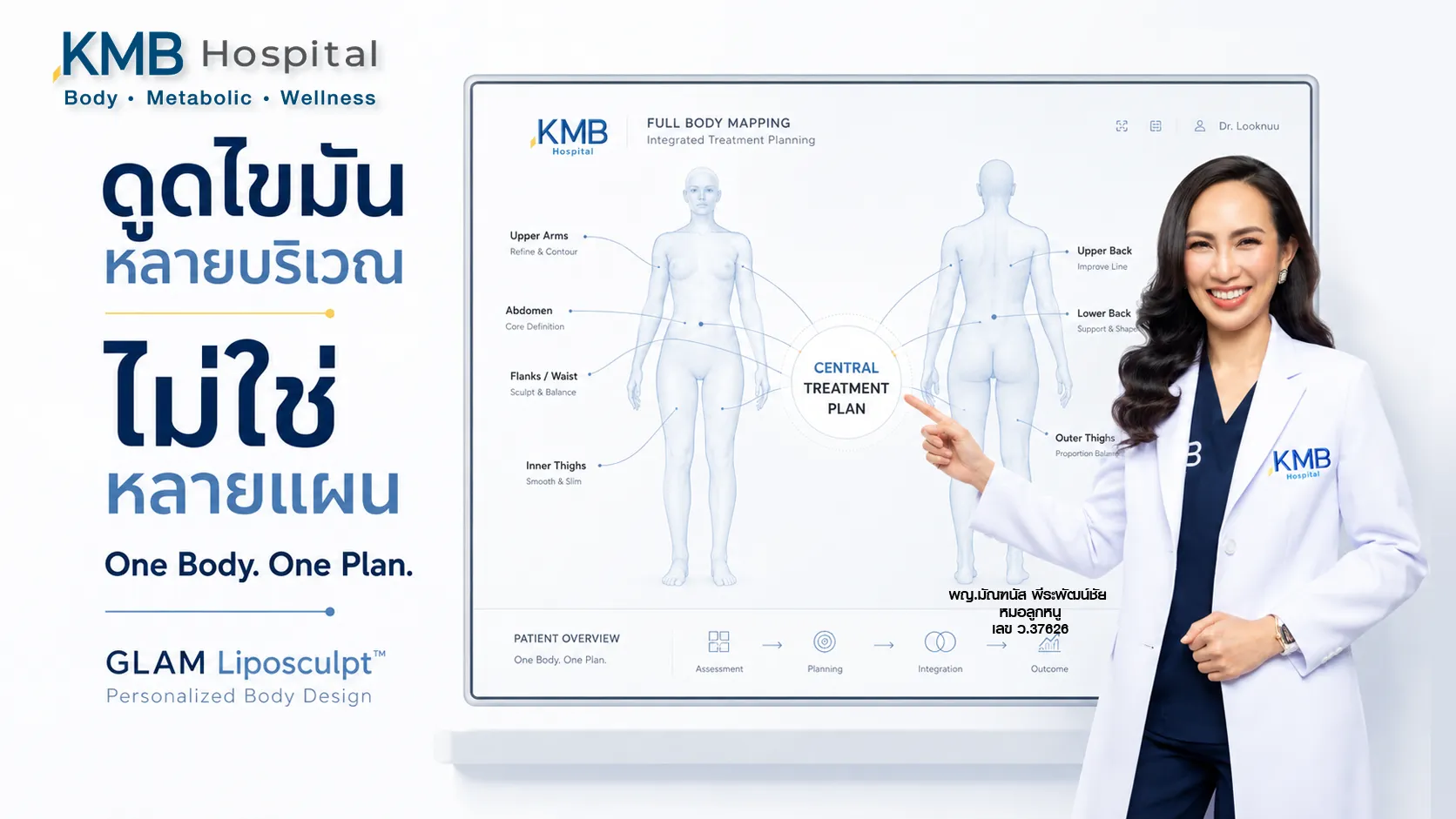
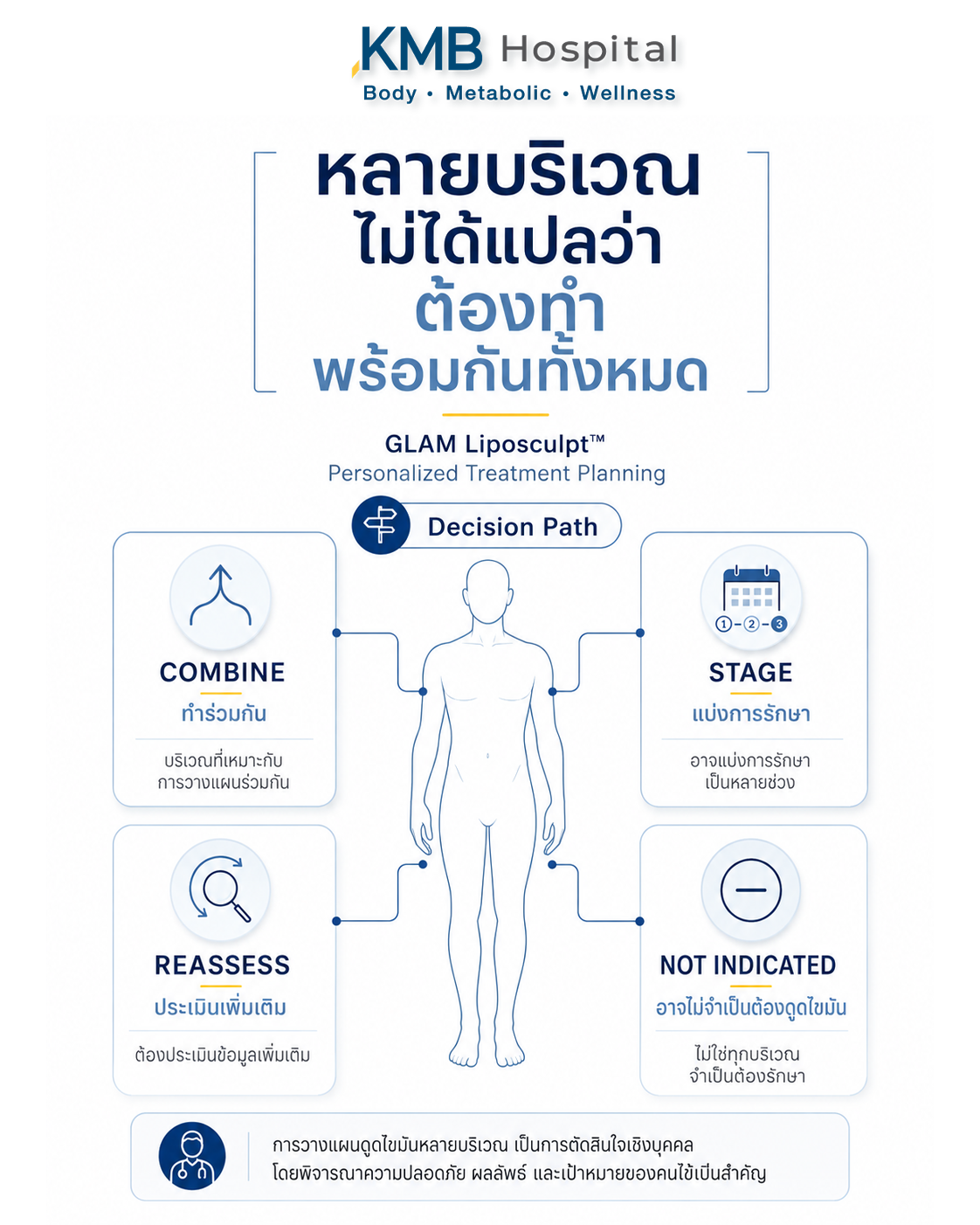
Planning a multiple area liposuction program with GLAM Liposculpt™ does not start by adding up the areas the patient wants to treat. Instead, it begins with an assessment of the body, health, and the relationship between all areas to determine which ones should be treated together, which should be staged, and which may not require liposuction at all.
Data from FAT Mapping™, physical examination, health history, the scope of treatment, and the patient's goals are analyzed together, prioritizing safety and individual suitability over the number of desired areas.
Wanting multiple area liposuction does not mean doing all at once
When a patient has fat deposits in multiple areas, such as the abdomen, flanks, back, and upper arms, it is natural to think:
“If I’m going for it, can I do it all at once?”
The answer must be determined on an individual basis, as a multiple area liposuction program is not just adding up separate treatment plans into one big plan.
The more areas involved, the more essential it is for the surgeon to step back and look at the body as a whole. Some areas are connected, making joint planning logical, while others may not need to be treated simultaneously. In some cases, staging the treatment over multiple sessions is more appropriate.
“How many areas can I treat?”
“For this person’s body, how should it be planned?”
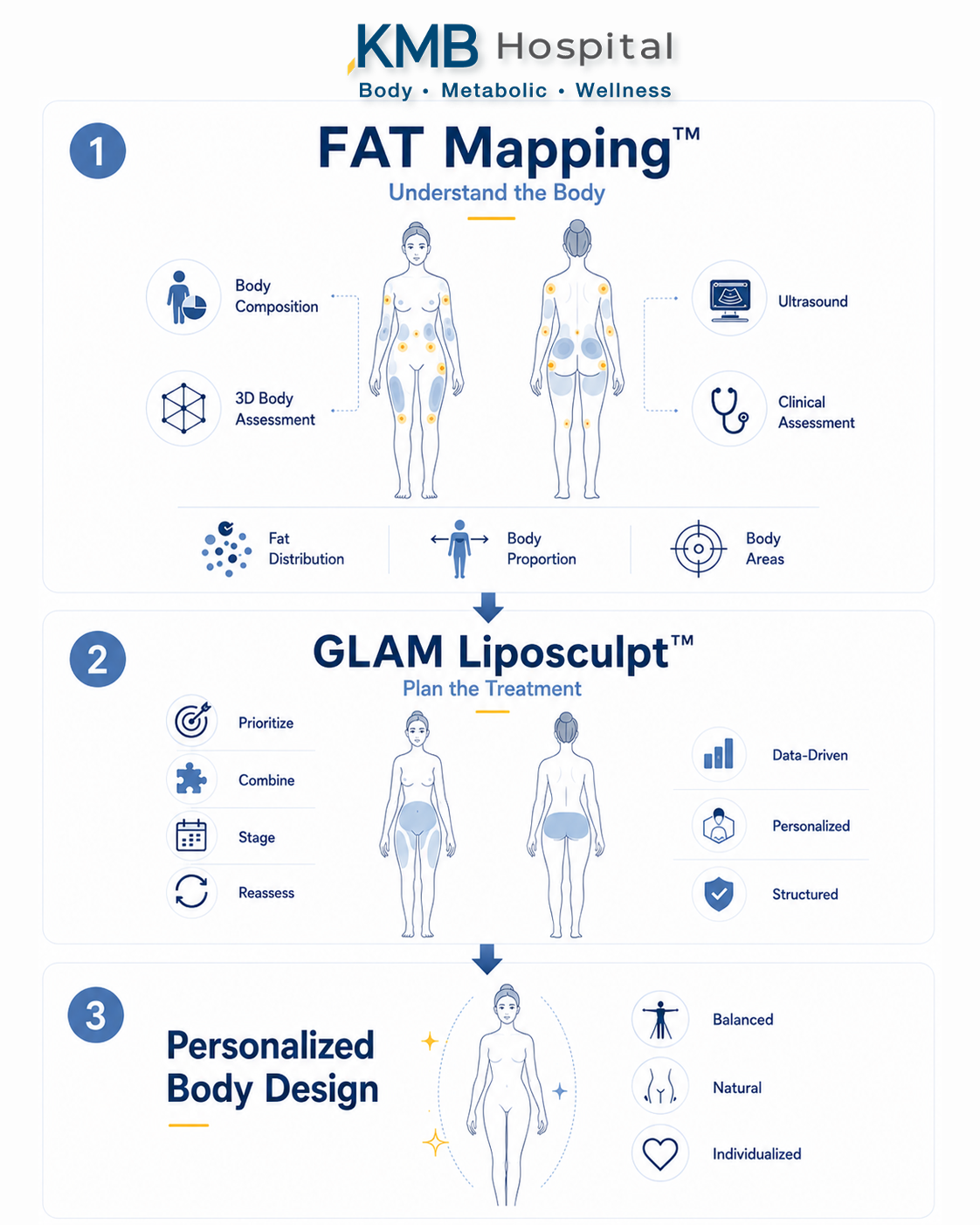
FAT Mapping™ helps us see the big picture before dividing by area
When discussing single-area liposuction, we might look at the abdomen, upper arms, thighs, or back separately to understand the details of each part.
However, when planning a multiple area liposuction program, we must do the opposite: step back and view the entire body.
FAT Mapping™ allows the surgeon to gather data on fat distribution and body proportions before integrating these findings with physical examinations and health assessments.
Having data, therefore, helps transform a “wishlist of areas” into a “logical treatment plan.”
Multiple areas do not mean every area carries the same weight
When a patient has fat deposits in multiple areas, the surgeon does not view every position as requiring the same level of treatment.
| Area Role | Significance in Planning |
|---|---|
| Key Area | Areas that may have a greater impact on the goals and overall silhouette. |
| Supporting Area | Areas that help create seamless proportions or support the overall body contour. |
| Not Required | Certain areas may, upon assessment, not need to be included in the liposuction plan. |
For example, if the goal is to enhance the waistline, the assessment should view the abdomen, flanks, and back together, rather than thinking of each point separately. This is the difference between “choosing multiple areas” and “designing multiple areas.”
A multiple area liposuction program must incorporate safety from the start
As the scope of treatment increases, the surgeon's considerations must go beyond just the silhouette.
Health data, patient readiness, scope of treatment, anesthesia approach, and relevant medical factors must be considered together before a plan is determined.
The goal of GLAM is not to treat the highest number of areas in one session, but to choose the plan that is most appropriate for the individual patient.
Therefore, "Personalized Treatment" does not mean simply "everyone is treated differently," but also that the number of areas, the sequence, and the scope of care must be designed individually.
Planning for multiple areas requires knowing what to do first and what to wait for
Suppose a patient wants liposuction on their abdomen, flanks, back, upper arms, and thighs. The GLAM question is not “How do we do all five points?” but begins with these questions:
When we answer these questions, multiple area liposuction is no longer just "doing many spots," but becomes a Treatment Sequence where every area has a purpose for being in the plan.
GLAM considers the end result before deciding where to perform liposuction
GLAM Liposculpt™ does not start by circling areas of fat one by one and adding them all up at the end. It begins by asking:
“When all the care is complete, how do we want this person's overall proportions to look?”
Then, we work backward to plan which areas contribute to that result. Some people may need to focus on the torso; others may need to focus on the lower body. Some may not need liposuction on every concerned spot, and others may be better suited for staged treatment sessions.
One person, one body, one plan that considers all areas together.
Key points to know
A multiple area liposuction program starts by viewing the body as a whole, then determining which areas should be in the plan.
It helps gather info on fat distribution and proportions before analyzing it with health and physical exams.
The number of areas, scope, and treatment sequence must be considered individually.
Doing all areas at once is not the program's primary goal.
Every area is covered under one plan that considers balance, suitability, and safety.
Frequently asked questions
1. Can a multiple area liposuction program with GLAM Liposculpt™ be done in one session?
It can be considered for some patients, but it does not mean everyone is suitable for doing every part at once. The surgeon must evaluate data from FAT Mapping™, physical exams, health status, treatment scope, and relevant medical factors before determining which areas should be treated together or if the treatment should be staged.
2. How does FAT Mapping™ help plan a multiple area GLAM Liposculpt™ program?
FAT Mapping™ allows the surgeon to see the full picture of fat distribution and the relationship of proportions in each area. Once the surgeon understands the whole, GLAM Liposculpt™ uses that data to determine which areas are key, which should be designed together, and which may not need treatment.
3. Does a multiple area GLAM Liposculpt™ program require doing every area at once?
No. Even if a patient has multiple areas they want treated, the surgeon may decide to include some areas in the same plan while scheduling others for a later session if it is safer or more effective. GLAM Liposculpt™ does not measure the value of a plan by the number of areas done at once, but by the suitability for the patient's body and health.
4. How does the surgeon choose which area to treat first in a multiple area program?
The surgeon considers the patient's goals, FAT Mapping™ data, the relationship between areas, treatment scope, and safety factors. Some areas have a greater impact on the overall figure and are classified as "Key Areas," while others provide support or can be scheduled in a different phase.
5. Is more better, and why does GLAM Liposculpt™ look at the whole body first?
Not necessarily. The number of areas in a liposuction program does not guarantee better results. Suitability and proportional relationships are more important. GLAM Liposculpt™ does not aim for the maximum number of spots, but uses FAT Mapping™ and medical assessment to select only the areas that add value to the treatment plan.
Our bodies are not divided into compartments; the abdomen connects to the waist, the waist to the back and hips, and the thighs to the knees. We must view the body as a whole under the "One Body. One Plan" concept.
From FAT Mapping™ to Personalized Body Design
This article is where two parts of our Knowledge Library clearly connect.
FAT Mapping™ gathers data to help the surgeon understand the body before liposuction.
GLAM Liposculpt™ uses that information to plan and design the treatment.
When multiple areas are involved, the connection between these two systems becomes crucial. The surgeon must go beyond "Is there fat here?" and answer: "How does this fat affect the total silhouette? Which areas should be treated together? Is it necessary to do it all at once? What is the right plan for this patient?"
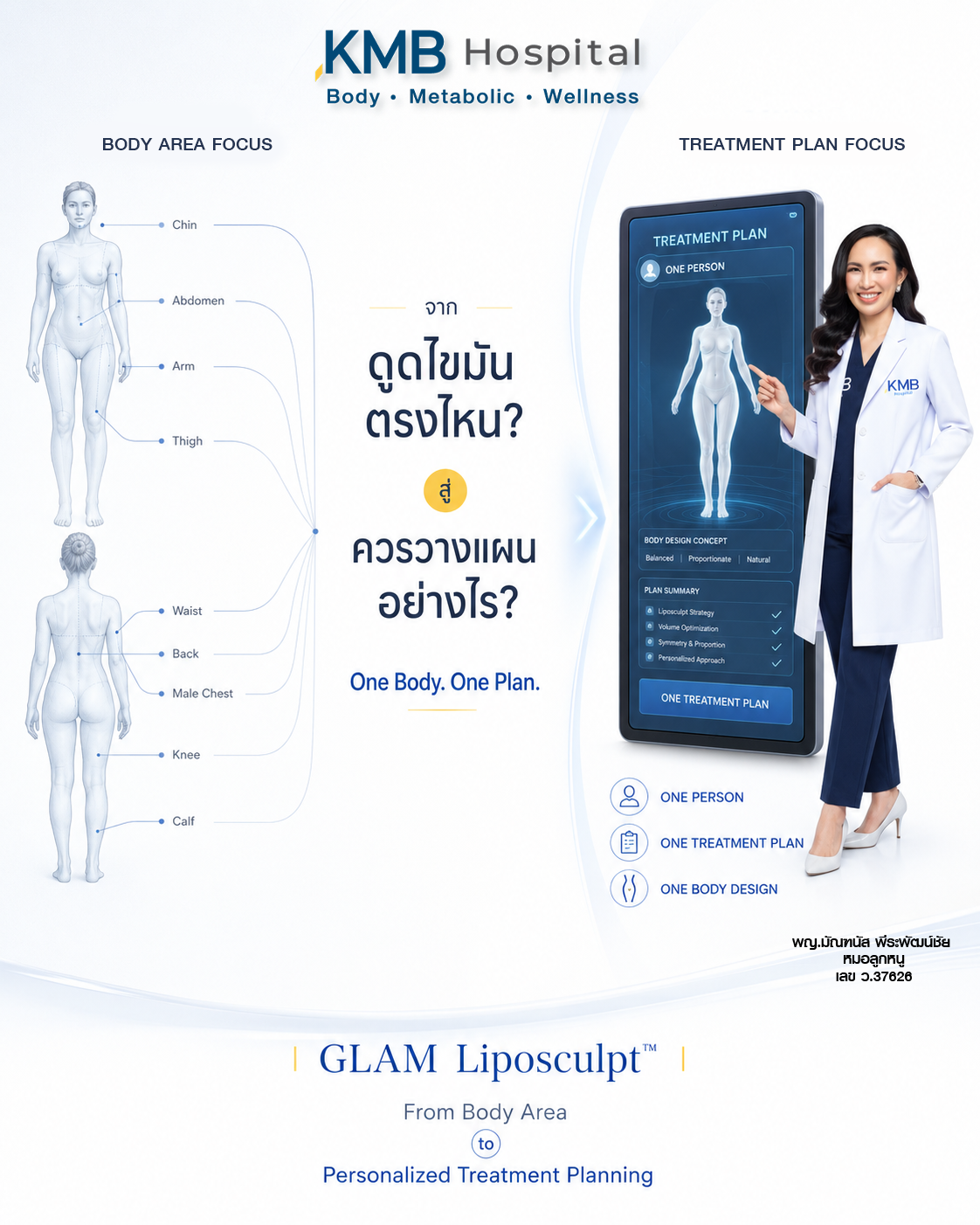
From Body Area to Personalized Treatment Planning
Throughout Domain D, we have seen that every liposuction area has unique details.
When many areas exist on one person, they should no longer be viewed as a list, but integrated into a single Treatment Plan.
This is where GLAM Liposculpt™ shifts from "liposuction for each area" to "personalized liposuction program design."
Summary
Planning a multiple area liposuction program with GLAM Liposculpt™ does not start with "How many can I do at once?" but with "For this person, how should we plan?"
FAT Mapping™ helps the surgeon understand fat distribution and proportional relationships, while GLAM Liposculpt™ uses that data to decide which areas belong in the plan, which should be treated together, which should be staged, and which may not need treatment at all.
Related Articles from KMB Hospital
Read More on DoctorLooknuu.com
Medical Reference Sources
- American Society of Plastic Surgeons. Liposuction Consultation. Used for general principles on assessing goals, health, medical history, risk factors, and expectations before treatment planning.
- American Society of Plastic Surgeons. Liposuction Risks and Safety. Used for general information on risks and the importance of discussing safety prior to treatment.
- Kaoutzanis C, Gupta V, Winocour J, et al. Cosmetic Liposuction: Preoperative Risk Factors, Major Complication Rates, and Safety of Combined Procedures. Aesthet Surg J. 2017;37(6):680-694. doi:10.1093/asj/sjw243.
- American Society of Plastic Surgeons. Evidence-Based Patient Safety Advisory: Liposuction. Used to support the principle that the cumulative effects of combined procedures may increase risk, making staging sessions appropriate in certain clinical scenarios.
Note: GLAM Liposculpt™ and FAT Mapping™ are concepts/systems described based on KMB Hospital's methodology; the referenced sources support general principles of risk assessment, multiple area planning, and safety.
About This Article
This article explains the principles of multiple area liposuction planning using GLAM Liposculpt™, connecting FAT Mapping™ data, physical examination, health history, area interrelationships, and patient goals to create a personalized liposuction plan that prioritizes both balance and safety.
The information in this article is for educational purposes and cannot replace professional examination, diagnosis, or personalized medical advice.
Authorship
Medical License No. 37626
One Body. One Plan.
When you have concerns about multiple areas, an assessment by a doctor helps identify which areas should be planned together, which should be staged, and which are not necessary, prioritizing your overall body and safety.