
How important is taking a medical history before the liposuction program? | KMB Hospital

KMB KNOWLEDGE BLUEPRINT™ | DOMAIN C Article Code FM-C-K02
Category: FAT Mapping™ and Pre-Liposuction Program Assessment
How Important Is Pre-Liposuction History Taking and What Topics Must Doctors Inquire About?
First Published: 5 August 2026 | Last Updated: 5 August 2026 | Read Time: Approx. 8–10 minutes
Author: KMB Hospital Medical Content Team
Medical Reviewer: Dr. Mardan Peerapattanchai (Dr. Luukhnu) License No. ว.37626
Pre-liposuction history taking is a crucial step that helps doctors understand the patient's health status, treatment history, lifestyle habits, and goals before combining all this information with physical examination and FAT Mapping™ to plan appropriate treatment.
The information patients provide during history taking has no “right” or “wrong” answers, but rather data that helps doctors assess readiness, safety, and select the most suitable care approach for each individual.
Why Is History Taking the Starting Point for Pre-Liposuction Program Assessment
Before the doctor performs a physical examination or begins FAT Mapping™, the first step is to take a medical history.
Taking a history is not just filling out forms or asking general questions, but it is a step that helps doctors understand comprehensive basic information about the patient.
This information allows the doctor to know factors that may affect liposuction program planning, treatment safety, and post-procedure care.
What information do doctors typically ask about?

Although the details of medical history taking may vary per case, generally, doctors typically ask about the following important information:
This information is not used solely for screening but is utilized for analysis along with data from physical examination and FAT Mapping™
What does each piece of information help the doctor assess?
| Information Asked | Reason for Consideration |
|---|---|
| Medical Conditions and Treatment History | Helps the doctor understand readiness and factors that may require additional assessment |
| Medications and Allergy History | Used for planning and recommendations prior to procedures |
| Lifestyle Behaviors | May relate to safety, recovery, and post-procedure care |
| Weight Changes | Helps the doctor understand body shape changes over the recent period |
| Goals and Expectations | Helps planning align with each individual's needs and limitations |
How History Taking Connects with FAT Mapping™
FAT Mapping™ allows doctors to view information about body shape and composition, while history taking helps understand health data and specific factors of the client
When both pieces of information are considered together, doctors can evaluate the overall picture more comprehensively than using data from only one side
Therefore, history taking and FAT Mapping™ are considered complementary steps in the assessment process before the liposuction program
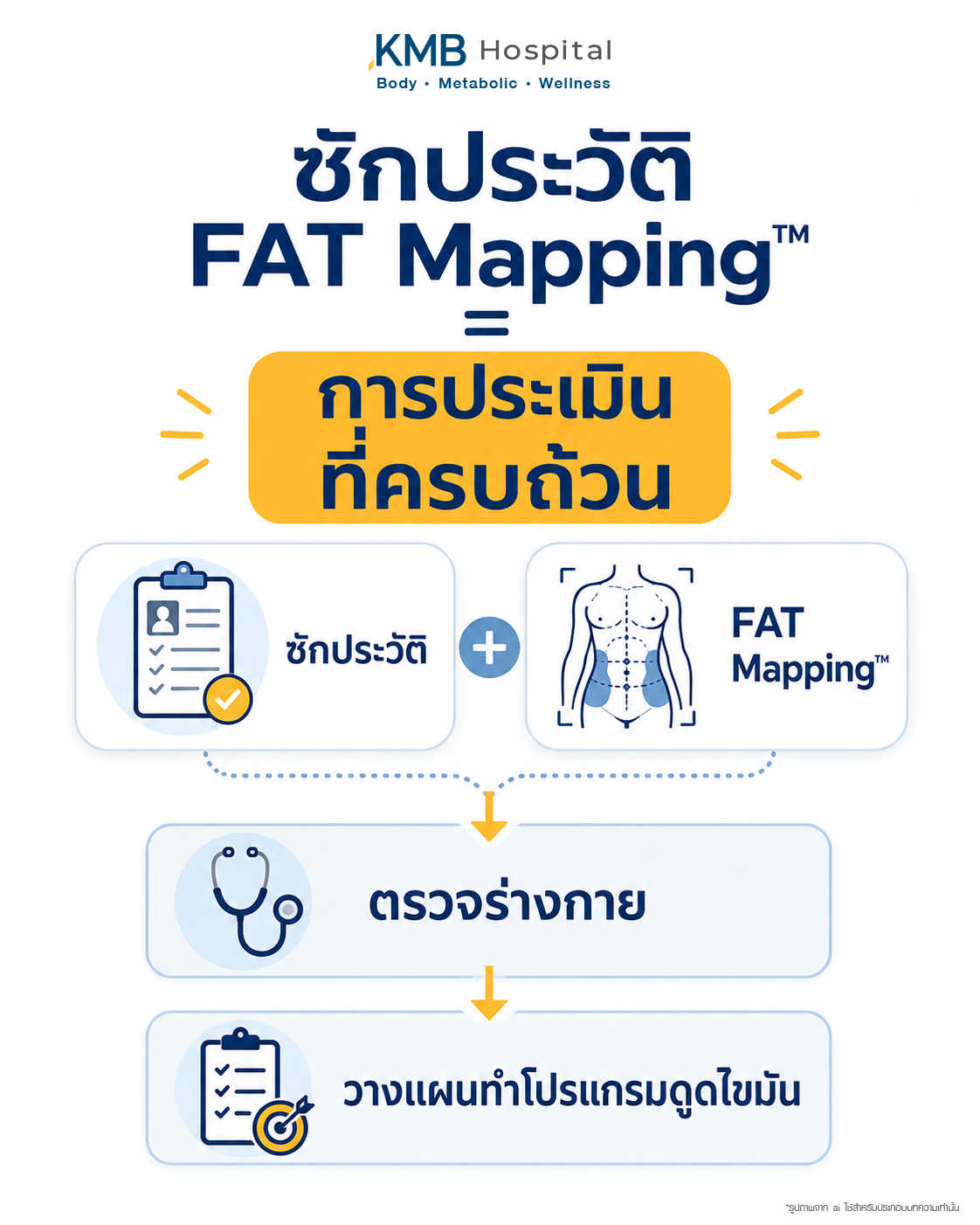
How History Taking, Physical Examination, and FAT Mapping™ Work Together
History taking provides foundational information that helps doctors understand clients in dimensions that physical examination or FAT Mapping™ cannot reveal
History Taking
Helps understand health, treatment history, behaviors, and goals of the client
Physical Examination
Allows doctors to assess physical condition and relevant areas through actual examination
FAT Mapping™
Helps gather information about body shape and composition for joint analysis
When data from history taking, physical examination, and FAT Mapping™ are considered together, it helps make liposuction program planning more appropriate and considerate of the client’s safety
Summary
History taking before the liposuction program is an important step in clinical assessment because it helps doctors understand health, treatment history, lifestyle behaviors, and the client’s goals
These data, when considered alongside physical examination and FAT Mapping™, help ensure the liposuction program planning is appropriate, safe, and aligned with each individual client
Key Points to Know
Frequently Asked Questions
1. Is a medical history review required for everyone before the liposuction program?
Necessary. The medical history review is a fundamental step in the pre-liposuction program evaluation because it helps the doctor understand health information, treatment history, and factors that may affect treatment planning.
2. If you have had a liposuction program before, must you inform the doctor?
You should inform them every time. Past history of liposuction programs or surgeries may affect evaluation, physical examination, and planning for the next liposuction program.
3. Why must the doctor ask about chronic diseases before the liposuction program?
Some chronic diseases may affect readiness and safety during treatment. Therefore, the medical history review helps the doctor assess suitability and plan care more thoroughly.
4. If you take regular medication, must you inform the doctor before undergoing FAT Mapping™?
You should inform them. Some medications may affect evaluation or planning of the liposuction program. Providing complete information allows the doctor to consider appropriate approaches for each client.
5. How does data from the medical history review relate to FAT Mapping™?
The medical history review helps the doctor understand health information, while FAT Mapping™ helps gather information about body shape and composition. Using both sets of information together makes the pre-liposuction program evaluation more comprehensive.
Unsure whether to proceed with the liposuction program; can I undergo evaluation beforehand?
Yes. The medical history review and pre-liposuction program evaluation aim to help clients understand information about their own bodies and use this information to make decisions jointly with the doctor. It does not mean treatment must be undergone immediately.

About KMB Hospital
KMB Hospital places importance on the pre-liposuction program assessment at every step. We believe that good planning begins with thoroughly understanding the patient's information, both through history taking, physical examination, and FAT Mapping™, to ensure care is as appropriate and safe as possible.
Medical Disclaimer
This article is created to provide knowledge about history taking, physical examination, and FAT Mapping™ before the liposuction program. Information cannot replace examination, diagnosis, or individual advice from a physician. Treatment suitability and further evaluation depend on health information, actual exams, and the discretion of doctors in each case.
Effective planning starts with complete information
Medical history, physical examination, and FAT Mapping™ help doctors understand the client’s health, body shape, and goals before evaluating the suitability of a personalized liposuction program.