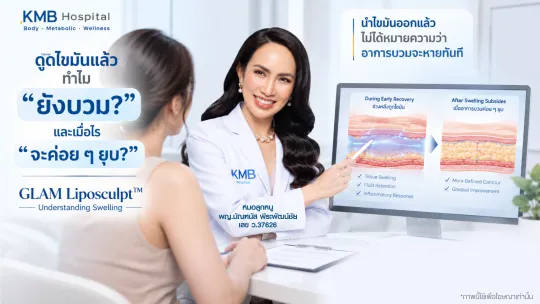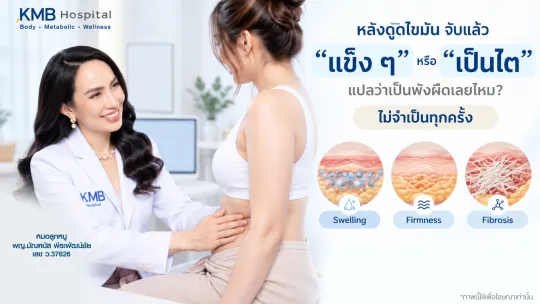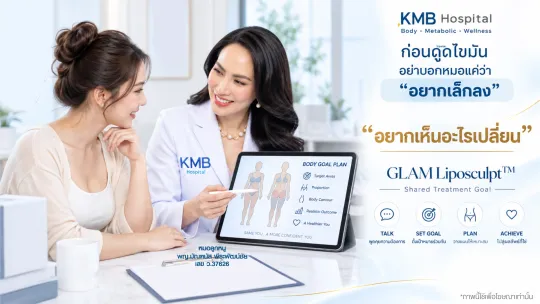
How should you take care of yourself after the GLAM Liposculpt™ procedure, and what should you avoid doing?
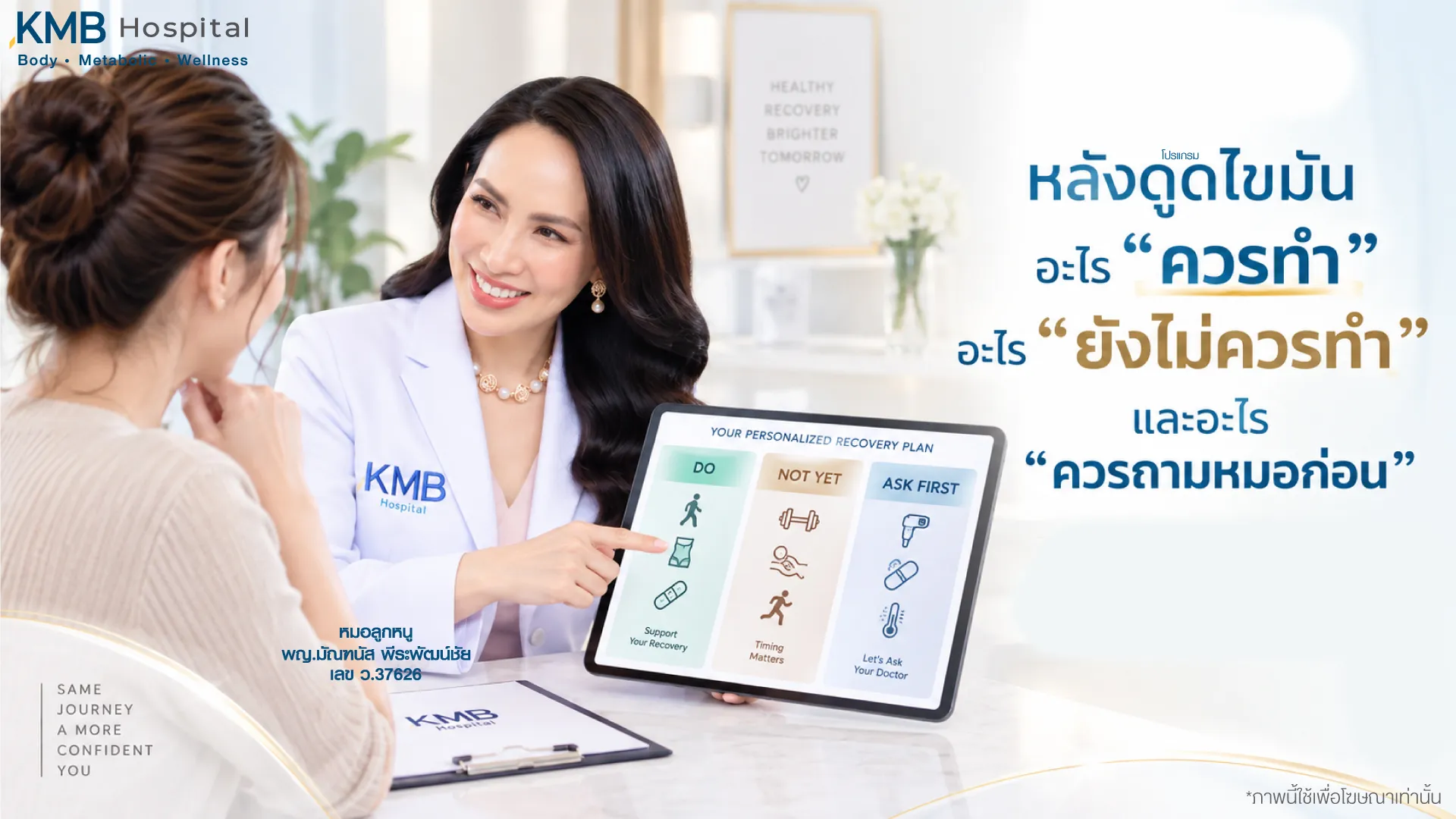
How to take care of yourself after GLAM Liposculpt™ and what you should not do yet
After the GLAM Liposculpt™ program, you should care for your wounds and the treated area according to your medical team's instructions. Gradually return to movement and activities based on your Recovery Stage, use medications or post-treatment devices as recommended, and observe your body's changes during recovery.
Category: Post-liposuction care and results
First Published: October 1, 2026 Last Updated: October 1, 2026
After the GLAM Liposculpt™ program, you should care for your wounds and the treated area according to your medical team's instructions. Gradually return to movement and activities based on your Recovery Stage, use medications or post-treatment devices as recommended, and observe your body's changes during recovery.
What you should not do yet is rush back to heavy activities, massage or press the treated area yourself, use heat, cold, tools, or recovery acceleration methods that have not been recommended. This includes applying someone else's timeline or care routine to your own recovery, as everyone's recovery after liposuction is unique.
"Good care" after liposuction does not mean doing a lot
After returning home, some patients feel, "Do I need to do anything extra to recover faster?"
Do I need a massage?
Do I need a compress?
Do I need to use any extra devices?
Should I hurry to make swelling or firmness go away?
In reality, good post-liposuction care does not mean trying to do everything to your body.
In some periods, the most important thing may simply be following instructions, moving appropriately, observing symptoms, and giving tissues time to recover.
So, before asking "What should I do more?", first ask, "What Recovery Stage is my body in right now?"
Because what is suitable for each stage is not necessarily the same.
1. Care for wounds according to the medical team's advice
After liposuction, there will be small incision sites from the treatment, which must be cared for according to the medical team's advice.
The important things are to keep them clean, observe the wound area, and follow instructions regarding changing wound dressings or getting the area wet, according to the prescribed plan.
Do not use products, topical medications, or wound care methods from other people without consulting your medical team.
Because wound characteristics, liposuction areas, and Recovery Stages can be different for everyone.
2. Move appropriately, do not stay immobile
"Recovery" does not mean you have to stay in bed until you are fully healed.
Moving as recommended by the medical team is part of the recovery process, but the activity level must be appropriate for your post-treatment phase and individual physical condition.
Walking or doing light daily routines is different from high-intensity exercise, running, lifting weights, or strenuous activity.
Therefore, do not translate "I can walk" into "I can do everything."
Increasing your activity should be gradual, following your doctor's advice.
3. Use compression garments correctly; tighter is not always better
After liposuction, some patients may be advised to use compression garments according to the treatment area and plan.
The important point is that Compression ≠ Maximum Pressure; having a tighter garment does not mean better results.
The choice of type, fit, wearing method, and duration should follow the medical team's recommendations.
If the garment is restricting you to the point of feeling abnormal, causing excessive pressure, leaving worrying marks, or causing issues, do not try to endure it thinking "the tighter, the better for shaping." You should contact the medical team to evaluate and make adjustments.
4. Use medications and care as prescribed
If your doctor prescribes medication or gives specific advice after liposuction, you should follow it for the specified duration and method.
Do not increase, decrease, stop, or take any additional medications yourself, especially if you are not sure if the medication or product will affect your recovery or conflict with your current prescriptions.
This also applies to vitamins, herbs, and supplements; you should inform the medical team if you are currently taking or planning to start anything during your recovery period.
Because "natural" does not mean it has no effect on the body or no reaction with the treatment.
5. Don't rush into massage just because of swelling or hardness
We covered this clearly in chapters 33 and 34.
Swelling ≠ Need for massage
Hardness ≠ Fibrosis in every case
If you feel that the liposuction area is swollen, hard, lumpy, or feels like there is a mass, let the medical team evaluate which Recovery Stage your tissue is in first.
If the doctor deems it necessary, they will define the appropriate method and timing for additional tissue care.
Do not massage forcefully, press, or try to "break down the lump" yourself.
6. Don't rush into using additional tools or treatments yourself
Currently, there are many tools and post-liposuction treatments offered on social media, including massages, energy devices, heat, cold, or various techniques.
The important question is not "Which tool is best?" but "Is my tissue ready for this yet?"
Because a treatment that might be suitable for one Recovery Stage is not necessarily suitable for another.
GLAM Liposculpt™ follows the same principle as chapter 34: Assess → Understand → Care
Assess first → Understand the tissue → Then choose the care.
7. Don't rush back to exercise just because you "don't feel pain anymore"
Reduced pain or soreness is just one piece of recovery data.
It does not mean all tissue has fully recovered.
Returning to exercise should be considered based on the type of activity, the extent of the liposuction, and individual recovery.
Light walking, cardio, weightlifting, and strenuous activity all have different effects on the body.
So don't just ask, "Can I exercise?", but ask, "Which type of activity is suitable for my current Recovery Stage?"
8. Don't skip follow-ups because you feel you are already good
Some people, once wounds look good, pain is reduced, and they have returned to work, may think there is no need to see the doctor again.
But follow-ups are not just for checking wounds.
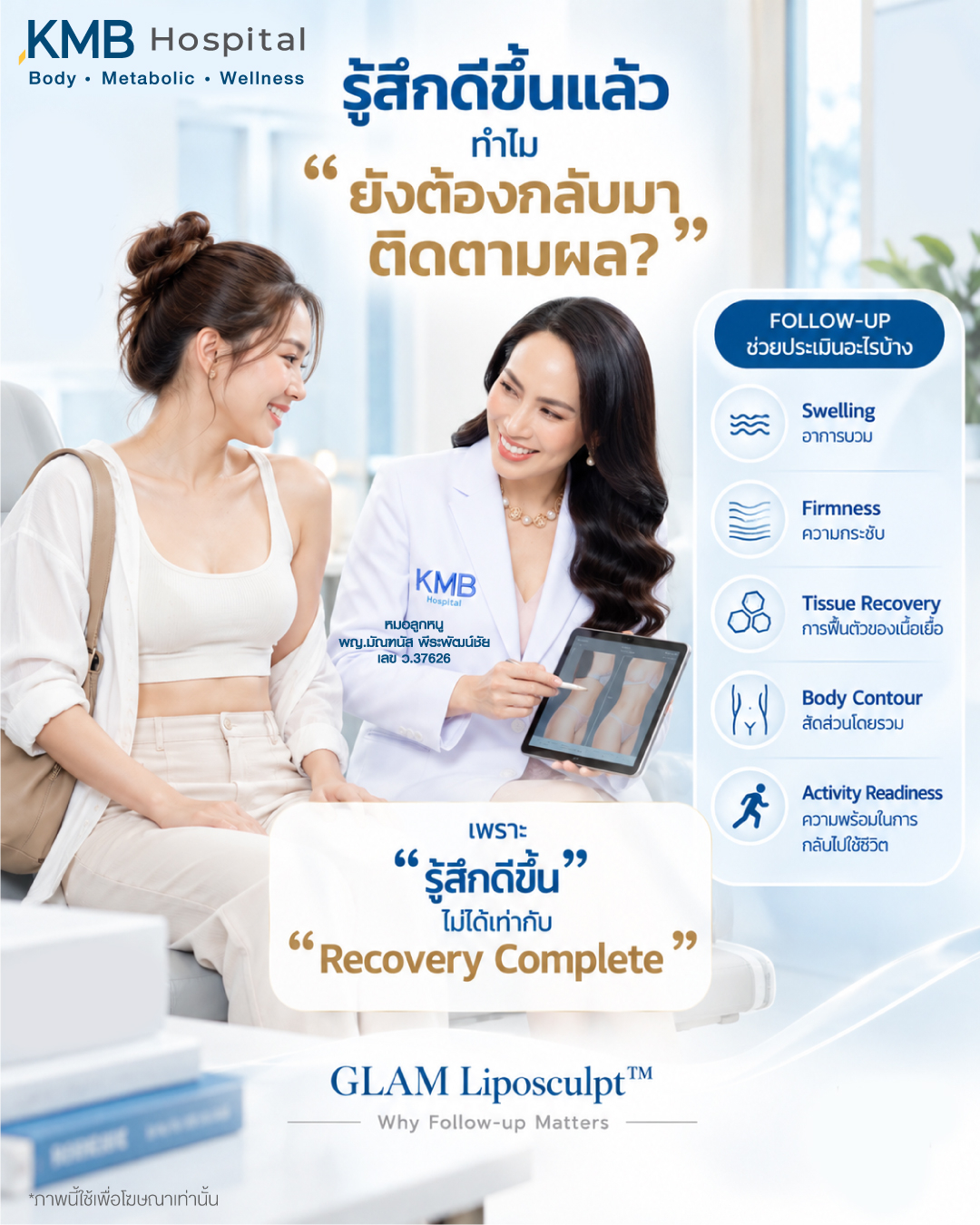
The doctor needs to assess swelling, tissue changes, firmness or lumps, body contour, and readiness for the next Recovery Stage.
Feel Better ≠ Recovery Complete
Feeling better does not mean the follow-up period is over.
And this is an important topic we will explain in detail in chapter 36.
The simplest principle of post-liposuction care
If you have to remember only one principle after coming home, I want it to be this sentence:
Do What Your Recovery Needs — Not Everything You See Online
Or simply put: "Do what your body needs at that time, not everything you see others doing."
Because everyone's recovery journey is different.
What works for a friend, what you see in reviews, or what others did and felt good about, does not mean it will be suitable for your body at that time.
Therefore, care after GLAM Liposculpt™ must move from Personalized Planning to Personalized Recovery.
This means caring for yourself based on the actual data of your body and changes in each stage.
Key points to know
Post-liposuction care should change according to the Recovery Stage; you don't have to do everything from the beginning.
Being able to return to walking or daily routines does not mean you can return to heavy activities immediately.
If your doctor recommends a compression garment, use it according to the instructions; tighter is not better.
Swelling, hardness, or lumpiness after liposuction should not be treated by massaging or pressing it yourself without evaluation.
The use of medications, supplements, massages, or additional tools should be informed or consulted with your medical team as appropriate.
Attending follow-ups remains important, even when you feel better and have returned to your daily life.
Clinical Connection™ — "A friend can do it, why can't I?"
Imagine two patients who underwent abdominal liposuction around the same time.
The first one says, "I've returned to exercising now."
The other still feels tight and not as agile as before.
What you shouldn't do is immediately conclude, "Why am I recovering slower?"
Because even if the name of the liposuction area is the same, the scope of treatment, health, tissue characteristics, lifestyle, and bodily responses can differ.
Therefore, what is suitable for the first patient today is not necessarily what is suitable for the second patient on the same day.
This is why post-liposuction advice should be based on your own Recovery Stage rather than someone else's timeline.
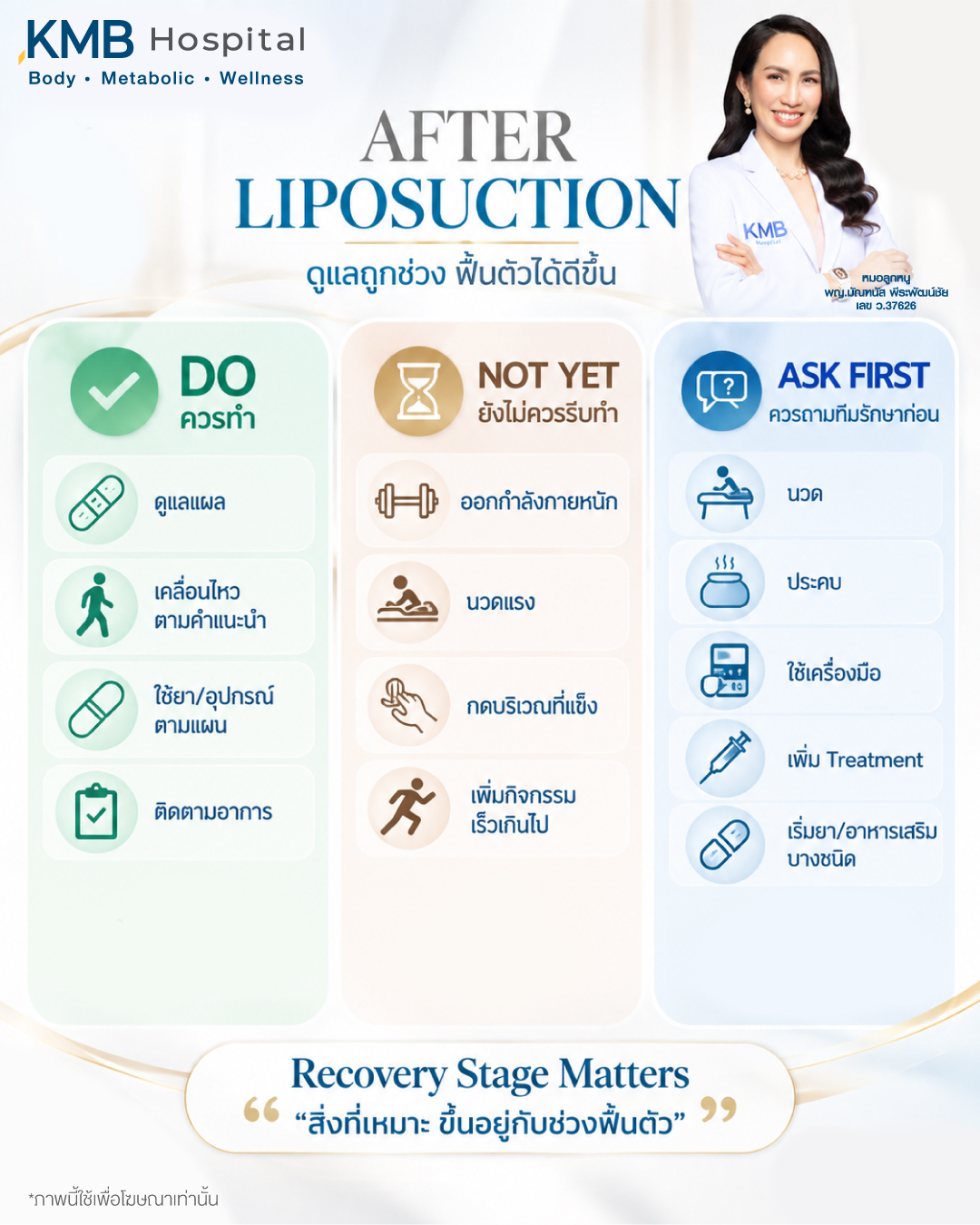
How is DO and NOT YET different from "allowed" and "forbidden"?
I want you to use this way of thinking for your post-liposuction care.
Some things are things you should do.
Some things are things you shouldn't do yet.
And some things are things you should ask your medical team about first.
The word Not Yet is very important because some activities are not forbidden throughout the entire recovery, but are not suitable for your tissue at that particular time.
For example, returning to exercise may be possible when the time is right, but that doesn't mean you should rush into it just because the pain has decreased.
Therefore, good care is not about memorizing a long list of "don'ts," but about understanding what is suitable for your body at this time.
After liposuction, what is DO / NOT YET / ASK FIRST
Note: This table provides general principles, not personalized medical advice. Patients should follow the instructions of the medical team handling their specific case.
How to think about eating and drinking after liposuction
After liposuction, your body is in a recovery phase; you should consume appropriate food and water based on your health and medical team's advice.
What you shouldn't do is change your diet drastically just because you want to lose shape faster.
Liposuction is not a reason to starve yourself or rush into weight loss immediately after treatment.
If you have underlying diseases, dietary restrictions, or are in a weight-management program, you should use the plan prescribed by your doctor and the care team to suit your individual health.
Aftercare goes beyond "wound care"
Initially, we focus on the wounds because they are easily visible.
But as the wounds begin to improve, the recovery journey continues.
After that, the doctor may need to follow up on swelling, tightness, tissue sensation, firmness or lumps, body contour changes, readiness to increase activities, and care for the next Recovery Stage.
Therefore, good aftercare is not a single checklist used from the first day to the end, but care that changes according to your body.
Frequently Asked Questions
How should I care for myself immediately after GLAM Liposculpt™?
You should care for your wounds, use the recommended medications and devices, move according to your team's advice, and observe changes in the treated area.
Details may vary depending on the area, extent of treatment, health, and Recovery Stage; therefore, you should primarily follow personalized advice and not replace your plan with a checklist from another patient.
Do I need to wear a compression garment after GLAM Liposculpt™, and is tighter better?
The use of compression garments depends on the area and the care plan determined by the doctor. If you are advised to use them, wear them according to the type, method, and duration recommended by your medical team.
Do not tighten them yourself thinking that tighter helps with shaping, as inappropriate pressure can cause problems. If you feel anything unusual, contact the medical team for evaluation.
Can I massage the swollen or hard areas myself after GLAM Liposculpt™?
Do not start massaging or pressing yourself just because you feel swelling, hardness, or lumps, as these symptoms can result from various tissue changes.
The doctor should evaluate which Recovery Stage your tissue is in first to determine if additional care is necessary and what method should be used.
When can I return to exercise after GLAM Liposculpt™?
There is no single timeline for everyone because light walking, cardio, weightlifting, and strenuous activities have different effects on the body.
The doctor will consider the area and extent of your liposuction, your actual recovery, and the type of activity before recommending when you should increase your exercise level.
Is there anything I should not do yourself without consulting a doctor after GLAM Liposculpt™?
Do not rush to massage or press the treated area, use heat or cold, add tools or treatments, or change medications and recovery-related products without consulting your medical team.
What is suitable for one Recovery Stage may not be suitable for another, and the methods others use after liposuction do not necessarily mean they are suitable for your body.
If I feel good after GLAM Liposculpt™, do I still need follow-ups?
You should attend follow-ups according to the plan set by your medical team because feeling better or returning to daily life does not mean your tissue recovery and body contouring process have ended.
Follow-ups allow the doctor to evaluate swelling, hardness, tissue changes, shape, and readiness for the next Recovery Stage.
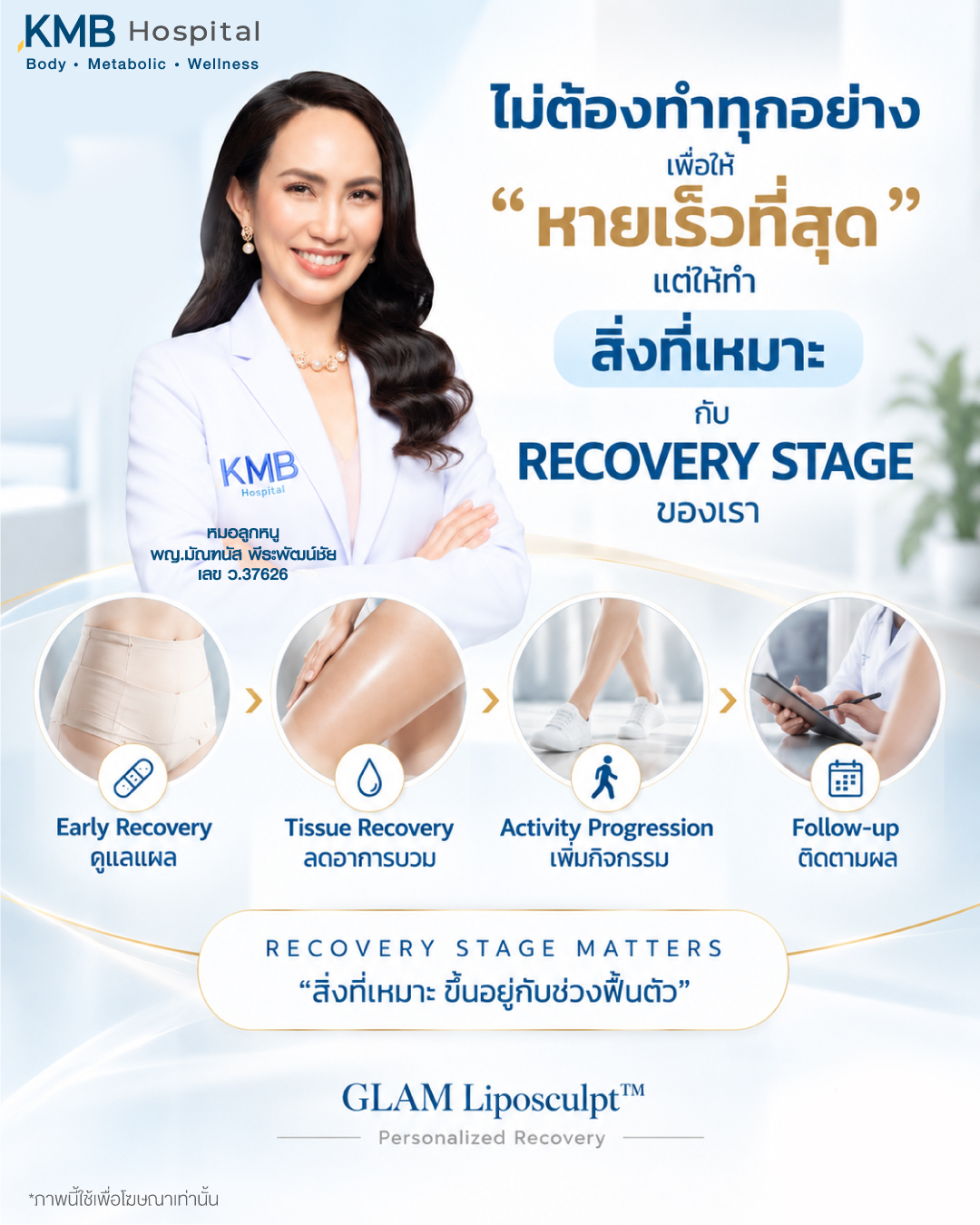
Article Summary
After GLAM Liposculpt™, good self-care does not mean "doing as much as possible to recover as fast as possible."
Instead, it means "doing what is suitable for your own Recovery Stage."
Some things should be done from the beginning, some should not be rushed, and some things should be discussed with the medical team first.
Wound care, movement, following compression garment plans, medication usage, returning to exercise, as well as massages or additional treatments should not be combined into one protocol for everyone.
The important principle is DO → NOT YET → ASK FIRST and Personalized Recovery.
Because after liposuction, everyone's body recovers differently.
Therefore, care should change according to the actual state of your body, not according to a timeline or methods seen from others.
Read more from DoctorLooknuu.com
About this article
This article explains the principles of self-care after GLAM Liposculpt™ liposuction, from wound care, movement, following compression garment plans, medication usage, and returning to activities, to things that should not be rushed during the recovery period.
Actual care guidelines may vary depending on the area and extent of liposuction, the health of the patient, and their specific Recovery Stage; therefore, you should primarily follow the advice of the doctor and the medical team handling your specific case.
The information in this article is for educational purposes and cannot replace an examination, diagnosis, or personalized advice from a doctor.
Article Review Information
First Published: October 1, 2026 Last Updated: October 5, 2026
Medical References
The original copy did not provide additional medical references, so no references not present in the original have been added.
Information for understanding and personalized care
The information in this article is for educational purposes and cannot replace an examination, diagnosis, or personalized advice from a doctor. Actual care guidelines may vary depending on the area and extent of liposuction, the health of the patient, and their specific Recovery Stage; therefore, you should primarily follow the advice of the doctor and the medical team handling your specific case.
Not sure what to do now or what not to do?
Post-liposuction care should be based on your Recovery Stage and individual assessment. If you are unsure about wounds, compression garments, massages, increasing activities, medications, supplements, or additional treatments, you should consult the medical team handling your case.