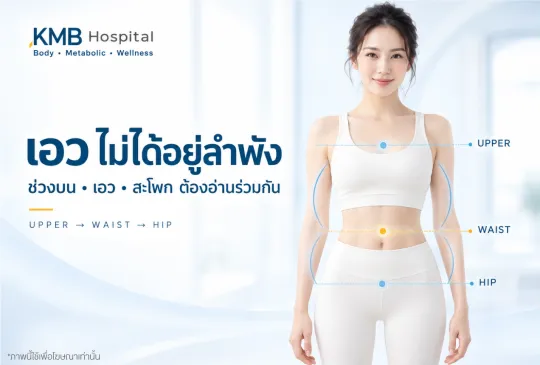
What is Body Proportion and how does it affect liposuction program planning?
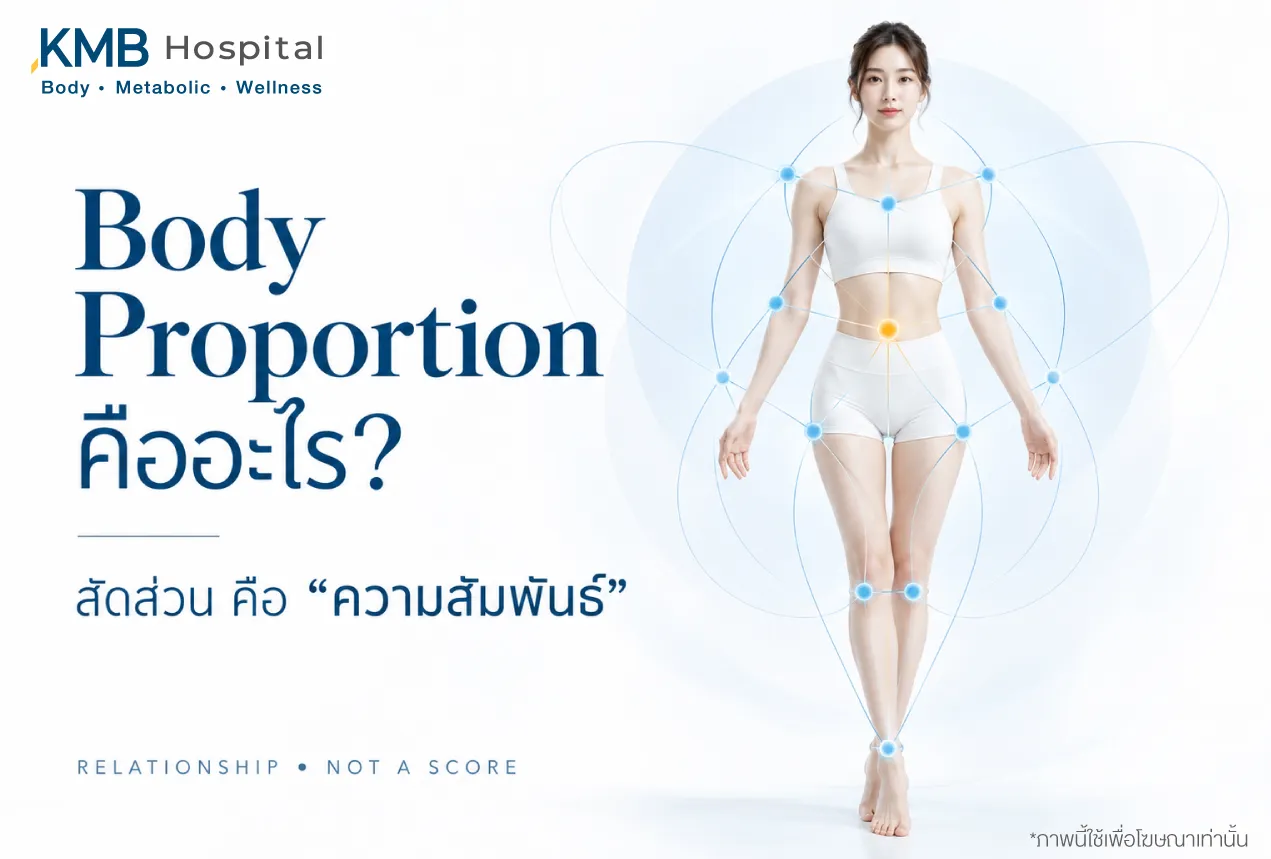
Body Design & Body Proportion
What is Body Proportion and how does it influence liposuction planning?
First published: 03/11/2026 Last updated: 05/11/2026 Estimated reading time: 9–11 minutes Category: Body Design & Body Proportion Author: KMB Hospital Medical Content Team Medically reviewed by: Dr. Manthanas Peerapatchai (Dr. Looknu), License No. 37626
In the context of Body Design, Body Proportion refers to “the relationship between parts of the body,” not the size of any one specific area, and it is not a formula where good proportions require the same set of numbers for everyone.
Before planning a liposuction program, a physician must examine how each area relates to the original structure—such as how the upper body relates to the midsection, or how the waist relates to the hips—or how the volume of one area affects the perception of others. This is because when localized fat volume changes, the relationship of the overall figure can appear transformed, even if the underlying body structure remains the same.
What is Body Proportion?
The same waist size does not mean the same proportions
Imagine two women with the exact same waist circumference. If we look only at the numbers, we might feel they have similar “waist proportions.” However, when looking at the whole body, we might find that the first person has broader shoulders, wider hips, and a longer torso, while the other has narrower shoulders, narrower hips, and a shorter torso. As soon as the waist is positioned between other body parts, the same waist size can convey a different proportion. This is the starting point of Body Proportion.
Because proportion doesn’t just ask, “What is the size of this area?” but asks,
“How does this area relate to the others?” What is Body Proportion? The term can be used in many contexts, including anatomy, anthropology, art, or body design.
For Series 4 at KMB Hospital, we use this term as a framework to describe the relationship of size, volume, position, and structure of various parts when viewed together as one person's body.
Therefore, Body Proportion is not a “body part,” but a relationship. For example:
Upper Body ↔ Waist
Waist ↔ Hips
Torso ↔ Legs
Shoulders ↔ Upper Arms
Thighs ↔ Knees ↔ Calves
Each relationship helps us understand the role one area plays in the overall picture.
KMB views Body Proportion as a “relationship,” not a “score”
This is a principle established from the beginning. In the KMB Hospital Body Design framework, we do not use Body Proportion to say who has a better figure or to define that a waist must be a certain size, or hips a certain width, to be considered well-proportioned. Instead, it is used to understand the baseline of an individual and how their parts relate on that baseline. The question is not, “Does this meet the standard proportions?” but rather, “What are the relationships between the parts on this specific body?”
Body Size and Body Proportion are different matters
| Concept | Core Question | Example |
|---|---|---|
| Body Size | What is the size of this part? | Waist, hips, upper arm circumference, torso width |
| Body Proportion | That size compared to what? | Upper body ↔ waist, waist ↔ hips, torso ↔ legs |
Body Size and Body Proportion are different matters
This is one of the most important concepts. Body Size refers to “dimensions” like waist circumference, hip circumference, upper arm circumference, or width of the torso. Body Proportion refers to “that dimension compared to something else.” Therefore:
SIZE ≠ PROPORTION
The numbers of one area alone cannot describe the overall body relationships. For example, suppose Person A and Person B have similar waist circumferences, but Person A has broad shoulders and wide hips, while Person B has narrow shoulders and narrow hips; the same waist size will be perceived differently by the eye.
Because what changes is the waist reference. This is why body design should not start simply by setting a target of “how many inches I want my waist to be.”
Should there be a fixed Body Proportion formula?
Is there an “ideal proportion”?
We do not define one. Body Proportion should not be reduced to a single beauty formula that everyone must try to match, because each body starts with different heights, torso lengths, shoulder widths, rib cage structures, pelvis structures, arm and leg lengths, fat distribution, muscle mass, and skin quality.
The American Society of Plastic Surgeons states that liposuction is a highly individualized procedure and should not be performed to match another person’s “ideal image,” but rather should start from the body contouring goals of the individual themselves.
Therefore, “Balanced Proportion” does not mean “Perfect Proportion.”
“Balance” does not mean “Equality”
Another understanding that must be distinguished is that Balance does not mean all parts must have the same size, nor does it mean the top must always be as wide as the bottom. In the context of Body Design, Balance is used to consider the relationship of each part as they coexist. Some people have broader shoulders than their pelvis according to their original anatomy.
Some have a broader pelvis than shoulders, some have a short waist, some have a long waist. These things do not need to be “equalized,” but they must be understood before design.
What determines Body Proportion?
What determines an individual's Body Proportion?
Body Proportion is not created by fat alone; it arises from several combined components:
1. Body Structure
Structure creates the basic framework for proportion, such as shoulder width, rib cage structure, pelvis, torso length, and leg length. These components are not changed by a liposuction program, so before design, one must know the framework being worked upon.
2. Location of Volume
Even if the structure is the same, the position where fat accumulates can change the visually perceived Body Proportion. For example, increased volume around the waist might make the difference between the waist ↔ hips seem smaller, or increased fat around the upper arms might make the relationship between the shoulders ↔ upper arms ↔ torso look different. Therefore, fat affects visual proportion even without changing the bone structure.
3. Distribution of Fat
The same amount of fat but with different distribution can create different proportions. For example, fat accumulated on the front of the abdomen versus fat accumulated on the waist and flanks does not give the same torso silhouette. Therefore, the physician must look at both the Amount and the Distribution.
4. Muscle and Tissues
The mass and shape of muscles also affect the size of certain areas, such as upper arms, thighs, calves, hips, and the torso. What appears as “proportion” from the outside is not entirely due to fat.
5. Skin and Laxity
Skin affects contour and how the volume underneath is displayed externally. Skin quality is another variable that must be considered when planning to change the volume of an area.
How does liposuction affect Body Proportion?
How does a liposuction program impact Body Proportion?
The American Society of Plastic Surgeons explains that liposuction is used to reduce localized fat to help improve body contour and proportion, not as a treatment for obesity or overall weight loss.
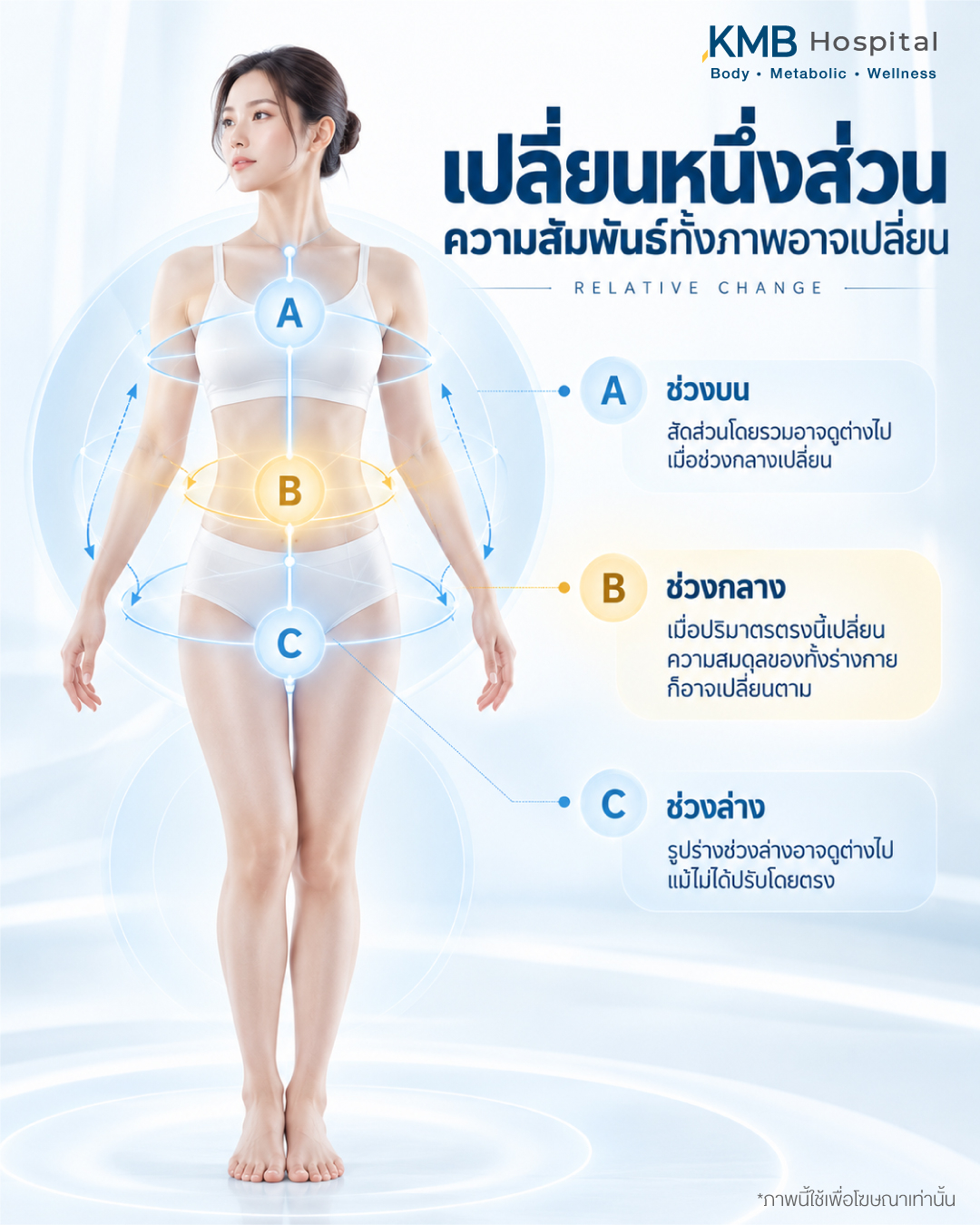
This is very important because a liposuction program does not “create a new structure” but changes localized fat volume. When the volume of an area changes, its relationship to the surrounding area can appear to change as well.
Changing “one part” may make “another part” look different without working on that area
Think about the relationship between the waist ↔ hips. Suppose we do not increase the hip volume at all, but if the volume around the waist changes, the difference between the waist and the hips becomes more apparent. The result is that the eye may perceive the hips as more prominent.
Even though the hips did not change, this is a key principle of proportion because what the eye reads is not just “size,” but differences and relationships.
Therefore, Body Proportion is a matter of “Relative Change”
If we adjust one area, we must ask: when this area changes, how will its relationship to the surroundings change? This is why planning a liposuction program should not look only at Local Reduction but must consider the Relative Relationship as well.
A retrospective study of 70 patients that examined trunk liposculpture strategies focusing on the waistline found changes in indicators such as waist concavity, hip convexity, and waist-to-hip ratio after treatment. However, this was a study in a specific group and does not mean there is one ratio that should be used as a target for everyone.
How useful are numbers and ratios?
Numbers “help measure” but should not “dictate the design”
Numbers are useful, such as circumference, width, ratio distances, multi-angle photos, and changes upon follow-up, because they allow us to compare data more systematically. But numbers do not know what kind of rib cage this person has, how long their torso is, how wide their pelvis is, what their skin is like, or what the person wants. Therefore, for Body Design, measurement is data, not the final answer.
Ratios are the same
Various ratios can help describe the relationship between two areas, but a ratio should not be immediately interpreted as: reaching this number = good, not reaching this number = not good. Because the same ratio can exist on bodies that have vastly different heights, torso lengths, structures, and volume distributions.
Therefore, we use ratios to Describe, and sometimes to Compare, but they should not be used to Define everyone with a single standard.
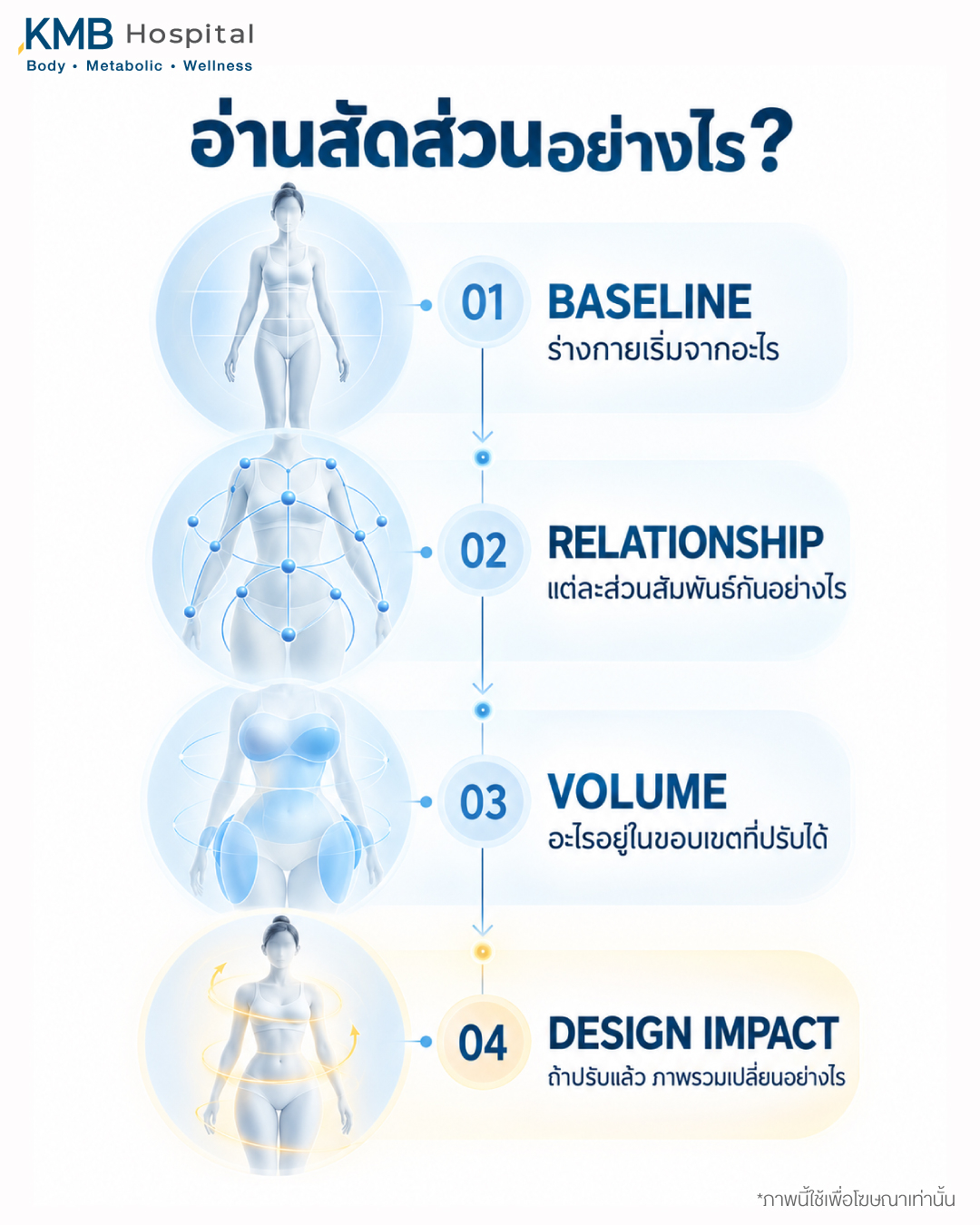
In the KMB Body Design framework, we read proportion in 4 steps
1. BASELINE
What does the body start with?
2. RELATIONSHIP
How do the parts relate to each other?
3. MODIFIABLE VOLUME
Which volume areas are within the range that can be adjusted?
4. DESIGN IMPACT
If volume changes, how will the relationship of the whole change?
BASELINE → RELATIONSHIP → MODIFIABLE VOLUME → DESIGN IMPACT
This framework is not intended to calculate a score of whether a figure is good or bad, but to help the physician think sequentially about what is being changed, on what kind of anatomy, and how that change will relate to other parts.
Simple example: “I want a more defined waist”
The phrase “I want a more defined waist” is not yet a treatment plan because one must read further: BASELINE, what is the torso like? RELATIONSHIP, how does the waist relate to the upper and lower body? VOLUME, where is the volume affecting the waist? DESIGN IMPACT, if the volume of one part changes, how will the seen relationship change? Therefore, two people who say the same sentence might not necessarily receive the same plan.
Body Proportion is not about “making everything small”
This is another important understanding. If the goal is just to make every part smaller, we might not maintain the body's relationships because, in some areas, volume plays a role in the transition or balance of the whole. Therefore, in Body Design, the question is not just “Which area can be reduced?” but also “Which area does not need to be reduced?” and “Which volume should be considered in relation to other parts?”
The word “fit” is individual
What is “fit” for one person may not be fit for another because their baselines are different. This is why KMB does not use the One Body → One Formula concept, but uses
Individual Baseline → Individual Relationship → Individual Design
This does not mean everyone must have completely different techniques or Treatment Areas, but it means the rationale for the plan must return to the data of that individual person.
How does FAT Mapping™ connect to Body Proportion?
How does FAT Mapping™ connect to Body Proportion?
In the KMB Hospital system, we place FAT Mapping™ as the Assessment Foundation because before reading proportion, we must have data on what the body's characteristics are. The data used for evaluation can include: body shape from multiple angles, location of fat,
fat distribution patterns, proportions, and related measurement data.
Tissue layer data according to the scope of the instrument, skin quality, and medical examination. But this data is not automatically a “Design” yet.
The physician still must interpret how that data relates to this specific person's body. Therefore:
FAT Mapping™ = See data
Body Proportion = Read relationship
Body Design = Apply relationships to create a plan
What is the difference between Body Proportion and Body Contour?
What is the difference between Body Proportion and Body Contour?
These two things are very related, but they are not the same thing. Based on the framework we have been using, Body Proportion focuses on the relationship between different parts. Body Contour focuses on lines, curves, and the transition of the body surface. A simple example: Proportion might ask, “How does the waist relate to the hips?” While Contour asks, “How does the line from the waist down to the hips connect?” This emphasizes Relationship, whereas Domain C will go into detail about Lines / Curves / Contour.
So what is “balanced proportion”?
The answer to this series is not a single number. We use the word “balance” to mean that parts are read in relation to the individual's baseline, and the goal of reshaping does not force the constraints of anatomy. This does not mean it must be symmetrical in every part, it does not mean it must hit a certain Ratio, and it does not mean it must look like someone else. Therefore, the word Balance is a planning concept, not a Beauty Score.
Why is this important for liposuction?
Because a liposuction program changes localized fat volume, but our eyes read the relationship of multiple areas. ASPS explains that liposuction plays a role in adjusting localized fat to change the contour and proportion of the body. Therefore, before adjusting Local Volume,
the physician should understand the Global Relationship first, so that the question does not end simply with “Can this area be liposuctioned?” but continues to “If this area is adjusted, how will the relationship of the shape be?”
What KMB wants you to remember from this chapter
If you only remember one sentence about Body Proportion, I want you to remember that proportion is not the size of any one part, but the relationship between many parts on the same person's body. Therefore, before asking how small a waist should be or how much upper arm should remain, perhaps you should ask first: “How does this part relate to others?” When we start with this question, Body Design is not limited to “Where can I reduce?” but shifts to “If I change this, how will the whole relate?” and this is the starting point.
Frequently Asked Questions
Does Body Proportion mean I have to follow a formula?
Not necessarily. In this series, Body Proportion refers to the relationship between body parts on an individual's baseline. It is not used to define a single beauty formula for everyone.
Does the same waist size mean the same proportions?
Not necessarily, because one must also consider the relationship with the upper body, hips, height, torso length, and other structural factors.
Can a liposuction program change Body Proportion?
Changing localized fat volume can make the perceived shape relationships change, but liposuction does not change the bones, torso length, or the entire base anatomy.
Can ratios like waist-to-hip be used for planning?
They can be used as supplementary data and help compare relationships, but a single number should not be used as a goal for everyone because every person's anatomy and baseline are different.
Why must a doctor look at the upper body and hips if the patient is only concerned about the waist?
Because the perception of the waist comes from its relationship with the surrounding area. Evaluation must see the whole picture first to understand the role of the waist volume in the overall proportion.
Especially for important torso areas such as
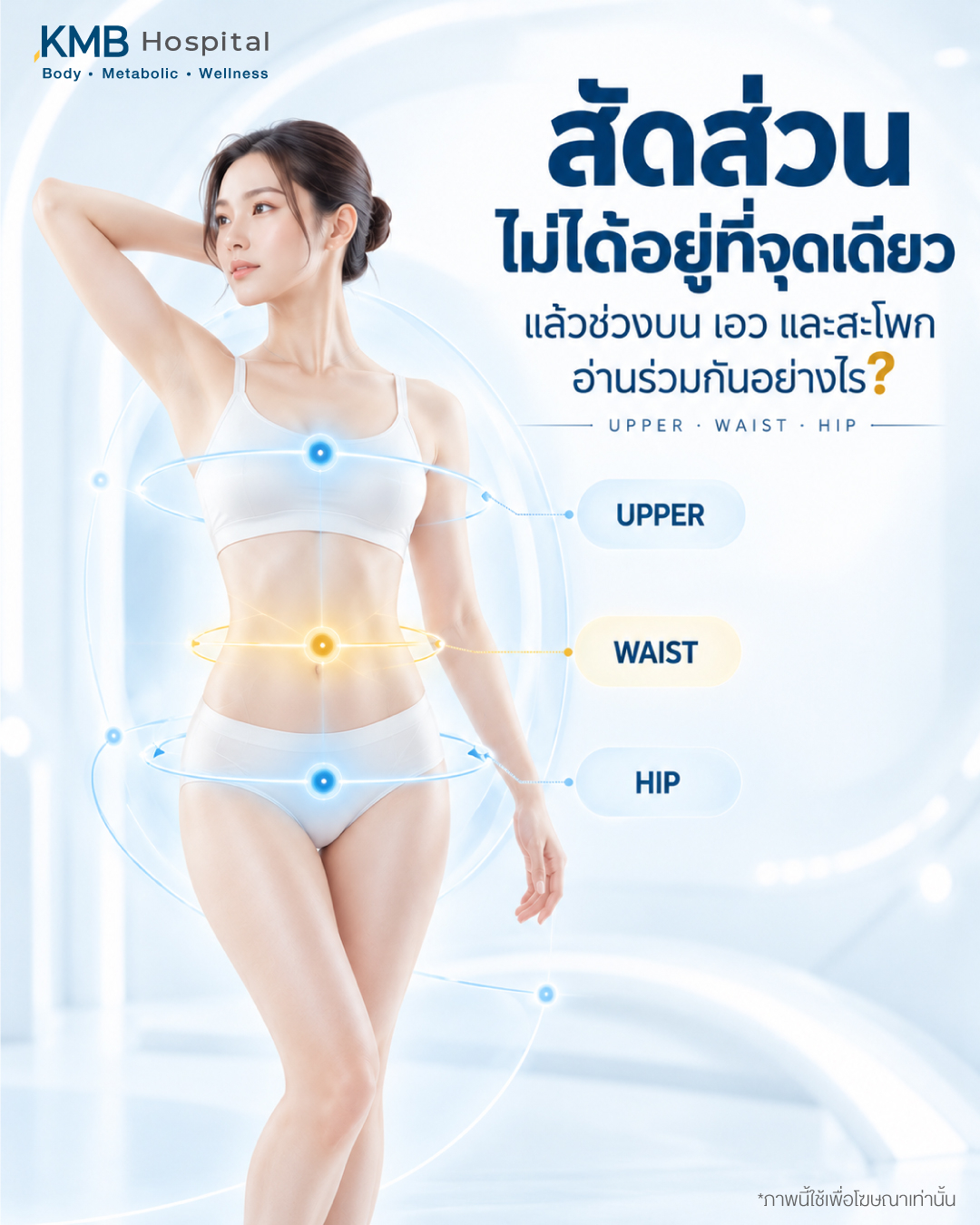
Upper Body → Waist → Hips
How are these three parts read together, and why is looking only at waist circumference not enough? Read more:
How upper body, waist, and hip proportions relate in design before a liposuction program
Medical sources referenced in the original article
| Source | Role in the original article |
|---|---|
| American Society of Plastic Surgeons (ASPS) | Used to explain the individual nature of liposuction, adjusting localized fat for contour/proportion, and not setting targets based on others' ideal images. |
| Retrospective study in 70 patients regarding trunk liposculpture and waistline | Used to explain waist concavity, hip convexity, and waist-to-hip ratio, emphasizing that there is no single standard ratio for everyone. |
Medical Disclaimer
Medical Disclaimer
This article is prepared for educational purposes regarding the Body Proportion concept for assessment and design before liposuction. Ratio, body size, photos, or a single value cannot be used to determine the appropriateness of treatment or predict specific individual outcomes.
The Baseline → Relationship → Modifiable Volume → Design Impact framework is used to explain the KMB Hospital Body Design concept and is not a diagnostic system or a medical standard for proportion defining which shape is best.
Liposuction planning must consider health, anatomy, fat distribution, skin quality, muscles, structure, goals, and individual factors from a physician's assessment.
Before planning, you must read the body's relationships first
Body Proportion is not a score or a single formula for everyone, but a context that helps physicians understand how Local Volume in one area relates to the whole.