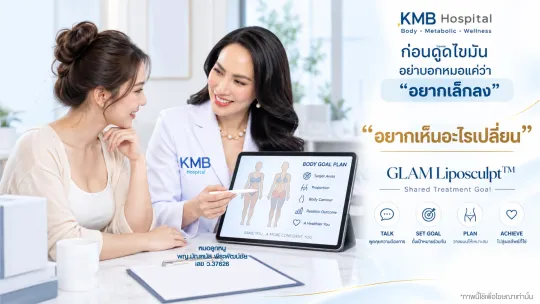
What information does the doctor use to assess readiness before the GLAM Liposculpt™ liposuction program?
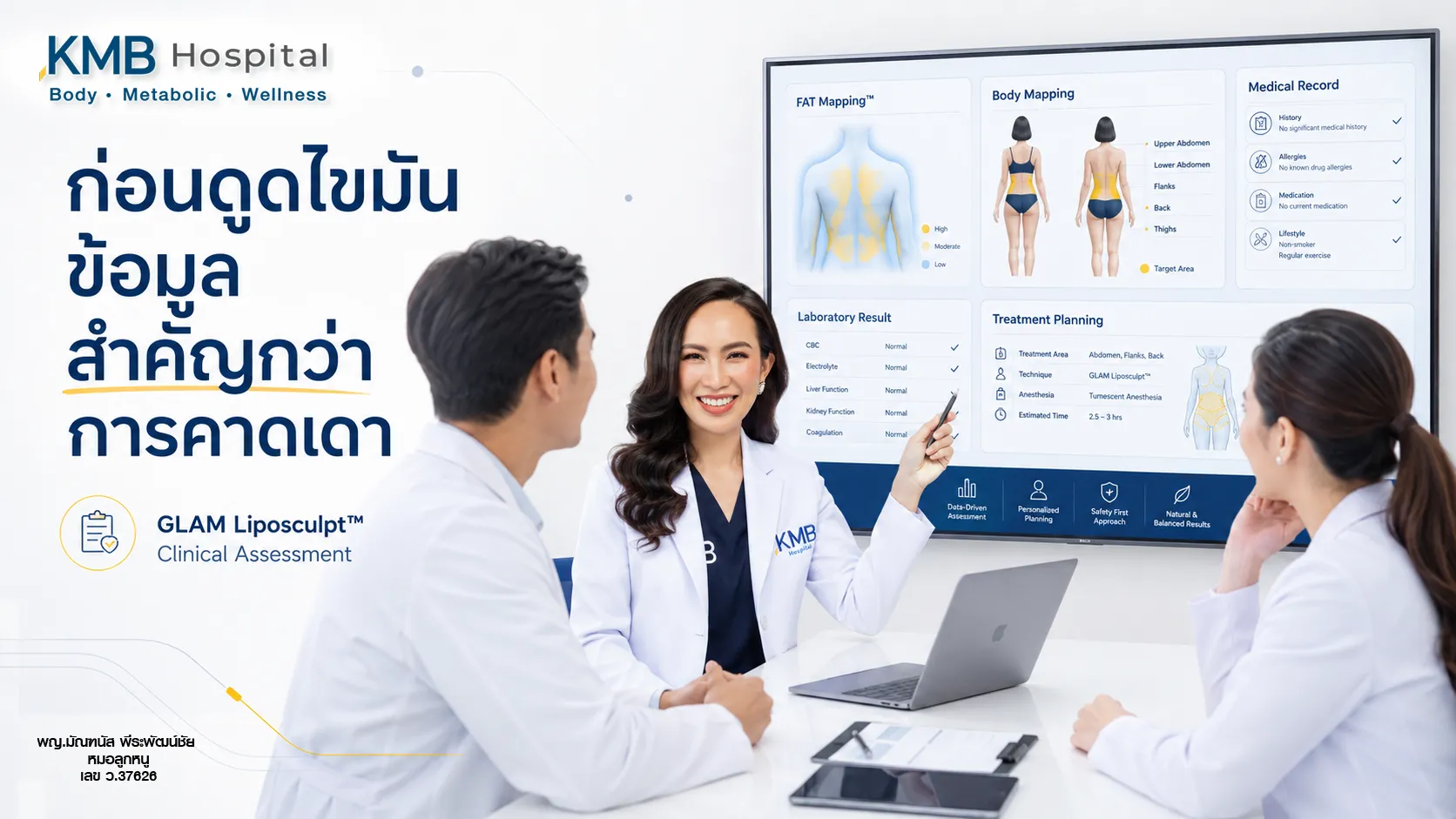
GLAM Liposculpt™ Knowledge Library
DOMAIN C — GLAM Safety & Patient Care | Article ID: GL-C-K02
Category: GLAM Safety & Patient Care | Liposuction Program Principles | Medical Knowledge
What information does a doctor use to assess readiness before a GLAM Liposculpt™ program?
First Published: September 4, 2026 | Last Updated: September 14, 2026
Reading Time: 8 minutes Author: Medical Content Team, KMB Hospital
Medically Reviewed by: Dr. Mantanas Peerapatchai (Dr. Looknuu), License No. 37626
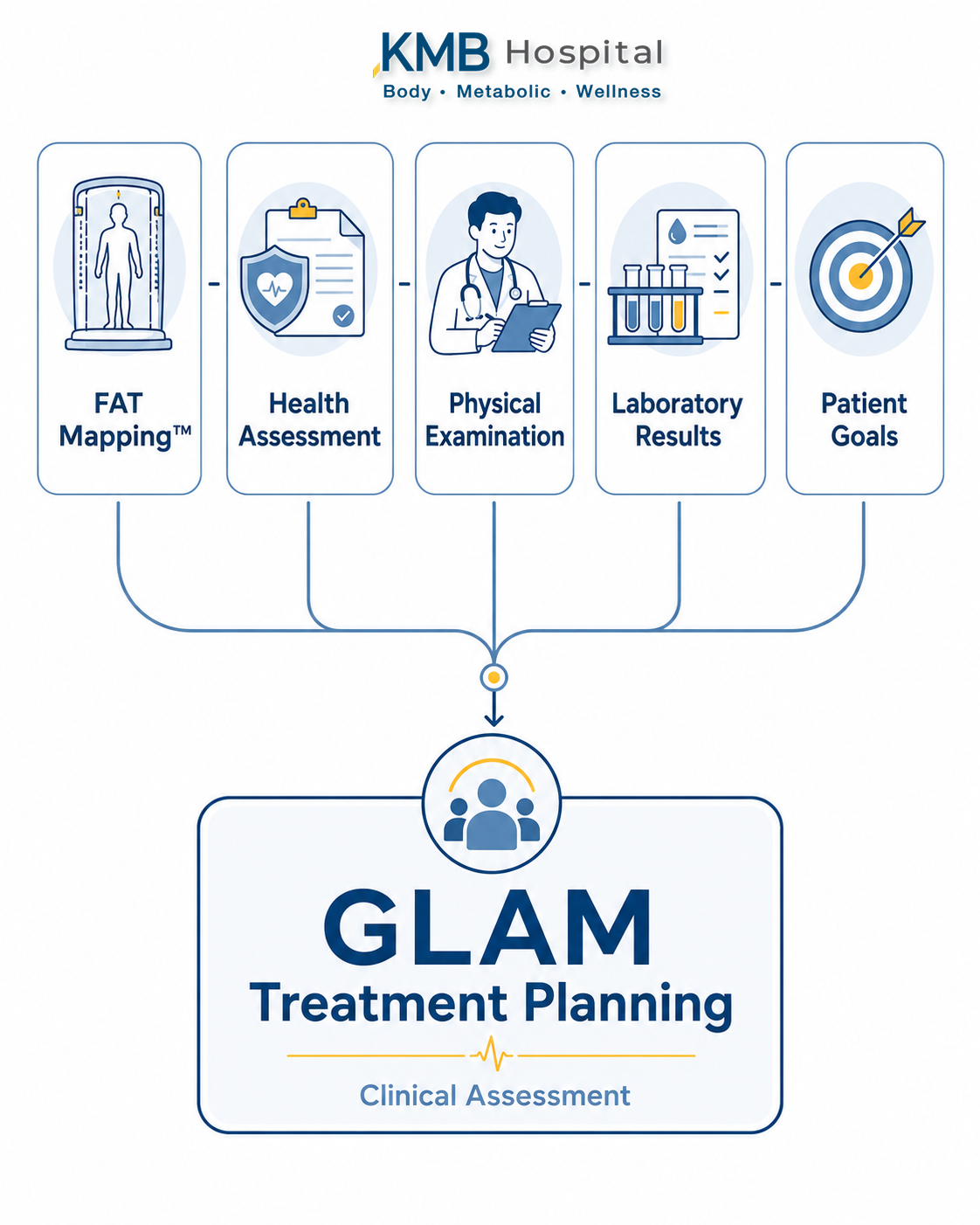
Before a GLAM Liposculpt™ program, doctors evaluate multiple sources of information—including FAT Mapping™ results, physical examinations, health history, laboratory results, and patient goals—to formulate a treatment plan.
At GLAM, we believe that readiness assessment should not rely on a single data point but rather on a holistic analysis to ensure the liposuction program begins with the most comprehensive understanding possible.
A Good Assessment Starts with a Holistic View
A liposuction program does not begin with selecting the areas to treat, but by understanding the patient's body as a whole.
Before planning a liposuction program, doctors gather information from various sources because each component helps answer specific clinical questions.
Helps understand body composition and fat distribution.
Helps doctors evaluate physical condition and health before treatment.
Helps align expectations with the direction of the plan.
When all data is considered together, the liposuction program planning becomes much clearer.
FAT Mapping™ is a Vital Piece of the Assessment
FAT Mapping™ is a tool that allows doctors to understand fat distribution, the structure of each fat layer, and the proportional relationships of specific areas.
However, within GLAM Liposculpt™, FAT Mapping™ does not work in isolation.
Data from FAT Mapping™ is analyzed alongside physical examinations, health history, and other information so the doctor can visualize the patient's holistic profile before starting the program.
Each Data Set Has a Specific Purpose
In the GLAM system, no single piece of data is most important; each part is integrated to design the treatment plan.
| Assessment Data | Purpose of Data |
|---|---|
| FAT Mapping™ | Helps understand fat structure, distribution, and proportional relationships. |
| Physical Exam | Assesses tissue quality, skin condition, and the characteristics of the target area. |
| Health History | Allows the doctor to identify health factors that should be considered in planning. |
| Relevant Lab Results | Supports readiness evaluation before starting, based on individual necessity. |
| Patient Goals | Helps define the direction of body contouring and manage pre-treatment expectations. |
When all this data is interconnected, doctors can design a liposuction program tailored specifically to each patient.
At GLAM, We Believe Informed Decisions Require Complete Data
In the GLAM Liposculpt™ system, decisions are not based solely on experience but on comprehensive data analysis.
When doctors understand both the medical data and the patient's goals, the liposuction program begins on a rational foundation, allowing for a systematic and personalized treatment design.
Multiple data points are analyzed together.
Decisions are based on the whole picture, not a single point.
Plans are designed according to individual goals and data.
Thorough Assessment Leads to Clearer Planning
Once all data has been gathered, doctors analyze it collectively before defining the liposuction plan.
The GLAM approach does not treat each piece of information in isolation; we prioritize the interconnection of all data to gain a comprehensive overview of the patient.
By understanding the patient's body, health, and goals, every step of the decision-making process is well-reasoned and aligned with the intended treatment plan.
Key Takeaways
Pre-treatment assessment does not rely on just one type of data.
Helps understand fat structure before integration with other data.
Health history, relevant labs, and physical exams determine readiness.
Everything is analyzed together before the plan is designed.
The goal is to align the plan with the patient's profile.
Frequently Asked Questions
1. What information do doctors evaluate before a GLAM Liposculpt™ program?
Before a liposuction program, doctors gather information from various sources, including FAT Mapping™ results, physical examinations, health history, relevant laboratory results, and patient goals. Each piece of information has a different purpose, and analyzing them together allows doctors to tailor the plan to each individual rather than relying on a one-size-fits-all approach.
2. What is the role of FAT Mapping™ in the pre-liposuction assessment?
FAT Mapping™ helps doctors understand fat distribution, the depth of each fat layer, and proportional relationships across areas. This data is used alongside physical and health evaluations to design a plan that matches the patient's unique structure.
3. Why is the physical examination important before a GLAM Liposculpt™ program?
The physical examination helps the doctor assess skin quality, tissue elasticity, and the characteristics of the areas slated for liposuction. When combined with FAT Mapping™ and health records, the resulting plan is much more precise.
4. If pre-liposuction information is incomplete, can the doctor still plan the surgery?
In the GLAM philosophy, good planning must start with complete information. If essential data is missing, the doctor may request further tests or assessments before proceeding, ensuring all decisions are based on the necessary foundation.
5. Why does GLAM Liposculpt™ use multiple data points, and how does it benefit the patient?
Liposuction is about more than just fat; a patient's general health, skin quality, body structure, and personal goals all impact the planning. Integrating multiple data points ensures a more suitable, individualized approach.
When the doctor has a complete picture, the patient understands the goals, the approach, and the reasoning behind each step. This fosters mutual understanding and improves care continuity from the initial consultation through to follow-up.
Summary
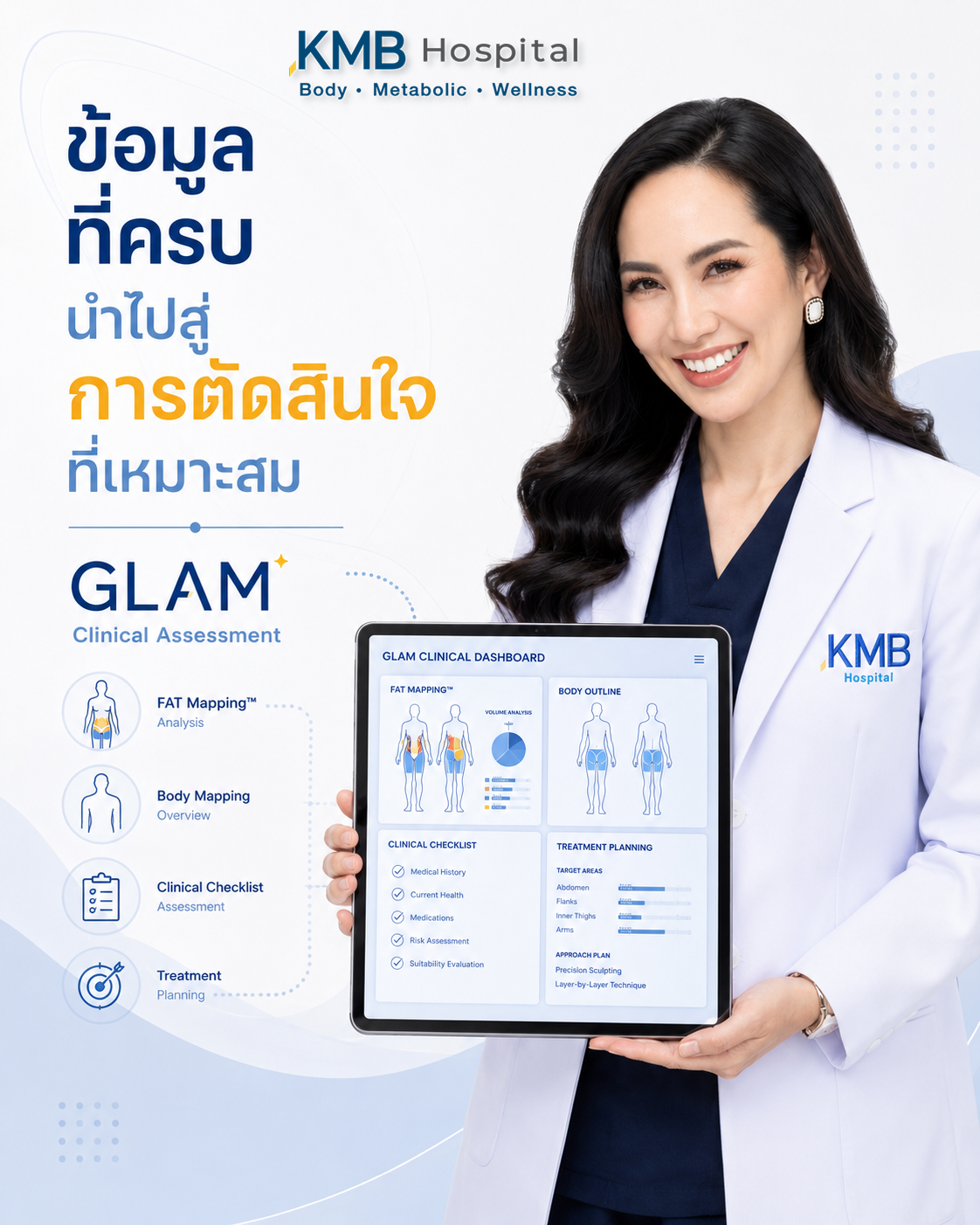
Pre-liposuction assessment for GLAM Liposculpt™ does not rely on FAT Mapping™ alone; it involves gathering comprehensive information including physical exams, health history, lab results, and patient goals.
When all data is analyzed together, doctors can design a customized liposuction plan and initiate treatment based on a full clinical understanding.

Related Articles at KMB Hospital
Read More at DoctorLooknuu.com
Medical References
- American Society of Plastic Surgeons. Liposuction Consultation. Used as a general reference for medical history, goals, health status, medications, risks, options, and pre-surgical health assessment.
- American Society of Plastic Surgeons. Consultation and Preparing for Surgery. Provides general information on potential lab tests or medical assessments appropriate before treatment.
- American Society of Anesthesiologists. Basic Standards for Preanesthesia Care. Covers general principles of medical record review, history taking, focused examination, and considering tests or consultations before anesthesia care.
Note: FAT Mapping™ and GLAM Liposculpt™ are proprietary concepts/systems defined by KMB Hospital; the references above are for general medical principles only.
About This Article
This article explains the information doctors use to assess readiness before a GLAM Liposculpt™ program by integrating FAT Mapping™, physical exams, health data, and joint analysis to ensure the treatment plan is appropriately tailored for each patient.
The information in this article is for educational purposes and cannot replace medical consultation, diagnosis, or personalized advice from a physician.
Article Author Information
Review Information
Complete Data Leads to Proper Decisions
Before starting GLAM Liposculpt™, medical assessment ensures we understand your body, health, relevant labs, and goals to create a highly personalized treatment plan.