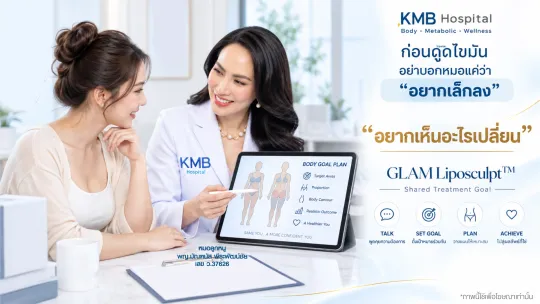
What information should be considered when setting goals before planning a liposuction program?
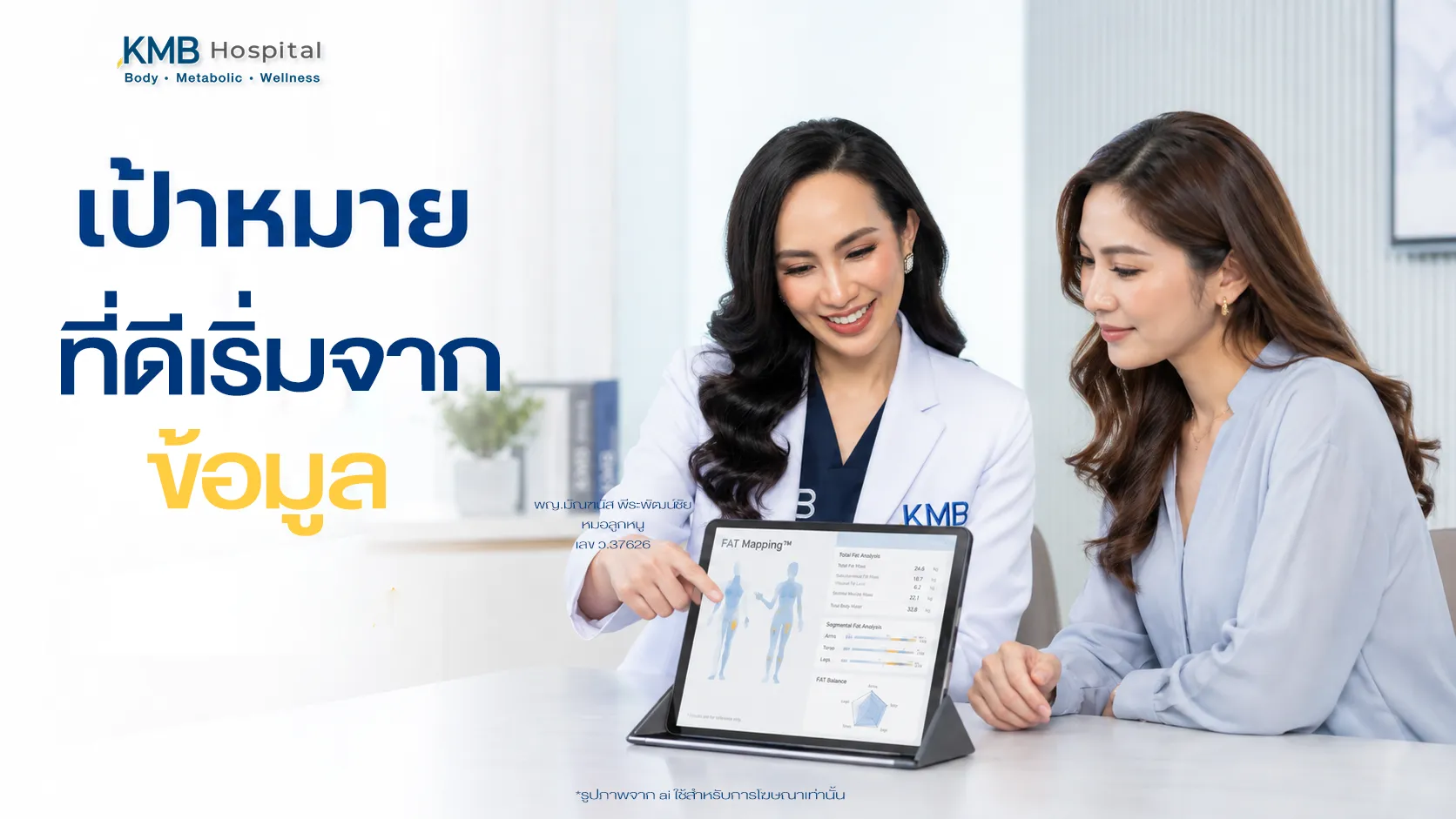
KMB KNOWLEDGE BLUEPRINT™
DOMAIN E — KMB HOSPITAL | Article 56 | Article Code: FM-E-K03
Category: FAT Mapping™ | Personalized Liposuction Program Planning | Medical Knowledge
What Information Should Be Considered When Setting Goals Before Planning a Liposuction Program?
First Published
23 August 2026
Last Updated
23 August 2026
Reading Time
Approximately 8 minutes
Author
Medical Content Team, KMB Hospital
Medically Reviewed By
Dr. Mantanas Pirapattanchai (Mom Luk Khun) License No. W.37626
Main Answer
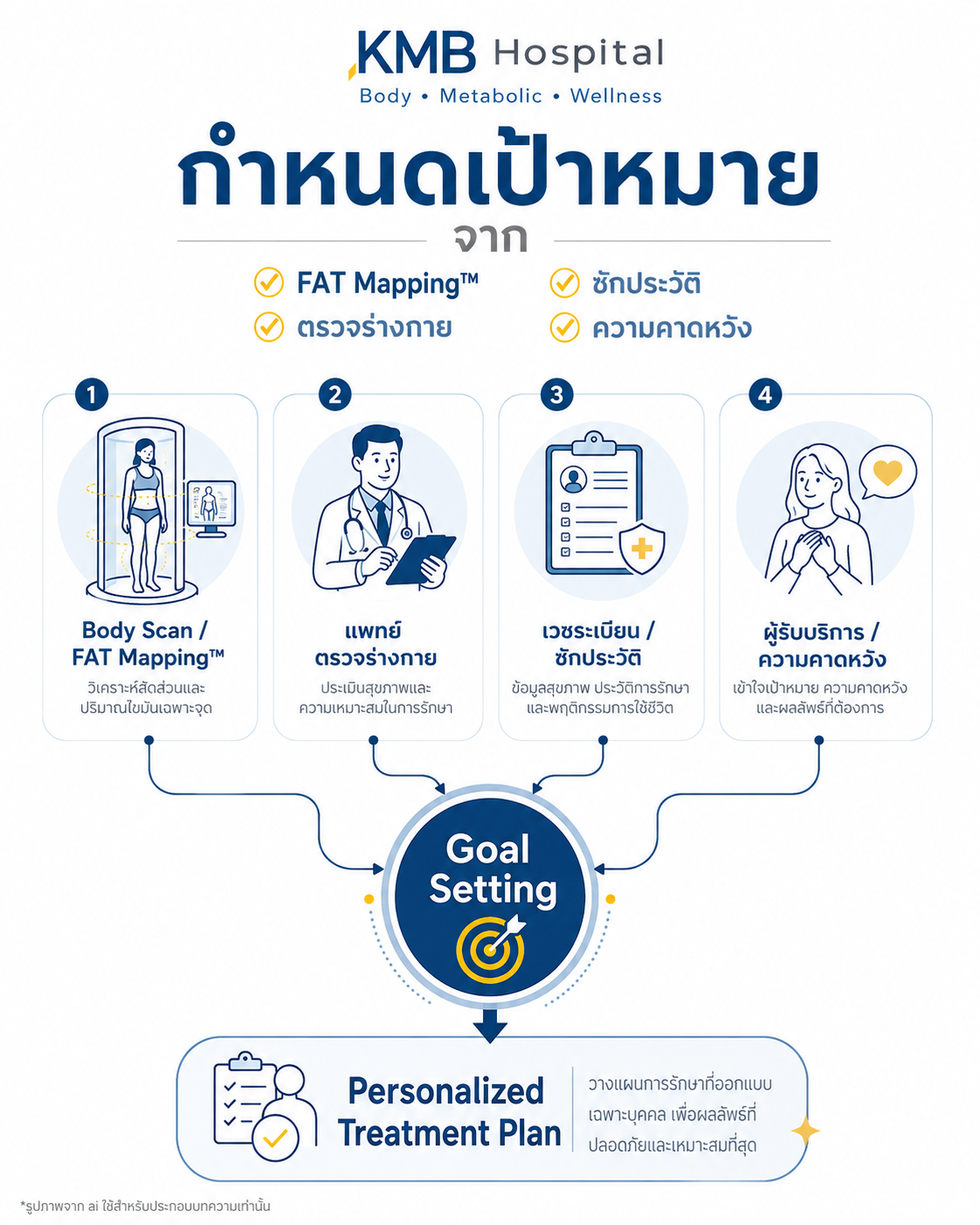
Setting goals before planning a liposuction program should not rely solely on the client's desires or information from FAT Mapping™ alone; rather, it should consider data from FAT Mapping™, patient history taking, physical examination, safety, and the feasibility of treatment outcomes together.
When treatment goals align with the patient's physical data, physicians can design more appropriate liposuction program plans for each individual.
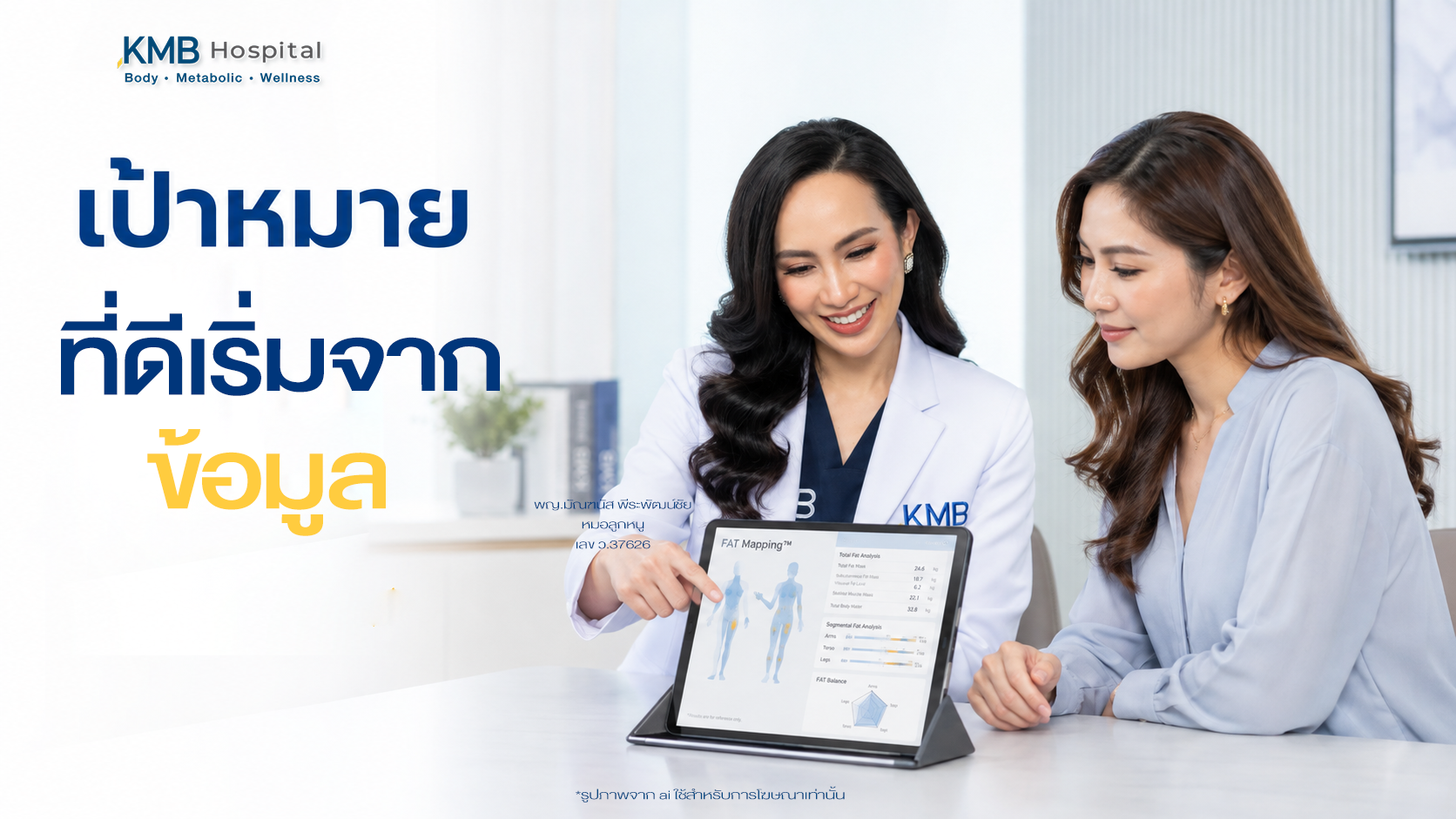
Treatment Goals Are Not the Same as Client Needs
Many clients come for consultation with clear goals, such as
Want a flat stomach
Want slimmer upper arms
Want a more defined waist
These needs are valuable information because they help doctors understand what clients expect
But in medicine, needs alone are not sufficient to determine treatment goals
Doctors must consider information from FAT Mapping™, physical examinations, and bodily limitations together so that liposuction program goals are based on realistic data
FAT Mapping™ Supports Evidence-Based Goal Setting
After conducting FAT Mapping™, doctors do not use the information merely to indicate fat amount, but to understand
Fat Distribution
Understanding how fat is distributed
Impact on Proportions
Considering which areas affect body proportions the most
Relationship Between Areas
Evaluating if multiple areas are interrelated
Information Priority for Planning
Determining which information should be prioritized before planning the liposuction program
This information supports logical treatment goal setting and allows for clear explanation to clients
Good Goals Must Be Justifiable
If a physician sets treatment goals without supporting data, the patient may not understand why that approach was chosen.
However, when goals arise from connecting data from FAT Mapping™, physical examinations, and patient expectations, every step of the liposuction program planning can be clearly explained and lead to easier mutual decision-making.
Important Points to Know
| Key Points | Considerations |
|---|---|
| Patient Needs | Goals prior to planning a liposuction program should not rely solely on patient needs. |
| FAT Mapping™ | Is one of the data sources that helps physicians set treatment goals systematically. |
| Shared Information | History taking, physical examinations, safety, and patient goals must be considered together. |
| Individual Differences | Appropriate treatment goals may differ even if patients have similar body shapes. |
| Goal Clarity | Setting clear goals helps make the liposuction program planning logical, explainable, and more focused. |
Frequently Asked Questions
What determines the treatment goal before planning the liposuction program?
The doctor determines the goal using information from multiple aspects together, including FAT Mapping™, medical history, physical examination, health readiness, and the patient's expectations.
Considering all information together helps ensure the treatment goal aligns with the actual body condition, allows for clear explanation of the liposuction program plan rationale, and makes planning more directed.
What role does FAT Mapping™ play in determining goals before the liposuction program?
FAT Mapping™ helps the doctor visualize fat distribution, proportion relationships, and composition of each body area.
This information ensures goal setting isn't based solely on intuition or external assessment, but incorporates more data for decision-making.
If the patient desires results different from the assessed data, what does the doctor do?
The doctor will explain FAT Mapping™ data and physical examination results to the patient for understanding, along with explaining both the possibilities and limitations of the treatment.
Then, they jointly determine appropriate goals that align with the body's data.
Why do patients with similar body shapes have different treatment goals?
Even though external body shapes may be similar, results from FAT Mapping™, health history, lifestyle, and patient expectations may differ.
Therefore, the doctor sets individualized goals, rather than applying a single approach to everyone.
Can treatment goals be changed?
Yes
If data from FAT Mapping™, physical examinations, or patient needs change, the doctor can adjust treatment goals to fit the latest information.
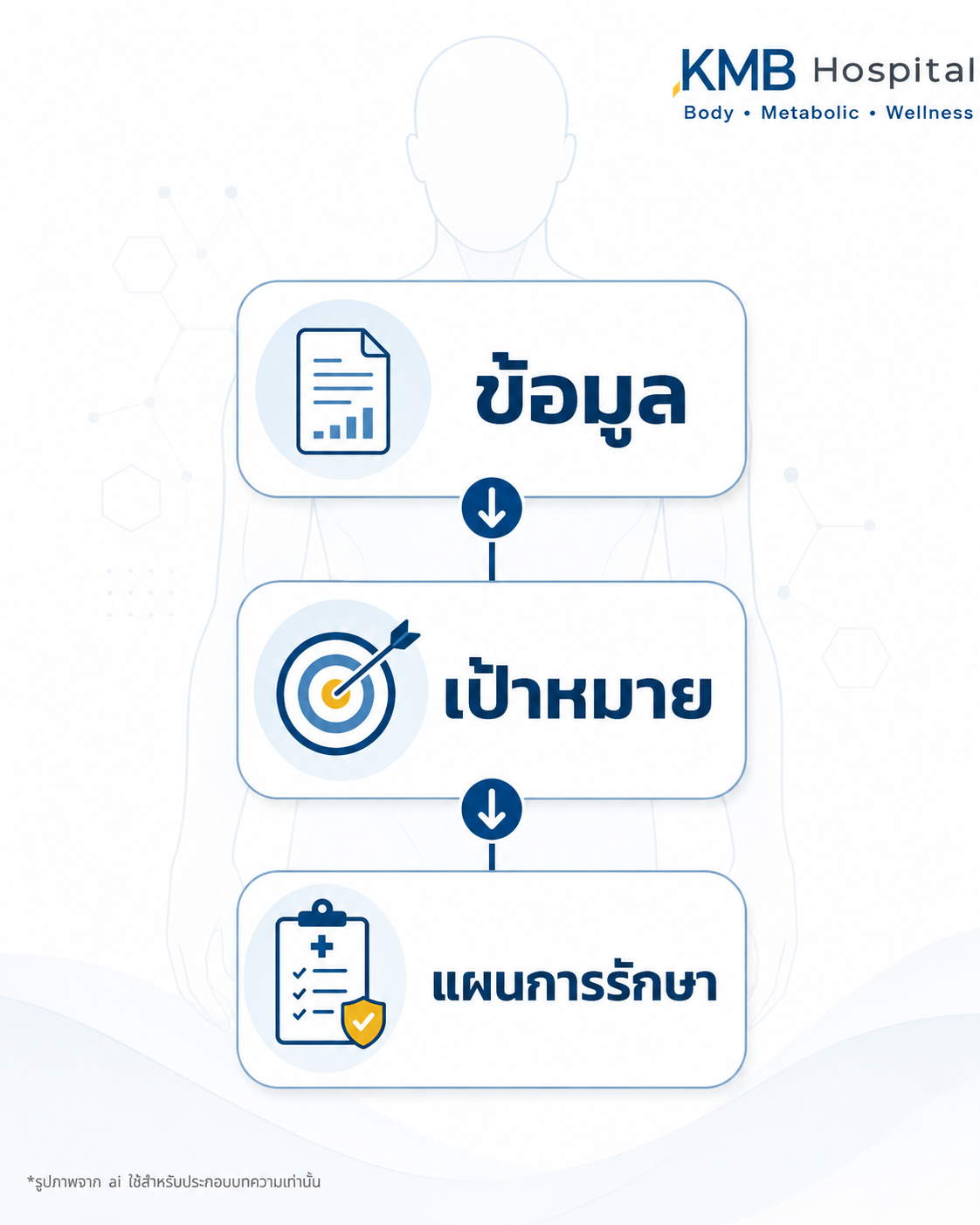
Article Summary
Setting goals before planning the liposuction program is a process where the doctor analyzes information from FAT Mapping™, medical history, physical examination, safety, and patient expectations together.
A good treatment goal does not mean making the body look like someone else's example, but choosing a suitable approach based on each patient's data and being able to clearly explain the reasoning behind the decision.

Medical Sources
The following sources are used to supplement general principles regarding pre-procedure consultation, health assessment, goals, expectations, possible outcomes, and risks, and do not replace individual assessment.
- American Society of Plastic Surgeons. Liposuction Consultation.
- American Society of Plastic Surgeons. Liposuction Risks and Safety.
About This Article
This article is created to explain the goal-setting principles before planning a liposuction program, describing the role of FAT Mapping™ in supporting decision-making along with medical history taking, physical examination, and clinical data, to ensure the treatment plan is appropriate for each client.
Medical Disclaimer
The information in this article is intended for public education purposes and cannot replace medical examination, diagnosis, or individual advice from a physician. Evaluation results and appropriate guidelines may vary per individual.
Article Author Information
Written by
Medical Content Team, KMB Hospital
Medically Reviewed By
Dr. Manatana Pirapatthanachai
Dr. Looknu
Medical License Number W.37626
Article Review Information
First Published: 23 August 2026 | Last Updated: 23 August 2026
Start with a Body Data Assessment
If you wish to understand FAT Mapping™ and the principles of planning a personalized liposuction program, you can inquire for information or request an appointment for an assessment from a doctor. Appropriate guidelines will consider each individual's health, examination data, limitations, and expectations.