Why is incision placement important in the GLAM Liposculpt™ liposuction program? | KMB Hospital
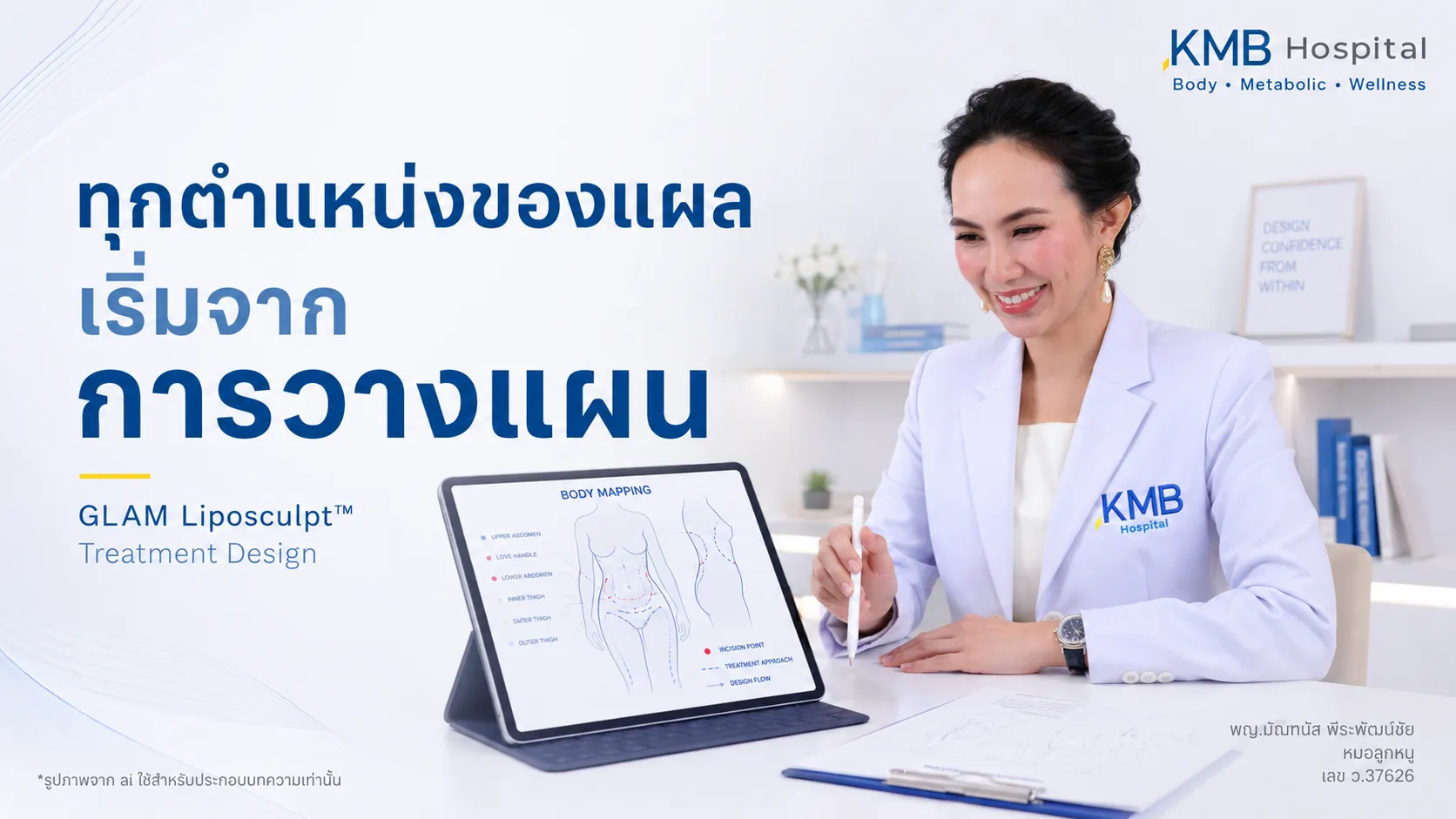
Why is Incision Placement Important in the GLAM Liposculpt™ Program?
Incision placement in the GLAM Liposculpt™ program is an integral part of treatment planning. It is determined by the target treatment areas, access strategies, body contouring design, and data from FAT Mapping™, ensuring every step aligns with the personalized care plan for each individual.
GLAM prioritizes incision planning before the treatment begins because incisions are not merely access points for equipment, but a fundamental component of the overall liposuction program design.
Incision placement starts with design, not on-site decision-making
When it comes to liposuction programs, many often focus on the size of the incision.
However, from the perspective of GLAM Liposculpt™,
the priority for the physician is the location of the incision,
as it affects the access route to each area and is part of the treatment design even before the liposuction program begins.
Every incision position has a rationale
Before starting the liposuction program, the physician analyzes multiple data points, including:
When all this data is analyzed together, the incision location becomes a result of the planning, rather than a random choice or one based solely on the surgeon's convenience.
Incision placement is connected to body contouring design
In GLAM Liposculpt™,
the incision placement is not considered separately from the liposuction program;
it is part of the outcome design.
When the physician determines the appropriate access routes for each area, the liposuction program can proceed according to the established plan, helping to ensure greater continuity in body contouring.
Therefore, incision placement is not a minor detail, but a component of the entire treatment system.
The goal of GLAM is not just hiding scars, but planning appropriately
Many may think the goal of incision placement is simply to minimize visible scarring.
However, in the GLAM philosophy, the more important goal is ensuring that the incision location aligns with the treatment plan.
When planning is meticulous, the incision position becomes part of the overall design, not just the starting point of the procedure.
Key points to know
Incision placement is part of treatment design
In the GLAM Liposculpt™ system, incision placement is never considered separate from the treatment.
The physician begins by understanding the patient's data, analyzing the structure of the fat in each area, and designing the optimal liposuction program approach first.
Then, the incision locations are determined to align with the entire treatment plan.
Viewed in its entirety, the incision position is a result of planning, not the beginning of treatment.
Frequently Asked Questions
Why is incision placement important in the GLAM Liposculpt™ program?
Because the incision position is part of the design of the treatment approach.
Before starting, the physician considers FAT Mapping™ data alongside body structure, fat distribution, and target areas to tailor the incision locations for optimal access.
This approach ensures the liposuction program proceeds according to the designed plan and connects with the overall body outcome.
How does FAT Mapping™ help in incision placement?
FAT Mapping™ allows the physician to understand the data for each area before starting the treatment.
Knowing the fat distribution, the relationships between different sites, and the characteristics of fat layers allows the physician to design the liposuction approach and systematically determine the incision locations in line with the treatment plan.
Do all patients use the same incision placement?
No, they do not.
Even for the same liposuction area, data varies between individuals.
Everything from body shape, fat distribution, and anatomy to treatment goals differs.
GLAM Liposculpt™ therefore designs incisions on an individual basis, rather than using a uniform pattern for everyone.
Is incision placement related to the liposuction outcome?
Yes, because the incision position affects access to each area.
When a physician can access the planned areas appropriately, the body contouring design can proceed as originally intended.
Thus, incision placement is part of the outcome design, not just a technical detail.
Does GLAM Liposculpt™ prioritize incision size or incision placement?
In the GLAM philosophy, both are important, but what the physician considers first is the appropriateness of the plan.
When the incision placement is designed appropriately, the incision size naturally follows the treatment approach rather than being a predetermined goal.
Why does GLAM Liposculpt™ view incision placement as part of a system?
Because every step in GLAM is interconnected.
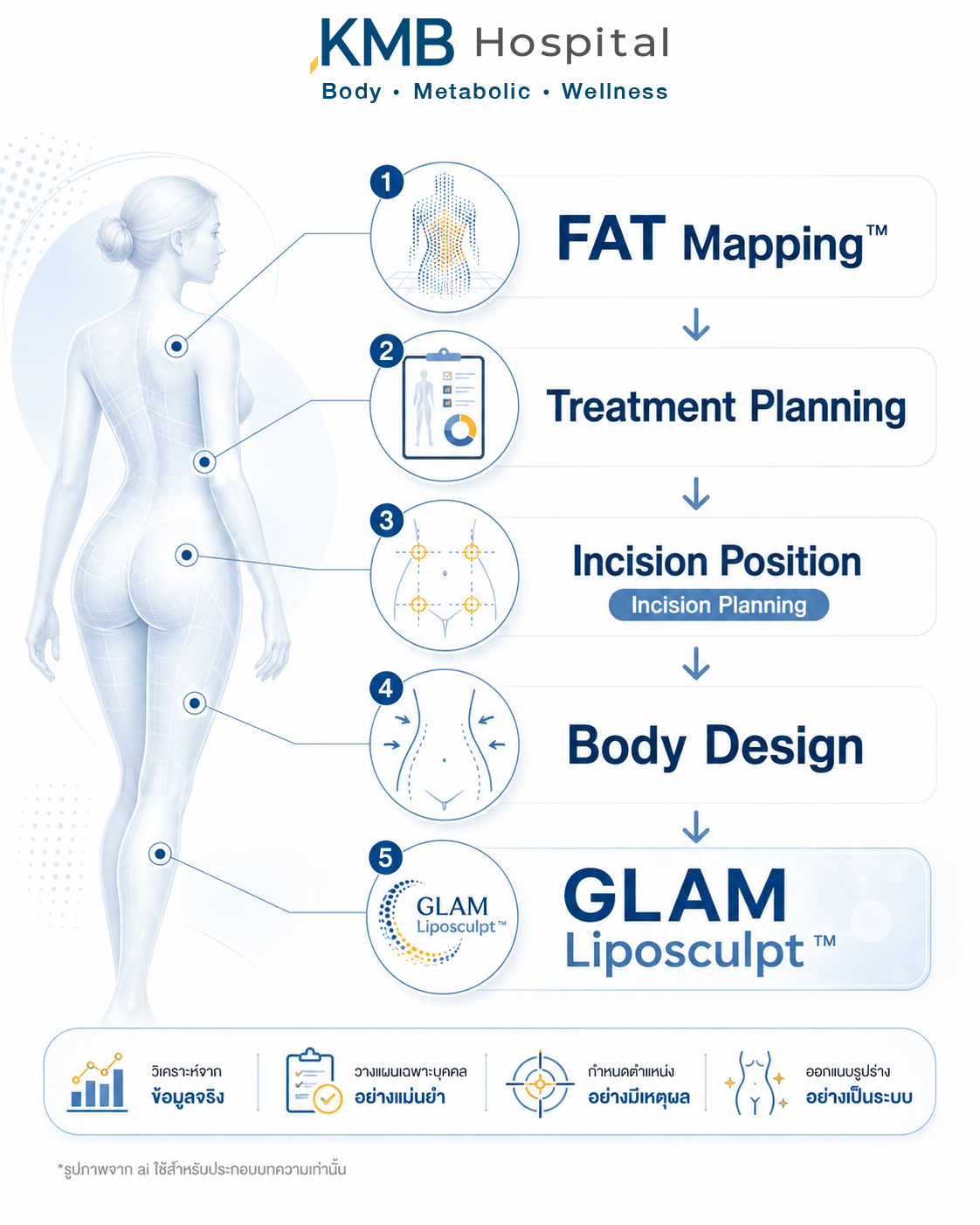
From FAT Mapping™ to analysis, planning, incision definition, the liposuction program, and follow-ups.
When all elements work together, the incision location becomes part of the patient care system, not a detail separated from the treatment.

Article Summary
Incision placement in the GLAM Liposculpt™ program is part of the treatment design, not just a procedural detail.
Before beginning, physicians analyze FAT Mapping™ data, physical examinations, and structural analysis of each area to determine the treatment approach best suited for each individual patient.
When every step starts with planning, the incision position becomes a component of the GLAM system that links assessment, treatment, and outcomes together.
About this article
This article was prepared to explain the principles of incision placement in the GLAM Liposculpt™ system, presenting the concept that incision placement is part of treatment planning based on individual patient data and linked to FAT Mapping™ assessments to ensure the liposuction program follows the designed plan.
The information in this article is for educational purposes only and cannot replace professional medical examination, diagnosis, or personalized advice from a physician.
Medical Reference
Article Author Information
Written by
Medical Content Team, KMB Hospital
Medical Review by
Dr. Mantanas Peerapatchai
Dr. Looknuu
Medical License No. 37626
Plan treatment based on individual data
If you are considering a liposuction program, a physician's assessment will help you understand the suitability, limitations, and planning approach tailored to your individual information, as there is no single incision pattern used for everyone.
Medical Disclaimer
The information in this article is for educational purposes only and cannot replace professional medical examination, diagnosis, or personalized advice from a physician. Suitability, limitations, safety, and treatment approaches should be considered based on individual patient assessment, and expectations should be aligned with the data obtained from individual evaluations.