KMB Hospital's Follow-up & Ongoing Care System After a Liposuction Program

After a liposuction program, a patient's peace of mind does not come from being “symptom-free” alone, but from knowing that a monitoring system and a care team are with them throughout recovery. At KMB Hospital post-treatment follow-up is designed as a system, so that patients never have to assess their own symptoms on their own.
- Symptom monitoring is an integral part of post-liposuction care, not an optional extra.
- The monitoring system helps distinguish between “normal recovery symptoms” and “symptoms that should be discussed with the care team.”
- Ongoing care helps reduce anxiety and supports an appropriate recovery.
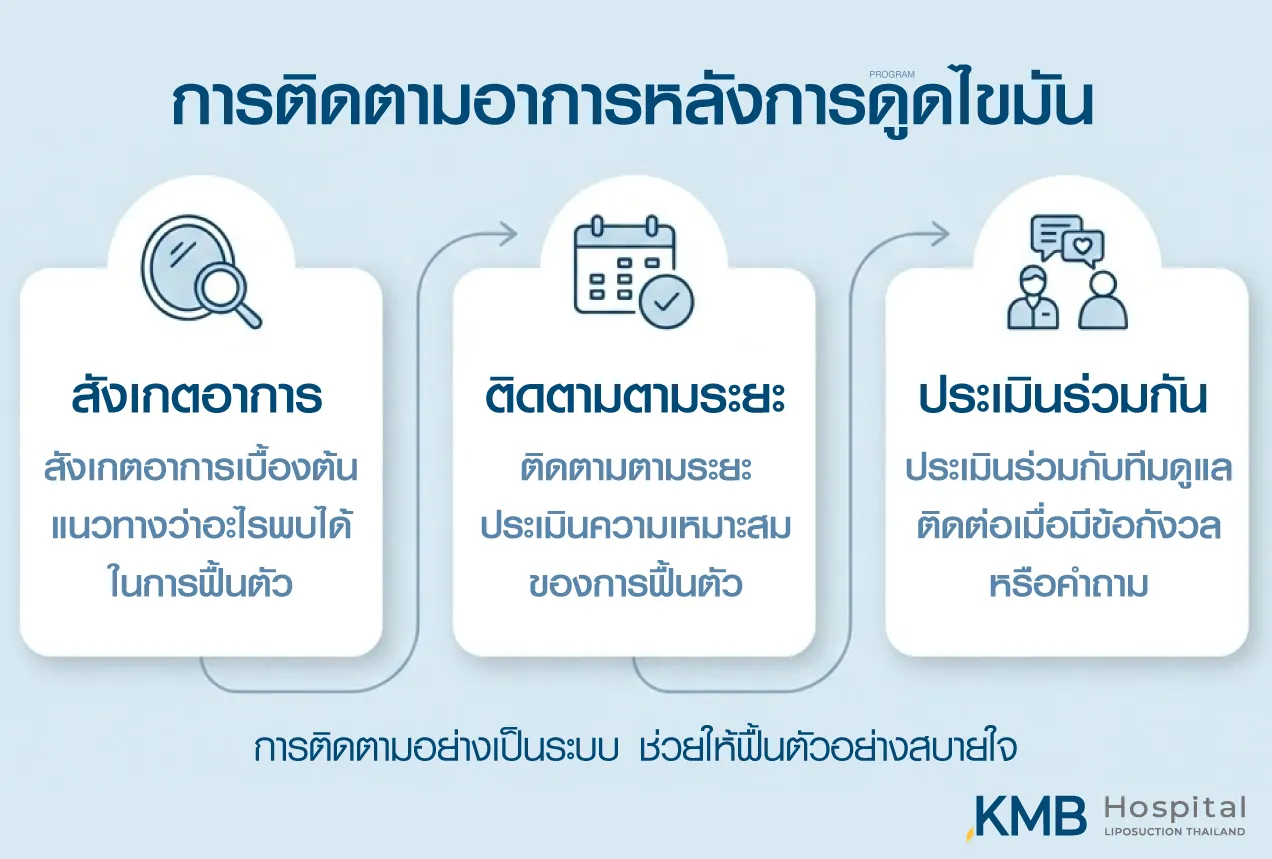
The Symptom Monitoring Process
KMB Hospital's monitoring system is designed to be clear and continuous, so that patients understand when to simply rest and recover as usual, and when to contact the care team.
Step 1: Guidance on Observing Symptoms
We provide guidance on which symptoms are commonly seen during recovery after a liposuction program, and which symptoms should be discussed further with the care team.
Step 2: Scheduled Follow-up
Symptoms are monitored at intervals to assess whether recovery is progressing appropriately, so that patients are never left to worry alone.
Step 3: Assessment Together with the Care Team
Whenever a concern or question arises, patients can contact the care team to receive advice from medical professionals.
What Patients Often Notice
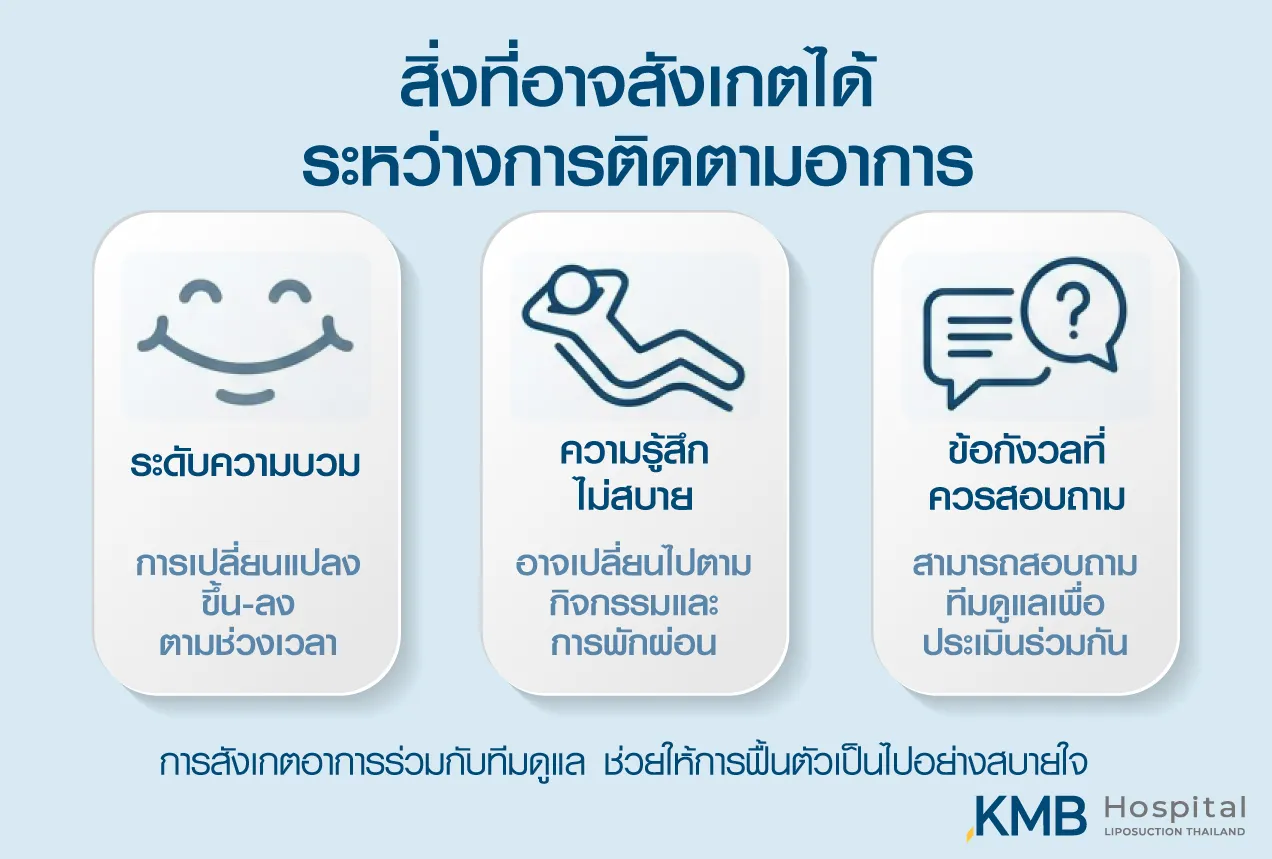
During recovery, patients may notice changes in their symptoms, such as the degree of swelling, tightness, or discomfort at certain times. The symptom monitoring system helps patients understand whether these changes fall within the normal range of recovery, or whether they should ask for further guidance, so that care can proceed appropriately.
Safety and Communication
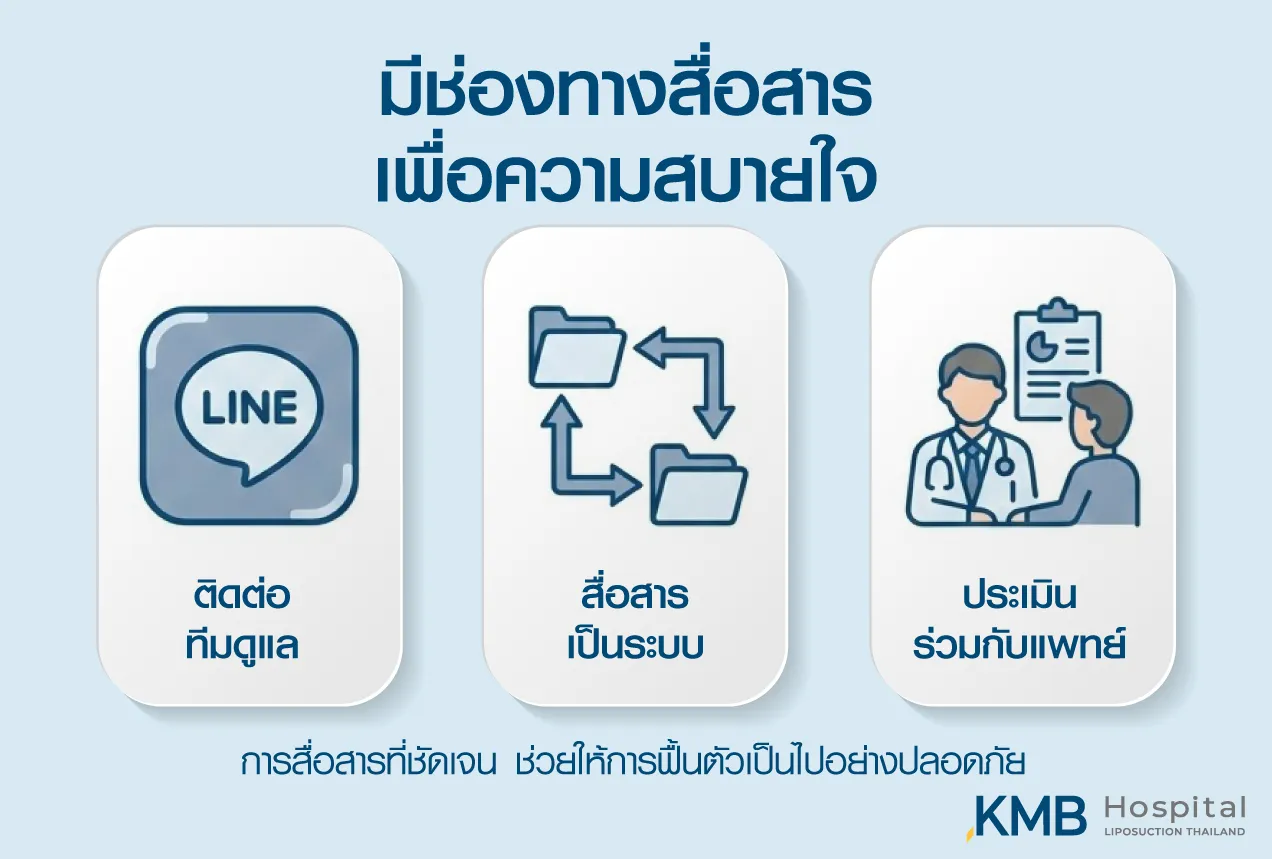
The symptom monitoring system works together with the hospital's safety systems to ensure clear communication between patients and the care team. The key principles are:
The key principles are:
- Patients know what to ask, and when.
- The care team can assess and provide appropriate advice.
- It reduces interpreting symptoms through personal anxiety.
How This Supports the Know My Body Concept
From the perspective of the symptom monitoring system, the Know My Body concept means care that relies on real data and continuous communication. Symptom monitoring ensures that recovery is not something to be guessed at, but a process supported by information and care.
Read More from a Physician's Perspective (Related Knowledge)
To better understand swelling and recovery from the perspective of the attending physician, you can read the articles on doctorlooknuu.com
Click to read more
- Part 1: How Many Days Does Swelling Last After Liposuction – Understanding Recovery Without Fear
- Part 2: Which Kind of Swelling Is Normal, and Which Should Be Watched
- Part 3: How to Reduce Swelling and Recover as Comfortably as Possible
Frequently Asked Questions (FAQ)
Q : How often should symptoms be monitored after liposuction?
A: The frequency of monitoring depends on the hospital's care protocols and what is appropriate for each individual.
Q : What should I do if I have a symptom that worries me?
A: We recommend contacting the hospital's care team to receive appropriate advice. You should not rely on self-assessment alone.
Q : Does the symptom monitoring system guarantee results?
A: It does not guarantee results, but it is a system that supports appropriate care and recovery.
KMB Hospital places great importance on post-treatment symptom monitoring as part of its safety and ongoing care system, in order to support a careful recovery and reduce patients' anxiety.
Content Information
Written by: Medical Content Team, KMB Hospital
Reviewed by: Clinical Governance Committee, KMB Hospital
Published: 24 January 2026
Last updated: 24 January 2026