What Is FAT Mapping, and Why Should a Liposuction Program Start From a Map?
A liposuction program should never begin with guesswork
Deciding to undergo a liposuction program today should not rely on experience, intuition, or looking at a single area alone. Instead, it should begin with reading the entire fat structure as a system
FAT Mapping was therefore developed to serve as a “map” that helps physicians understand how fat is distributed
before planning a liposuction program that is safe and appropriate for each individual
At KMB Hospital, FAT Mapping is part of the pre-treatment assessment system—not an optional add-on, and not a sales tool
What Is the FAT Mapping System?
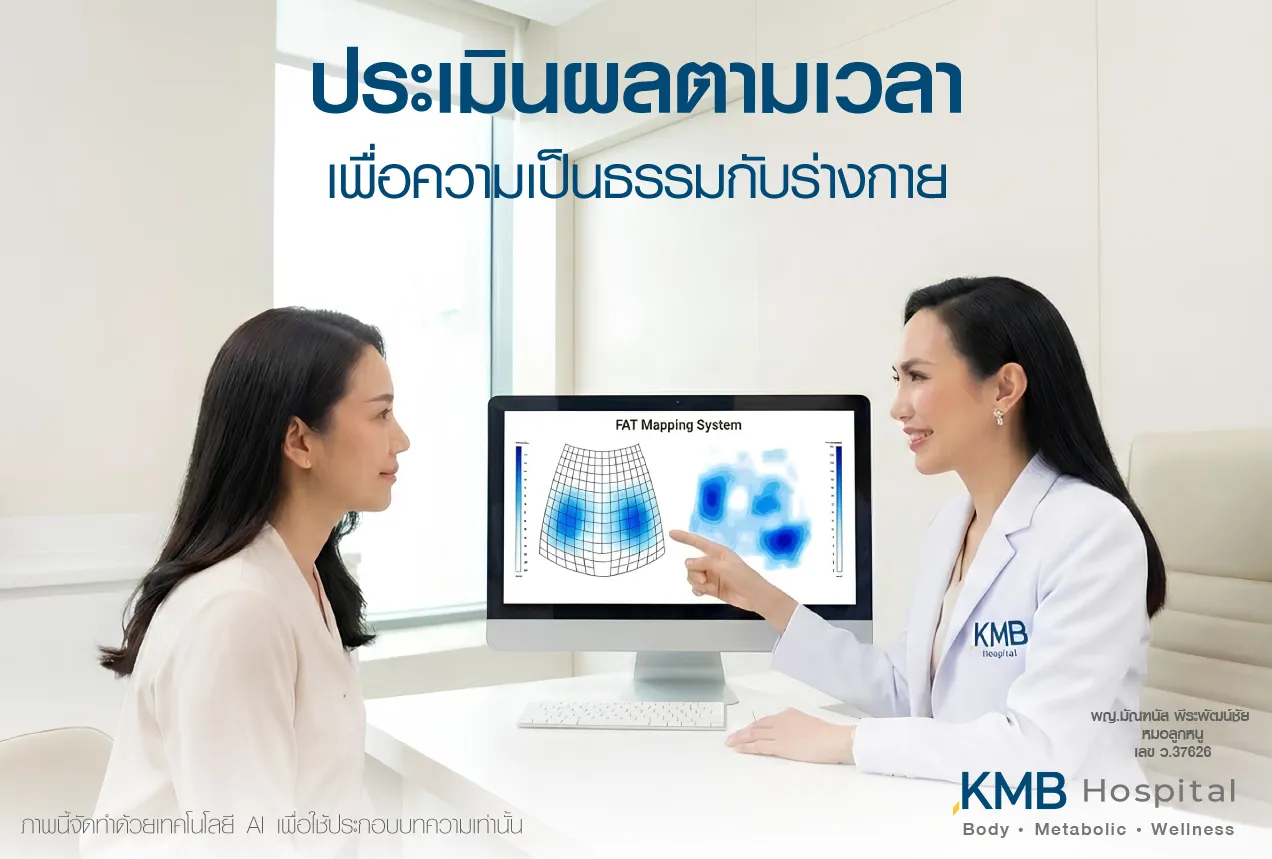
The FAT Mapping System is a system for structural fat assessment and analysis, allowing physicians to see the overall picture of fat throughout the body—not just the areas visible from the outside
This system ensures that a liposuction program is based on real data, such as:
The distribution of fat
Differences between fat layers
The relationship between fat and skin
The body's readiness at that particular time
FAT Mapping therefore serves as the “database” for medical decision-making before a liposuction program
Why Should a Liposuction Program Start From FAT Mapping?
A liposuction program that does not include reading the fat structure may result in planning that is inconsistent with the actual body. FAT Mapping helps physicians:
Understand which areas are superficial fat
Which areas are deep fat, or mixed fat
How fat distribution relates to the skin
What boundaries the liposuction program should use in each area
Starting from FAT Mapping therefore reduces guesswork and increases the safety of the liposuction program
How Does FAT Mapping Differ From Traditional Liposuction?
Traditional fat assessment often relies on looking from the outside or palpating specific areas, whereas FAT Mapping
focuses on reading the “fat system” as a whole, in order to reveal the differences of fat in each area
and to ensure that the liposuction program does not work against the body's structure
This approach allows physicians to plan a liposuction program that is fair to the patient's body
FAT Mapping and the KMB Hospital System
At KMB Hospital, FAT Mapping does not operate in isolation, but is connected to the hospital's core systems, namely:
These systems ensure that a liposuction program is not a one-time decision, but a process involving assessment, planning, and follow-up
Read More From the Physician's Perspective
To understand FAT Mapping from a physician's perspective, and the reasons a liposuction program should begin with reading the map, you can read the articles on doctorlooknuu.com
What Is FAT Mapping, and Why Should a Liposuction Program Start From a Map?
How to Read FAT Mapping So It Truly Fits Your Liposuction Program
FAQ — Frequently Asked Questions About FAT Mapping and Liposuction Programs
Q: What is FAT Mapping, and how does it relate to a liposuction program?
A: FAT Mapping is a system for reading and analyzing the fat structure, in order to help plan a liposuction program that is safe and appropriate for the body
Q: Does everyone undergoing a liposuction program need to have FAT Mapping?
A: FAT Mapping enhances systematic understanding before a liposuction program, with its suitability depending on each individual physician's assessment
Q: Does FAT Mapping guarantee the results of a liposuction program?
A: It does not guarantee results, but it helps ensure that the decision to undergo a liposuction program is based on real data and reduces guesswork
KMB Hospital places great importance on a systematic liposuction program, starting from FAT Mapping for safety, understanding, and planning that is appropriate for the patient's body
Content Information
Written by: Medical Content Team, KMB Hospital
Reviewed by: Clinical Governance Committee, KMB Hospital
Published: 19 February 2026
Last updated: 19 February 2026