
Assessing Fat Layers and Fat Distribution Before a Liposuction Program

A liposuction program requires understanding both the “fat layers” and the “distribution” together
The decision to undergo a liposuction program safely should not begin by looking only at a bulge or the area the patient is concerned about, but rather by understanding which layer the fat is in and how it is actually distributed throughout the body
At KMB Hospital assessing fat layers and distribution is an essential part of FAT Mapping, helping ensure that a liposuction program is not based on guesswork and does not work against the body’s structure.
What are fat layers, and how do they relate to a liposuction program?
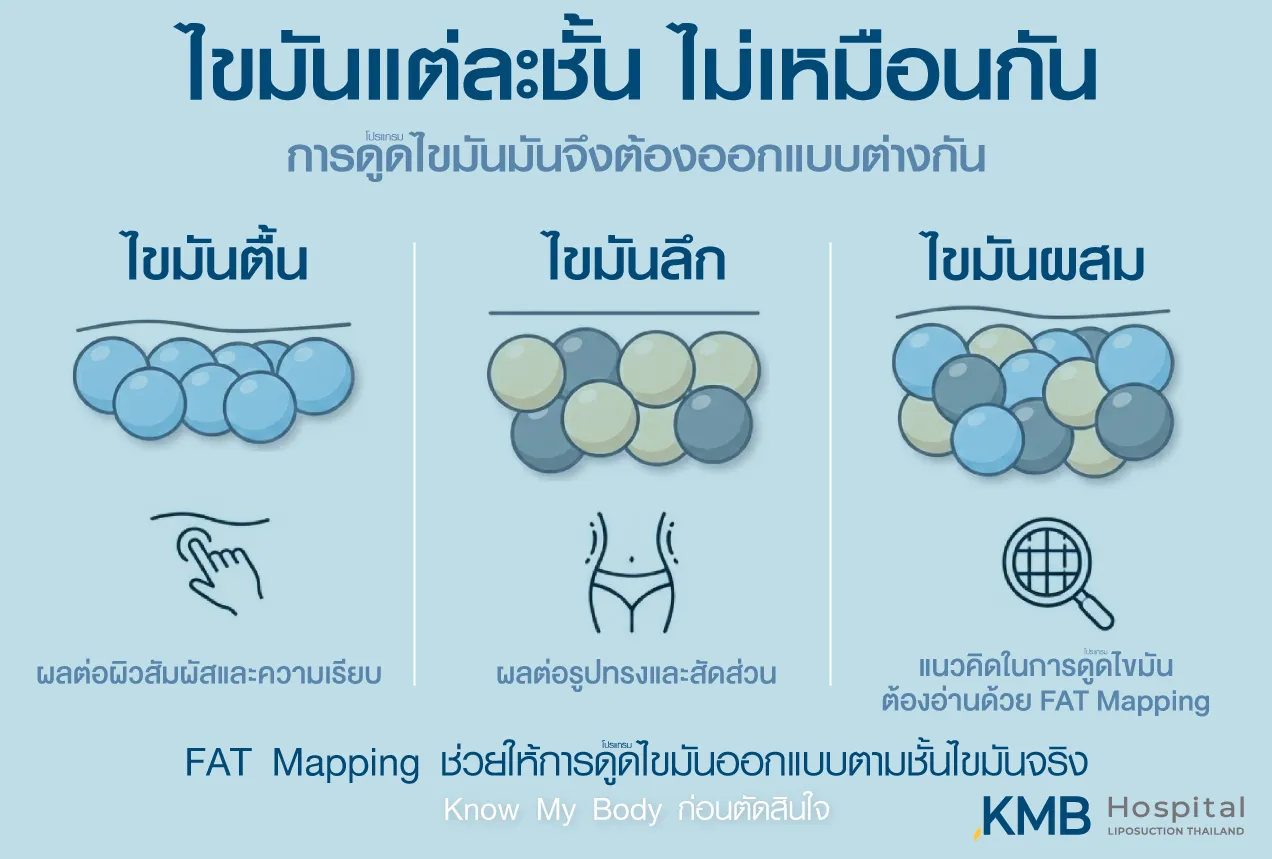
Medically, fat is not a single uniform mass but is divided into several layers, each of which plays a different role in a liposuction program. In general, these can be described as follows:
Superficial fat: located near the skin, affecting skin smoothness
Deep fat: located deeper, affecting shape and proportion
Mixed fat: contains both superficial and deep fat, requiring especially detailed assessment
A liposuction program that does not account for the fat layers may result in a plan that is not well suited to the patient’s actual body.
How does fat distribution matter for a liposuction program?
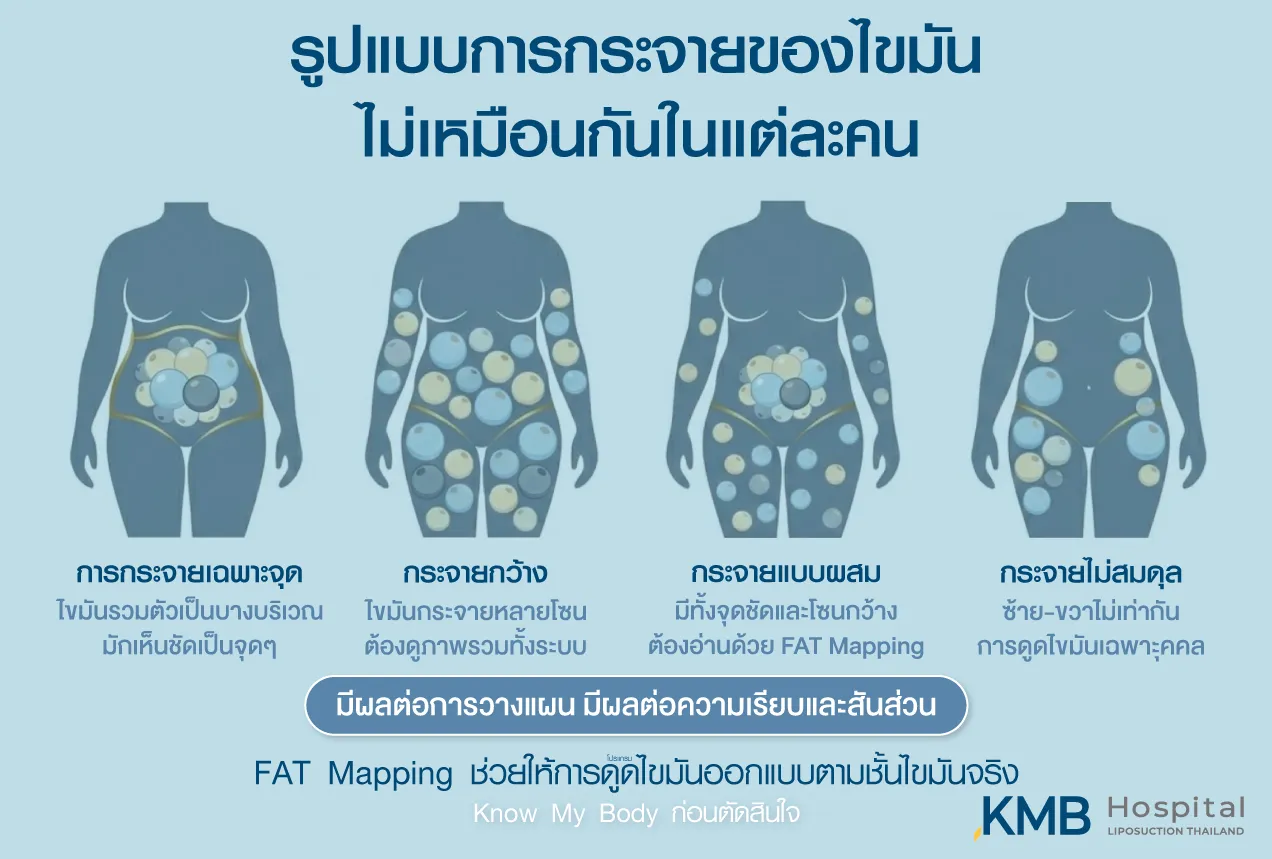
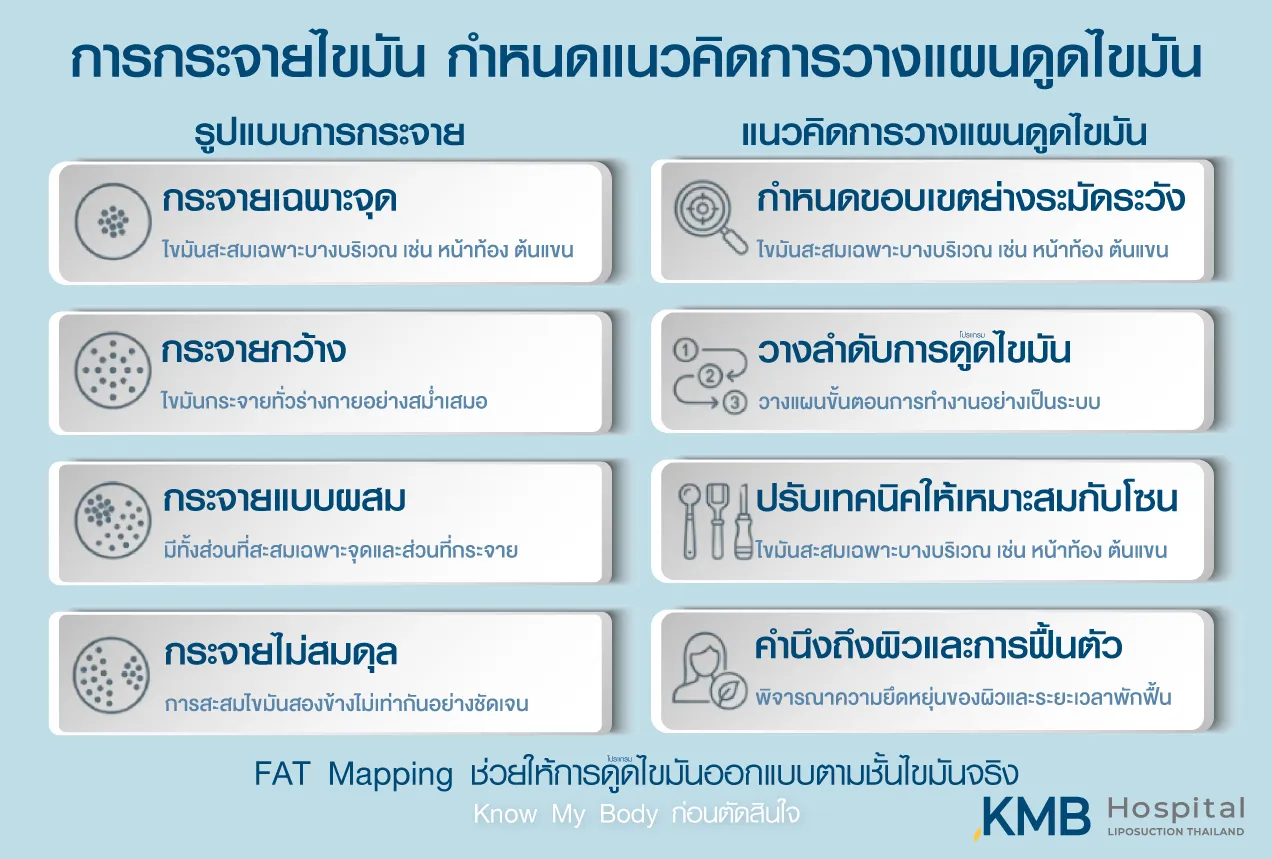
In addition to fat layers, the pattern of fat distribution is another important factor the physician considers before a liposuction program. Common distribution patterns include:
Localized distribution
Widespread distribution across multiple areas
Mixed distribution across several zones
These patterns influence how a liposuction program is designed, both in terms of safety and long-term results.
Why must the “fat layers” and “distribution” be assessed together?
Looking only at the fat layers may not reveal the overall picture of the whole body, while looking only at distribution may not capture the structural differences. Assessing both together allows the physician to:
Understand the true fat structure
Select the appropriate scope for the liposuction program
Reduce strain on the skin and tissues
Set realistic expectations
This is why FAT Mapping emphasizes reading both the “layer” and the “distribution” together.
Fat-layer assessment within KMB Hospital’s systems
At KMB Hospital, assessing fat layers and distribution is not done in isolation but is connected to:
These systems help make a liposuction program a systematic decision rather than guesswork at a single spot.

Further reading from a physician’s perspective
To understand how to read FAT Mapping and assess fat layers from a physician’s point of view, you can read articles on the website doctorlooknuu.com
FAQ — Frequently asked questions about fat layers and liposuction programs
Q: How do superficial fat and deep fat differ in a liposuction program?
A: Superficial fat affects skin texture and smoothness, while deep fat affects shape. Assessing both makes a liposuction program more appropriate.
Q: How does fat distribution affect a liposuction program?
A: The distribution pattern helps the physician plan the scope and method of a liposuction program safely and in a way that respects the body.
Q: Does assessing fat layers guarantee the results of a liposuction program?
A: It does not guarantee results, but it reduces guesswork and improves the appropriateness of planning a liposuction program.
KMB Hospital places great importance on a systematic liposuction program, beginning with the assessment of fat layers and distribution—for safety, understanding, and decisions that are appropriate to the body.
Content Information
Written by: Medical Content Team, KMB Hospital
Reviewed by: Clinical Governance Committee, KMB Hospital
Published: 19 February 2026
Last updated: 19 February 2026