
How Are Short-Chain Fatty Acids Related to Hunger and Fullness?
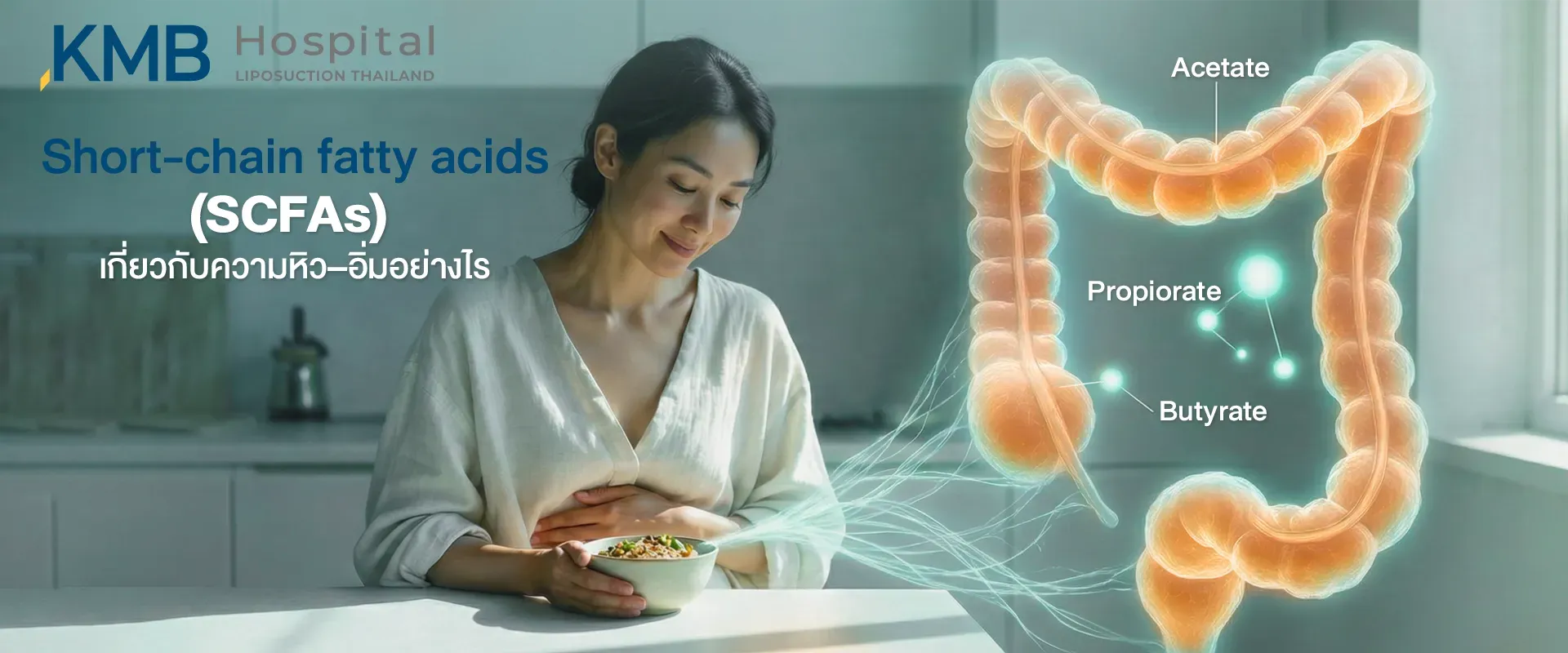
How Are Short-Chain Fatty Acids (SCFAs) Related to Hunger and Fullness?
Many people understand that “eating fiber keeps you full longer,” but the deeper question is — what actually happens at the level of hormones and the gut–brain system?
In the current literature on the microbiome and metabolism, short-chain fatty acids (SCFAs) — produced when gut microbes ferment dietary fiber — are described as molecular signals that may link the gut with the hormonal system, energy regulation, and part of gut–brain communication.
That said, the effects in humans are highly variable and should be interpreted in a context-dependent way.
Table of Contents
- What are SCFAs?
- Through what mechanism do SCFAs relate to satiety?
- Why do some people feel less full even after eating fiber?
- Evidence in humans: how real is the signal?
- SCFAs, insulin, and metabolism
- A further molecular-level perspective
- Evidence Strength
- Clinical Perspective
- Key Takeaway
- Frequently Asked Questions
- Author & Transparency
What are SCFAs?
SCFAs are short-chain fatty acids produced when gut microbes ferment dietary fiber in the large intestine. The main types are acetate, propionate, and butyrate.
From a metabolic standpoint, SCFAs are not merely a “by-product of fiber.” In review articles they are described as molecular signals involved in appetite regulation, gut hormone signaling, energy homeostasis, and, in some contexts, insulin sensitivity.
The important point is that SCFAs work as a “system,” not as a direct switch that makes everyone feel full immediately.
1) Through what mechanism do SCFAs relate to satiety?
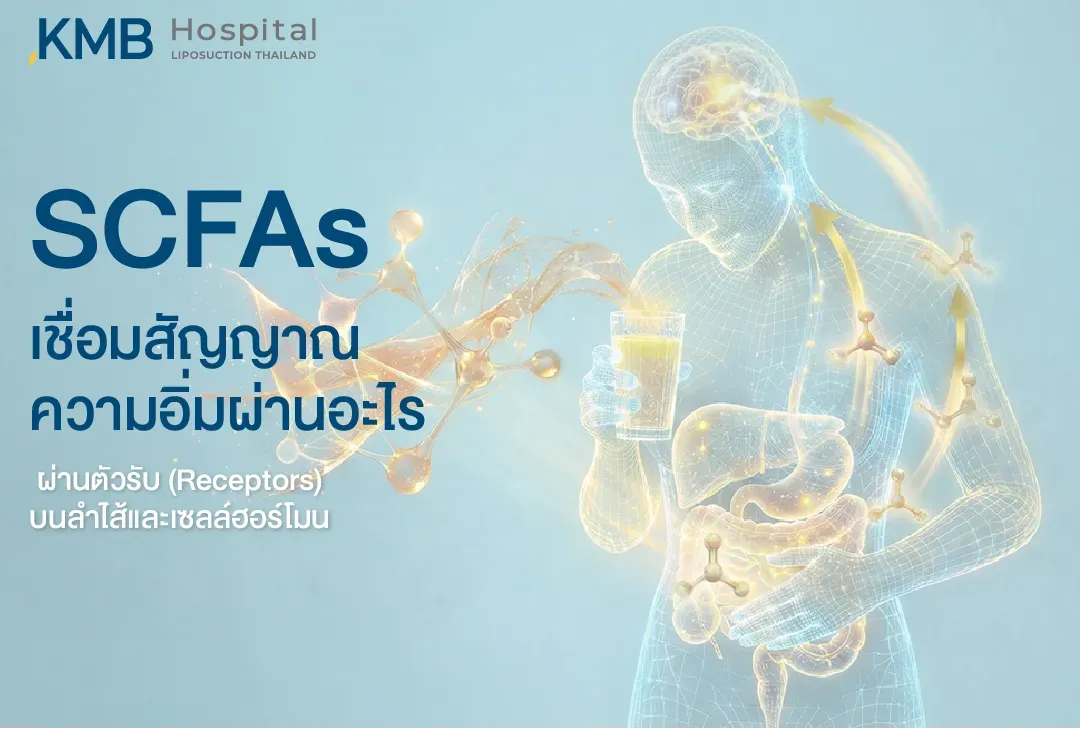
1.1 Via receptors in the gut
Mechanistic reviews explain that SCFAs can activate GPCR-family receptors, namely FFAR2 (GPR43) and FFAR3 (GPR41), which are found in the gut and are involved in enteroendocrine signaling associated with the secretion of certain satiety hormones such as GLP-1 and PYY.
It should be stated clearly that this is an overall picture drawn from numerous review and mechanistic studies. How this translates into humans still depends on context and inter-individual differences.
2) Why do some people “feel less full” even after eating fiber?

Although the idea that “fiber helps you feel full” points in the right direction, the actual outcome can vary because of the type of fiber, the rate of fermentation, the baseline composition of the microbiome, the underlying metabolic state, and overall energy intake.
SCFAs are not produced equally in everyone, so the sense of fullness differs from person to person even when fiber intake is similar.
3) Evidence in humans: how real is the signal?
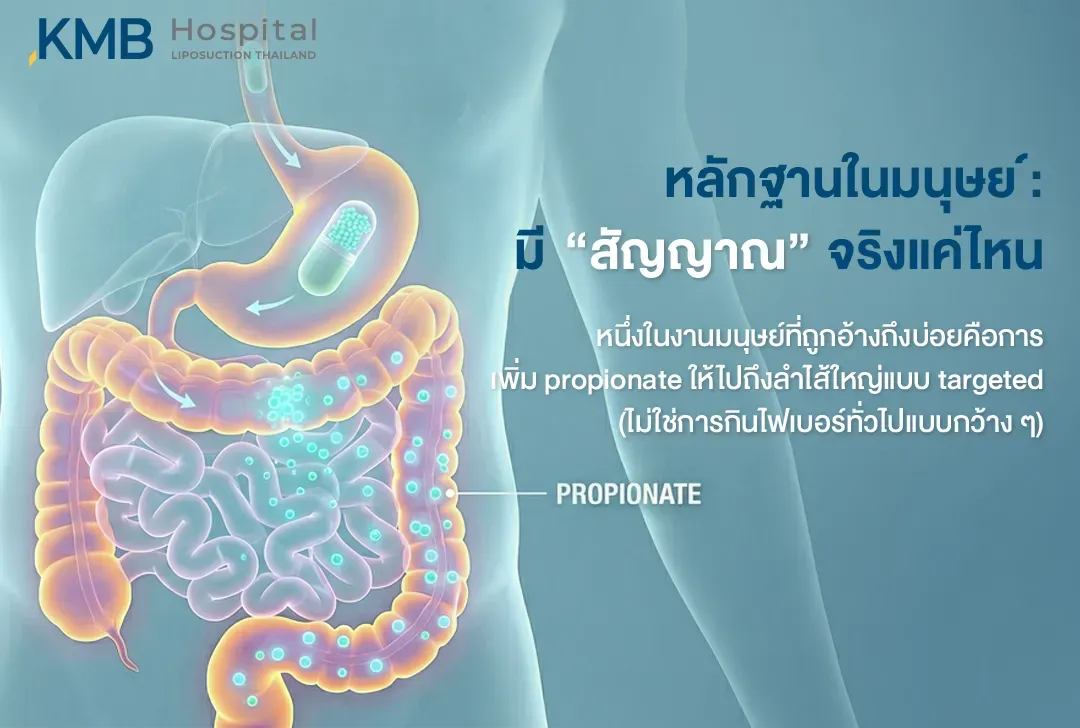
One frequently cited study involved increasing propionate through targeted delivery to the large intestine, which reported signals related to appetite regulation and changes in certain markers.
However, this is a specific form of intervention, not ordinary broad fiber intake, and it cannot be generalized to represent every type of fiber or every person.
4) SCFAs, insulin, and metabolism
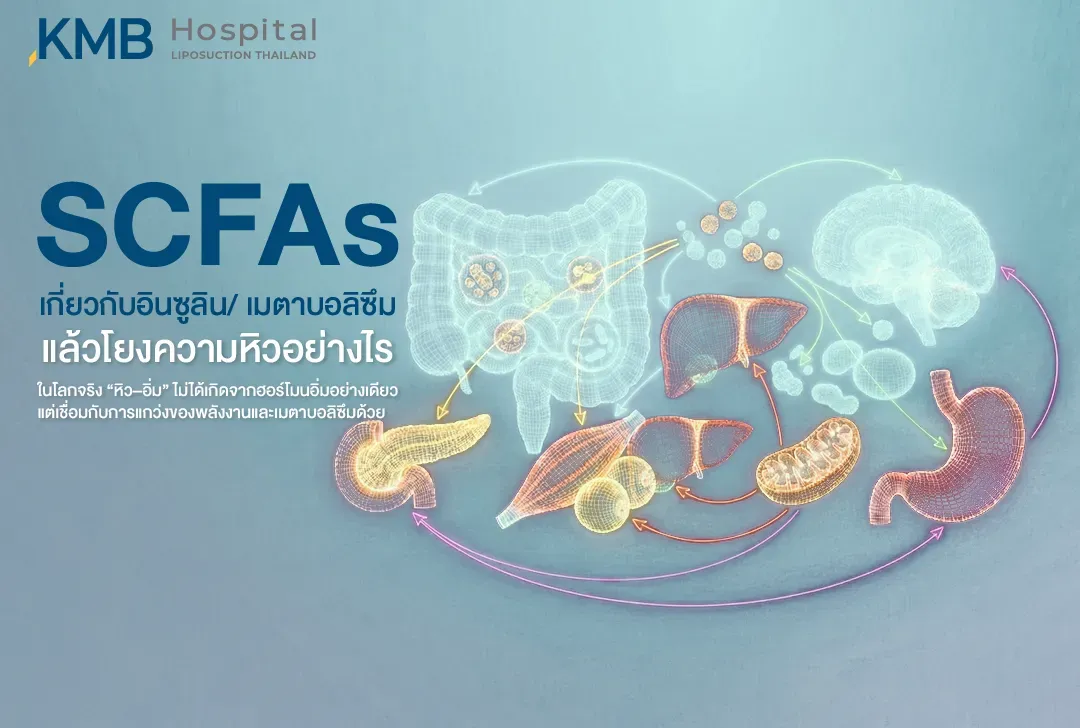
Hunger and fullness are also linked to metabolic regulation. Some systematic reviews and meta-analyses report a trend toward reduced fasting insulin and HOMA-IR when SCFA levels increase following an intervention.
Nevertheless, there is high heterogeneity — in the type of intervention, measurement methods, duration, and population characteristics — so one should not conclude that “raising SCFAs will definitely control hunger.”
5) A further molecular-level perspective
SCFAs, particularly butyrate, have been studied in relation to epigenetic modulation and histone deacetylase inhibition (HDAC inhibition). However, linking these molecular-level mechanisms to human eating behavior still requires more evidence.
Evidence Strength (Medical Authority Framing)
- SCFAs as molecular signals — Strong (review consensus)
- FFAR2/FFAR3 and enteroendocrine signaling — Mechanistic strong
- Effect on appetite in humans — Signals from some interventions
- Effect on insulin sensitivity — Meta-analyses show a trend, but with high heterogeneity
Note: this level of evidence reflects the consistency of review articles, not a clinical treatment guideline.
Clinical Perspective
Clinically, the sense of hunger or fullness is the combined result of many systems, including overall nutrition, energy intake, sleep quality, stress levels, baseline metabolic status, and individual differences in the microbiome.
At present there is no single biomarker that can accurately predict an individual’s sense of fullness from their SCFA levels. Assessment should take place within a holistic framework under a physician’s care.
Key Takeaway
But the effects in humans are highly context-dependent, so they should be viewed within a multi-factorial metabolic model rather than as a linear explanation.
Frequently Asked Questions (FAQ)
What are SCFAs?
Short-chain fatty acids produced when microbes ferment dietary fiber, such as acetate, propionate, and butyrate.
How do SCFAs create a feeling of fullness?
They are proposed to be involved in signaling through the FFAR2/FFAR3 receptors and enteroendocrine signaling associated with GLP-1 and PYY in certain contexts.
Does raising SCFAs definitely reduce hunger?
There are signals from some forms of human studies, but this cannot be generalized to represent every type of fiber or every person.
How do SCFAs differ from probiotics?
Probiotics are living microorganisms, whereas SCFAs are metabolites — the products generated by the microbial fermentation of food.
References
- Silva YP, Bernardi A, Frozza RL. Front Endocrinol (Lausanne). 2020;11:25. doi:10.3389/fendo.2020.00025.
- Blaak EE, et al. Benef Microbes. 2020;11(5):411–455. doi:10.3920/BM2020.0057.
- O’Riordan KJ, et al. Mol Cell Endocrinol. 2022;546:111572. doi:10.1016/j.mce.2022.111572.
- Chambers ES, et al. Gut. 2015;64(11):1744–1754. doi:10.1136/gutjnl-2014-307913.
- Pham NHT, et al. Nutrition Reviews. 2024;82(2):193–(article). doi:10.1093/nutrit/nuad042.
Author & Transparency
Hospital Authority
KMB Hospital is committed to fairly evaluating outcomes over time after a liposuction program, for care that is safe, reassuring, and respectful of the patient’s body.
Content Information
Written by: Medical Content Team, KMB Hospital
Reviewed by: Clinical Governance Committee, KMB Hospital
Published: 26 February 2026
Last updated: 26 February 2026