
How Does the Gut Affect the Hormonal System? Low-grade Inflammation, Gut Barrier, and Metabolic Signaling

Does the Gut Really Affect the “Hormonal System”?
Since 2020, the literature on gut–immune–metabolic interaction has taken a growing interest in the idea that low-grade inflammation and changes in the intestinal barrier may be linked to the regulation of hormones such as insulin, cortisol, and appetite-related hormones.
However, most of the human evidence remains associational rather than a direct demonstration of cause and effect. This article therefore explains the proposed mechanisms while clearly identifying the limitations of the evidence.
Table of Contents
1) Gut Barrier: More Than Nutrient Absorption

The intestinal barrier is a multi-layered structure consisting of tight junctions between epithelial cells, the mucus layer, and immune components within the lamina propria.
When permeability changes, components from the gut—such as bacterial fragments or lipopolysaccharides (LPS)—may be detectable in the circulation in certain metabolic contexts. This condition is known as metabolic endotoxemia and has been proposed as potentially associated with low-grade chronic inflammation via immune activation.
However, measuring LPS in humans still has technical limitations, and reported levels show high variability, so this remains a topic of debate in the current literature.
2) Low-grade Inflammation and Hormonal Signaling
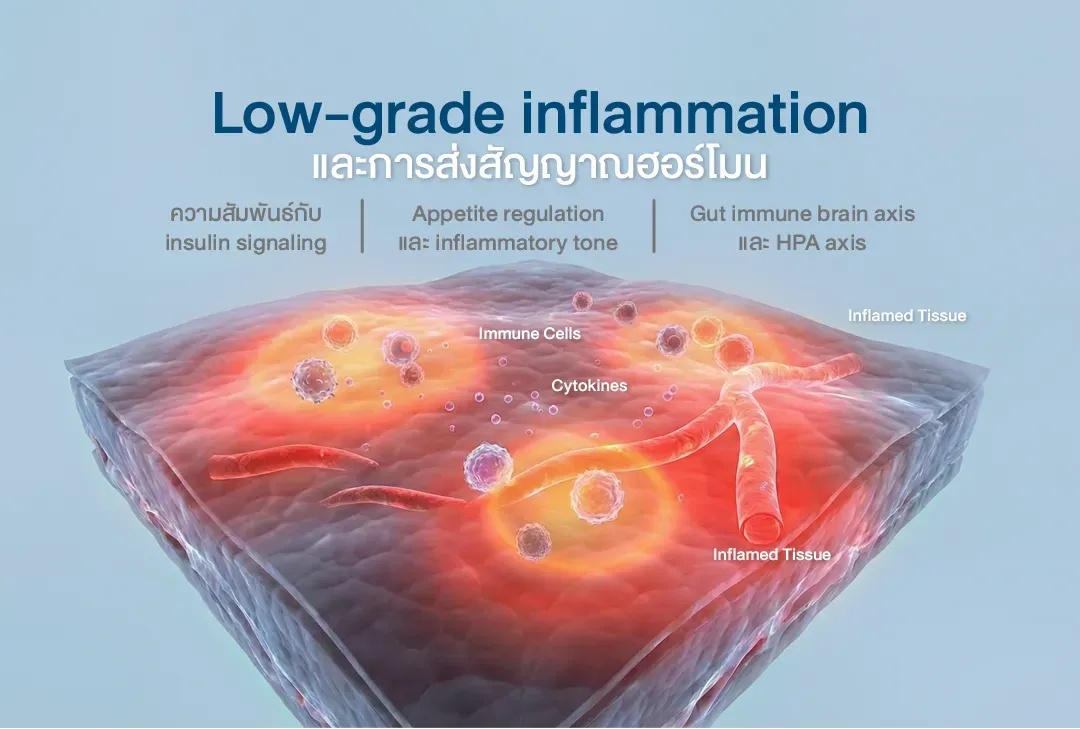
2.1 The Relationship with Insulin Signaling
Chronically elevated cytokines such as TNF-α and IL-6 may be involved in disrupting the insulin signaling pathway in peripheral tissues. However, most of the human evidence is associational and should be interpreted as inflammation being “one component within the system” rather than a sole cause.
2.2 The Gut–Immune–Brain Axis and the HPA Axis
A conceptual framework has been proposed in which immune activation may signal to the brain through cytokines or neural pathways, which is associated with modulation of the HPA axis and cortisol regulation. Conversely, chronically elevated cortisol from stress may be associated with changes in barrier integrity.
This may give rise to a bidirectional cycle: Stress ↔ Barrier function ↔ Immune activation ↔ HPA modulation. In humans, however, disentangling the causal direction remains difficult.
2.3 Appetite Regulation and Inflammatory Tone
It has been proposed that increased inflammatory tone may be associated with altered leptin sensitivity, reward pathway modulation, and variability in appetite regulation. Nevertheless, these mechanisms remain more mechanistic and translational than broadly confirmed clinical conclusions.
3) Real-World Context
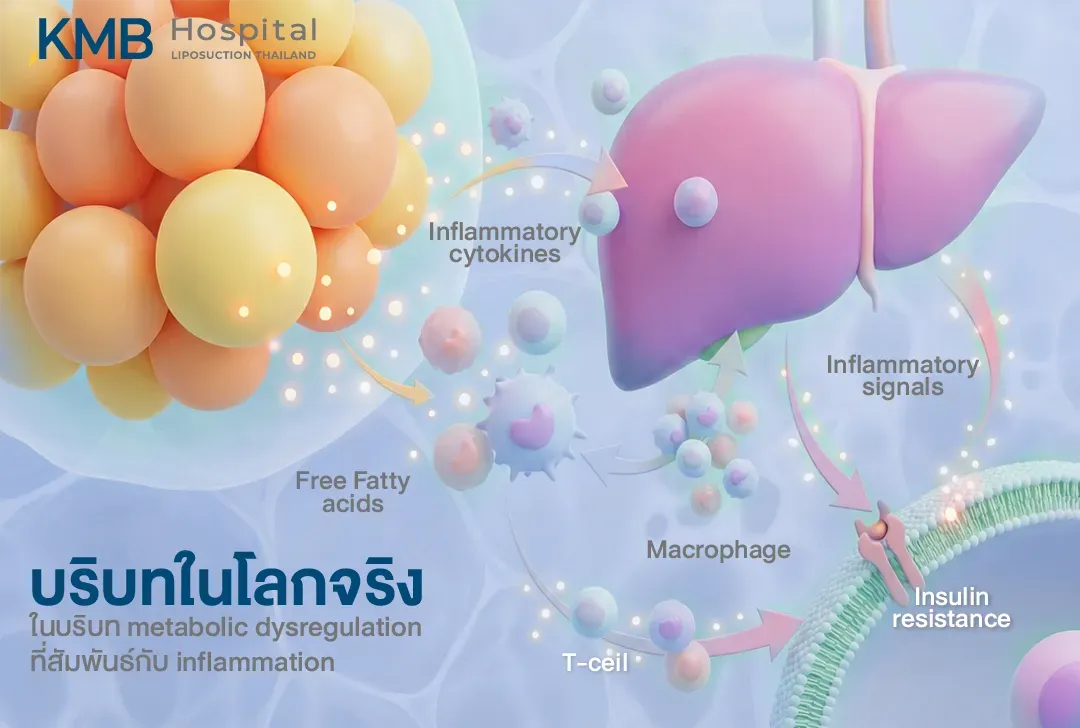
In the context of metabolic dysregulation associated with inflammation, some individuals may report symptoms such as feeling easily bloated, inconsistent energy, or changes in appetite.
However, these symptoms have many causes and should not be interpreted as arising from intestinal permeability alone. The gut should be viewed as one part of an endocrine-immune-metabolic network with multiple overlapping layers.
4) Strength of Evidence

- Strong (Conceptual / Mechanistic)
The structure and function of the intestinal barrier
The role of chronic inflammation in insulin resistance - Moderate
The relationship between permeability markers and metabolic phenotypes
Gut–immune–brain signaling frameworks - Emerging / Controversial
Metabolic endotoxemia measurement in humans
Direct links to appetite hormones
Clinical Perspective
Clinically, the assessment of metabolic dysregulation should consider multiple components together, such as metabolic markers, inflammatory markers, lifestyle factors, and psychosocial stressors.
A causal pathway should not be concluded from a single biomarker, and evaluation should be conducted under the care of a specialist.
Frequently Asked Questions (FAQ)
Does a leaky gut cause hormonal imbalance?
At present, there is no causal evidence confirming that changes in intestinal permeability alone directly cause hormonal dysregulation, but there are conceptual frameworks proposing a relationship through immune activation.
How is low-grade inflammation measured?
Research often uses biomarkers such as CRP, cytokines, or LPS-related markers, but there is still no single standard for confirming metabolic endotoxemia.
How should the gut be cared for in the context of metabolic health?
Overall care—such as balanced nutrition, adequate sleep, and stress management—may play a role in overall metabolic regulation.
Key Takeaway
However, in certain contexts, changes in the barrier and immune signaling may be associated with metabolic and endocrine regulation.
Interpretation should be based on systems-level evidence rather than a linear causal narrative.
References
- Neurath MF et al. Lancet Gastroenterol Hepatol. 2024.
- Portincasa P et al. Biomedicines. 2021.
- Chen X. Am J Physiol Endocrinol Metab. 2025.
- Peña-Durán P et al. Int J Mol Sci. 2025.
- O’Riordan KJ et al. Gut Microbiota-Immune-Brain Axis Review. 2025.
- Bertollo N et al. HPA Axis & Gut Axis Review. 2025
Hospital Authority
KMB Hospital is committed to fair, time-appropriate evaluation of outcomes following liposuction programs, for care that is safe, reassuring, and respectful of the patient's body.
Content Information
Written by: Medical Content Team, KMB Hospital
Reviewed by: Clinical Governance Committee, KMB Hospital
Published: 1 March 2026
Last updated: 1 March 2026