
How Do Gut Bacteria “Talk to the Brain”? The Gut–Brain–Hormone Axis Explained Through 4 Main Pathways

Through What Channels Do Gut Bacteria “Talk to the Brain” (Gut–Brain–Hormone)?
When we say “the gut and the brain are connected,” we don’t just mean that queasy, churning feeling in your stomach when you’re stressed.
In the current literature, the microbiota–gut–brain axis is described as a “multi-channel communication system” that links the nervous system + immune system + metabolism + hormones, all working together as a single network.
Below are the 4 main pathways through which “gut bacteria” exert effects on “the brain and hormones.”
Table of Contents
1) Neural pathway — the nervous system (especially the Vagus nerve)
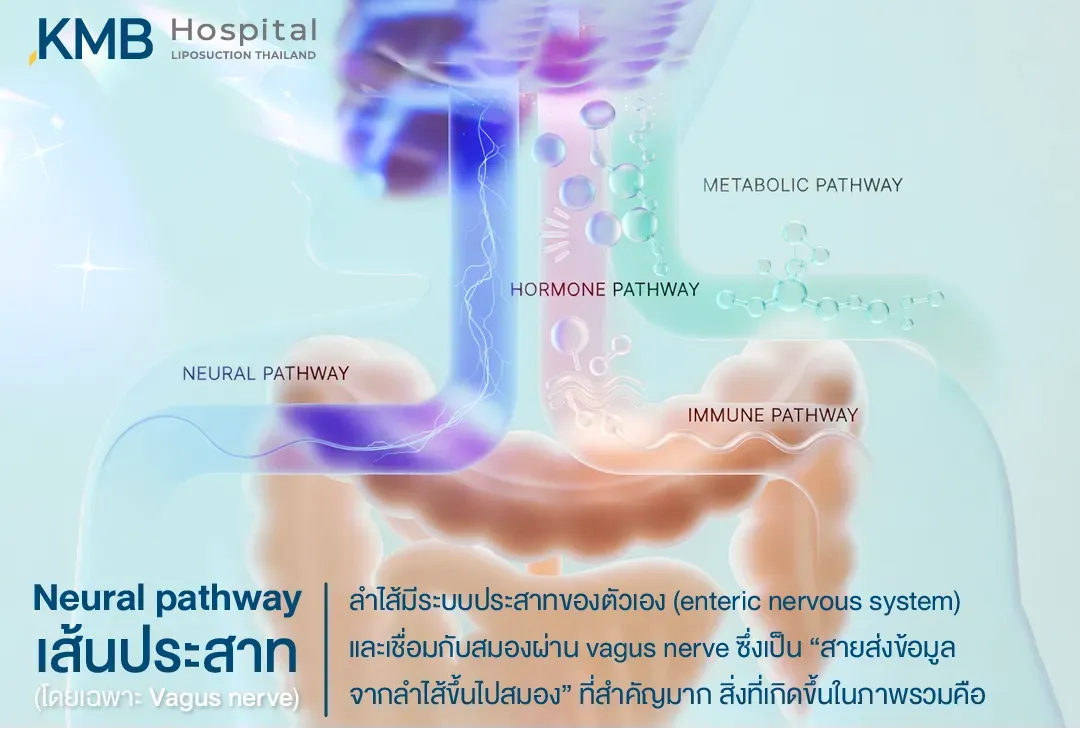
The gut has its own nervous system (the enteric nervous system) and connects to the brain via the vagus nerve, which serves as a critically important “data line carrying information from the gut up to the brain.”
In broad terms:
- The gut senses signals from food and the environment
- It transmits that information along nerve pathways up to the brain
- This affects hunger, satiety, and the response to stress
A large body of review work supports the role of the nervous system as a “communication expressway,” but establishing cause-and-effect in humans still requires further interventional studies.
2) Immune signaling — immune function and low-grade inflammation

The intestinal wall is a large immune barrier. When microbial balance or the barrier itself changes, the immune system can be modulated accordingly.
Reviews in the gut–immune–brain field indicate that cytokine signaling and immune tone are among the main channels linking the gut to the brain.
However, much of the evidence still comes from preclinical models and observational studies in humans.
3) Metabolic mediators — molecules produced by bacteria
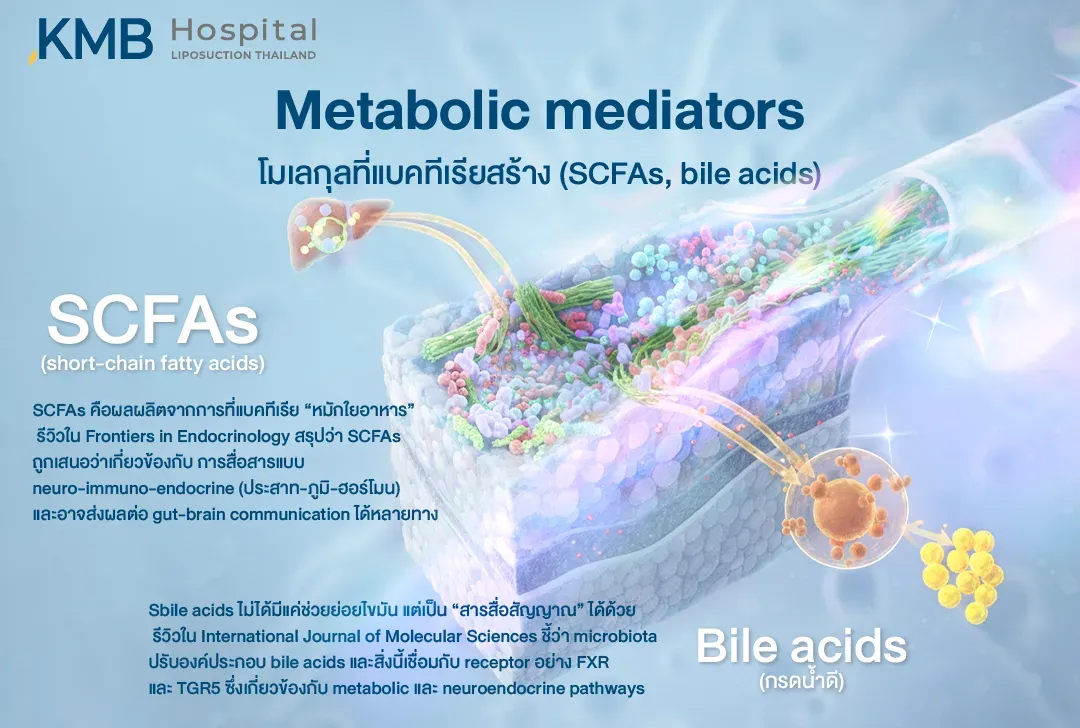
3.1 SCFAs (Short-chain fatty acids)
SCFAs are products of dietary fiber fermentation by gut bacteria, and they have been proposed to be involved in neuro-immuno-endocrine communication.
- Involved in sensing energy status
- Linked to gut hormone signaling
- May be involved in appetite regulation in some contexts
Limitation: effects in humans are highly variable, depending on the microbiome, diet, and baseline health.
3.2 Bile acids
Bile acids do not merely serve to digest fats; they also act as signaling molecules through receptors such as FXR and TGR5, which connect to metabolic and neuroendocrine pathways.
4) Endocrine interface — Enteroendocrine cells (EECs)
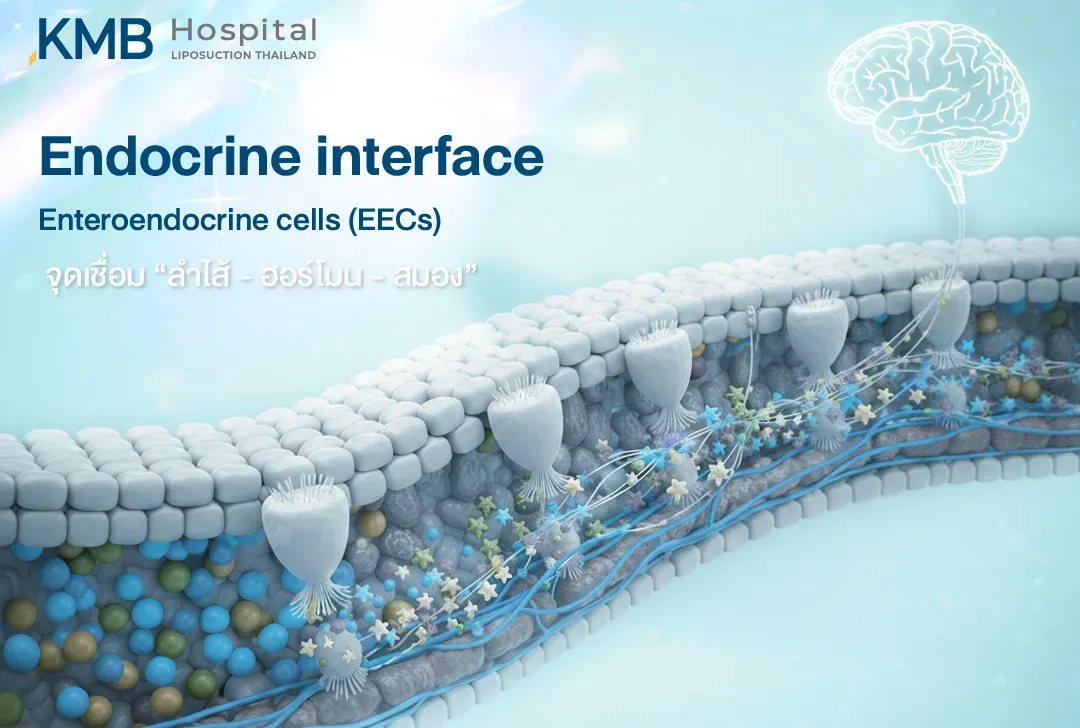
Enteroendocrine cells (EECs) are described as the “gatekeepers” of microbiome–gut–brain communication.
EECs:
- Receive signals from food and the environment within the gut
- Secrete hormones related to satiety, digestion, and metabolism
- Influence gut–brain signaling
This is the point at which “hormones” connect most clearly with the microbiome in the latest review work.
Evidence Strength
| Pathway | Level of review-based evidence | Notes |
|---|---|---|
| Neural (Vagus/ENS) | Strong mechanistic | Human causal evidence still needed |
| Immune signaling | Strong review, moderate human | Mostly preclinical |
| SCFAs | Mechanistic strong | High human variability |
| Bile acids | Emerging-to-moderate | Body of work is growing |
| EECs | Strong conceptual | Clear hormonal connection point |
Note: these evidence levels reflect the consistency of review work, not clinical treatment guidelines.
Frequently Asked Questions (FAQ)
Through what channels do bacteria talk to the brain?
Through 4 main channels: the nervous system (vagus), the immune system, metabolic molecules (SCFAs/bile acids), and hormones from EECs.
Which one is the most important?
There isn’t a single one; the entire system works in overlapping layers as a network.
Why do some people feel hungry or crave sweets when stressed?
Reviews indicate that neural pathways, immune tone, and reward/metabolic pathways are all interconnected, but causal proof in humans still requires further interventional studies.
Clinical Perspective
Although reviews describe the gut–brain–hormone mechanisms in detail, in clinical practice, evaluating symptoms related to stress, appetite, or metabolic dysregulation requires considering multiple factors together, including:
- Health history
- Sleep habits
- Stress levels
- Nutrition
- Baseline metabolic status
- Psychosocial factors
At present, there is no single biomarker that can directly summarize the “quality of gut–brain communication.” Interpretation should be carried out under the care of a physician.
Author & Medical Transparency (E-E-A-T)
KMB Hospital is committed to evaluating outcomes after liposuction programs fairly and over time, for care that is safe, reassuring, and respectful of the patient’s body.
Written by: Medical Content Team, KMB Hospital
Reviewed by: Clinical Governance Committee, KMB Hospital
Published: 26 February 2026
Last updated: 26 February 2026