
What Is Dysbiosis: The Balance of Gut Bacteria That May Be Linked to Frequent Hunger
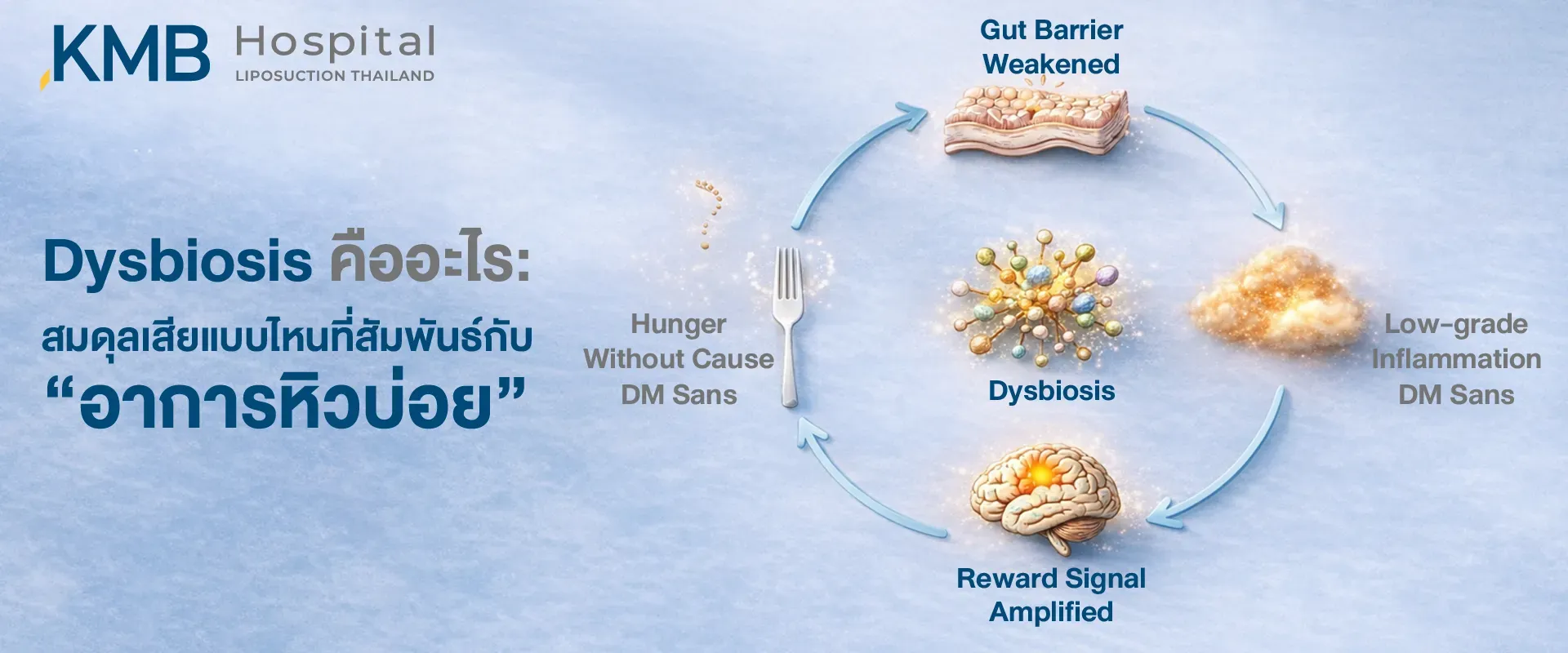
What Is Dysbiosis: What Kind of Imbalance Is Linked to “Frequent Hunger”
In recent years, the concept of the gut microbiome and its relationship with eating behavior has attracted growing interest, particularly the term dysbiosis, which is often used to describe a state in which the gut microbial system has “lost its balance.”
However, in the scientific literature, dysbiosis does not refer to the presence of a single “bad” bacterium, but rather to a change in the entire microbial ecosystem, which may affect metabolism, the immune system, and the communication between the gut and the brain.
This article explains what dysbiosis is, and how, in certain contexts, changes in the microbiome may be associated with a “feeling of frequent hunger” through several interconnected mechanisms, particularly within the framework of the microbiota–gut–brain axis, a communication system linking the gut, the brain, and the hormonal system.
Table of Contents
1) What Is Dysbiosis
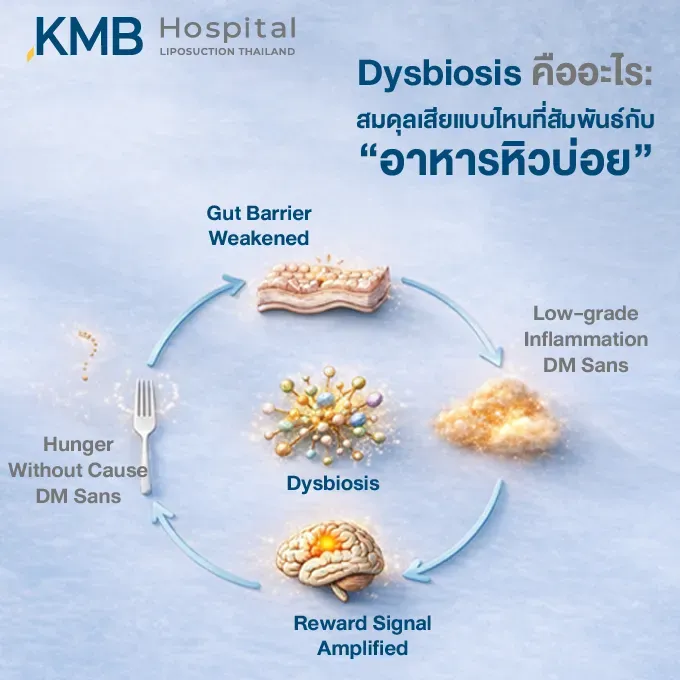
Dysbiosis refers to a state in which the gut microbial ecosystem loses its balance, to the point that the overall functional pattern of the microbiome changes.
Examples of characteristics observed in research include:
- Reduced microbial diversity (reduced diversity)
- A decline in bacterial groups that produce key metabolites
- An overgrowth of certain groups (pathobiont bloom)
In microbiome ecology research, the stability of the system is often described through the concept of microbiome diversity, which reflects the balance of the gut microbial ecosystem.
2) What Kind of Imbalance May Be Linked to “Frequent Hunger”

It is important to note that dysbiosis does not cause “hunger” in a linear fashion. Rather, changes in the microbiome may affect hunger–satiety signals through several systems, such as metabolism, immunity, and the nervous system.
Overall, microbiome reviews tend to describe three main mechanistic pathways.
3) Low SCFAs → Satiety Signals May Become Less Distinct
Certain groups of gut bacteria play a role in fermenting dietary fiber and producing Short-chain fatty acids and how they relate to hunger and satiety such as butyrate and propionate.
SCFAs have been proposed to be involved in:
- Communication with hormone-producing cells in the gut (enteroendocrine cells)
- The secretion of satiety hormones such as GLP-1 and PYY
- Signals transmitted through nerves to the brain
If the bacterial groups that produce SCFAs decline, satiety signals within gut–brain communication may become irregular. Nevertheless, the effects in humans still vary and depend on many contextual factors.
4) Gut Barrier and Low-Grade Inflammation
Some forms of dysbiosis may be associated with changes in the intestinal barrier, which acts as a boundary between the gut and the bloodstream.
If barrier integrity is altered, molecules from microbes may enter the circulation and trigger low-level immune activation.
Low-grade inflammation has been proposed to be potentially associated with:
- Changes in metabolic signaling
- The stress response
- The brain’s reward system related to eating behavior
However, most of the evidence remains observational association rather than direct proof of cause and effect.
5) Gut–Brain Axis and Eating Behavior
The gut–brain axis is not only involved in hunger–satiety signals, but is also connected to hedonic eating behaviors, such as eating due to stress or fatigue.
Some research suggests that the microbiome may play a role in this system through:
- Metabolites from bacteria
- Gut hormones
- Nerve signals via the vagus nerve
Dysbiosis may reinforce these circuits, but the mechanisms in humans still require further study.
Level of Scientific Evidence
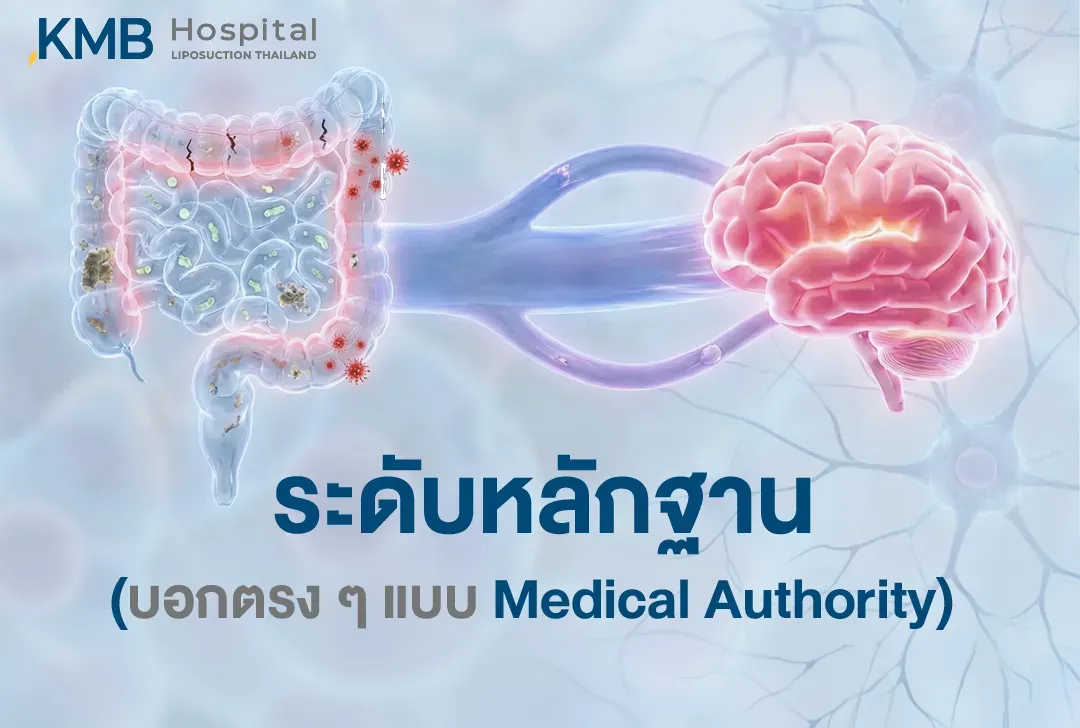
- Strong (conceptual framework) – There is consistent evidence that gut–brain communication occurs through the nervous, immune, and metabolic systems.
- Moderate – Dysbiosis is linked to the gut barrier and inflammatory tone in many contexts.
- Emerging – Human studies indicating a causal relationship between the microbiome and appetite are still in a developmental stage.
This level of evidence reflects the consistency of the reviews, not a clinical treatment guideline.
Frequently Asked Questions (FAQ)
Does dysbiosis really cause frequent hunger?
At present, there is no evidence confirming that dysbiosis alone directly causes frequent hunger. However, changes in the microbiome may be related to the gut–brain communication system involved in hunger and eating behavior.
Can dysbiosis be tested for?
The microbiome can be analyzed through DNA sequencing of gut microbes, but the interpretation of results still lacks a single standard for diagnosing dysbiosis clinically.
How should the microbiome be cared for to support metabolic health?
General approaches mentioned in research include eating a diverse diet, consuming sufficient dietary fiber, getting good sleep, and managing stress.
Key Takeaway
Changes in the microbiome may be associated with feelings of hunger through several systems, such as metabolism, immunity, and gut–brain communication
However, these relationships still fall within a systems biology framework and should not be interpreted as a linear causal pathway.
Hospital Authority
KMB Hospital focuses on assessing the outcomes of liposuction programs fairly and over time, for care that is safe, reassuring, and respectful of the patient’s body.
Content Information
Written by: Medical Content Team, KMB Hospital
Reviewed by: Clinical Governance Committee, KMB Hospital
Published: 6 March 2026
Last updated: 6 March 2026
References
- Winter SE, Bäumler AJ. Gut dysbiosis: Ecological causes and causative effects on human disease. Proc Natl Acad Sci U S A. 2023.
- Hrncir T. Gut Microbiota Dysbiosis: Triggers, Consequences, Diagnostic and Therapeutic Options. Microorganisms. 2022.
- Yu M, Yu B, Chen D, et al. The effects of gut microbiota on appetite regulation and the underlying mechanisms. Gut Microbes. 2024.
- Longo S, Rizza S, Federici M. Microbiota-gut-brain axis relationships among the vagus nerve, gut microbiota, obesity, and diabetes. Acta Diabetol. 2023.
- de Wouters d’Oplinter A, Everard A, Cani PD. Gut microbes and food reward. Front Neurosci. 2022.