
Systems Thinking: Why Small Behavioral Changes Can Transform the Entire gut–hormone System

Systems Thinking: Why Small Behavioral Changes Can Transform the Entire gut–hormone System
Many people view health as something “compartmentalized”
- Hungry → control calories
- Stressed → rest
- Bloated → eat fiber
But within the framework of the gut–hormone–brain axis, the system does not operate in a straight line. It works as a network
Small behaviors such as
- Going to bed one hour earlier
- Shifting meal timing
- Reducing late-night snacking
- Keeping a consistent daily routine
may therefore affect hormones, metabolism, and the microbiome all at once
Table of Contents
- Health systems do not work in a straight line
- Feedback loops matter more than single factors
- Small Change ≠ Small Effect
- Timing and consistency are the “pacemakers”
- Allostatic Load and system resilience
- Small changes strengthen the resilience of the network
- The risks of viewing things through Reductionism
- Limitations of the evidence
- Key Takeaway
1️⃣ Health systems do not work in a straight line

In the body, various systems are connected as a network
- The HPA axis is linked to the immune system
- Insulin signaling is linked to inflammatory tone
- Circadian rhythm is linked to microbiome rhythmicity
- The gut barrier is linked to metabolic signaling
Reviews of the gut–brain axis explain that changing one node in the system may affect multiple pathways simultaneously
This is the core principle of systems biology: the system works as a network, not as a single wire
2️⃣ Feedback loops matter more than single factors
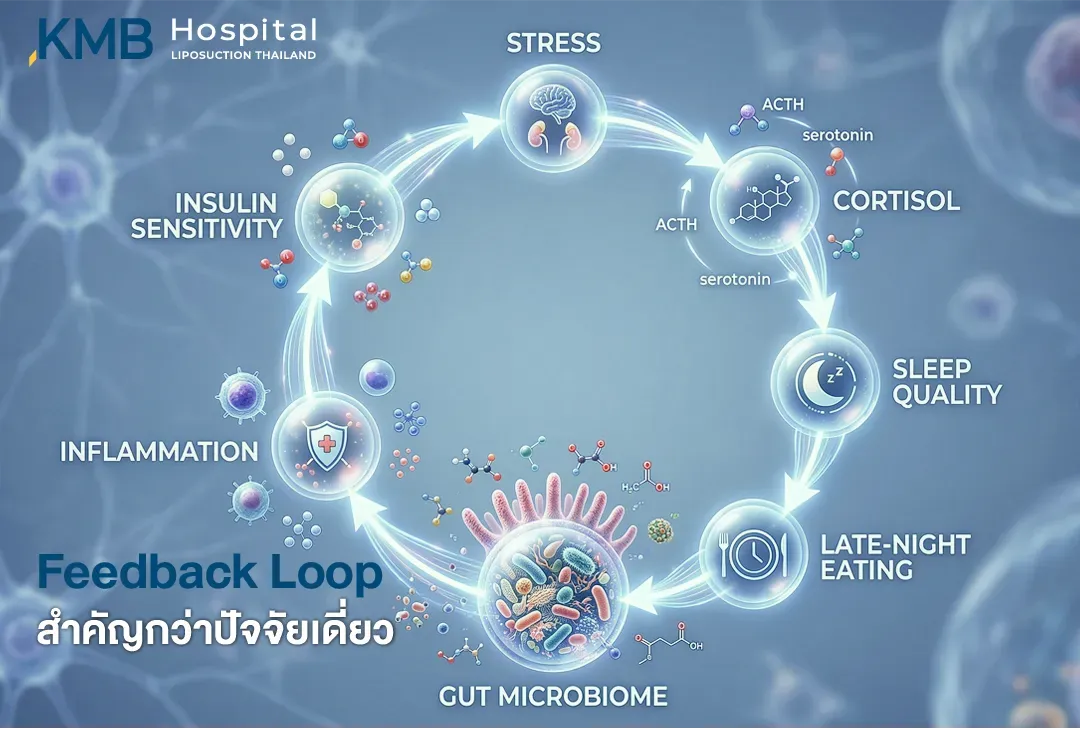
An example of a commonly observed cycle
Stress ↑ → cortisol ↑ → sleep quality ↓ → late-night eating ↑ → microbiome shift → inflammatory tone ↑ → insulin sensitivity ↓
This is not a linear relationship but a multi-layered feedback loop
The role of stress on the microbiome is explained further in the article How Stress Changes the Gut Microbiome
3️⃣ Small Change ≠ Small Effect

In a network system
- One node is connected to many pathways
- A small change may amplify its effect across multiple cycles
This is called a non-linear response
Going to bed earlier → more consistent cortisol rhythm → reduced late-night eating → reduced glucose excursions → more stable microbial rhythmicity
This is the cascading effect of a network system
4️⃣ Timing and consistency are the “pacemakers”

Based on research in circadian biology
- Meal timing is a zeitgeber for peripheral clocks
- Cortisol has a circadian rhythm
- Insulin sensitivity varies with the time of day
The consistency of one’s routine may therefore be just as important as the amount of food consumed
The role of meal timing is explained further in the article How Meal Timing Affects the Microbiome
5️⃣ Allostatic Load and system resilience
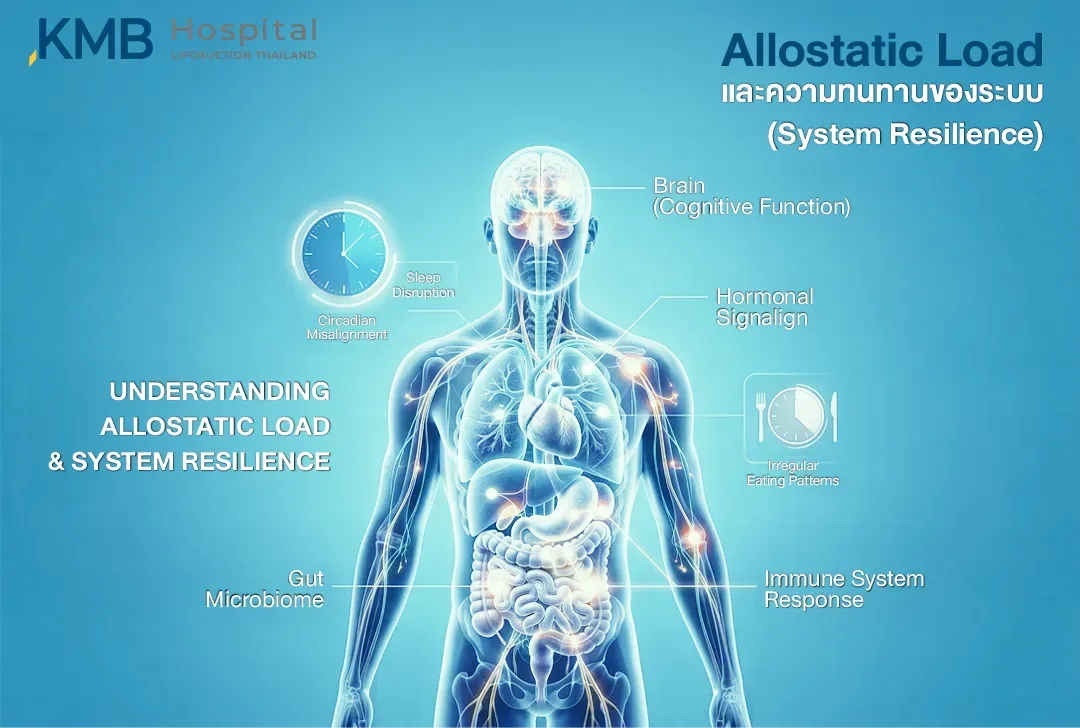
The body has the capacity to adapt to stress, known as allostasis
When the system is repeatedly activated, it develops what is called allostatic load
which refers to the cumulative cost of activating the systems
- The hormonal system
- The nervous system
- The immune system
In the gut–hormone–brain context
- Chronic HPA axis activation
- Sleep disruption
- Circadian misalignment
- Dietary irregularity
These factors may cause the system to lose its resilience
6️⃣ Small changes strengthen the resilience of the network

Small behavioral adjustments such as
- Consistent bedtimes
- Fixed meal times
- Reducing late-night stimulation
- Reducing fluctuations in routine
may help
- Reduce allostatic load
- Improve circadian alignment
- Stabilize autonomic tone
- Create a predictable microbial niche
This is not about fixing a “single point” but about increasing the resilience of the entire network
7️⃣ The risks of Reductionism

Solving problems at a single point, such as
- Focusing only on calories
- Focusing on a single hormone
- Focusing on a single probiotic
may not be enough, because the system has many layers
- Neural
- Endocrine
- Immune
- Metabolic
- Microbial
Limitations of the evidence
- Interventional microbiome research is still limited
- Results depend on baseline variability
- Not everyone responds in the same way
- Systems thinking does not mean that small changes will fix everything
Key Takeaway
but the result of the stability of the network among hormones, the brain, metabolism, and the microbiome
Small behavioral changes may increase system resilience and reduce allostatic load
Related articles
- How Circadian Rhythm Connects the Gut and Hormones
- How Stress Changes the Gut Microbiome
- Dysbiosis and Frequent Hunger
- How Gut Bacteria Communicate with the Brain
References
- Cryan JF, et al. The microbiota–gut–brain axis. Nat Rev Neurosci. 2020. DOI: 10.1038/s41583-020-0360-8
- Bautista J, et al. Chronobiome medicine: circadian regulation of host–microbiota crosstalk in systemic physiology. Front Endocrinol. 2025. DOI: 10.3389/fendo.2025.1691172
- Lages M, et al. Effects of time-restricted eating on circadian system and metabolic biomarkers. Proc Nutr Soc. 2024. DOI: 10.1017/S002966512400747X
Hospital Authority
KMB Hospital emphasizes fair, time-appropriate evaluation of outcomes following liposuction programs, ensuring care that is safe, reassuring, and respectful of the patient’s body.
Content Information
Written by: Medical Content Team, KMB Hospital
Reviewed by: Clinical Governance Committee, KMB Hospital
Published: 11 March 2026
Last updated: 11 March 2026