
How the Gut Microbiome Affects Insulin Sensitivity
How the Gut Influences Insulin Sensitivity Through “Inflammation”
In recent years, the concept of metabolic inflammation has become an important framework for explaining insulin resistance
A key question is whether the gut truly plays a role in insulin sensitivity, and if so, through what mechanisms it is involved
Reviews in microbiome and metabolic medicine since 2020 propose that the relationship between the gut barrier, dysbiosis, low-grade inflammation, and insulin signaling may be part of a broader metabolic network
However, this relationship is not a linear, single-cause pathway but rather a network interaction among multiple body systems
Table of Contents
1️⃣ Gut Barrier: Where the Changes Begin
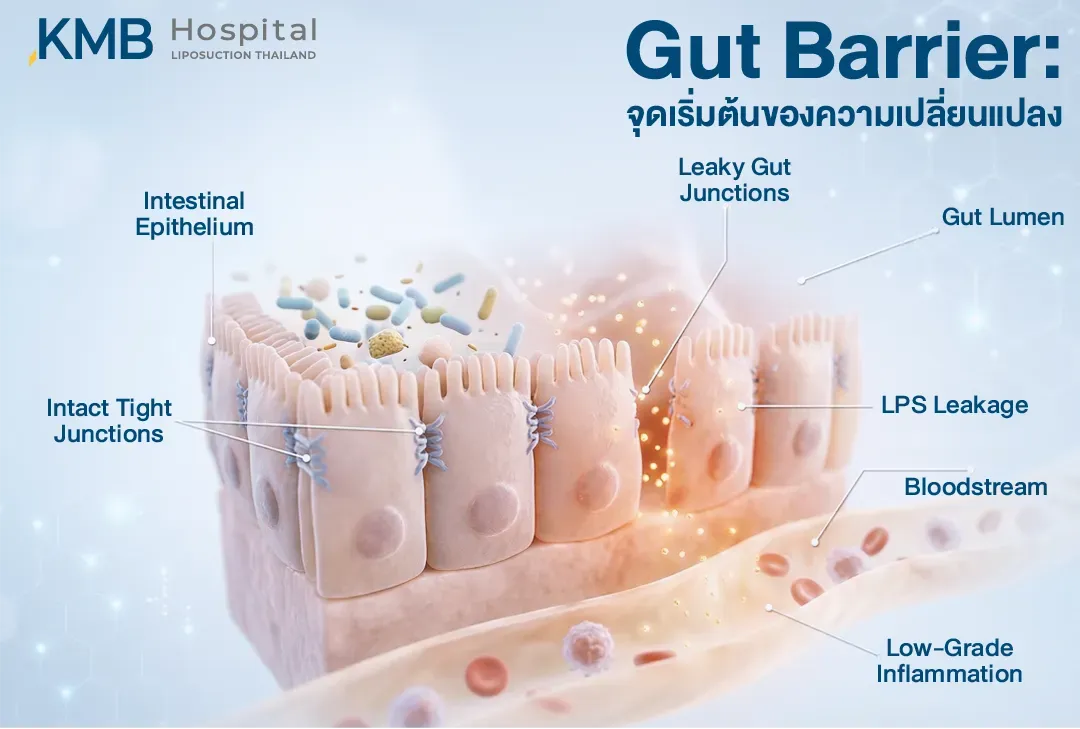
The intestinal lining acts as a selective barrier that controls what passes from the gut into the bloodstream
- It allows nutrients to pass through
- It blocks bacterial components such as lipopolysaccharide (LPS)
Microbiome reviews report that changes in
- tight junction proteins
- intestinal permeability
- mucosal immune signaling
may be associated with an increased systemic inflammatory tone
When the gut barrier is altered, circulating LPS levels may rise slightly. This condition is known as metabolic endotoxemia
However, measuring LPS in humans remains highly variable, and there is still no single standard
2️⃣ LPS → Immune Signaling → Insulin Pathway Disturbance
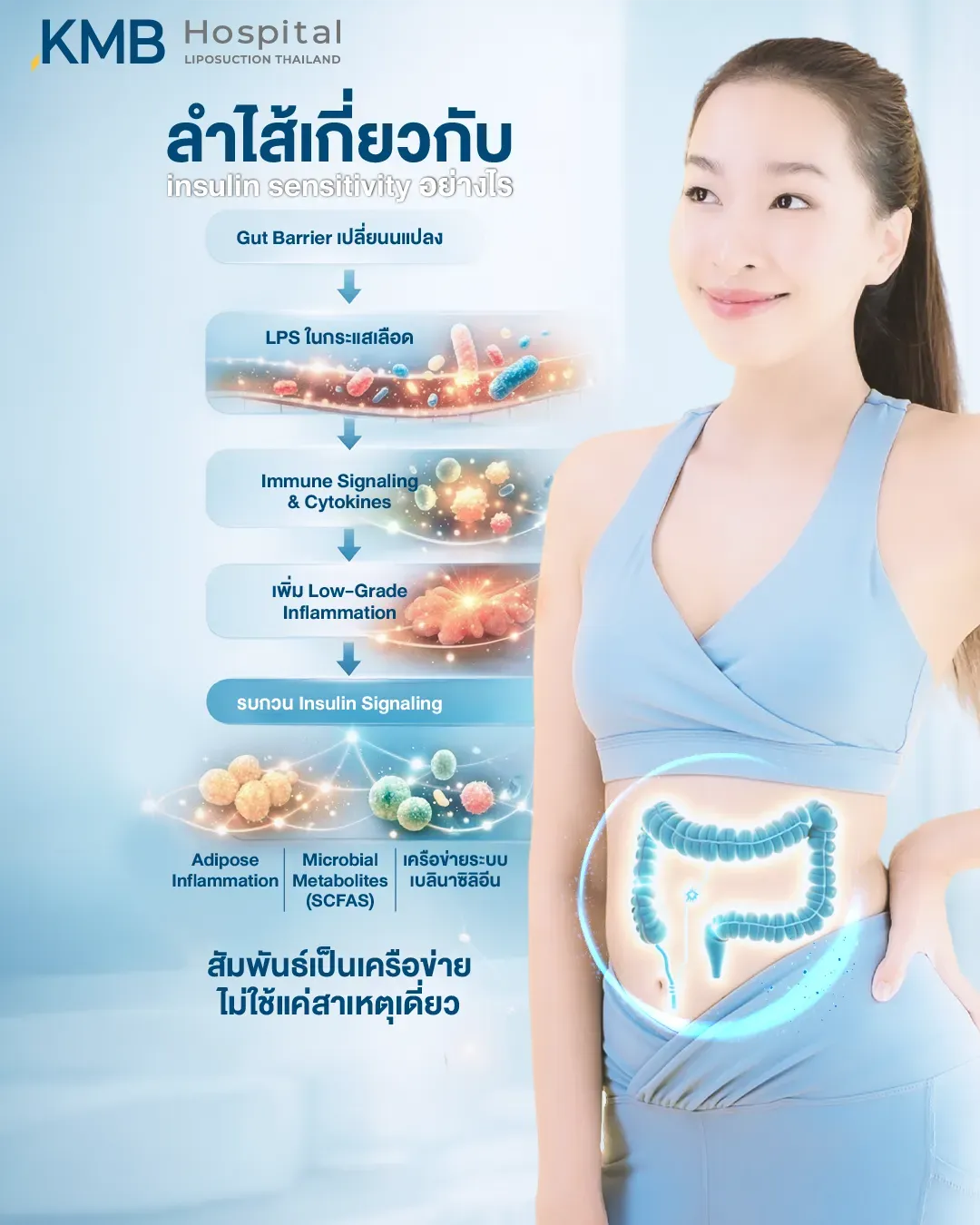
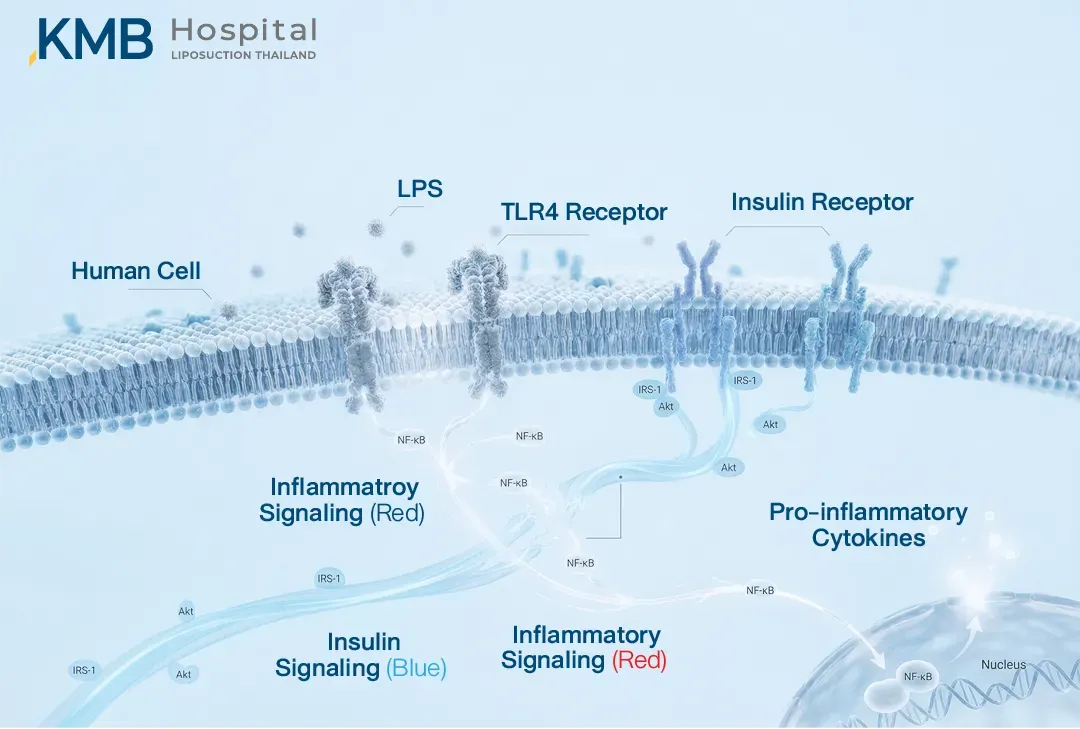
LPS can trigger immune signaling through
- TLR4 receptor
- NF-κB activation
- cytokine production
Reviews in immunometabolism indicate that these inflammatory mediators may interfere with insulin receptor signaling through mechanisms such as
- JNK pathway activation
- serine phosphorylation of IRS
- reduced efficiency of the PI3K–Akt cascade
This mechanism has strong mechanistic plausibility from experimental work, but in humans, causal confirmation is not yet definitive
3️⃣ Adipose Tissue: The Mediator of Metabolic Inflammation
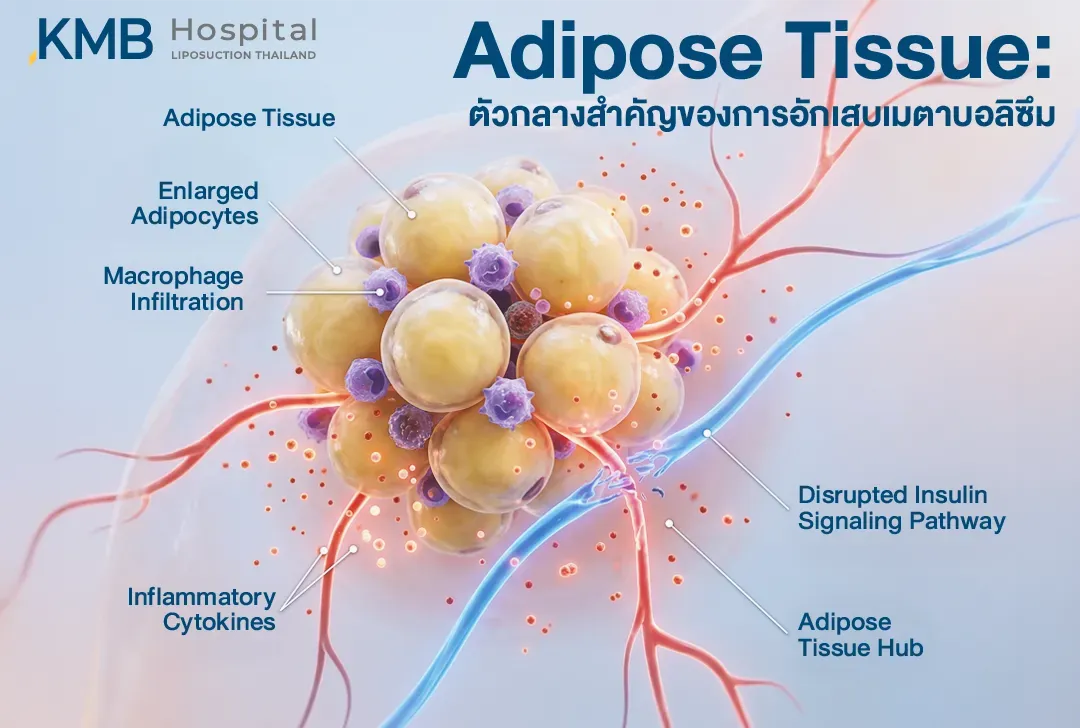
Low-grade inflammation does not occur in the gut alone
In adipose tissue, one can observe
- increased macrophage infiltration
- an altered cytokine milieu
- elevated inflammatory signaling
A review in Nature Reviews Immunology states that adipose inflammation is a key node of insulin resistance
Therefore, the relationship between the gut and insulin sensitivity often operates through immune activation in adipose tissue rather than as a direct line from the gut alone
4️⃣ Microbial Metabolites and Insulin Sensitivity
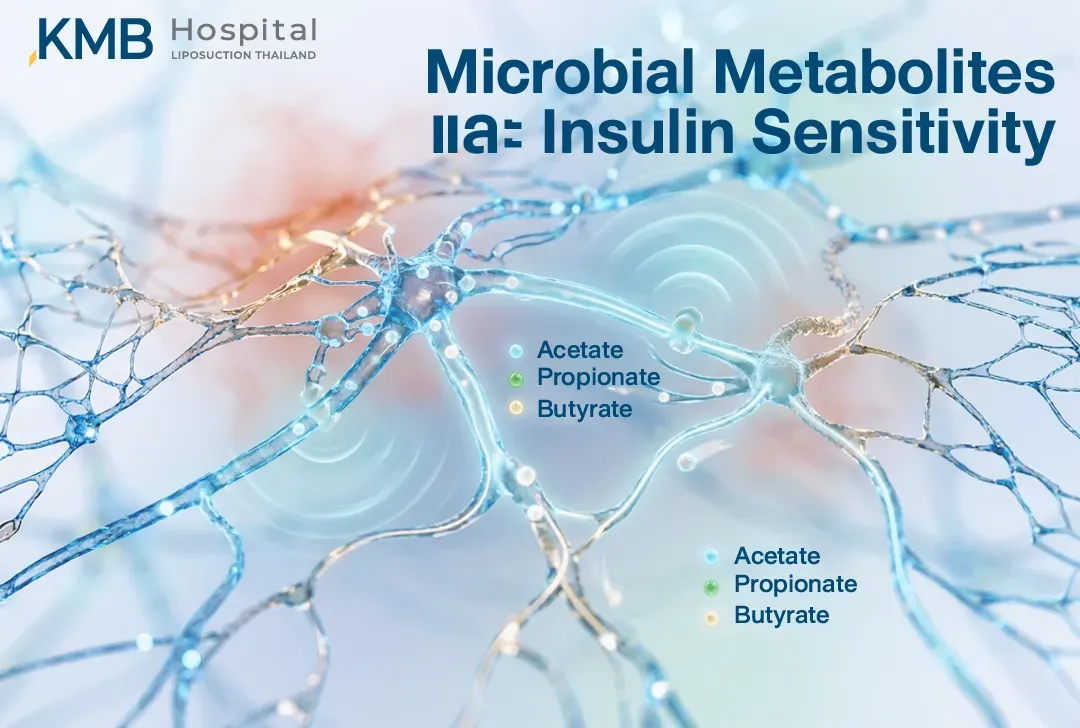
Gut microbes can produce various metabolites, such as short-chain fatty acids (SCFAs)
SCFAs such as
- acetate
- propionate
- butyrate
have been proposed to be involved in
- modulating inflammatory tone
- the secretion of gut hormones such as GLP-1
- metabolic signaling related to insulin sensitivity
Meta-analyses in humans report that, in some contexts, an SCFA increase is associated with improved insulin sensitivity
However, the results still show high heterogeneity
5️⃣ Human Evidence: Association Rather Than Causation

Current evidence has both strengths and limitations
Strengths of the evidence
- cohort studies linking gut diversity with metabolic markers
- mechanistic pathways with strong plausibility
- systematic reviews supporting the inflammation–insulin link
Limitations
- diet is an important confounder
- sleep and circadian rhythm affect both the gut and insulin
- permeability measurement is not yet standardized
- microbiome variability between individuals is high
Therefore, gut-driven insulin resistance is not yet considered a clearly confirmed diagnostic entity in clinical practice
6️⃣ Gut–Insulin Interaction Within a Systems Physiology Framework
From a systems biology perspective, this relationship can be described as a network
Gut barrier ↓ Immune signaling ↓ Inflammatory tone ↓ Adipose immune activation ↓ Insulin signaling efficiency ↓
However, the magnitude of the effect depends on many factors, such as
- adiposity
- sleep quality
- stress physiology
- circadian rhythm
- dietary pattern
Therefore, insulin sensitivity is the sum of network stability rather than any single factor
FAQ
Can the gut really cause insulin resistance?
Current evidence suggests that the gut may be involved through inflammatory signaling, but there is not yet a clearly confirmed causal pathway in humans
If the gut barrier is damaged, will insulin resistance occur immediately?
Not necessarily, because insulin resistance is a multidimensional condition that depends on adiposity, sleep, stress, and genetics
Can modifying the microbiome fix insulin resistance?
Intervention trials still show varied results and are not yet consistent enough to conclude a single guideline
Key Takeaway
The gut may play a role in insulin sensitivity through a network of multiple systems, such as
- gut barrier integrity
- metabolic endotoxemia
- low-grade inflammation
- adipose immune activation
- microbial metabolites
However, this relationship is a network interaction rather than a linear, single-cause relationship
References
- Di Vincenzo F, et al. Gut microbiota, intestinal permeability and systemic inflammation in metabolic disorders. Intern Emerg Med. 2024;19(2):xxx–xxx. doi:10.1007/s11739-023-03374-w.
– A review explaining the role of the intestinal barrier in systemic inflammation and metabolic disease.
- Jian E, et al. The metabolic endotoxemia and gut microbiota: implications for inflammation and metabolic disorders. J Endocrinol Metab. 2025;xx(x):xxx–xxx. doi:10.1152/ajpendo.00355.2025.
– An article discussing LPS translocation from the gut and the associated TLR4/NF-κB pro-inflammatory cascade.
- Chakaroun RM, et al. Gut-microbiota permeability-inflammation interactions in metabolic disease. Front Physiol. 2020;11:1380713. doi:10.3389/fphys.2024.1380713.
– A summary of evidence from human/model studies on gut permeability and immune response.
- Jobe M, et al. Translocation of bacterial debris and metabolic endotoxemia in insulin resistance: mechanisms and consequences. Int J Obes (Lond). 2022;46(9):xxxx–xxxx. doi:10.1038/s41366-022-01193-1.
– Presents evidence of the association between bacterial translocation, metabolic endotoxemia, and insulin resistance.
- Del Cornò M, et al. Endotoxins and metabolic endotoxemia in obesity-associated disorders. Biomolecules. 2026;16(2):226. doi:10.3390/biom16020226.
– Coverage of gut dysbiosis, endotoxemia, chronic inflammation, and metabolic disorders.
Hospital Authority
KMB Hospital emphasizes fair, time-appropriate evaluation of outcomes after a liposuction program, providing care that is safe, reassuring, and respectful of the patient's body
Content Information
Written by: Medical Content Team, KMB Hospital
Reviewed by: Clinical Governance Committee, KMB Hospital
Published: 18 March 2026
Last updated: 18 March 2026