
Real Hunger vs. Craving: How Hunger Hormones Work Differently
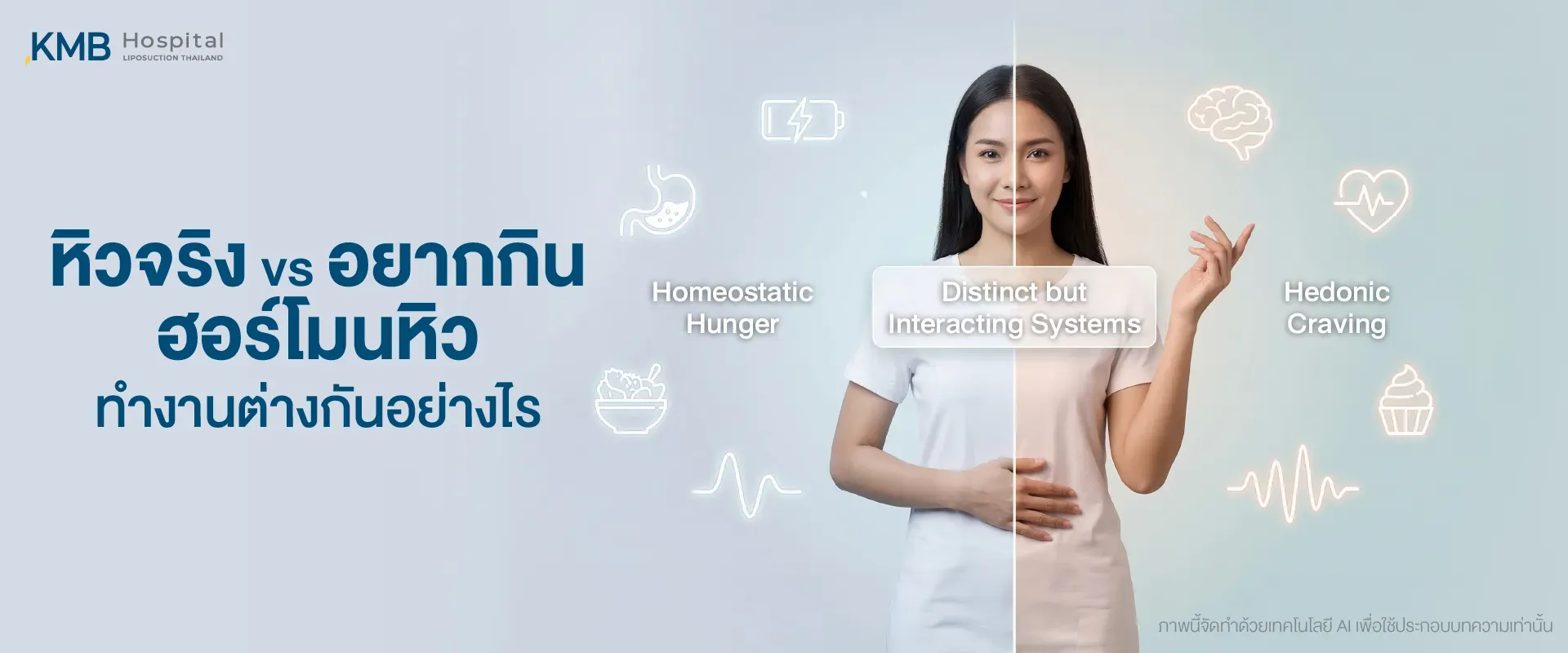
Real Hunger vs. Craving: How to Tell Them Apart Through the Gut–Hormone Axis
Answer-first:
Real hunger (physiological hunger) and craving (hedonic craving) arise from two different biological systems in the body. Hunger is tied to energy hormones such as ghrelin and is regulated by the hypothalamus, while craving is tied to the brain's reward circuitry and dopamine signaling. The two systems can operate at the same time and interact with each other, but they are not the same mechanism.
Table of Contents
Introduction
Many people have felt something like this:
- “I'm not hungry, I just want something sweet.”
- “I just ate and I'm full, but I still want to keep eating.”
The question is: how does real hunger (physiological hunger) differ from craving (hedonic craving) at the level of hormones, the gut, and the brain?
The answer lies in two overlapping but distinct systems:
1️⃣ The energy-control system (homeostatic regulation)
2️⃣ The reward system (hedonic reward circuitry)
Current human evidence supports the view that these two systems are distinct but interacting neuroendocrine systems.
1️⃣ Real Hunger (Physiological Hunger)
Biological hunger typically occurs when:
- energy levels drop
- glucose falls
- insulin is low
- leptin reflects low energy availability
The key hormone is ghrelin.
Ghrelin:
- is secreted by the stomach
- rises before meals
- falls after eating
- stimulates the hypothalamus to generate a hunger signal
Endocrinology reviews in humans confirm that ghrelin is one of the principal hunger-stimulating hormones.
Characteristics of real hunger
- an empty stomach
- reduced energy
- willingness to eat anything
- improvement after eating
This is an energy-driven signal.
2️⃣ The Satiety System (Satiety Signaling)
When food enters the intestine:
- Enteroendocrine cells release GLP-1
- PYY is released
- gastric emptying slows
- satiety increases
GLP-1 and PYY have human evidence showing that they help regulate food intake and satiety signals.
This system serves to maintain energy homeostasis, not to control impulses driven by external cues.
3️⃣ Craving (Hedonic Craving)
Craving can occur even when:
- energy status is sufficient
- glucose is not low
- you have just eaten and are full
It is associated with:
- the mesolimbic dopamine pathway
- reward anticipation
- food cue reactivity
Neuroimaging work shows that reward circuitry can drive eating independent of metabolic need.
Characteristics of craving
- wanting only certain specific foods
- arising after seeing or thinking about food
- not being truly hungry yet still wanting to eat
This is a reward-driven signal.
4️⃣ These Two Systems Operate at the Same Time
The homeostatic system and the reward system:
- are not entirely separate
- engage in cross-talk
- sometimes come into conflict
For example:
After a large meal → GLP-1 is high → you feel full
But seeing something sweet → the reward circuitry activates
This is not:
- hormone failure
- gut dysfunction
- endocrine damage
Rather, it is an interaction between the two systems.
5️⃣ The Role of Glucose Variability
A post-meal glucose spike:
- insulin ↑
- glucose ↓
In some people, a rapid glucose fall may be associated with a hunger sensation.
However:
craving ≠ glucose dip in every case
Craving is usually associated more with reward cues than with a pure energy deficit.
6️⃣ Stress and Cravings
Cortisol can:
- increase appetite
- increase preference for high-energy foods
Stress-induced eating is a pathway that differs from physiological hunger.
This reflects neurobehavioral modulation rather than an endocrine abnormality.
7️⃣ Is the Gut–Brain Axis Real?
A common question is: does the gut make us crave sweets?
The current evidence:
- there is still no causal proof in humans that the microbiome directly drives craving
- there are mechanistic hypotheses from animal studies
- human data are still at an emerging stage
So the most accurate framing is:
Gut hormones → regulate satiety
Reward circuitry → regulates craving
The two systems interact, but they are not the same system.
FAQ
Q1: What is the difference between real hunger and craving?
Real hunger is tied to ghrelin and low energy, while craving is tied to the dopamine reward circuitry.
Q2: Why do I still want something sweet even when I'm full?
Because reward signaling can operate independently of the satiety hormones.
Q3: Does the gut make us crave?
There is still no causal evidence in humans.
Q4: Does stress cause hunger or craving?
It usually triggers craving rather than real hunger.
Key Takeaway
Real hunger
- Energy-driven
- Ghrelin mediated
- Hypothalamic control
Craving
- Reward-driven
- Dopamine mediated
- Cue-triggered
The two systems work together, but they are not the same system.
Further Reading
- Why Am I Hungry All Day When Cutting Calories? The leptin–gut mismatch mechanism
- Why Do Some People Crave More Right After Eating Sweets: hormones or bacteria?
- Sugar and Dysbiosis: the sugar craving cycle
- How Dietary Fiber Helps Control Blood Sugar Through Bacteria
- Post-meal crash (feeling sleepy after eating): is it related to gut-insulin?
References
- Moon JH, Gallo LC, Patterson RE, et al. Ghrelin and appetite regulation — recent advances in human studies. Endocrine Reviews. 2022.
- Baggio LL, Wang X, Huang Q, Drucker DJ. Incretin action in the human enteroinsular axis. Cell Metabolism. 2021.
- Volkow ND, Wang G-J, Tomasi D, Baler RD. The neurobiological overlaps of reward and eating behaviours. Nat Rev Neurosci. 2020.
- Rutters F, Nieuwenhuizen AG, Lemmens SG, et al. Stress and eating behaviour in humans. Physiology & Behavior. 2021.
- Jin T, Day M. Appetite hormones in body weight control: a human perspective. Endocrine Connections. 2021.
- Freeman LR, Granholm ACE. Effects of high-fat diet and insulin resistance on reward processing. Neuroscience & Biobehavioral Reviews. 2021.