
How Poor Sleep Disrupts Your Hormones (Sleep and Metabolism)

Lack of Sleep Makes You Hungry: The Leptin↓ Ghrelin↑ Mechanism and Its Link to the Gut
Answer-first:
Insufficient sleep is associated with increased hunger in numerous human studies, with changes observed in appetite-regulating hormones such as leptin and ghrelin, as well as the effects of circadian disruption on the nervous system and metabolism. However, this mechanism is a coordinated response of multiple systems, not the malfunction of any single hormone.
Table of Contents
Introduction
Many people notice that on nights they sleep poorly, they feel hungry all the next day, or crave sweets more than usual.
The common explanation is “hormonal imbalance,” particularly the idea that leptin decreases and ghrelin increases.
However, the actual mechanism involves many systems, including:
- circadian rhythm
- the nervous system
- appetite-regulating hormones
- signaling from the gut
Therefore, the “hungry after poor sleep” effect results from changes across multiple levels of biology.
---
1️⃣ What Are Leptin and Ghrelin

Leptin
- produced by adipose tissue
- signals sufficient energy stores to the hypothalamus
- helps reduce appetite
Ghrelin
- produced mainly by the stomach
- rises before meals
- stimulates hunger signaling through the hypothalamus
These two hormones work together to control homeostatic appetite regulation.
---
2️⃣ Research on Sleep Deprivation

Sleep restriction experiments in humans, such as sleeping only 4–5 hours per night for several consecutive nights, have found that:
- hunger increases
- energy intake increases
- in many studies, ghrelin rises and leptin falls
However, the magnitude and direction of these changes may vary according to:
- sex
- BMI
- energy intake
- the pattern of sleep loss
Therefore, the claim that “leptin drops and ghrelin rises in everyone” is an overgeneralization that overstates the precision of the evidence.
---
3️⃣ Circadian Disruption Matters as Much as the Number of Hours Slept
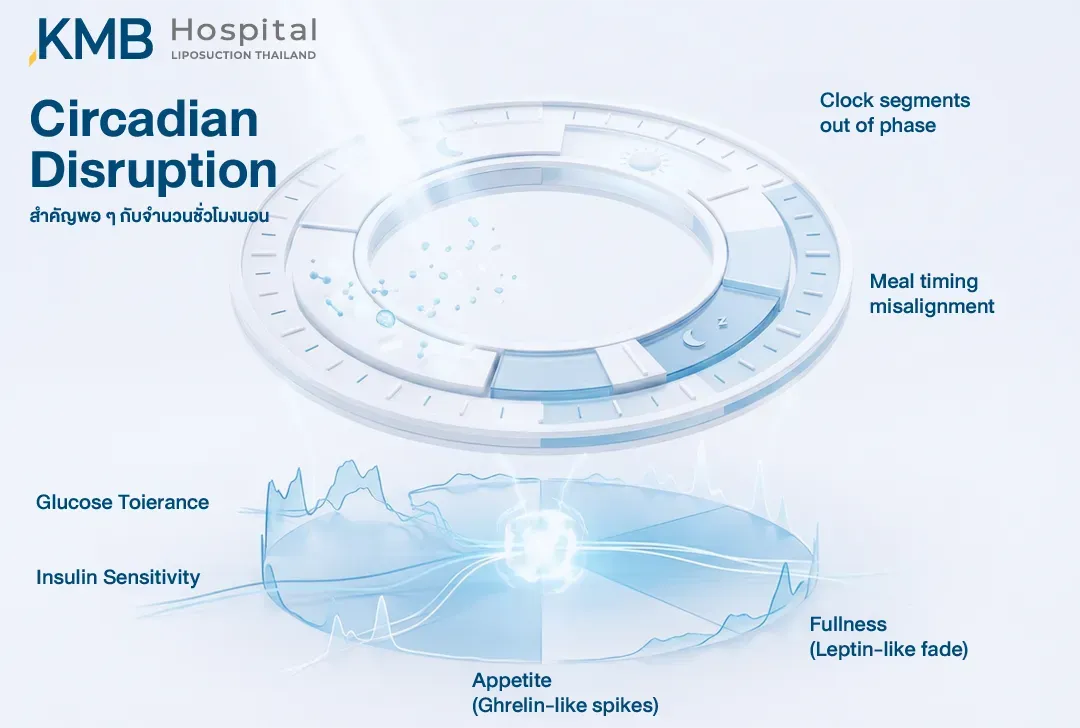
Insufficient sleep does not simply mean “fewer hours”—it is also related to:
- going to bed late
- exposure to light at night
- eating outside of biological timing
Circadian misalignment affects:
- glucose tolerance
- insulin sensitivity
- appetite regulation
Therefore, the hunger that follows sleep loss is the result of changes to the biological rhythm across the entire system.
---
4️⃣ The Gut–Appetite Axis

Ghrelin is produced by the stomach, and the enteroendocrine system in the gut plays an important role in appetite signaling.
Sleep deprivation may be associated with:
- changes in gut motility
- slight shifts in microbiome composition
- low-grade inflammatory signaling
However, there is still no causal evidence that a microbiome shift alone causes increased hunger after sleep loss.
---
5️⃣ Why You Crave Sweets After Poor Sleep

Sleep deprivation can stimulate both:
1. Homeostatic hunger
hunger signals from hormones
2. Hedonic hunger
the response of the brain’s reward circuitry
Therefore, appetite after sleep loss is a circadian–neuroendocrine–behavioral interaction.
---
6️⃣ Does Lack of Sleep Cause Weight Gain

In the short term:
- hunger increases
- high-energy food intake increases
In the long term, if sleep restriction continues without compensation, it may increase the risk of weight gain.
However, this mechanism is the result of multiple systems working together, not a hormone imbalance in the pathological sense.
---
FAQ
Q1: Does lack of sleep really make you hungry?
Many human studies have found that insufficient sleep is associated with increased hunger and higher energy intake.
Q2: Why do you crave sweets after poor sleep?
Sleep deprivation increases the sensitivity of the brain’s reward circuitry, leading to hedonic eating and cravings for high-energy foods.
Q3: Does lack of sleep break your hormones?
The changes in leptin and ghrelin after sleep loss are a physiological response, not a pathological hormonal abnormality in healthy people.
---
Key Takeaway
- Insufficient sleep is associated with increased hunger.
- Many studies find that ghrelin rises and leptin falls.
- Circadian disruption plays an important role in appetite regulation.
- Appetite after sleep loss arises from both homeostatic and reward mechanisms.
---
Recommended Further Reading
- Circadian Rhythm: How Your Body Clock Connects the Gut and Hormones
- Real Hunger vs. Cravings: How to Tell Them Apart from the Gut–Hormone Axis Perspective
- How Dietary Fiber Helps Control Blood Sugar Through Bacteria
- Why Stress Makes Your Belly Bigger—Is Cortisol Really to Blame
---
Hospital Authority
Written by: Medical Content Team, KMB Hospital
Reviewed by: Clinical Governance Committee, KMB Hospital
Published: 25 March 2026
Last updated: 25 March 2026
References
- Broussard JL, Van Cauter E. Disturbances of sleep and circadian rhythms: novel risk factors for obesity. Physiol Rev. 2021.
- Spiegel K, Tasali E, Penev P, Van Cauter E. Sleep curtailment is associated with decreased leptin levels and increased hunger. Ann Intern Med. 2004.
- Depner CM, Stothard ER, Wright KP Jr. Metabolic consequences of circadian misalignment. Curr Biol. 2020.