
How Burnout Affects Metabolism
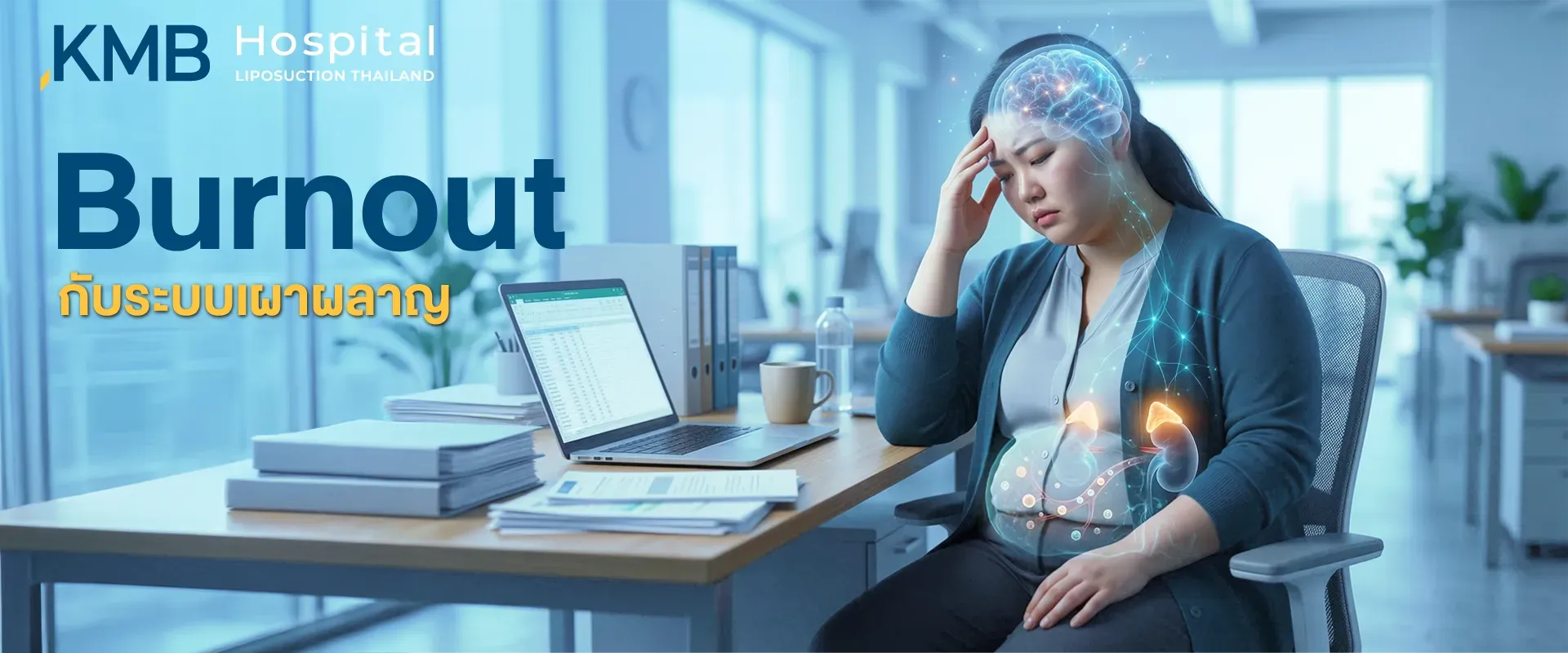
Burnout and Metabolism: Why Some People Feel Their “Metabolism Is Broken”
Answer-first:
Burnout does not directly damage your basal metabolic rate (BMR). It is a state of chronic stress dysregulation that affects sleep disruption, circadian rhythm, movement behavior (NEAT), and eating patterns more than anything else. What many people experience as a “broken metabolism” usually stems from systemic changes such as disrupted sleep, fatigue, and reduced movement rather than a failure of the metabolic system itself.
Table of Contents
Introduction
Many people experiencing burnout often say:
- “My metabolism is broken”
- “I eat the same amount but keep gaining weight”
- “I'm so tired I don't even want to move”
The key question is: does burnout really slow down metabolism, or is it a more complex systemic change?
To understand the answer, we need to be clear about one thing:
Burnout ≠ an endocrine disease
and it is not the same as hypercortisolism such as Cushing's syndrome.
Biologically, burnout is usually described as a form of chronic stress dysregulation.
---
1️⃣ Burnout from a Physiological Perspective
Burnout is often associated with changes across multiple systems, such as:
- HPA axis dysregulation
- Cortisol rhythm flattening
- Sympathetic overactivation
- Reduced parasympathetic recovery
- Sleep architecture disruption
Importantly, cortisol in burnout is usually not elevated around the clock; rather, there is a disruption of the circadian rhythm.
Research has found that this may involve:
- A reduced cortisol awakening response
- A flattened diurnal slope
- Slightly elevated evening cortisol in some individuals
This pattern therefore reflects a regulatory dysrhythmia rather than abnormally excessive cortisol production as in a disease.
---
2️⃣ Does Burnout Lower BMR?
To date, there is no high-quality evidence confirming that burnout directly lowers the basal metabolic rate (BMR).
What changes more clearly is:
- Reduced non-exercise activity thermogenesis (NEAT)
- A decline in overall physical activity
- Fatigue reducing spontaneous movement
- Reduced recovery capacity
In many cases where patients feel their “metabolism is broken,” the reality may actually be:
Adaptive energy conservation behavior
In other words, the body enters an energy-saving mode through behavior rather than by directly lowering BMR.
---
3️⃣ Sleep Disruption: The Main Mediator
Almost every case of burnout also involves sleep problems.
Sleep loss affects:
- Reduced insulin sensitivity
- Reduced glucose tolerance
- Altered appetite regulation
- Increased reward sensitivity toward high-energy foods
Repeatedly disrupted sleep can significantly reduce insulin sensitivity even in healthy humans.
Therefore, the metabolic shift seen in burnout usually occurs through sleep disruption rather than the direct effect of cortisol.
---
4️⃣ Circadian Misalignment
Burnout often comes together with:
- Working late at night
- Screen use during nighttime hours
- Irregular meal timing
Circadian misalignment affects:
- Hepatic glucose regulation
- Peripheral insulin signaling
- Hormonal timing
This disruption of the body's biological rhythm can increase metabolic variability even when BMR has not decreased.
---
5️⃣ The Reward System and Eating Patterns
Chronic stress affects:
- The dopaminergic reward pathway
- Executive control
- Hedonic eating
During burnout, many people therefore find that they:
- Crave high-energy foods
- Crave sweet or fatty foods
- Eat to give their mind a break
This mechanism is a neurobehavioral adaptation, not an endocrine collapse.
---
6️⃣ Burnout and Insulin Signaling
Sleep fragmentation and chronic stress can be associated with:
- Peripheral insulin resistance
- Low-grade inflammation
- Altered adipokine signaling
However, this mechanism reflects a system-level strain rather than a single cortisol spike.
---
7️⃣ The Gut Layer (Emerging Evidence)
Chronic stress may be associated with:
- Altered gut motility
- Increased visceral sensitivity
- Low-grade inflammatory signaling
- A shift in microbiome composition
However, there is still no causal evidence confirming that burnout alters the microbiome to the point of directly lowering BMR.
Gut alterations are more likely a secondary consequence of lifestyle patterns rather than a primary driver.
---
Key Takeaways
- Burnout is not a state of broken hormones
- Cortisol is usually out of rhythm rather than constantly elevated
- BMR does not decrease directly
- Sleep disruption is a key mediator
- Reduced NEAT plays a major role in energy expenditure
- The reward system alters eating patterns
- The gut may be secondarily affected by lifestyle patterns
---
FAQ
Does burnout really break your metabolism?
There is no evidence that burnout directly lowers the basal metabolic rate. The changes that are observed usually arise from disrupted sleep, fatigue, and reduced movement.
Why is it easy to gain weight during burnout?
The key factors usually involve sleep disruption, circadian misalignment, reduced movement, and changes in eating patterns rather than a change in any single hormone.
Does stress break your metabolism?
In healthy people, chronic stress usually affects the sleep system, circadian rhythm, and behavior more than it directly damages the metabolic system.
---
Recommended Further Reading
- Stress Eating: How Cortisol Shapes the Foods You Choose
- What Cortisol Really Is in Everyday Life
- Not Sleeping Enough Makes You Hungry: Leptin and Ghrelin
- Circadian Rhythm, Hormones, and the Gut
---
References
- Danhof-Pont MB, van Veen T, Zitman FG. Biomarkers in burnout: A systematic review. J Psychosom Res. 2021.
- Sjörs A, Jansson PA, Eriksson JW. Altered diurnal cortisol rhythm in chronic stress states. Psychoneuroendocrinology. 2021.
- Broussard JL, Van Cauter E. Disturbances of sleep and circadian rhythms. Physiol Rev. 2021.
- Depner CM, Stothard ER, Wright KP Jr. Metabolic consequences of circadian disorders. Lancet Diabetes Endocrinol. 2020.
- Sinha R, Jastreboff AM. Stress as a risk factor for obesity. Biol Psychiatry. 2021.
- Yau YHC, Potenza MN. Stress and eating behaviors. Physiol Behav. 2020.
- Foster JA, Rinaman L, Cryan JF. Stress and the gut–brain axis. Trends Endocrinol Metab. 2021.