
What Is Emotional Eating: The Brain and Hormone Mechanisms
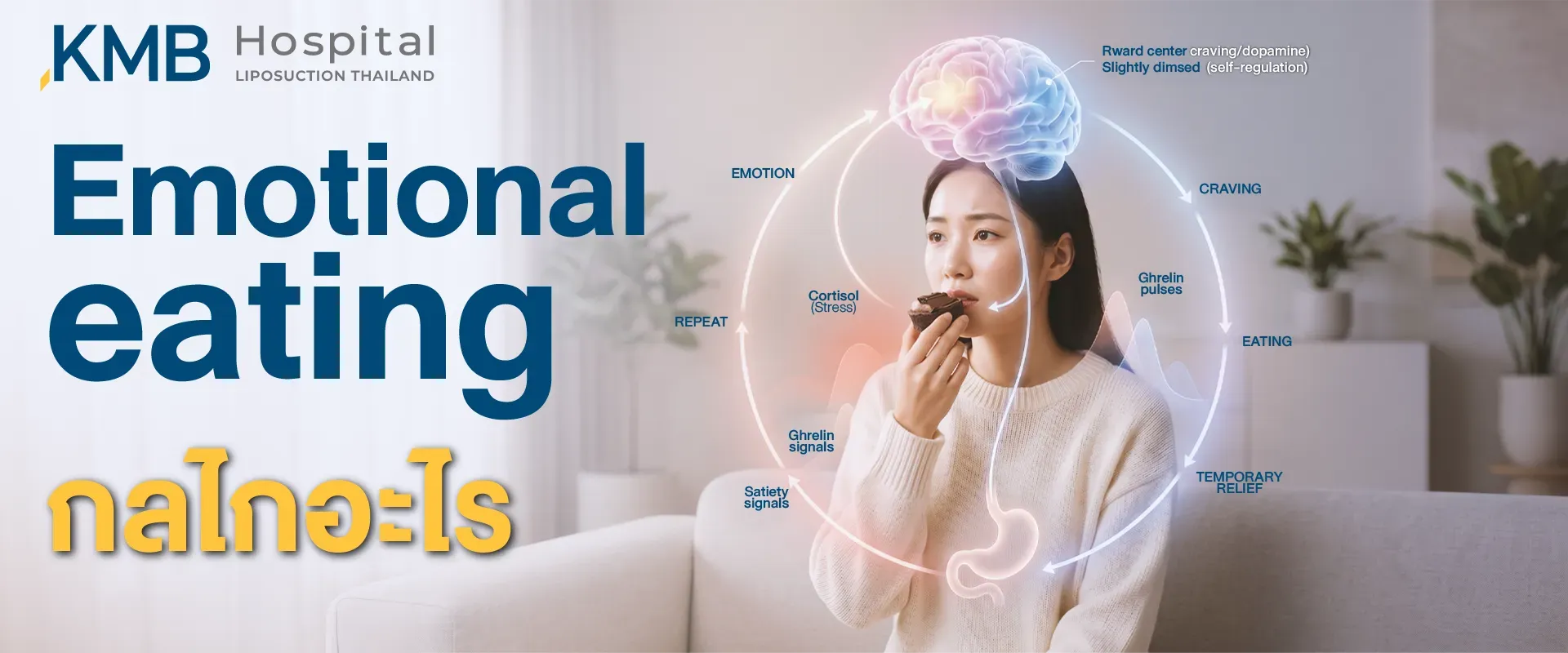
Emotional eating: what mechanisms lie behind it
Answer-first:
Emotional eating is not caused by “hormonal imbalance” alone. It results from the combined workings of the reward circuitry in the brain, the stress system, sleep, and behavioral control. High-energy foods can trigger dopamine signaling and create a reinforcement loop between emotion and eating.
Table of Contents
Introduction
Many people have had experiences like these
- Feeling stressed and craving something sweet
- Feeling tired and snacking constantly
- Feeling bored and looking for something to eat
- Feeling happy or celebrating and wanting a special treat
The question is: what causes emotional eating—hormones, the brain’s reward system, or signals from the gut?
Current evidence indicates that emotional eating is the result of a neurobehavioral–endocrine interaction rather than a disorder of any single hormone.
---
1️⃣ Emotional eating from a biological perspective
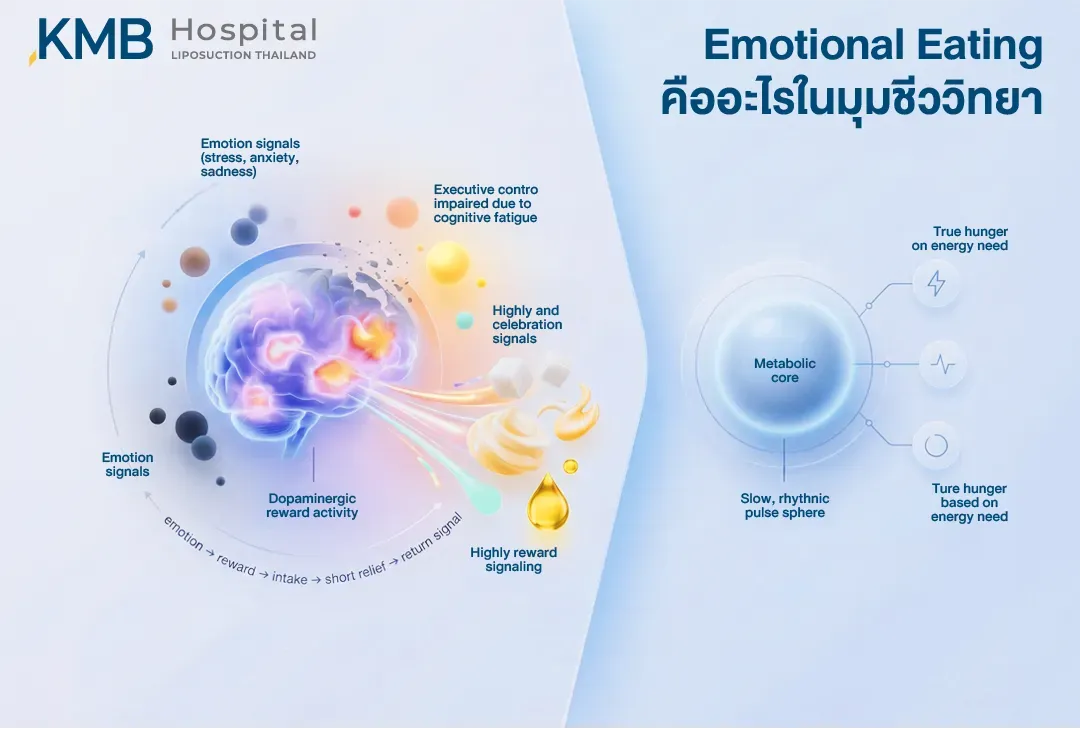
Emotional eating is eating that is triggered by
- Negative emotions such as stress, anxiety, sadness
- Fatigue
- Cognitive fatigue
- Sometimes positive emotions such as celebration or reward
It is therefore considered hedonic eating rather than eating driven by low energy.
Read more about the difference between hunger and craving at True hunger vs craving
---
2️⃣ Reward circuitry
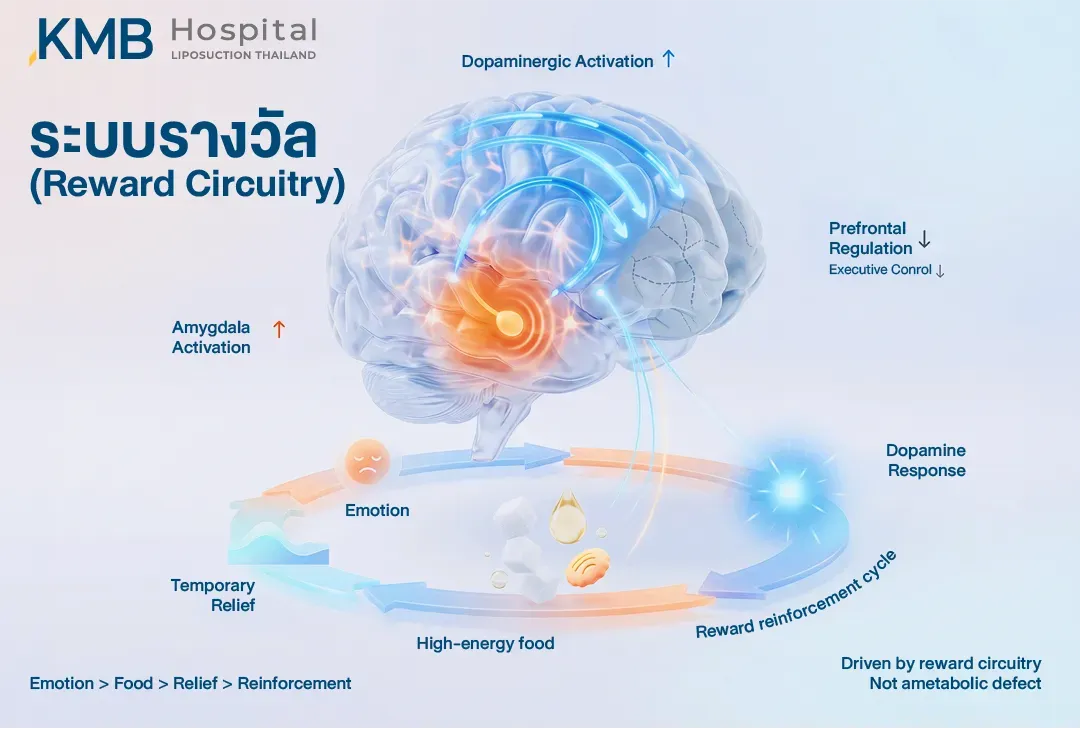
When stress occurs, the brain regions involved in reward, such as
- Amygdala
- Dopaminergic pathway
become more activated, while the prefrontal cortex, which controls impulse, may play a reduced role.
High-energy foods such as sugar and fat can trigger dopamine rapidly, giving rise to the loop
Emotion → Food → Temporary relief → Reinforcement
This loop is called the reward reinforcement cycle
Read more about stress eating at Stress eating: what kinds of food does Cortisol lead you to choose
---
3️⃣ How much of a role does Cortisol play
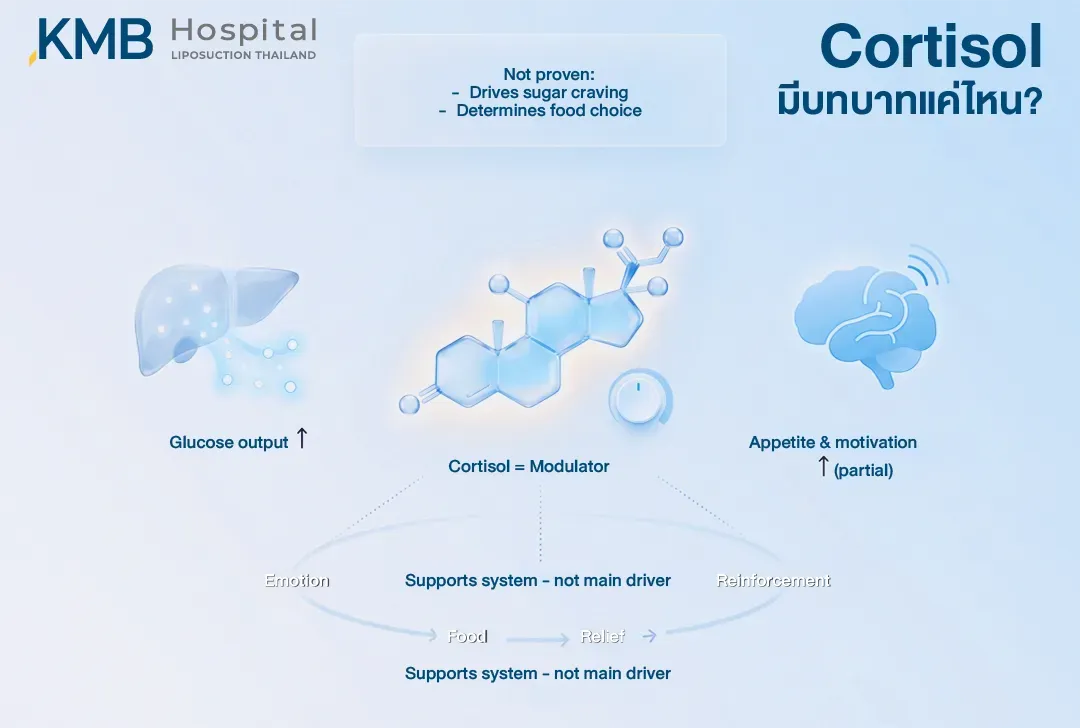
Cortisol can
- Increase hepatic glucose output
- Partly affect appetite regulation
- Increase motivation to eat under stress
However, evidence in humans does not yet support the idea that cortisol alone determines cravings for sweets or specific types of food.
The role of cortisol is therefore more likely that of a permissive modulator rather than the primary driver.
Read more about cortisol at What Cortisol really is in everyday life
---
4️⃣ Sleep layer
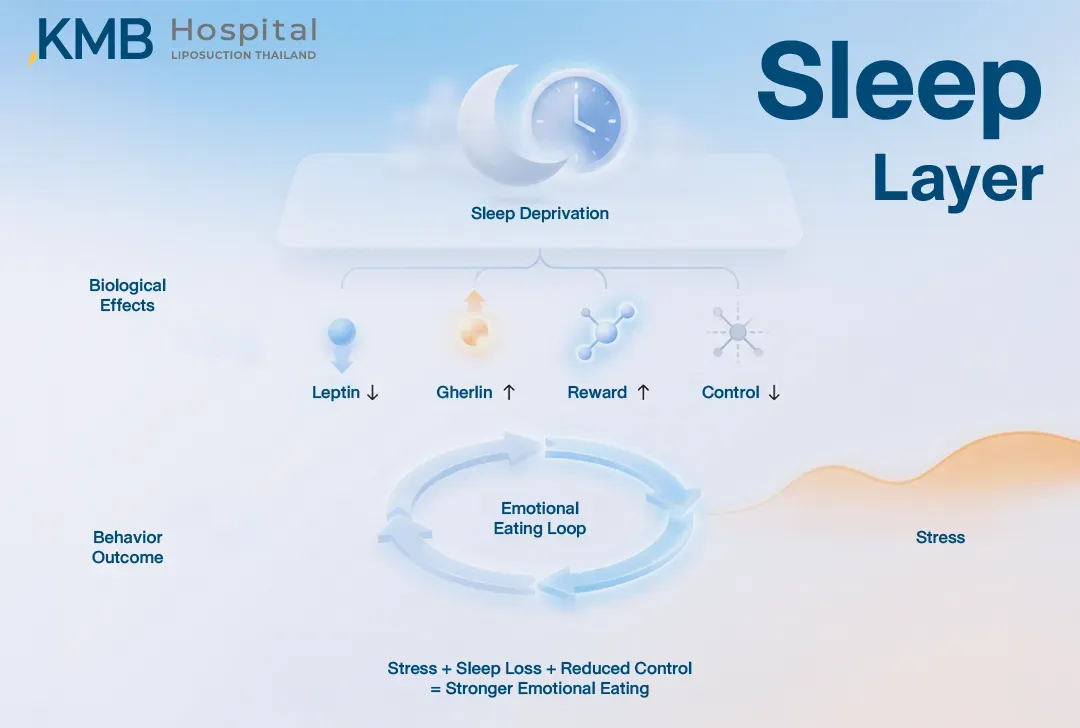
Insufficient sleep affects
- Leptin decreases
- Ghrelin increases
- Reward sensitivity increases
- Executive control decreases
When combined with stress, emotional eating becomes more likely to occur.
Read more Lack of sleep makes you hungry: leptin and ghrelin
---
5️⃣ Emotional eating and the glucose loop
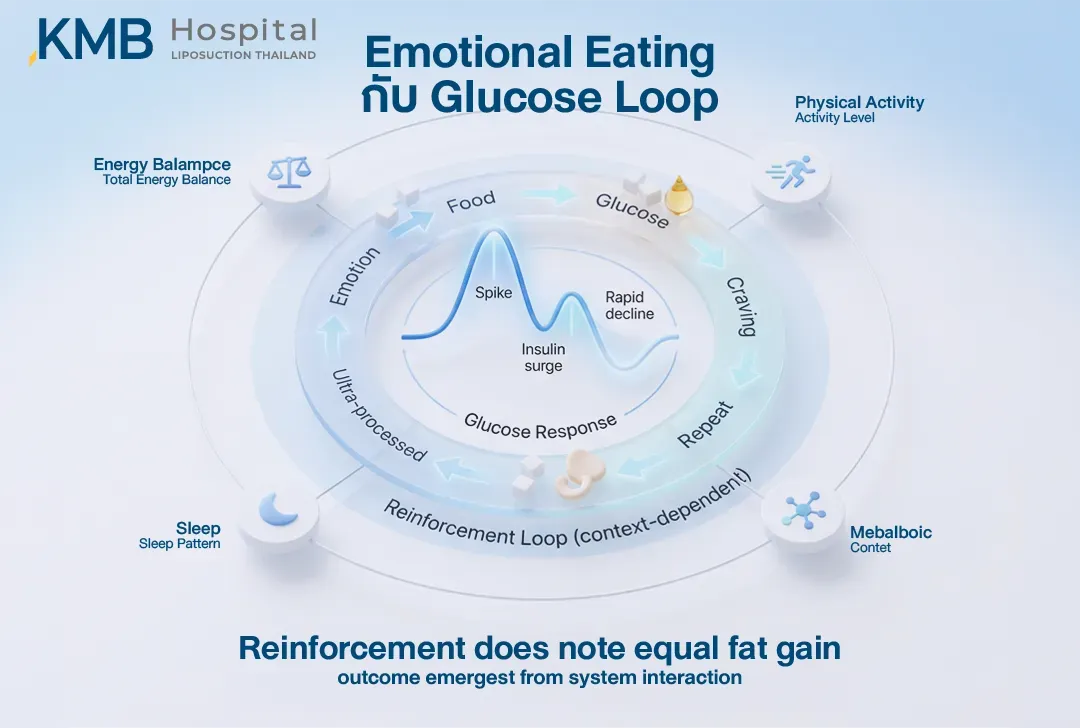
Eating high-energy foods may lead to
- Glucose spike
- Insulin surge
- Rapid glucose decline
In some people this may trigger repeated cravings, which help reinforce the emotional eating cycle.
Nevertheless, emotional eating alone does not always lead to weight gain, because the outcome depends on
- Total energy balance
- Physical activity
- Sleep pattern
- Metabolic context
---
6️⃣ Gut–brain layer
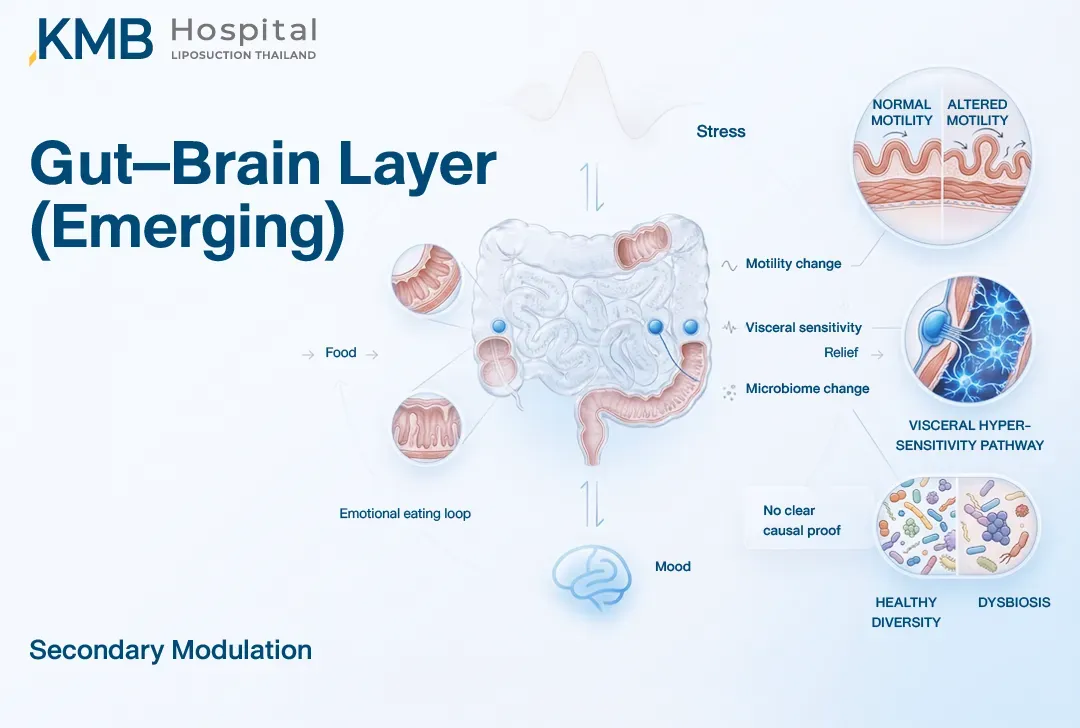
Chronic stress may be associated with
- Altered gut motility
- Visceral sensitivity
- Microbiome composition shift
Some studies suggest that the gut–brain axis may play a role in mood regulation.
However, there is still no causal evidence confirming that microbiome alteration directly causes emotional eating.
Read more about the microbiome at The diversity of gut bacteria
---
Key Takeaways
- Emotional eating is not broken hormones
- The reward system plays the primary role
- Executive control decreases under stress
- Cortisol is a contributor, not a determinant
- Sleep loss strengthens the cycle
- Emotional eating does not always equal weight gain
- The gut may play a secondary role
---
FAQ
What is emotional eating
Emotional eating is eating that is triggered by emotions such as stress, boredom, or fatigue, rather than eating driven by biological hunger.
Is emotional eating caused by hormones
Some hormones, such as cortisol, may play a partial role, but the primary mechanism involves the reward circuitry and the brain’s behavioral control.
Does emotional eating always cause weight gain
Not always. The outcome depends on energy balance, physical activity, sleep, and metabolic context.
---
Recommended further reading
- Stress eating: what kinds of food does Cortisol lead you to choose
- Burnout and metabolism
- True hunger vs craving
- Lack of sleep makes you hungry
---
References
- Yau YHC, Potenza MN. Stress and eating behaviors: reward pathway implications. Physiol Behav. 2020.
- Chrousos GP. Stress and disorders of the stress system. Nat Rev Endocrinol. 2020.
- Depner CM, Stothard ER, Wright KP Jr. Metabolic consequences of sleep and circadian disorders. Lancet Diabetes Endocrinol. 2020.
- Broussard JL, Van Cauter E. Disturbances of sleep and circadian rhythms. Physiol Rev. 2021.
- Macht M. How emotion affects eating: a five-way model. Appetite. 2020.
- van Strien T. Emotional eating and food intake regulation. Neurosci Biobehav Rev. 2020.
- Sinha R, Jastreboff AM. Stress as a risk factor for obesity and metabolic disease. Biol Psychiatry. 2021.
Content Information
Written by: Medical Content Team, KMB Hospital
Reviewed by: Clinical Governance Committee, KMB Hospital
Published: 26 March 2026
Last updated: 26 March 2026