
How Estrogen and Progesterone Affect Digestion: Why You Feel Bloated Before Your Period
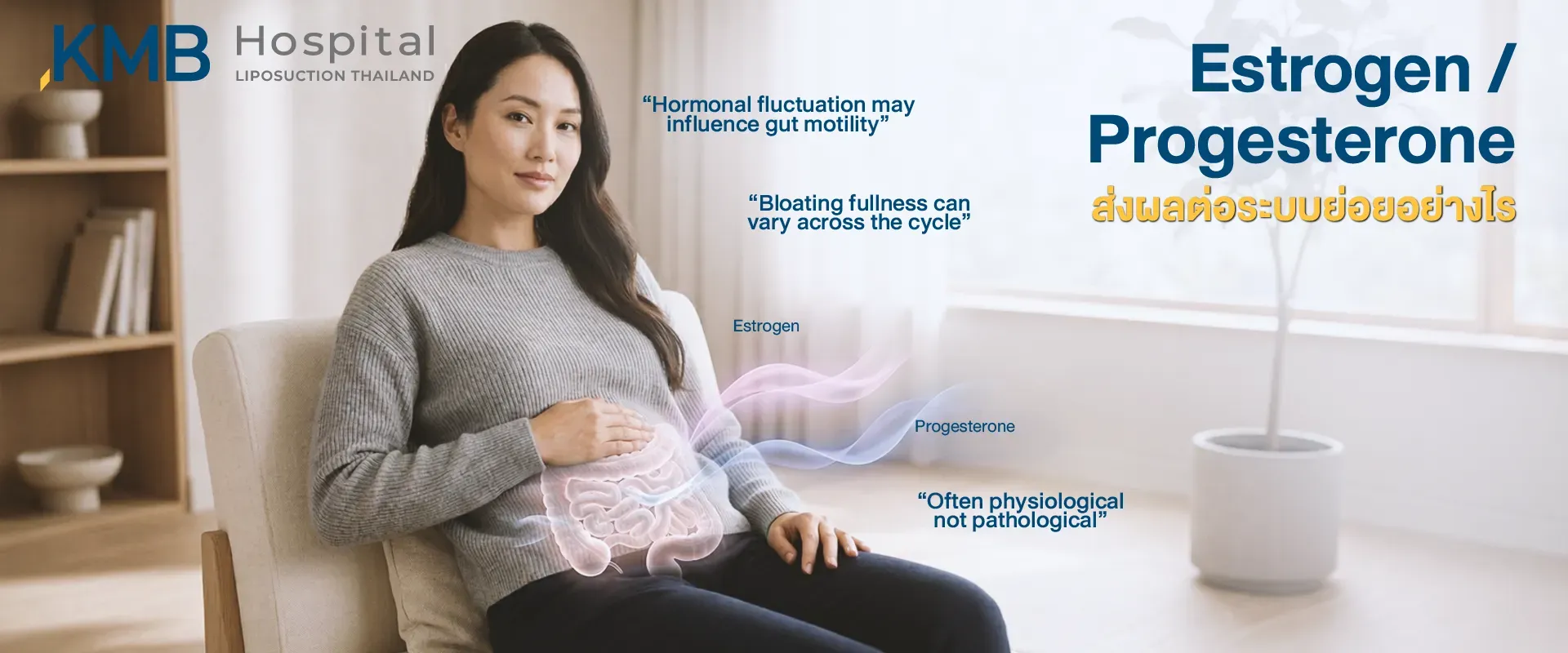
How Estrogen and Progesterone Affect Digestion
Answer-first:
Fluctuations in female sex hormones such as estrogen and progesterone throughout the menstrual cycle can affect GI motility and sensations within the digestive system. In healthy women, symptoms such as bloating, fullness, or slowed bowel movements before menstruation are usually a physiological fluctuation rather than a permanent abnormality.
Table of Contents
Progesterone and Bowel Movement
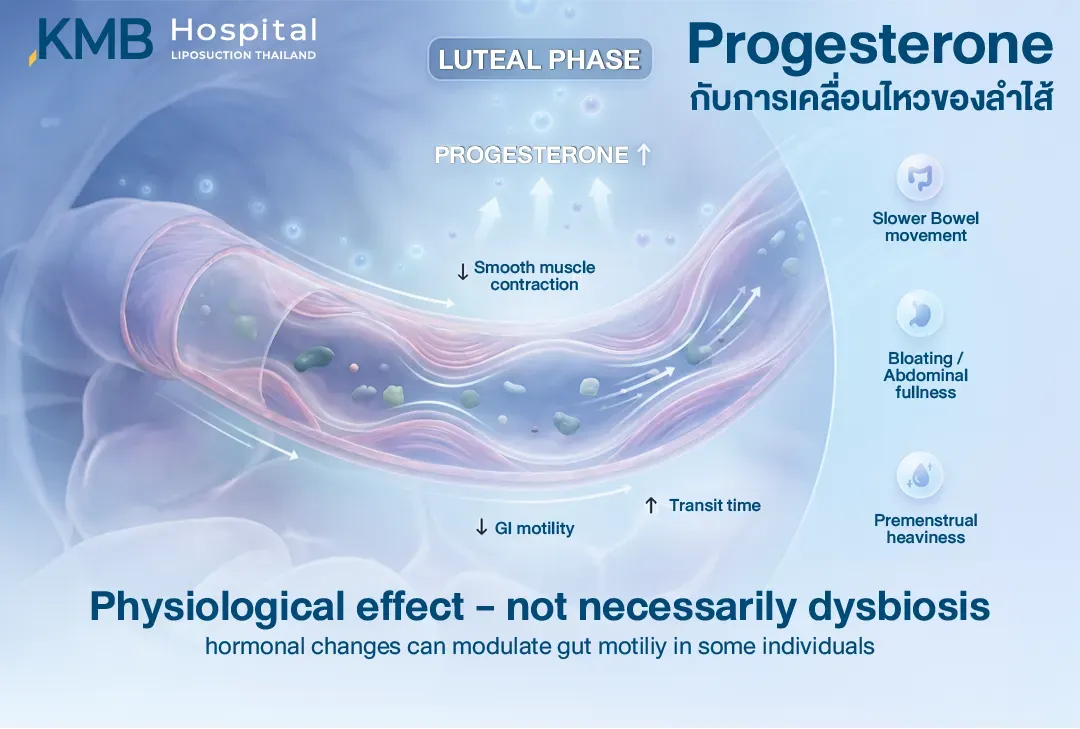
During the luteal phase, progesterone levels rise, which can affect
- smooth muscle tone
- GI motility
- intestinal transit time
Progesterone can reduce the contraction of smooth muscle in the gastrointestinal tract, slowing motility in some individuals.
As a result, some women may notice that they
- have slower bowel movements
- feel abdominal fullness
- feel bloated before menstruation
These symptoms are usually a physiological response rather than dysbiosis.
---
Estrogen and Digestion
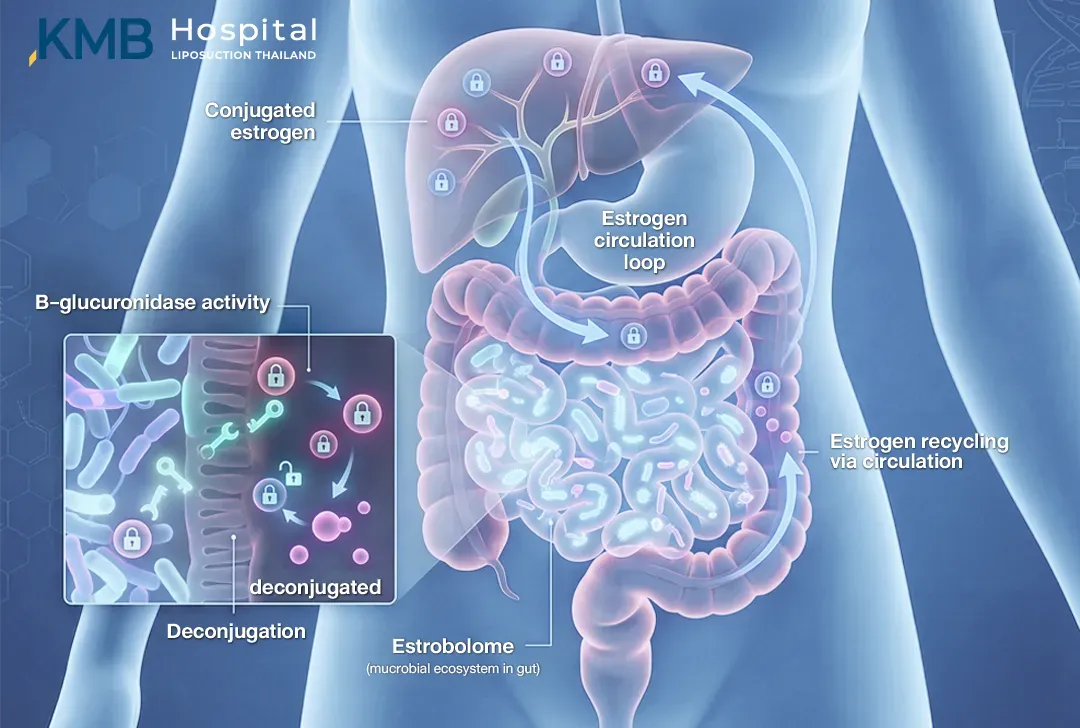
Estrogen plays a role in several aspects of digestion, such as
- intestinal barrier
- immune signaling
- gut–brain communication
- part of the microbial ecosystem
Some research has found associations between estrogen and the microbiome, but most human evidence remains at the level of association.
---
What Is the Estrobolome?
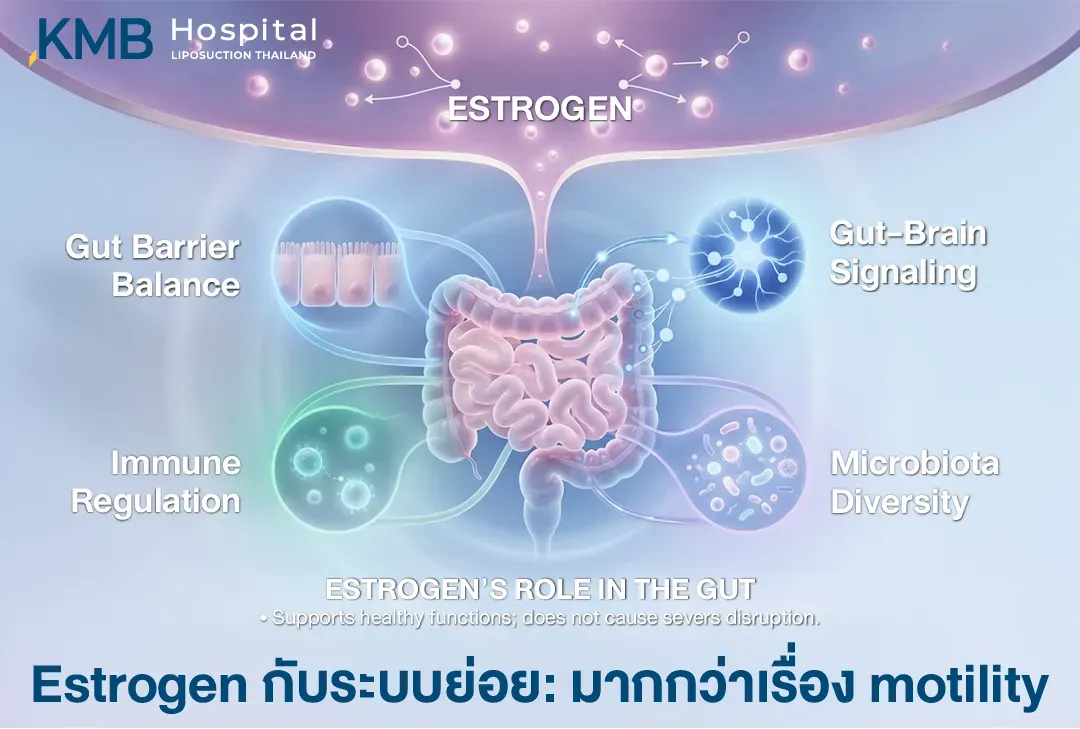
The estrobolome is the group of gut microbes involved in estrogen metabolism, particularly through the enzyme β-glucuronidase.
Mechanisms proposed in the literature include
- deconjugation of estrogen
- recycling of some estrogen back into circulation
However, there is still no evidence confirming that the estrobolome directly causes PMS.
---
Why Symptoms Differ From Person to Person
Population data show that GI symptoms during the menstrual cycle are highly variable.
- Some people experience increased abdominal fullness.
- Others have almost no symptoms.
These differences reflect the individual variability of female hormone–gut interaction.
---
Why You Feel Bloated Before Your Period
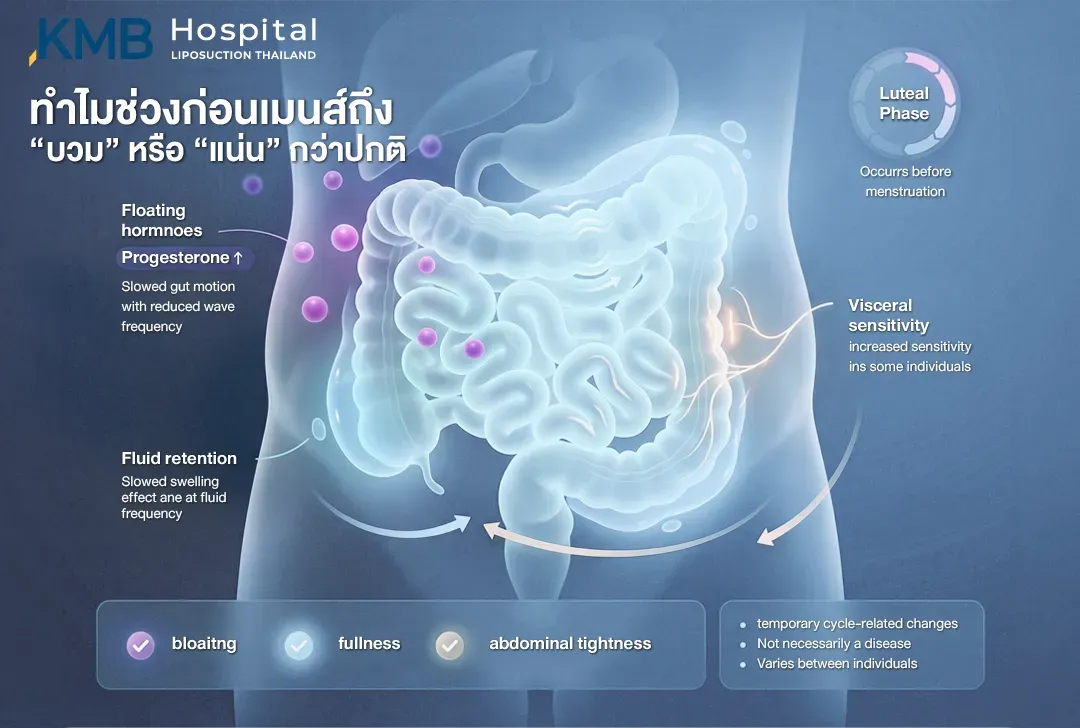
During the luteal phase, several factors may combine, such as
- high progesterone → slower motility
- increased fluid retention
- increased visceral sensitivity in some individuals
This gives rise to symptoms such as
- bloating
- abdominal fullness
- a feeling of swelling
which are usually temporary and follow the menstrual cycle.
---
FAQ
Why do you feel bloated before menstruation?
Rising progesterone levels may slow bowel movement, leading to abdominal fullness or bloating in some individuals.
Do female sex hormones throw the gut out of balance?
In healthy women, hormonal changes across the menstrual cycle are usually a physiological fluctuation, not dysbiosis.
Does estrogen really affect the microbiome?
There is moderate evidence of an association, but no clear causal proof yet.
---
Further Reading
---
Hospital Authority
Written by: Medical Content Team, KMB Hospital
Reviewed by: Clinical Governance Committee, KMB Hospital
Published: 27 March 2026
Last updated: 27 March 2026
References
- Alqudah M et al. Progesterone inhibitory role on gastrointestinal motility. Physiol Res. 2022.
- Coquoz A et al. Impact of progesterone on the gastrointestinal tract. Climacteric. 2022.
- Mendelson S et al. Gastrointestinal functioning and menstrual cycle phase. BMC Gastroenterol. 2023.
- Hannan K et al. Mood symptoms and gut function across the menstrual cycle. Physiol Behav. 2024.
- Park SL et al. Gut microbiome and estrogen. J Menopausal Med. 2025.
- Hu S et al. Gut microbial beta-glucuronidase and estrogen metabolism. Gut Microbes. 2023.