
The Misconception About Body Shape: Why Thin ≠ Well-Proportioned
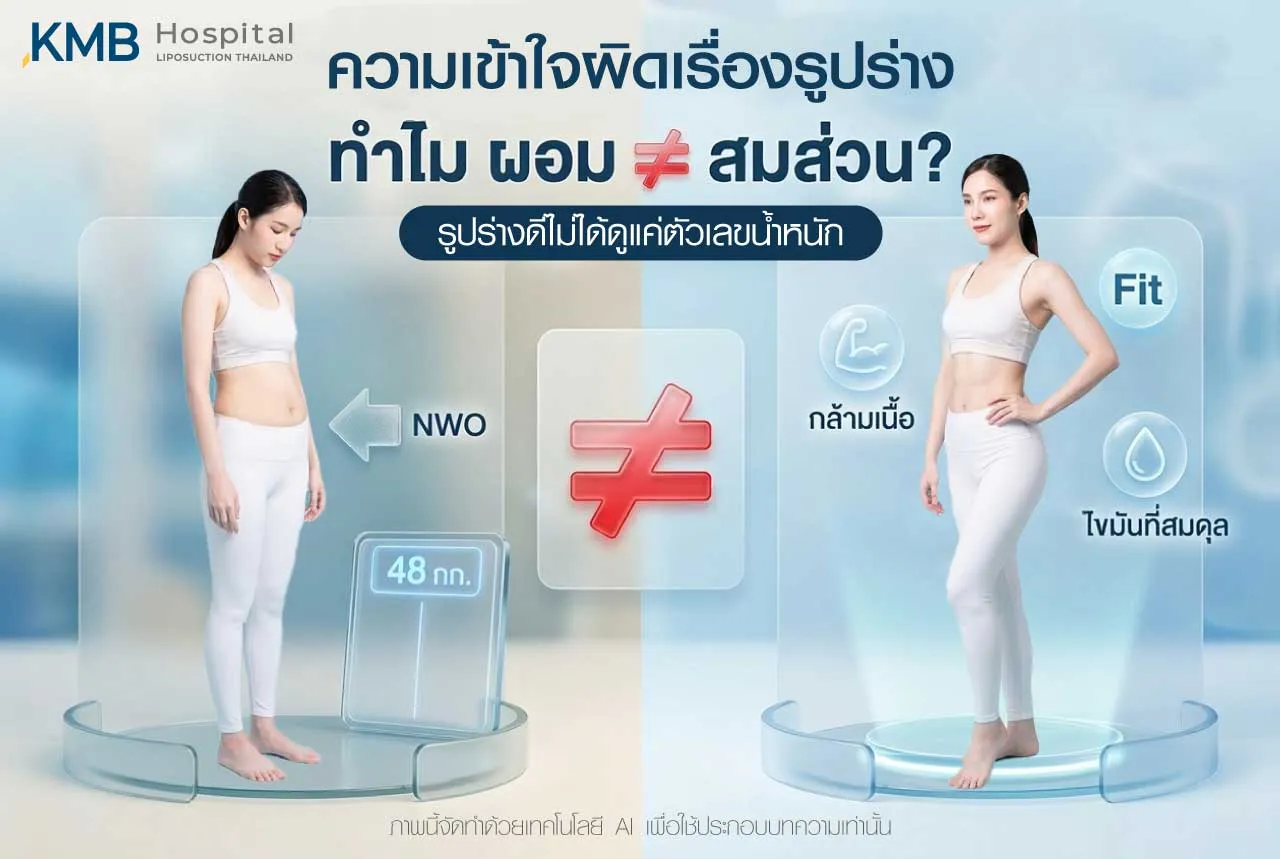
The word “thin” does not always mean “well-proportioned,” because a good-looking figure is not determined by the number on the scale (body weight) alone. Instead, it depends on your Body Composition such as muscle mass and the amount of fat stored beneath the skin (Subcutaneous Fat). This misconception often leads many people to set expectations for the results of a liposuction program that deviate from medical reality.
A common misconception: thin = a good figure. Many people believe that if their Body Mass Index (BMI) is within the normal range or their weight is low, their body should automatically be well-proportioned. In medicine, however, there is a condition called Normal Weight Obesity (NWO) or “skinny fat,” in which people with a low body weight can still experience the following problems:
- Localized belly fat: an abnormally high amount of fat stored in the lower abdomen
- Unbalanced proportions: muscle mass below the standard (less than 20–30% of body weight), causing the body to look flabby
- Loose skin: a lack of firmness in the skin and core muscles
All of these can occur even when body weight is not above the standard.
Why is “thin” still not well-proportioned?
- Imbalanced Body Composition: Some thin people may have a Body Fat Percentage above 30% relative to their muscle mass, making the body look unfirm and out of proportion even though their overall weight is low.
- Individual Fat Distribution: Genetics and hormones cause each person’s body to store fat differently. Some people accumulate fat mainly in the abdomen, hips, or waist — areas that are difficult to reduce through diet alone. This is why many people turn to an abdominal liposuction program to help address this issue.
- The role of muscle and bone structure: Muscles determine the “contour” of the body. If the bone structure is not favorable, or muscle mass is low, the figure may look flat or out of proportion even with no excess fat at all.
- Skin quality and firmness (Skin Elasticity): Skin that has become loose from rapid weight loss, or degraded subcutaneous collagen, will make the figure look uneven even when there is very little subcutaneous fat.
How does this misconception affect the way people view a “liposuction program”?
- Expecting thin people to achieve “easy, beautiful” results: Many assume that having little fat means it can be removed easily with immediately visible results.
- Believing liposuction will make the figure 100% well-proportioned: while overlooking existing muscle mass and bone structure.
- Comparing results with others: by looking only at the number of kilograms lost, when in reality a liposuction program is Body Contouring, not a direct method of Weight Loss.
The correct framework for viewing body shape and liposuction programs
- Thin = a low number on the scale and a low BMI
- Well-proportioned = a balanced body composition (an appropriate ratio of fat to muscle)
- A liposuction program = a medical innovation that removes subcutaneous fat from specific areas to refine proportions (Body Contouring); it does not change the entire body structure
A safety perspective on setting expectations
- Do not evaluate your figure or health by thinness alone.
- You should use a body composition analyzer (such as InBody or a DEXA Scan) as the primary framework for assessment before undergoing any procedure.
- Consulting a specialist at KMB Hospital or an accredited medical facility helps assess subcutaneous fat separately from visceral fat, so that an abdominal liposuction program can be planned safely with realistic results.
The misconception that “thin = well-proportioned” leads many people to hold inaccurate expectations of the results from a liposuction program. The truth is that body shape is determined by many components of the body. Understanding Body Composition and medical limitations helps you assess your figure on a realistic basis, and makes the decision to undergo a procedure safer and its results more satisfying.
Read more from a doctor’s perspective
To understand long-term results in friendly, everyday language, you can read articles on doctorlooknuu.com
Related articles on recovery and safety
- Is a liposuction program dangerous — where does the danger actually come from?
- What kind of body should “delay” having a liposuction program
Recovering after a liposuction program: how to prepare so your body isn’t damaged
Content Information
Written by: Medical Content Team, KMB Hospital
Reviewed by: Clinical Governance Committee, KMB Hospital
Published: 12 March 2026
Last updated: 12 March 2026