
Does Circadian Fasting Improve Insulin Sensitivity?

Circadian Fasting and Insulin Sensitivity
Answer-first:
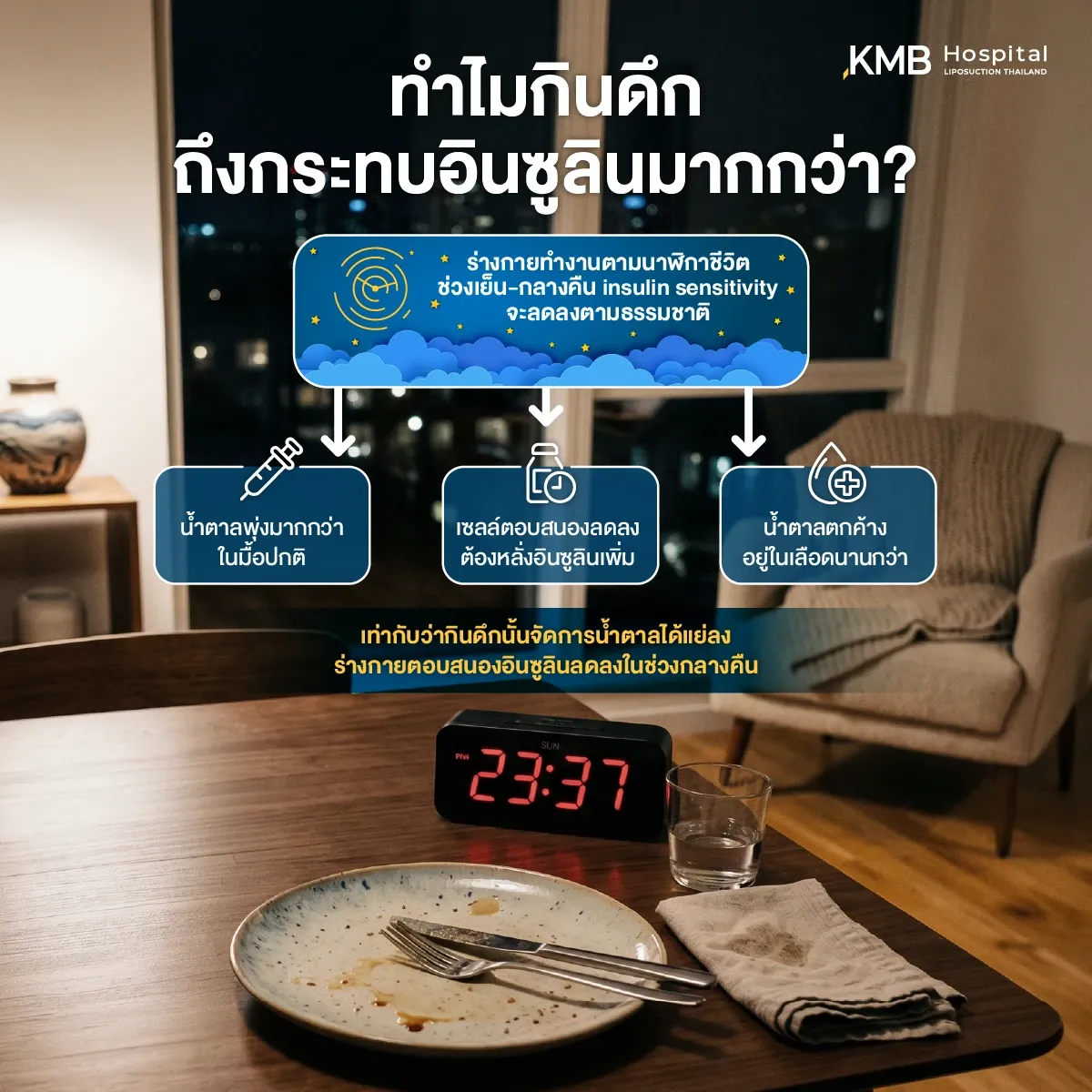
Circadian fasting, or early time-restricted eating (eTRE), is the practice of confining your eating window to align with the body's circadian rhythm, emphasizing food intake during the morning and early afternoon while reducing or avoiding late-night meals. Research in chrononutrition has found that insulin sensitivity shows clear circadian variation, typically being higher in the morning and declining at night.
Table of Contents
Introduction
Circadian fasting, or early time-restricted eating (eTRE), is a form of restricting the eating window to align with the body's biological clock, generally emphasizing food intake from morning to early afternoon and abstaining during the night.
This concept falls within the field of chrononutrition, which studies the relationship between “when we eat” and the metabolic system. A large body of research shows that human metabolism follows a circadian rhythm, and that eating out of sync with biological timing may affect glucose regulation and insulin sensitivity.
1) Circadian Rhythm and Metabolism
The biological clock governs many metabolic processes, such as:
- Glucose tolerance
- Insulin secretion
- Hepatic glucose production
In general, insulin sensitivity is higher in the morning and declines in the evening or at night.
Late-night eating is associated with:
- Increased postprandial glucose
- Elevated insulin exposure
- Reduced glucose clearance
As a result, the same meal eaten at night may drive blood sugar higher than when eaten in the morning.
2) Early Time-Restricted Eating (eTRE)

Several randomized controlled trials report that early time-restricted eating may affect metabolic signaling, for example:
- Increasing insulin sensitivity
- Lowering fasting insulin
- Reducing oxidative stress markers
- Modulating circadian gene expression
Notably, some studies observed these outcomes even without a significant reduction in total energy intake, suggesting that “when you eat” may influence metabolism beyond calorie quantity alone.
3) Circadian Misalignment

Circadian misalignment, such as shift work or late-night eating, is associated with metabolic dysfunction and insulin resistance.
This disruption is also linked to:
- Altered cortisol rhythm
- Increased inflammatory signaling
- Disrupted glucose homeostasis
Among night-shift workers, the risk of metabolic disorders is typically higher than in groups with normal circadian alignment.
4) Gut Microbiome and Circadian Feeding
The gut microbiota exhibits diurnal oscillation, or day-to-day variation over time.
Eating patterns can affect:
- Microbial rhythmicity
- SCFAs production
- Host metabolic gene expression
However, causal evidence in humans still requires further randomized controlled trials.
5) Important Clinical Context
Circadian fasting may not be suitable in certain contexts, such as:
- Chronic stress
- Sleep deprivation
- Women with hormonal instability
- Energy deficiency states
Therefore, chrononutrition should be considered alongside each individual's sleep quality, stress load, and workload.
Frequently Asked Questions (FAQ)
1) How does circadian fasting differ from typical IF?
Intermittent fasting usually emphasizes the duration of the fast, such as 16:8, whereas circadian fasting prioritizes eating in alignment with the biological clock—for example, eating between 08:00 and 18:00 and avoiding late-night meals.
2) Why does eating late affect insulin more?
At night, insulin sensitivity declines in line with the circadian rhythm, so a late-night meal may raise blood sugar higher and require more insulin than the same meal eaten in the morning.
3) Do you have to fast for 16 hours to see results?
Not necessarily. Some research suggests that fasting for about 12–14 hours, with the last meal before evening, may already provide metabolic benefit.
4) What should women be cautious about with circadian fasting?
In women with high stress, poor sleep, or low energy availability, fasting for too long may raise cortisol and affect hormonal balance.
5) Does circadian fasting directly aid weight loss?
Circadian fasting may help regulate insulin sensitivity and appetite, but weight outcomes still depend on total energy intake, food quality, sleep, and stress.
Key Takeaways
- Insulin sensitivity is higher in the morning
- Early time-restricted eating may help modulate metabolic signaling
- Late-night eating is associated with glucose dysregulation
- The gut microbiome follows a circadian rhythm
- Sleep and stress context matter for outcomes
Hospital Authority
Written by: Medical Content Team, KMB Hospital
Reviewed by: Clinical Governance Committee, KMB Hospital
Published: 31 March 2026
Last updated: 31 March 2026
References
- Morris CJ, Purvis TE, Mistretta J, Scheer FAJL. Circadian misalignment increases insulin resistance. Proc Natl Acad Sci U S A. 2020.
- Jakubowicz D, et al. Timing of food intake and insulin sensitivity. Nutrients. 2021.
- Sutton EF, et al. Early time-restricted feeding improves insulin sensitivity in men with prediabetes. Cell Metab. 2020.
- Hutchison AT, et al. Time-restricted feeding improves glucose tolerance. Obesity. 2020.
- Qian J, Scheer FAJL. Circadian system and glucose metabolism. Trends Endocrinol Metab. 2021.
- Thaiss CA, et al. Microbiota diurnal oscillations and metabolic homeostasis. Cell. 2021.