
How Aging Affects Microbiome Diversity
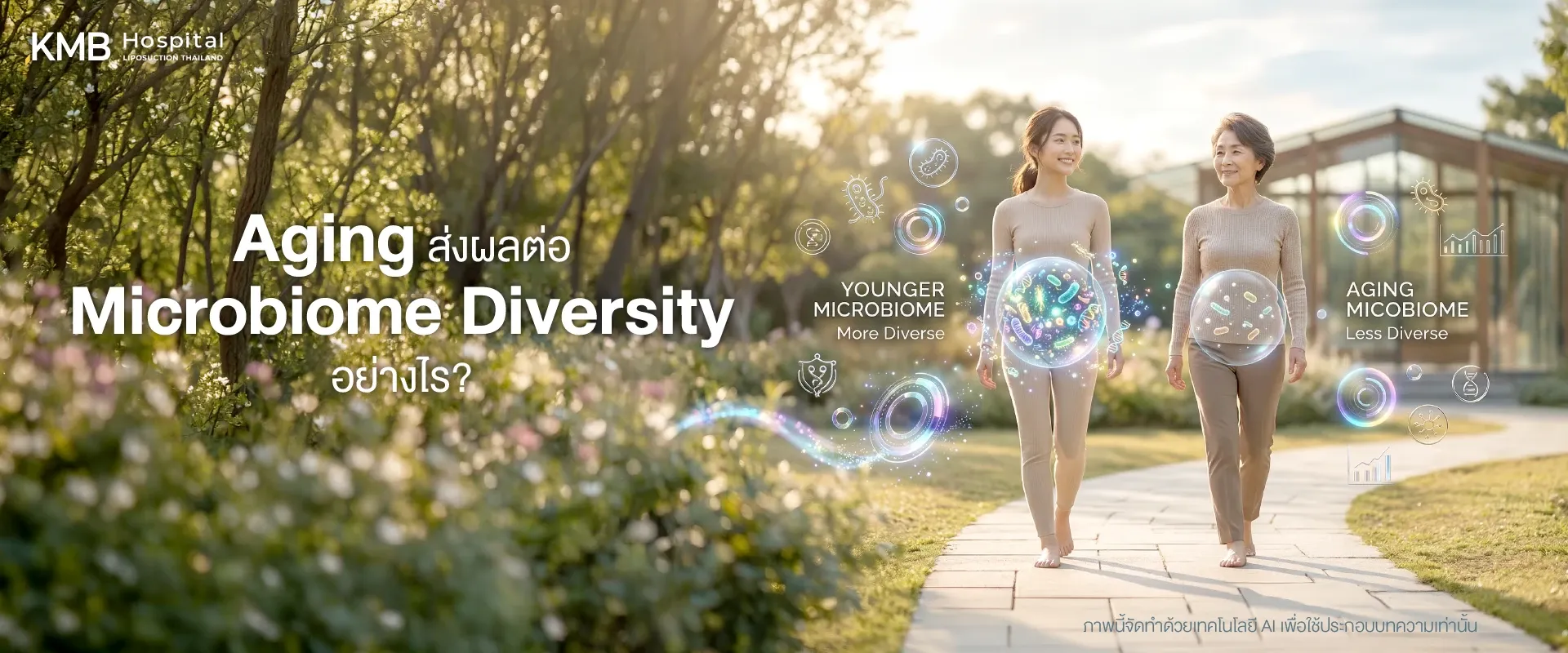
Aging and Microbiome Diversity
Answer-first:
As we age, it isn't only hormones or muscle mass that change — aging is also associated with shifts in gut microbiome diversity and stability. That said, current evidence suggests that the microbiome in older age does not change because of “age alone,” but rather in connection with diet, medication, inflammation, sleep, physical activity, and overall lifestyle.
Table of Contents
Introduction
As we grow older, metabolism, immunity, sleep, and lifestyle patterns often change together, and all of these can affect the gut microbiome. Research in older adults has found that microbiome composition is highly variable and does not shift in the same direction for everyone.
The key question, therefore, is not simply “does the microbiome get worse with age?” but rather “what factors cause each person's microbiome to change as they age?”
1) Increasing age and microbiome diversity

Research in older adults has found that:
- Microbiome diversity, or alpha diversity, may decline in some groups
- Microbial composition shifts according to health context
- Between-individual variability is very high
However, healthy and active older adults often have a microbiome pattern similar to that of middle-aged individuals.
Thus, the aging effect on the microbiome is not always linear, and not everyone experiences a decline in diversity in the same way.
2) Possible mechanisms
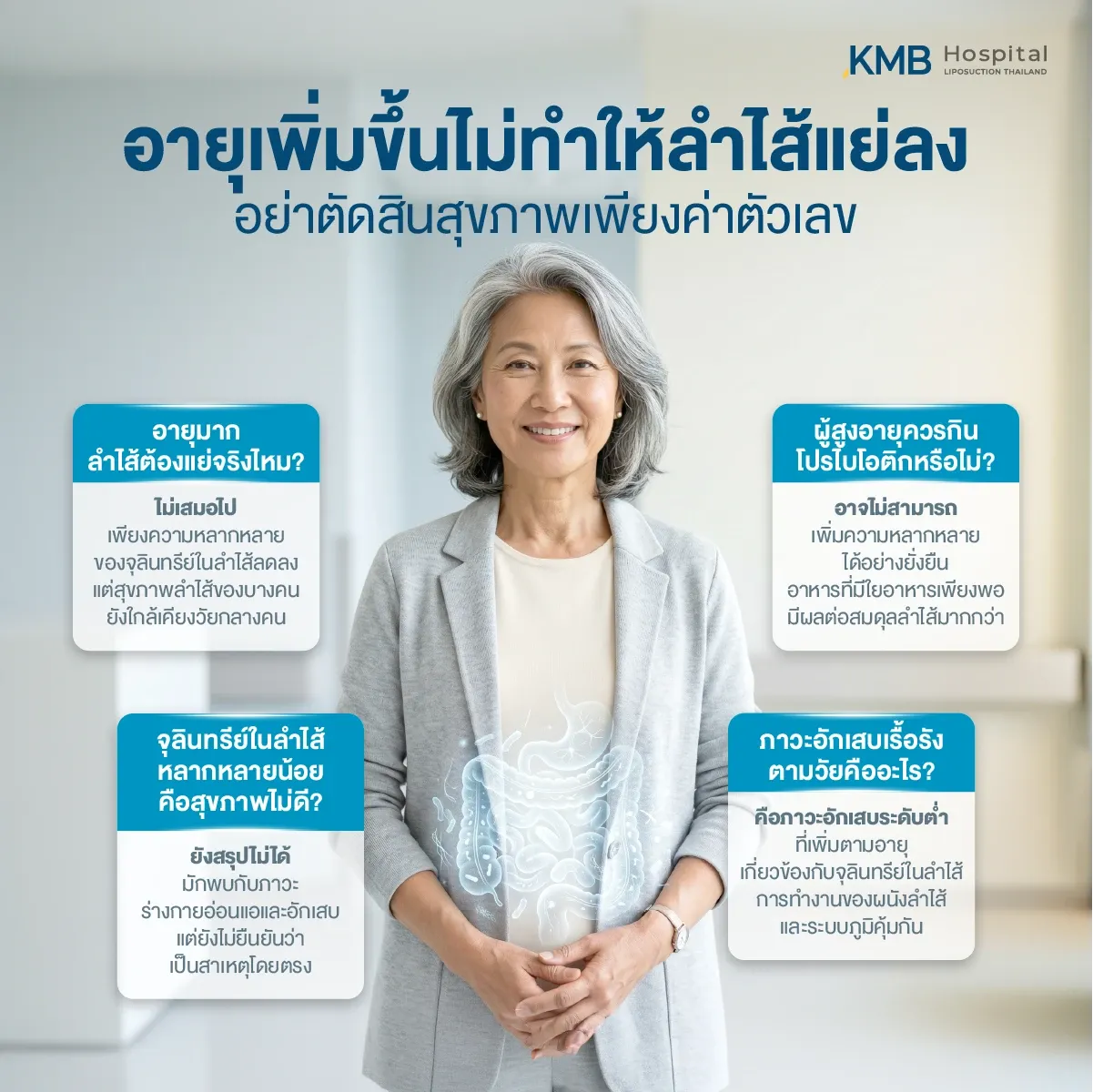
Immunosenescence
Age-related changes in the immune system may affect host–microbe interaction and alter the microbial ecology of the gut.
Inflammaging
Chronic low-grade inflammation, which becomes more common with age, is associated with microbiome imbalance and may be linked to changes in gut barrier function.
Dietary pattern change
Some older adults consume less dietary fiber, have less dietary variety, and take in less total energy, which may be associated with reduced SCFA production.
Medication exposure
The use of antibiotics, proton pump inhibitors (PPIs), and certain other medications clearly affects microbial ecology and, in many cases, may be a more important factor than chronological age.
3) Diversity and long-term health
Low microbiome diversity is associated with certain indicators of declining health, such as:
- frailty
- metabolic dysfunction
- increased inflammatory markers
However, most of these relationships remain observational associations, and a clear causal direction cannot yet be established.
In other words, low diversity may serve both as a “reflection” and as “part of a system” associated with health changes that occur with age, but it is not yet a single biomarker that can be used to directly assess health on its own.
4) Aging ≠ Microbiome Collapse
Increasing age does not necessarily mean that the microbiome will “collapse.”
Older adults who:
- exercise regularly
- consume adequate dietary fiber
- have social engagement
- sleep well
- use medications appropriately, as indicated
tend to have better microbiome diversity and stability.
Therefore, lifestyle plays a greater role than chronological age alone.
5) Clinical Interpretation
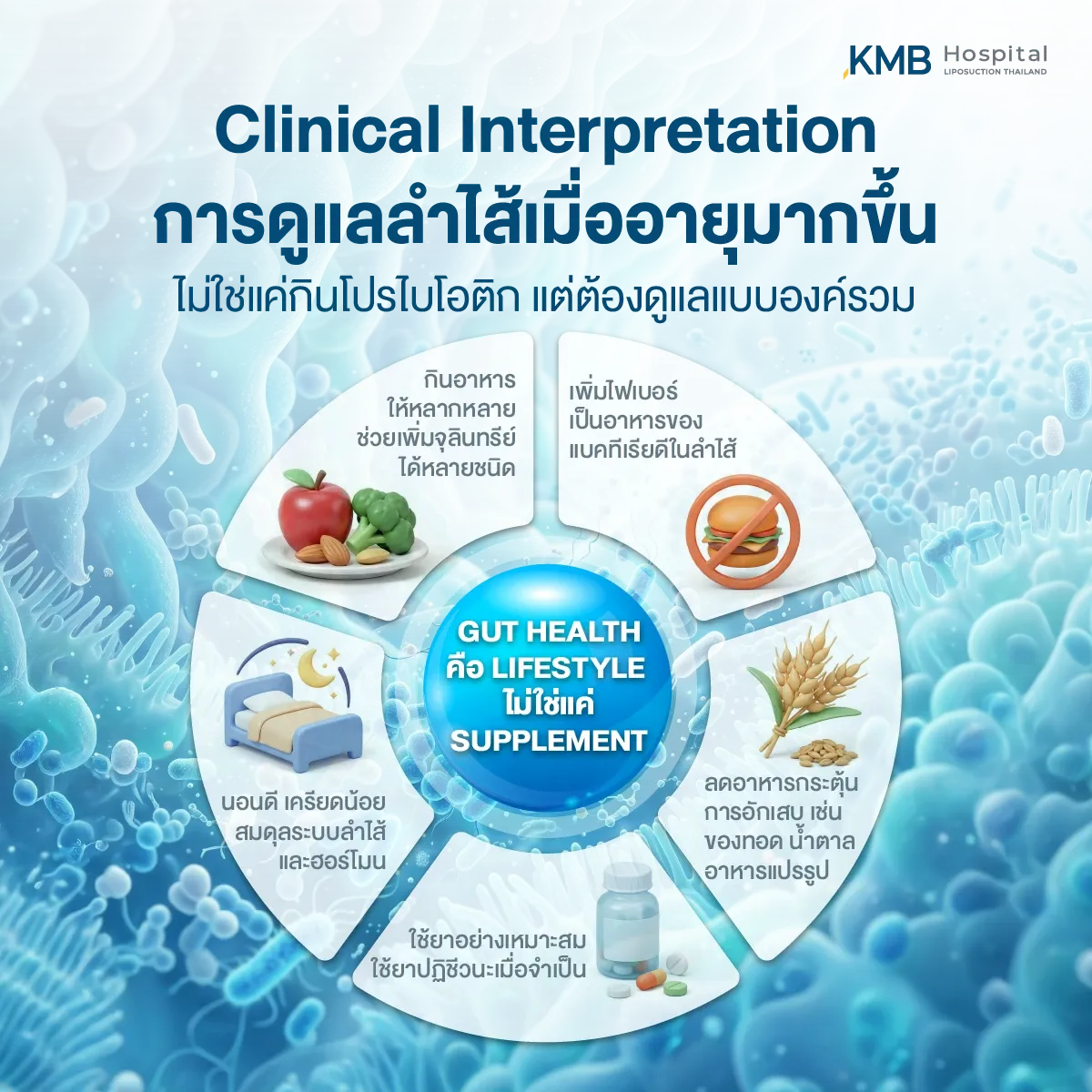
Caring for the microbiome in older age is not simply a matter of taking nonspecific probiotics; it should be part of an overall, systems-based approach, such as:
- maintaining dietary diversity
- increasing fiber intake
- reducing inflammatory load
- attending to the sleep–stress balance
- using medications appropriately, as indicated
A more accurate concept is to “care for the body's ecosystem” rather than focusing on a single strain of microbe.
Frequently Asked Questions (FAQ)
1) Does the microbiome always get worse with age?
Not always. Although there is a trend toward reduced microbiome diversity in some groups of older adults, those with good health and a healthy lifestyle can maintain diversity close to that of middle age. Age alone is not the only factor.
2) Does low microbiome diversity definitely mean poor health?
No firm cause-and-effect conclusion can be drawn. Low diversity is associated with frailty and inflammation, but it cannot yet be confirmed as a direct cause. Overall health context matters more than a single diversity value.
3) Should older adults take probiotics to increase diversity?
There is still no clear evidence that a single probiotic can increase diversity over the long term. Increasing dietary fiber and dietary diversity tends to have a greater effect on microbial ecology.
4) What is inflammaging, and how is it related to the gut?
Inflammaging is chronic low-grade inflammation that increases with age. This condition is associated with microbiome imbalance, altered gut barrier integrity, and immune dysregulation, but the relationship remains at the level of association.
5) Why do some older adults still have very healthy guts?
Commonly shared factors include regular exercise, adequate dietary fiber, good sleep, social engagement, and appropriate, indication-based medication use. Lifestyle plays a very significant role.
6) Do antacids or antibiotics greatly affect the microbiome?
These medications can affect microbial composition, especially with repeated or long-term use. They should therefore be used according to medical indications and with monitoring of symptoms.
7) At what age should one start caring for the microbiome?
It is never too late. Attending to dietary pattern, sleep, and physical activity can begin at any age and remains beneficial even when started later.
Key Takeaways
- Aging is associated with changes in the gut microbiome
- Immunosenescence and inflammaging may play important roles
- Low diversity is associated with frailty and inflammatory burden in some studies
- Lifestyle matters more than chronological age alone
- Caring for the microbiome means caring for the body's overall system
Hospital Authority
Written by: Medical Content Team, KMB Hospital
Reviewed by: Clinical Governance Committee, KMB Hospital
Published: 31 March 2026
Last updated: 31 March 2026
References
- O'Toole PW, Jeffery IB. Microbiome–health interactions in older people. Cell Mol Life Sci. 2020;77:119-128.
- Thevaranjan N, et al. Age-associated microbial dysbiosis and immune dysfunction. Cell Host Microbe. 2020;27(5):703-716.
- Claesson MJ, et al. Gut microbiota composition correlates with diet and health in the elderly. Nat Rev Gastroenterol Hepatol. 2021;18:473-486.
- Franceschi C, Garagnani P, Parini P, Giuliani C, Santoro A. Inflammaging and gut microbiota. Nat Rev Immunol. 2021;21:665-679.
- Valdes AM, et al. Diet–microbiome interactions and aging. BMJ. 2020;369:m1613.
- Wilmanski T, et al. Gut microbiome patterns associated with healthy aging. Nat Metab. 2021;3:274-286.