
Does Late-night Eating Affect Your Hormones?

Does Late-night Eating Affect Your Hormones?
Late-night eating doesn't just affect stored energy — it is also linked to insulin, melatonin, cortisol and the hunger hormones, because the hormonal system operates according to the body's circadian rhythm. Eating during the biological night may not align with the periods when the body is best prepared to burn energy, and when this occurs repeatedly over the long term it can increase metabolic strain.
How Late-night Eating Relates to Hormones
Eating late isn't only about calories or stored energy — it is also connected to the circadian alignment of several major hormonal systems, such as insulin, melatonin, cortisol and leptin/ghrelin.
Because the hormonal system operates on a 24-hour cycle, eating during what is the biological night may not align with the times when the body is best prepared to take in food and manage energy.
1) Insulin Sensitivity Declines at Night
Human studies have found that insulin sensitivity tends to be higher in the morning and gradually declines from evening into the night. As a result, the same amount of food, when eaten late at night, may raise post-meal blood sugar levels more than eating during the day.
- insulin sensitivity is often lower during the evening and night
- postprandial glucose may rise higher with late-night meals
- circadian misalignment is associated with insulin resistance in many studies
2) Melatonin and Glucose Regulation
Melatonin is a hormone that is secreted at higher levels at night and plays a role in the onset of sleep. At the same time, however, melatonin receptors on pancreatic β-cells may in certain contexts be associated with reduced efficiency of insulin secretion.
This is why eating during periods of high melatonin may be linked to reduced glucose tolerance in some human studies.

3) Cortisol Rhythm and Late Eating
Normally, cortisol is high in the morning and gradually declines at night. Repeated late-night eating may disrupt the circadian hormonal rhythm and metabolic signaling.
That said, the effects are usually associated with a chronic pattern rather than a single late-night meal.
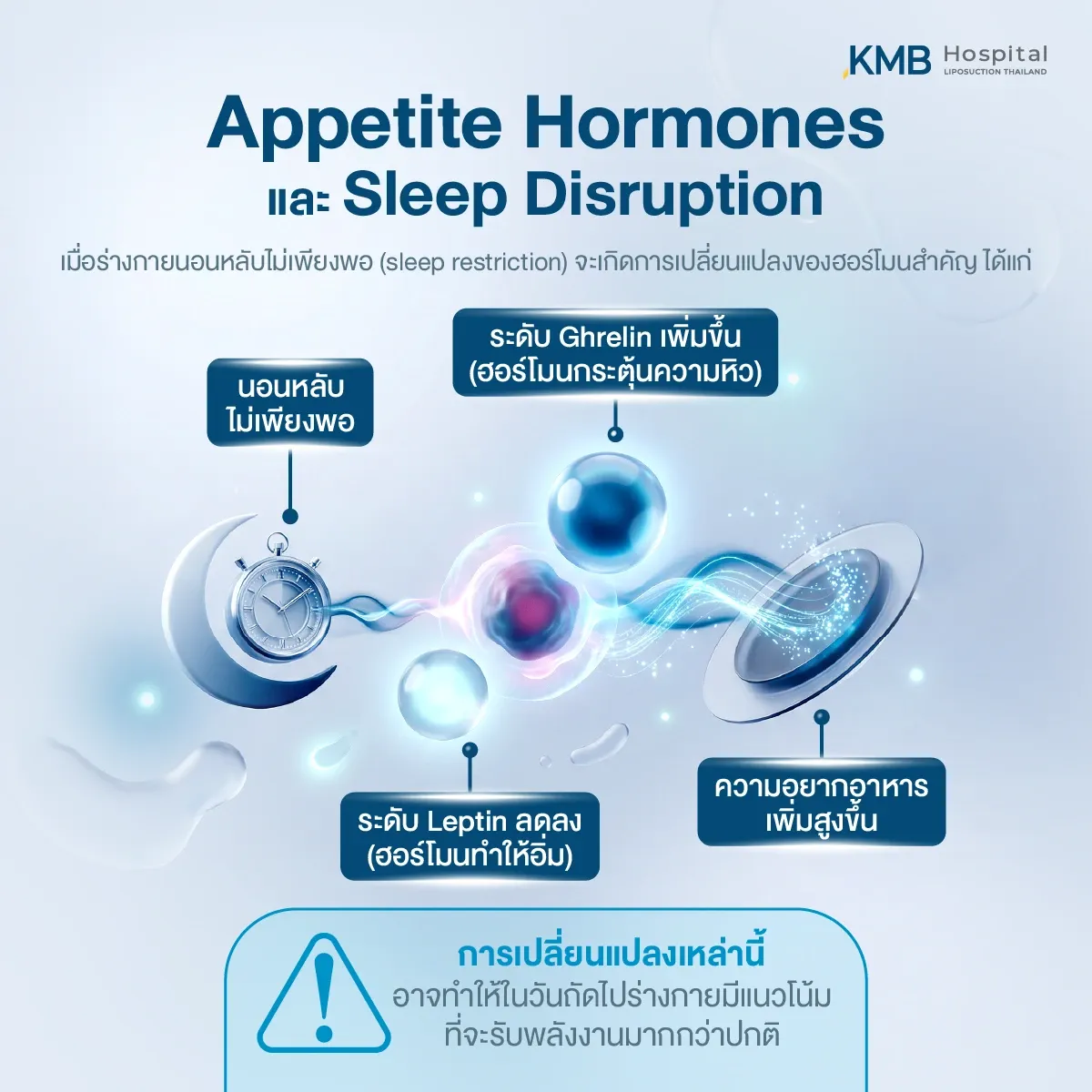
4) Appetite Hormones and Sleep Disruption
Late-night eating is often associated with going to bed late or with reduced sleep quality, and sleep restriction is linked to changes in the hunger hormones, such as:
- decreased leptin
- increased ghrelin
- a stronger drive to eat the following day
This can make it harder to control food intake and may increase energy intake without you realizing it.
5) Gut Microbiome and Circadian Disruption
Circadian misalignment is also associated with altered microbial rhythmicity and metabolic changes. When late-night eating occurs repeatedly, it may indirectly affect gut–hormone signaling through inflammatory tone and the gut system.
- microbial rhythmicity may become more disrupted
- metabolic signaling may lose its balance
- gut-related inflammation may increase in certain contexts
Systems Interpretation
Late-night eating does not damage the system instantly
But if it occurs repeatedly over the long term, it may reduce insulin sensitivity, disrupt the hormonal rhythm and increase metabolic strain. Timing alignment therefore plays an important role in metabolic stability.
Frequently Asked Questions
1) Does eating late always mean you'll gain weight?
Not always. Weight gain is mainly related to a sustained energy surplus, but eating late may lower insulin sensitivity, keep blood sugar elevated for longer and worsen sleep quality — which can increase metabolic strain if it occurs repeatedly over the long term.
2) If I eat late but stay within my total calories, does it still matter?
Total energy is still an important factor, but the timing of eating also affects the hormonal rhythm, especially the insulin and melatonin interaction. So being able to control your calories doesn't mean there is no effect in terms of biological timing.
3) Can the harm come from a single meal?
Generally the problem tends to arise from a repeated pattern. The body has considerable flexibility, and eating late just once usually doesn't damage the system.
4) Why do some people feel sleepy after eating late while others feel awake?
It depends on several factors, such as insulin sensitivity, the type of food, cortisol levels and accumulated sleep debt. Some people may experience a glucose spike followed by a crash, while others may experience more sympathetic activation.
5) What does melatonin have to do with blood sugar?
Melatonin rises at night, and there is evidence that eating during periods of high melatonin may be associated with reduced glucose tolerance. This is why late-night meals may be harder to manage.
6) If I have to eat late, what should I do?
The systems-based approach is to avoid very heavy meals, reduce refined sugar, keep a consistent sleep schedule, and not let late-night eating become a daily pattern. Consistency matters more than perfection.
7) Does late-night eating affect the microbiome too?
Circadian disruption may affect microbial rhythmicity, and when it occurs repeatedly over the long term it may be linked to inflammatory tone and metabolic regulation.
Key Takeaways
- Insulin sensitivity tends to be lower at night
- Melatonin may be associated with a reduced glucose response at late-night meals
- Circadian misalignment is linked to insulin resistance
- Sleep disruption affects leptin and ghrelin
- A chronic pattern matters more than a single meal
Hospital Authority
Written by: Medical Content Team, KMB Hospital
Reviewed by: Clinical Governance Committee, KMB Hospital
Published: 1 April 2026
Last updated: 1 April 2026
References
- Qian J, Scheer FAJL. Circadian system and glucose metabolism. Trends Endocrinol Metab. 2021;32(7):508-521.
- McHill AW, et al. Later circadian timing associated with impaired glucose tolerance. J Clin Endocrinol Metab. 2020;105(6):e2303-e2312.
- Morris CJ, et al. Circadian misalignment increases insulin resistance in humans. Proc Natl Acad Sci U S A. 2020;117(27):15855-15861.
- Garaulet M, Gómez-Abellán P. Timing of food intake and melatonin interactions. Nutrients. 2020;12(2):343.
- Scheer FAJL, et al. Adverse metabolic consequences of circadian misalignment. PNAS. 2020;117(27):15855-15861.