
Will My Skin Sag After Abdominal Liposuction?
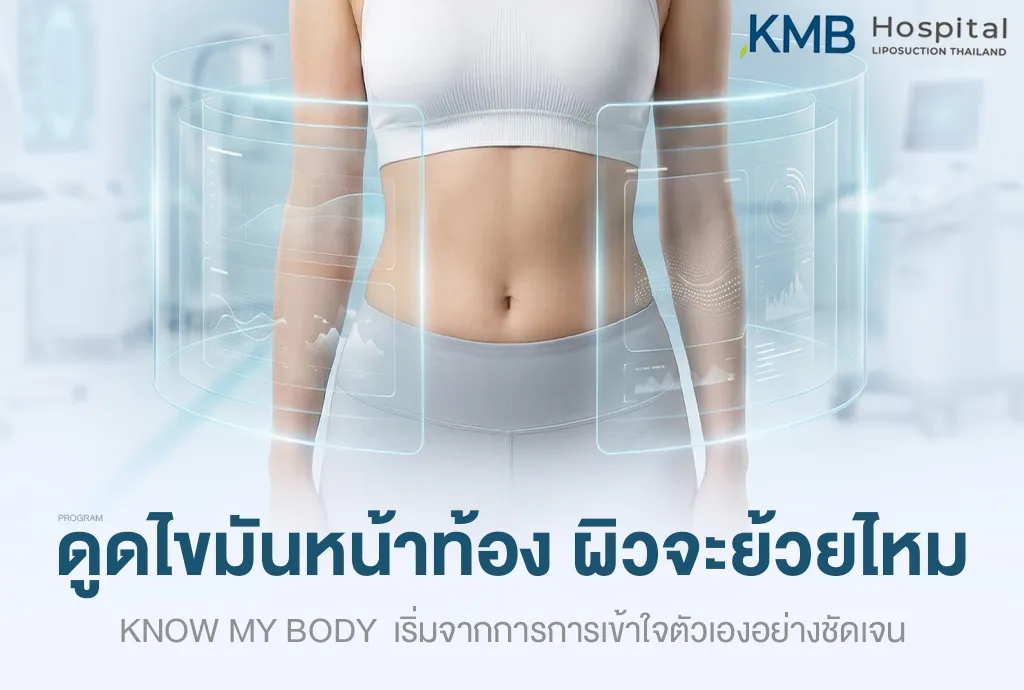
Will My Skin Sag After Abdominal Liposuction?
Understanding the factors that influence skin firmness after abdominal liposuction, through a medical perspective that emphasizes assessing fat structure, skin condition, and treatment planning tailored to each individual.
Will My Skin Sag After Abdominal Liposuction?
Whether your skin sags after abdominal liposuction depends on your baseline skin condition, tissue elasticity, the amount of fat, and each person’s abdominal structure. If the skin is still firm, the risk of sagging is usually lower, but if there is pre-existing skin laxity, thick fat, or a loss of skin elasticity, the physician may consider adding a skin-tightening program alongside the treatment to make the abdominal liposuction plan more appropriate.
When it comes to abdominal liposuction, one of the questions patients worry about most is, “Will my skin sag afterwards?” This is a very understandable concern, because the abdomen is not just about accumulated fat — it also involves skin condition, tissue elasticity, fat thickness, and the underlying structure of the abdominal wall.
From a medical perspective, the answer is not the same for everyone; it requires an individual assessment — in particular, examining which layer the fat sits in, how firm the skin is, and what the goal of treatment is. This is a core principle of the systematic approach to body contouring that KMB Hospital has always prioritized.
What Is Abdominal Liposuction?
Abdominal liposuction is a body-contouring approach that systematically addresses fat accumulated around the abdomen. Its main goal is to refine proportions, not to reduce whole-body weight across every system.
However, from a medical perspective, good abdominal liposuction does not mean removing as much fat as possible. It must also take into account the balance of the figure, the smoothness of the skin afterwards, tissue quality, and how well it suits the person’s existing body structure.
To gain a more complete understanding of the fundamentals of the treatment, we recommend reading What Is Liposuction?, which helps show why pre-treatment assessment matters far more than judging by the name of the procedure alone.
Why Does Some People’s Skin Sag While Others’ Doesn’t?
The main reason results from abdominal liposuction differ from person to person is the difference in each individual’s “baseline skin” and “existing abdominal structure.”
The main factors affecting skin firmness after abdominal liposuction include:
- The skin’s baseline elasticity
- The thickness and distribution of fat
- Long-standing stretching of the skin
- Age and collagen quality
- The balance between the skin layer, fat, and abdominal wall
It could therefore be said that the answer to “Will my skin sag?” does not depend on the abdominal liposuction procedure alone, but also on the patient’s pre-existing physical condition.
Analyzing Two Common Groups of Patients
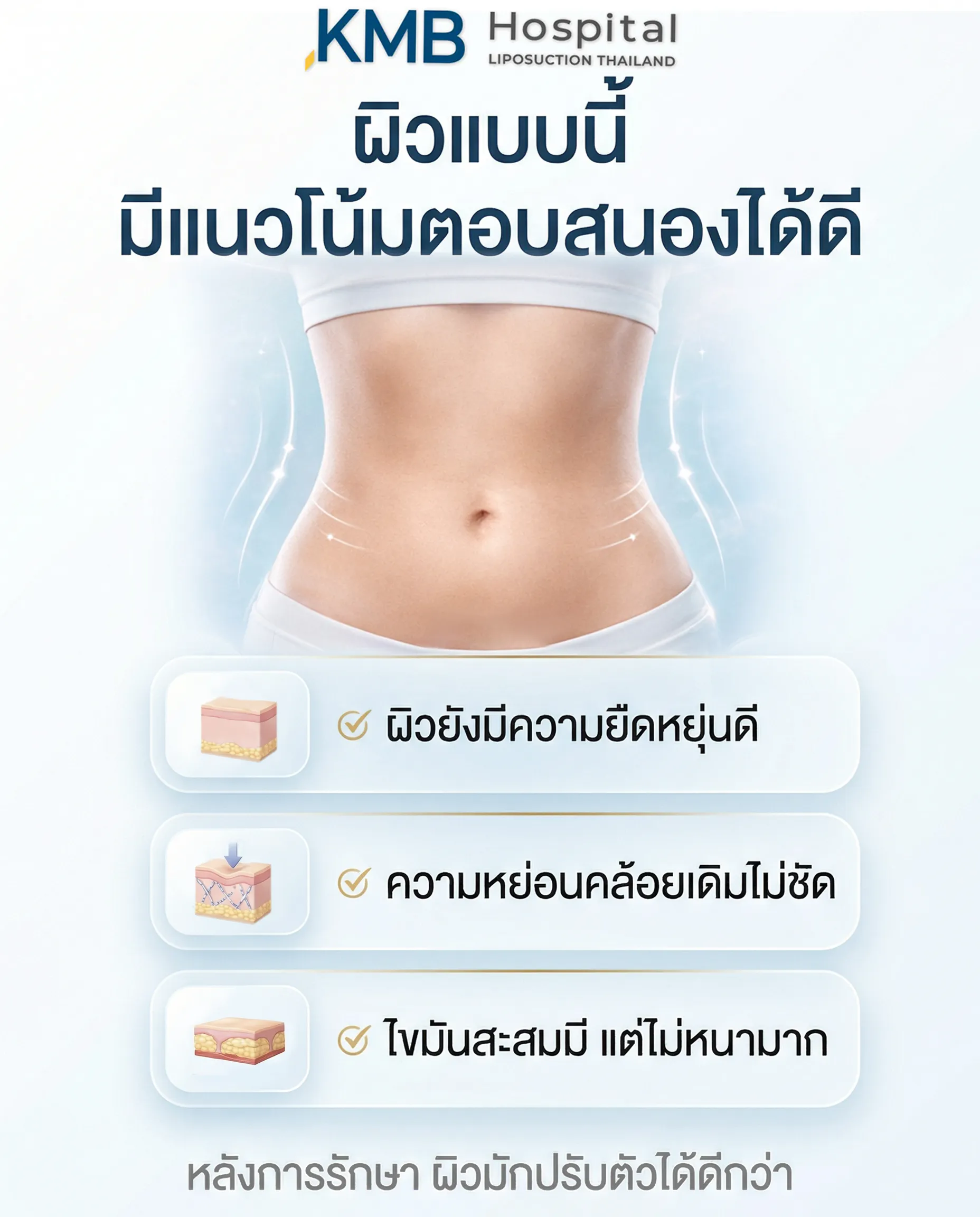
Group 1: Relatively Good Baseline Skin
Patients in this group generally have fairly good skin elasticity, no obvious abdominal sagging, and fat that is not overly thick.
- The skin still holds together well
- No pronounced abdominal sagging
- Overall skin quality remains fairly firm
In this group, after abdominal liposuction the skin tends to have a better chance of gradually adapting to the new contour.
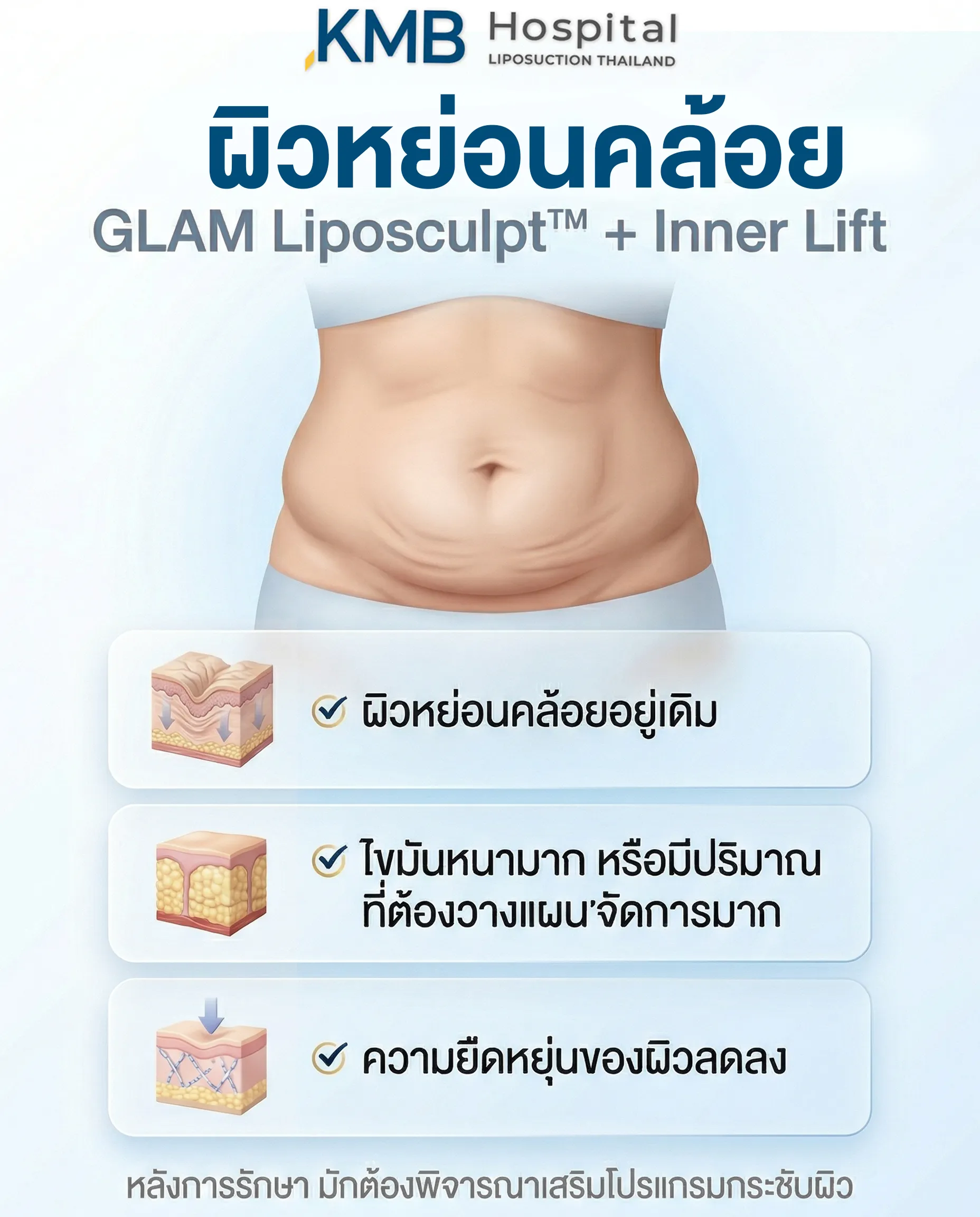
Group 2: Lax Skin or at Risk of Poor Firmness
This group may have pre-existing skin laxity, thick fat, or long-standing skin stretching, so the skin does not respond as well as the first group.
- The skin is already lax
- Reduced skin elasticity
- A large amount of fat must be planned for
In this group, the physician may consider planning a skin-tightening program alongside the treatment to help support the smoothness and firmness of the skin afterwards.
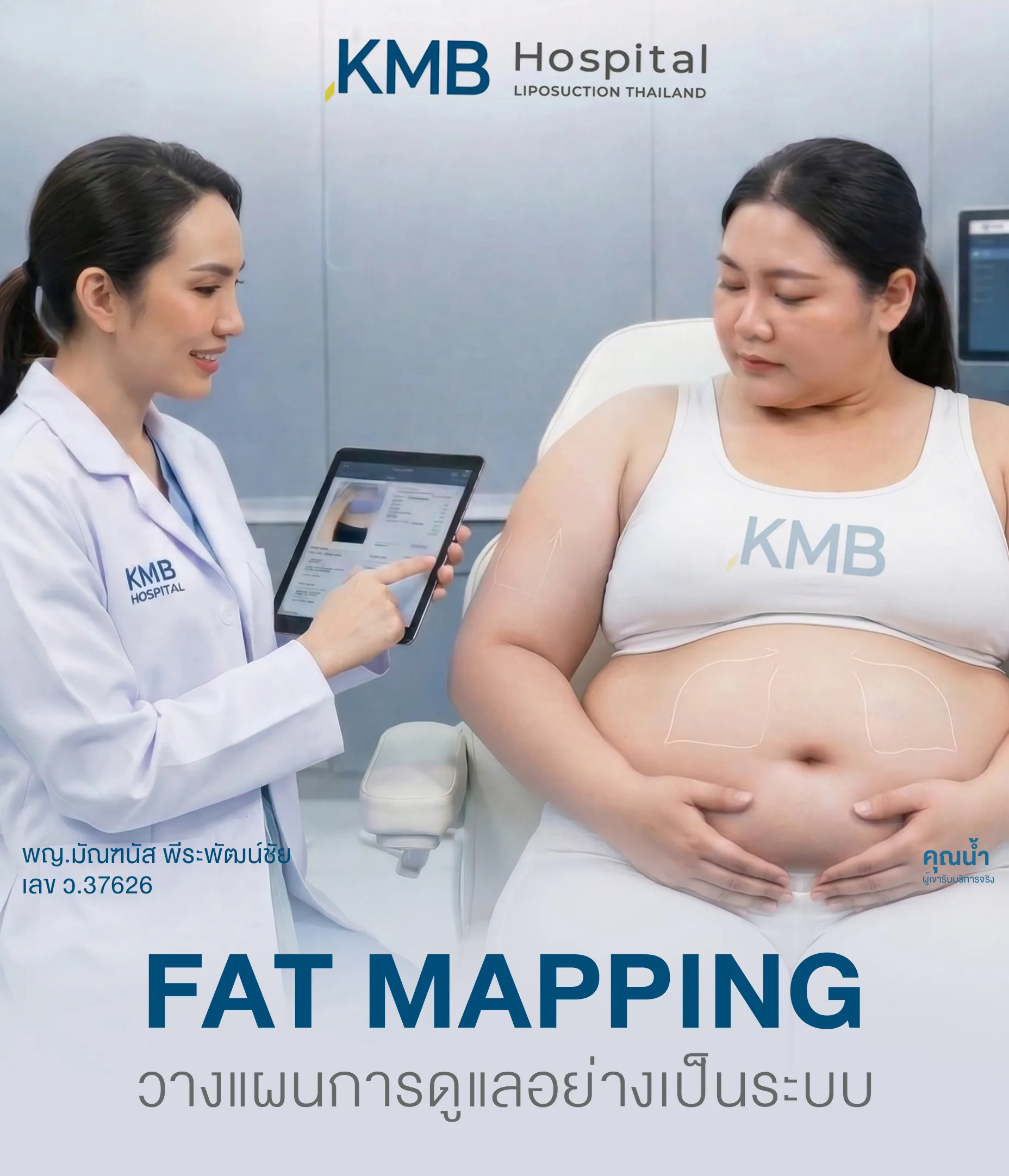
What Is FAT Mapping and Why Does It Matter Before Planning Abdominal Liposuction?
FAT Mapping is the analysis of the location, amount, and characteristics of fat at each site before treatment, so that the abdominal liposuction plan can be more precise.
The importance of FAT Mapping is that it helps the physician see that abdominal fat is not the same everywhere — some areas are thicker, some relate to differing skin conditions, and some may require particularly detailed planning.
- Helps assess how the fat should be managed
- Helps reduce the risk of irregularity or asymmetry
- Helps account for both proportion and skin firmness at the same time
For a deeper understanding of this concept, you can continue reading What Is FAT Mapping? Why It Matters Before Planning Liposuction
How Does Liposuction with the GLAM Liposculpt™ Technique Reduce the Risk of Poor Skin Firmness?
The concept of liposuction with the GLAM Liposculpt™ technique does not focus solely on the amount of fat removed, but places importance on analyzing fat structure, torso balance, and the suitability of the skin afterwards together.
This means the question of whether the skin will sag is not viewed separately from the overall plan, but is assessed from before treatment begins — which approach suits the patient, what kind of proportional refinement to emphasize, and which areas require special caution.
Highlights of the GLAM Liposculpt™ concept
- Views treatment in detail, layer by layer and in proportion
- Considers the existing body structure, not just the amount of fat
- Helps make the abdominal liposuction plan more suited to each individual
- Reduces the risk of results that are unbalanced or inconsistent with the baseline skin
Continue reading the article How Is GLAM Liposculpt™ Different? to connect your understanding of the technique, the planning, and the results after treatment.
Skin-Tightening with the Inner Lift Technique and Potentially Related Technologies
In some cases where the physician assesses a higher risk of poor skin firmness, planning may include a skin-tightening program using the Inner Lift technique to help care for the skin’s structure from within, in line with the results after abdominal liposuction.
In addition, some cases may consider supplementary technologies such as BodyTite or J-Plasma, depending on the suitability of the skin condition and the degree of sagging — but this does not mean everyone necessarily needs to use these technologies.
Skin-Tightening with the Inner Lift Technique
An approach used to help maintain skin firmness from the internal structure, with the physician deciding according to each patient’s characteristics.
BodyTite / J-Plasma
Medical technologies that may be chosen in certain cases to support skin contraction and the smoothness of the result, as appropriate.
A Medical Perspective: Summary
If you ask, will my skin sag after abdominal liposuction, the answer is: “It depends on each person’s pre-existing body.”
- If the baseline skin is good, the risk of sagging is usually lower
- If the baseline skin is lax, the fat is thick, or elasticity is reduced, there may be a higher chance of poor firmness
- The most important thing is not a one-size-fits-all answer, but a detailed assessment before planning abdominal liposuction
Therefore, good body contouring does not begin with rushing to remove fat, but with understanding that each person’s abdominal structure is different and should receive a treatment plan suited to their actual body.
FAQ
Will my skin sag after abdominal liposuction?
It depends on your baseline skin quality, tissue elasticity, the amount of fat, and each person’s abdominal structure. If the skin is still relatively firm, the risk of sagging is usually lower.
Who is more likely to have sagging skin after abdominal liposuction?
Those with pre-existing skin laxity, a relatively thick fat layer, or reduced skin elasticity are generally more likely to experience poor firmness than those with good baseline skin quality.
Why is FAT Mapping important before planning abdominal liposuction?
FAT Mapping helps the physician analyze the location and characteristics of fat at each site in greater detail, making the treatment plan more appropriate and precise, and taking better account of both proportion and post-treatment skin results.
How is liposuction with the GLAM Liposculpt™ technique different from the usual approach?
This concept emphasizes analyzing fat structure, body balance, and the suitability of the result — not just the amount of fat to be removed.
Does everyone need to have a skin-tightening program as well?
Not everyone. The physician primarily decides based on baseline skin quality, the degree of sagging, and the suitability of each case.