
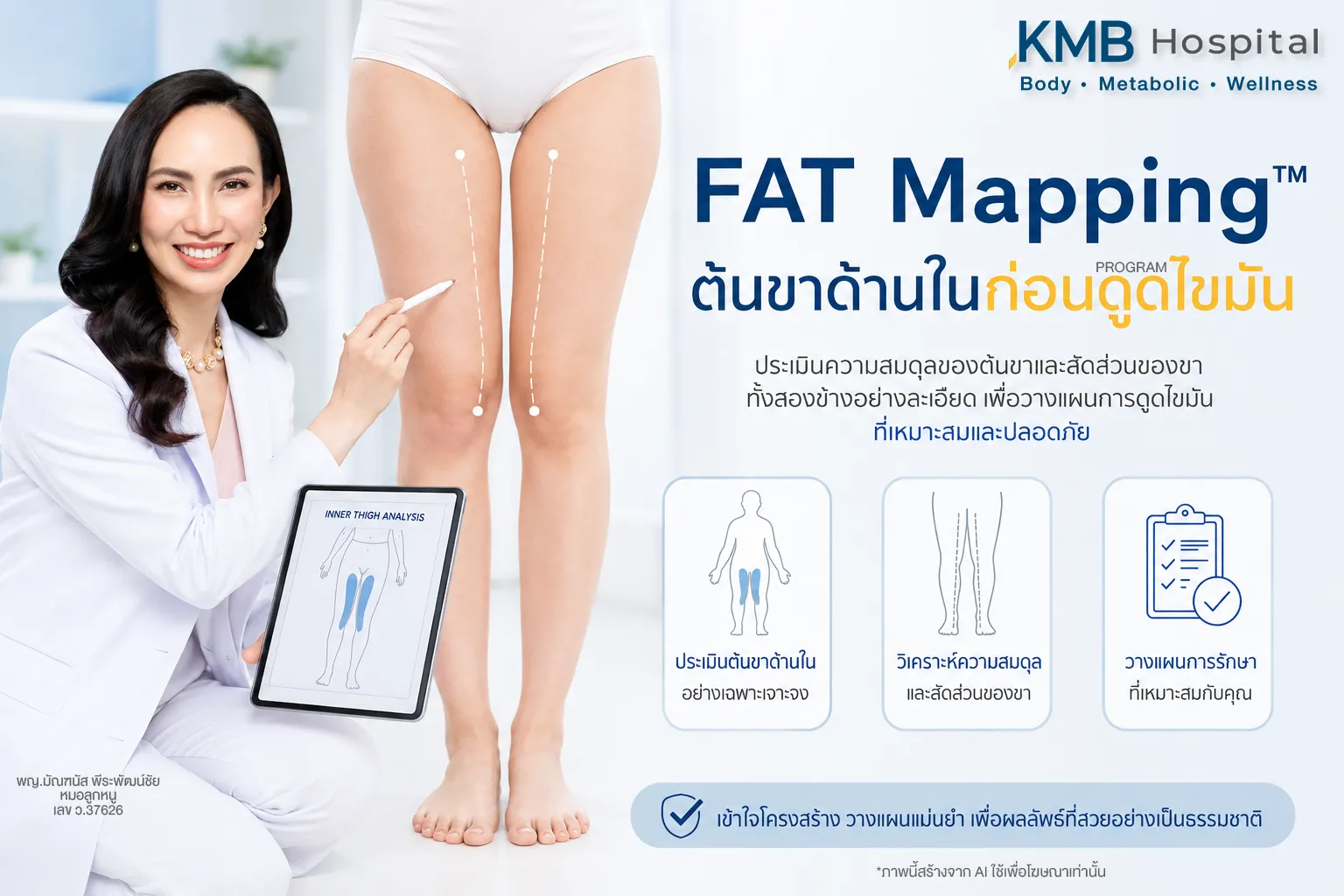
How does FAT Mapping™ inner thigh help evaluate before a liposuction program by considering gaps and balance?
DOMAIN D — KMB HOSPITAL | Article Code: FM-D-K06
Category: FAT Mapping™ | Pre-operative Area-Specific Liposuction Assessment | Medical Knowledge
How FAT Mapping™ of the Inner Thighs Assists Pre-Liposuction Evaluation Considering Gaps and Balance
First Published: August 18, 2569 | Last Updated: August 18, 2569 | Reading Time: 8 minutes
Author: Medical Content Team, KMB Hospital
Medically Reviewed By: Dr. Manusana Pirapatchanai (Dr. LukNua) License No. W37626
Before Inner Thigh Liposuction Program, doctors do not assess only fat volume but use FAT Mapping™ alongside physical examination to analyze the relationship between both thighs, the gap between thighs, leg alignment, and overall proportions before designing a treatment plan.
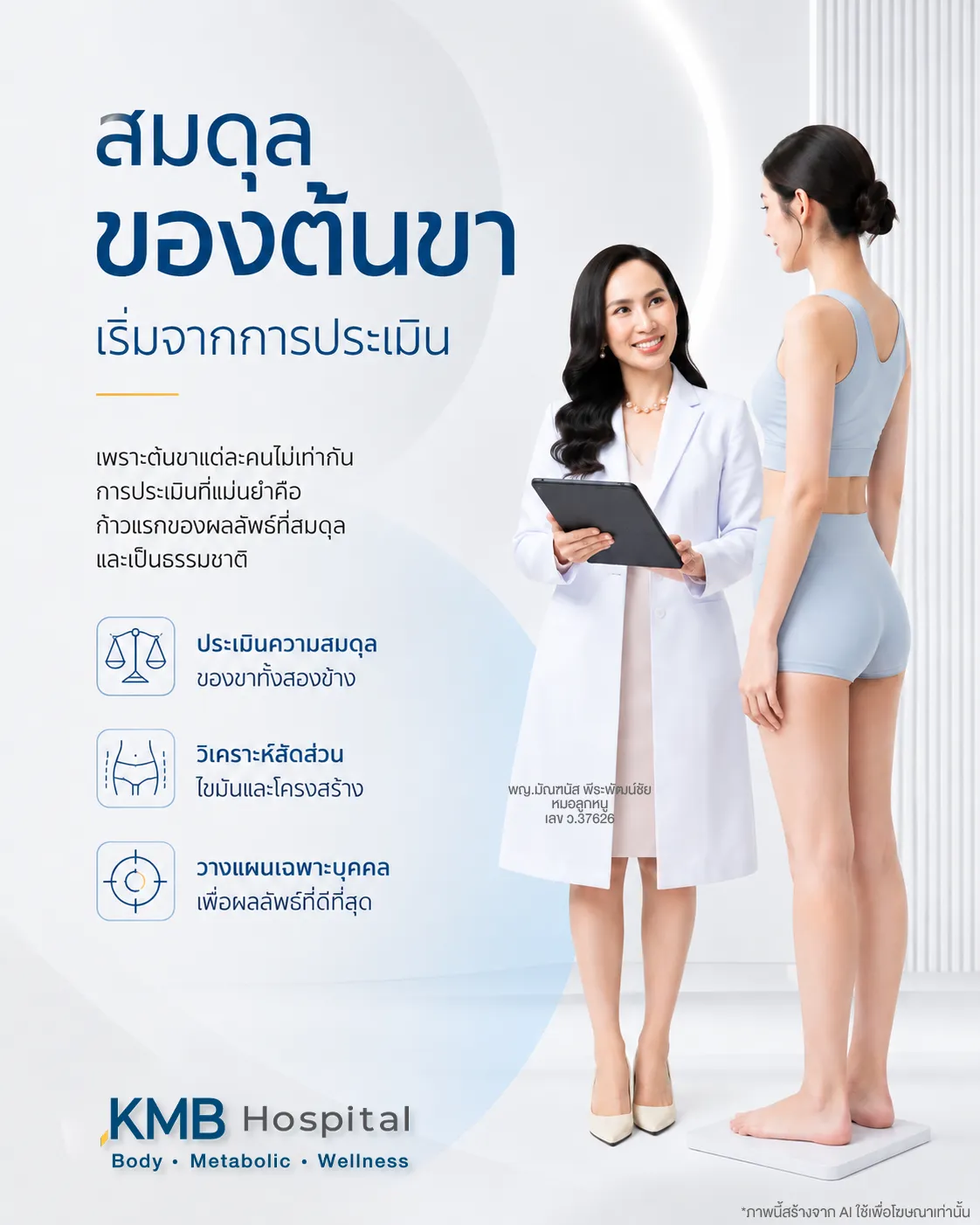
The assessment goal is not to create a thigh gap for everyone, but to design a pathway suitable for the body structure and maintain natural balance.
Thigh gap is not the sole goal of the liposuction program
One of the most common questions when clients consult about inner thighs is whether there will be a thigh gap after undergoing the liposuction program
Although many prioritize the appearance of the thighs, medical evaluation does not start from the question of whether a gap can be created
More importantly, it involves considering what kind of result suits the client's shape and structure
Bone Structure
Bone alignment and leg shape affect the distance between the thighs
Hip Proportions
The width and orientation of the hips are related to the thigh alignment
Leg Lines and Muscles
Muscle shape and leg line affect the overall proportion
Fat Distribution
Position and patterns of fat accumulation vary per individual
A thigh gap is not caused by fat alone, so it should not be used as the sole goal for planning a liposuction program.
FAT Mapping™ Allows Physicians to See Beyond Inner Thighs
Inner thigh evaluation does not focus solely on areas of concern for the client
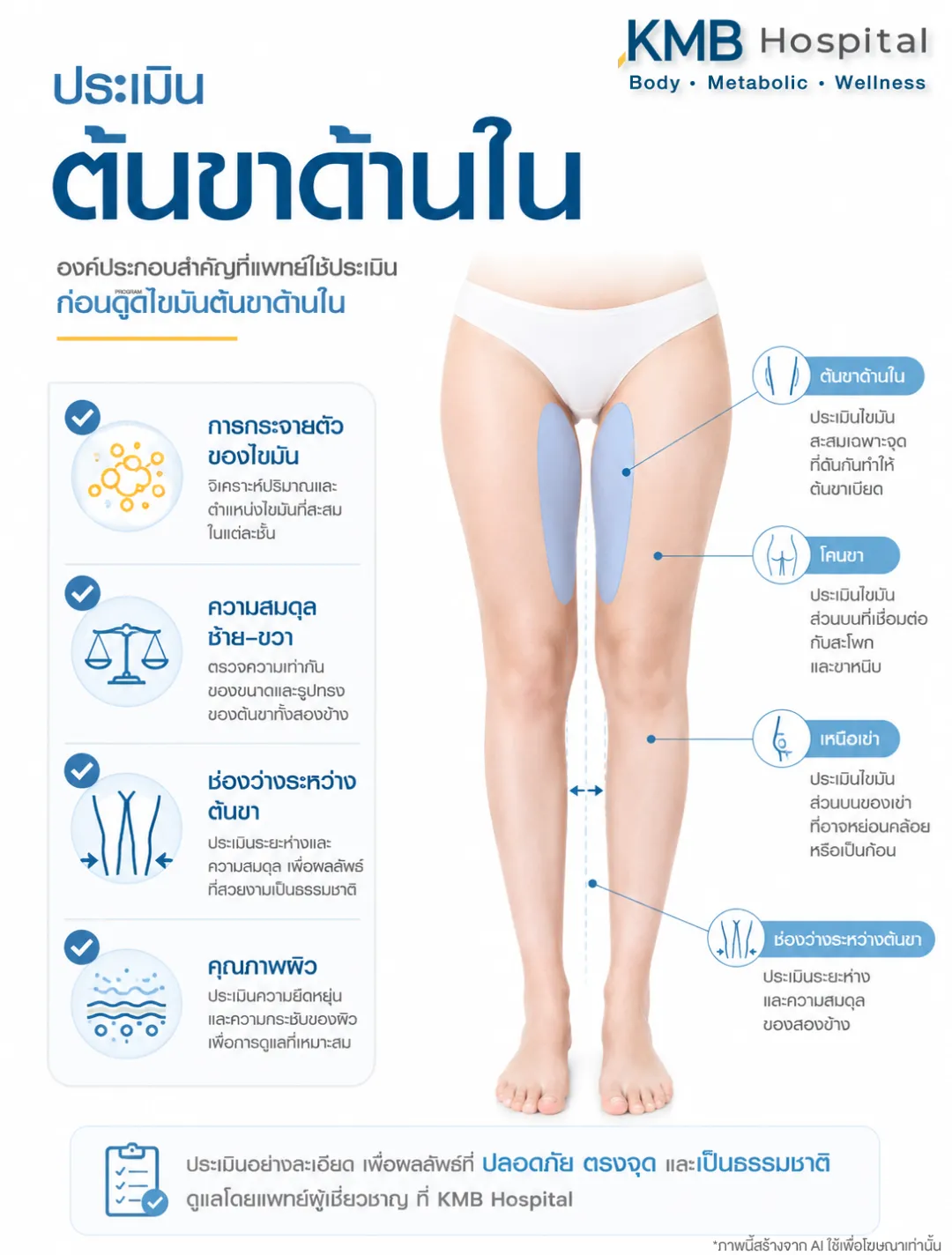
Inner Thighs
Assess position and fat distribution in concerned areas
Front Thighs
Consider the continuity of the front leg line
Outer Thighs
Evaluate relationship with hips and outer thigh line
Hips
Consider upper proportions connecting to the thighs
Leg Alignment
Look at the overall picture of both legs and overall balance
Changes in the inner thighs can affect the balance of all legs. Therefore, FAT Mapping™ allows physicians to see the relationships of various areas before starting to plan the liposuction program
Planning is not designed from "gaps" but from "balance"
Some clients use example images for consultation and expect their body shape after treatment to be similar to such images
However, each person's body shape arises from different body structures, so doctors cannot design for everyone to have the same gap between their inner thighs
FAT Mapping™ data must be used together with a physical examination to assess the approach appropriate for each client's body shape
The balance of the thighs and leg alignment is more important than trying to create gaps like the sample image
Proper assessment helps the liposuction program have appropriate goals
Before starting the liposuction program, the doctor should explain to the client both what can potentially change and the limitations of the body
| Topic | Implication for Planning | What Should Be Understood |
|---|---|---|
| Things That Can Change | Locations related to fat and suitable for planning | Results depend on individual data |
| Structural Limitations | Pelvic bones, leg alignment, muscles, and other components may not change from the liposuction program | Inner thigh gaps cannot be guaranteed |
| Data from FAT Mapping™ | Helps organize fat and proportion data | Must be used together with physical examination and history taking |
When the doctor and client understand the same set of data, planning will have clear goals, and expectations will be based on information rather than comparison with others
What Information Is Used for Inner Thigh Assessment
Assessing the inner thighs requires combining multiple data sources; one should not rely solely on FAT Mapping™ results or external images.
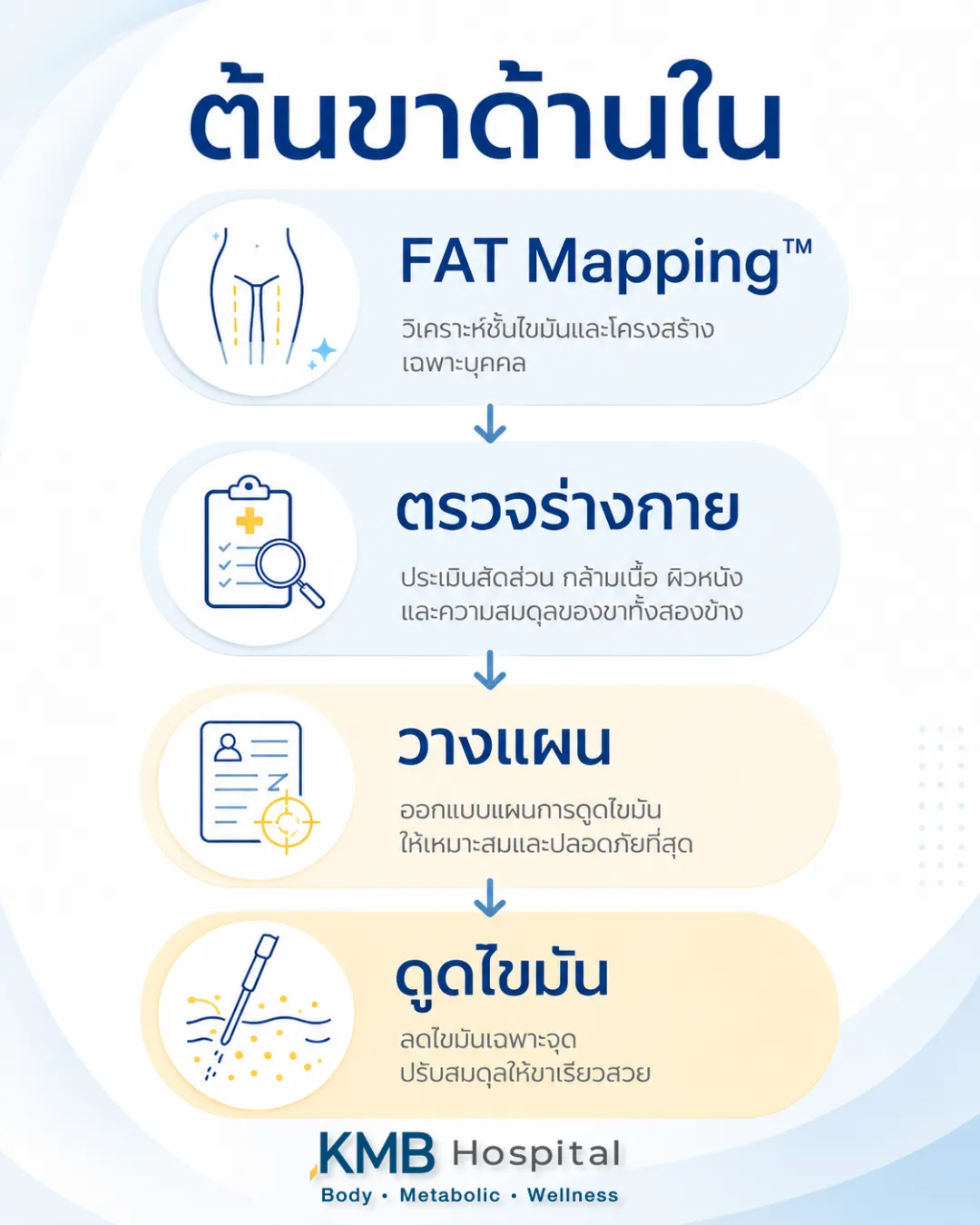
FAT Mapping™
Helps organize data regarding fat distribution and thigh proportions.
Physical Examination
Helps assess structure, leg alignment, skin quality, and related details.
Medical History
Aids in understanding health status, treatment history, and information affecting planning.
Patient Goals
Helps define expectations and approaches to be considered jointly.
Physician’s Judgment
Used to consider suitability, safety, and limitations on an individual basis.
Important Points to Know
Frequently Asked Questions
1. What is Inner Thigh FAT Mapping™, and why should it be assessed before the liposuction program?
It involves gathering data on fat distribution, thigh balance, skin quality, and the relationship of the thighs to the overall structure. Outer appearance of large inner thighs may result from multiple factors, so information must be used alongside a physical examination.
2. Can FAT Mapping™ determine if there will be a gap between the thighs after the liposuction program?
No, because the gap still depends on structure, pelvis, muscles, and other body components.
3. Are all people with large thighs suitable for the inner thigh liposuction program?
Not necessarily. The physician must evaluate FAT Mapping™, physical exam, health, skin quality, and goals together.
4. Why do people with similar thighs receive different plans, and can FAT Mapping™ replace a physical examination?
Because fat distribution, skin quality, and structure may differ. FAT Mapping™ is part of the assessment and cannot replace a physical examination.
5. If you have previously undergone a thigh liposuction program, do you still need to do FAT Mapping™ again?
In many cases, re-evaluation is recommended because shape, skin quality, and tissue distribution may change after treatment.
Article Summary
Inner Thigh FAT Mapping™ helps physicians assess fat distribution, thigh balance, skin quality, and relationship with body structure before planning a liposuction program.
Evaluation in this area does not aim to create the same shape for everyone, but helps physicians choose an approach appropriate for each client's data and explain possible treatment outcomes based on findings.
Read More from DoctorLooknuu.com
About This Article
This article is created to provide knowledge about inner thigh assessment before a liposuction program, explaining the role of FAT Mapping™ in gathering data for treatment planning.
The information in this article is intended for public knowledge and cannot replace medical examination, diagnosis, or individual advice from a doctor.
Article Author Information
Written by
Medical Content Team, KMB Hospital
Medically Reviewed by
Dr. Mandanus Peerapatthanachai
Mor Luk Noo
Licensed Medical Practitioner License No. ว.37626
First Published: August 18, 2026
Last Updated: August 18, 2026
Medical Disclaimer
This article is created to provide knowledge about FAT Mapping™, inner thigh assessment, and pre-liposuction program evaluation. Information cannot replace medical examination, diagnosis, or individual advice from a doctor. Suitability, risks, limitations, and outcomes vary by individual.
Assess Entire Leg Line Before Planning Inner Thigh
FAT Mapping™ allows doctors to see the relationship between the inner thigh, front thigh, outer thigh, hips, and leg alignment, to be used alongside physical examination and health data before personalized planning.