
What Is the Microbiome? | Its Relationship with Hormones, Metabolism, and Weight Loss
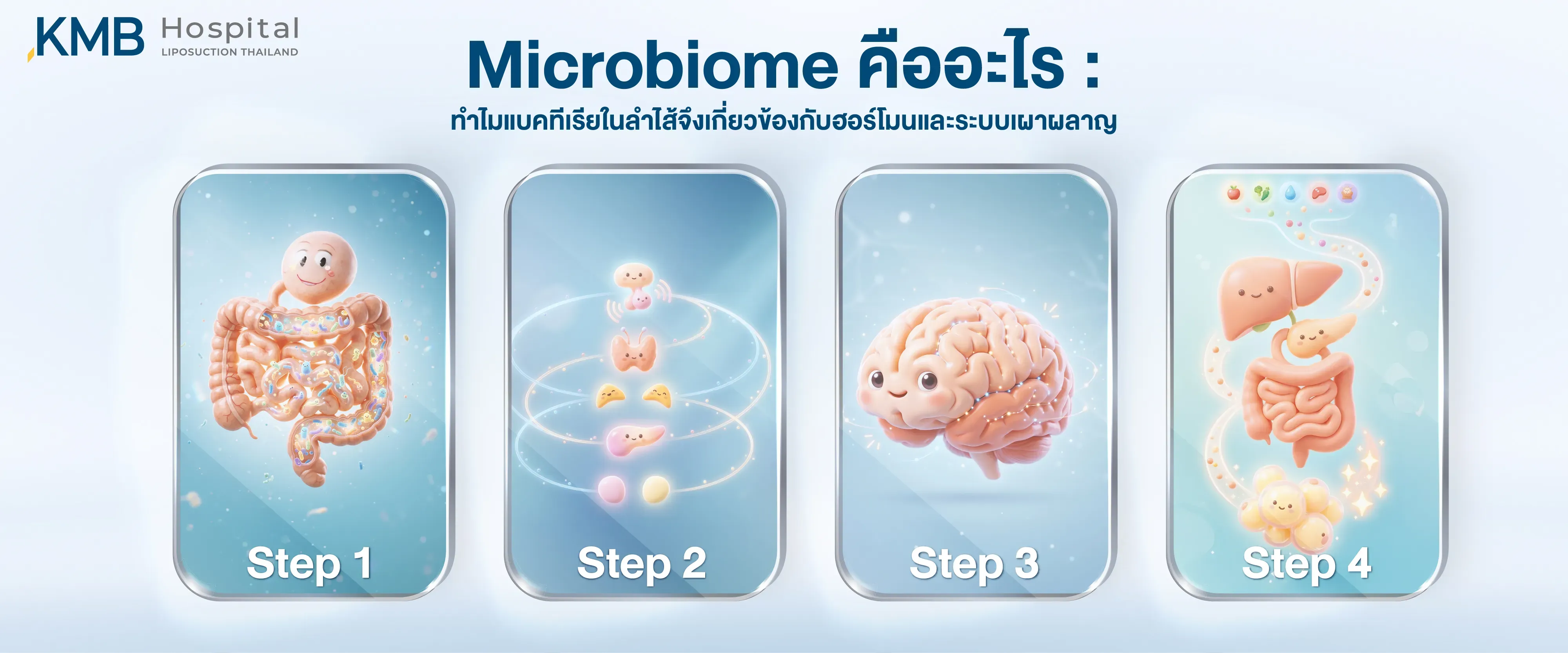
What Is the Microbiome: Why Gut Bacteria Are Linked to Hormones and Metabolism
The Microbiome is the ecosystem of microorganisms living in the human gut, playing a role far beyond simply aiding digestion or bowel movements.
Research in metabolic health over recent years has suggested that the microbiome may be involved in the communication between
- the gut
- the hormonal system
- the brain
- the body's metabolism
For this reason, the microbiome is no longer viewed merely as a part of the digestive system, but as one component of a complex system that links eating behavior, hunger, satiety, and the body's response to food.
Table of Contents
What Is the Microbiome
The microbiome refers to the vast community of microorganisms that live in the human body, particularly in the gut.
These microorganisms include
- bacteria
- certain viruses
- fungi
- other microbes
The microorganisms in the gut are enormous in number and highly diverse, which is why they are often described as an “ecosystem within the body.”
Under normal circumstances, the microbiome plays fundamental roles such as
- helping digest certain foods
- producing metabolites
- participating in the immune system
However, newer research suggests that the role of the microbiome may also be linked to metabolism and hormones.
The Microbiome, Hormones, and Metabolism
Gut microorganisms can produce many types of metabolites, such as short-chain fatty acids (SCFAs)
These substances may be involved in the communication between the gut and various systems of the body, such as
- the hormonal system
- the immune system
- the nervous system
In the context of metabolic health, this relationship may be linked to
- the perception of hunger and satiety
- the body's response to food
- blood sugar balance
The role of SCFAs in hunger is explained further in the article SCFAs and Satiety Signals
What Is the Gut–Brain–Hormone Axis
Another important concept is the Gut–Brain Axis, or the communication between the gut and the brain.
This system connects
- the gut
- the brain
- the nervous system
- the hormonal system
In this context, the microbiome may act as one of the mediators of biochemical signals.
This communication may be involved in
- appetite
- energy levels
- the response to stress
Read more in the article How Gut Bacteria Communicate with the Brain
The Microbiome and Low-Grade Inflammation
Another topic that has attracted attention is the relationship between the microbiome and low-grade inflammation
In some cases, an imbalance of the microbiome (dysbiosis) may be associated with changes in the immune system.
These processes may be linked to
- insulin response
- blood sugar control
- energy balance
However, this relationship is still under continuous study.
The Microbiome Is Only Part of a Larger System
Although the microbiome has been receiving increasing attention, metabolic health does not depend on the microbiome alone.
There are also other factors, such as
- eating behavior
- sleep quality
- stress levels
- exercise
- circadian rhythm
This concept is explained in the article Systems Thinking in the gut–hormone axis
Why the Microbiome Matters for Metabolic Health
The study of the microbiome helps broaden our perspective on metabolic health.
Whereas the focus used to be mainly on
- the amount of food
- physical activity
today researchers are beginning to view metabolism as a network of multiple systems
- the gut
- hormones
- the brain
- lifestyle behaviors
Frequently Asked Questions (FAQ)
Is the microbiome really related to weight loss?
The microbiome may play a role in regulating hunger, satiety, and the body's response to food, which are related to metabolism.
What is the gut–brain axis?
It is the communication between the gut, the brain, and the hormonal system, which affects eating behavior and the response to stress.
How does an imbalanced gut affect the body?
It may be associated with low-grade inflammation, metabolic dysfunction, and blood sugar control.
Conclusion
The microbiome is the ecosystem of microorganisms in the gut, which may be involved in the communication between
- the gut
- the hormonal system
- the brain
- metabolism
Understanding the microbiome therefore helps us see a broader picture of health—that the balance of metabolism is the result of multiple systems in the body working together.
Related Articles
- What Is Dysbiosis
- Circadian Rhythm and the Gut
- How Circadian Rhythm Affects the Gut Microbiome
Common Misconceptions About Insulin Resistance
References
Lynch SV, Pedersen O.
The Human Intestinal Microbiome in Health and Disease.
New England Journal of Medicine. 2016;375(24):2369–2379.
https://doi.org/10.1056/NEJMra1600266Cryan JF, et al.
The Microbiota–Gut–Brain Axis.
Physiological Reviews. 2019;99(4):1877–2013.
https://doi.org/10.1152/physrev.00018.2018Turnbaugh PJ, et al.
The Human Microbiome Project.
Nature. 2007;449:804–810.
https://doi.org/10.1038/nature06244Koh A, De Vadder F, Kovatcheva-Datchary P, Bäckhed F.
From Dietary Fiber to Host Physiology: Short-Chain Fatty Acids as Key Bacterial Metabolites.
Cell. 2016;165(6):1332–1345.
https://doi.org/10.1016/j.cell.2016.05.041Tilg H, Moschen AR.
Microbiota and Diabetes: An Evolving Relationship.
Gut. 2014;63(9):1513–1521.
https://doi.org/10.1136/gutjnl-2014-306928
Hospital Authority
KMB Hospital emphasizes the fair, time-appropriate evaluation of outcomes after liposuction programs, for care that is safe, reassuring, and respectful of the patient's body.
Content Information
Written by: Medical Content Team, KMB Hospital
Reviewed by: Clinical Governance Committee, KMB Hospital
Published: 9 March 2026
Last updated: 9 March 2026