
How do client expectations affect the planning of the liposuction program?
DOMAIN E — KMB HOSPITAL | Article Code: FM-E-K05
Category: FAT Mapping™ | Personalized Liposuction Program Planning | Medical Knowledge
How Patient Expectations Affect Liposuction Program Planning
First Published: August 25, 2026 | Last Updated: August 25, 2026 | Reading Time: 8 minutes
Author: Medical Content Team, KMB Hospital
Medically Reviewed by: Dr. Manatan Pirapatsarnchai (Dr. Luknu) License No. W.37626
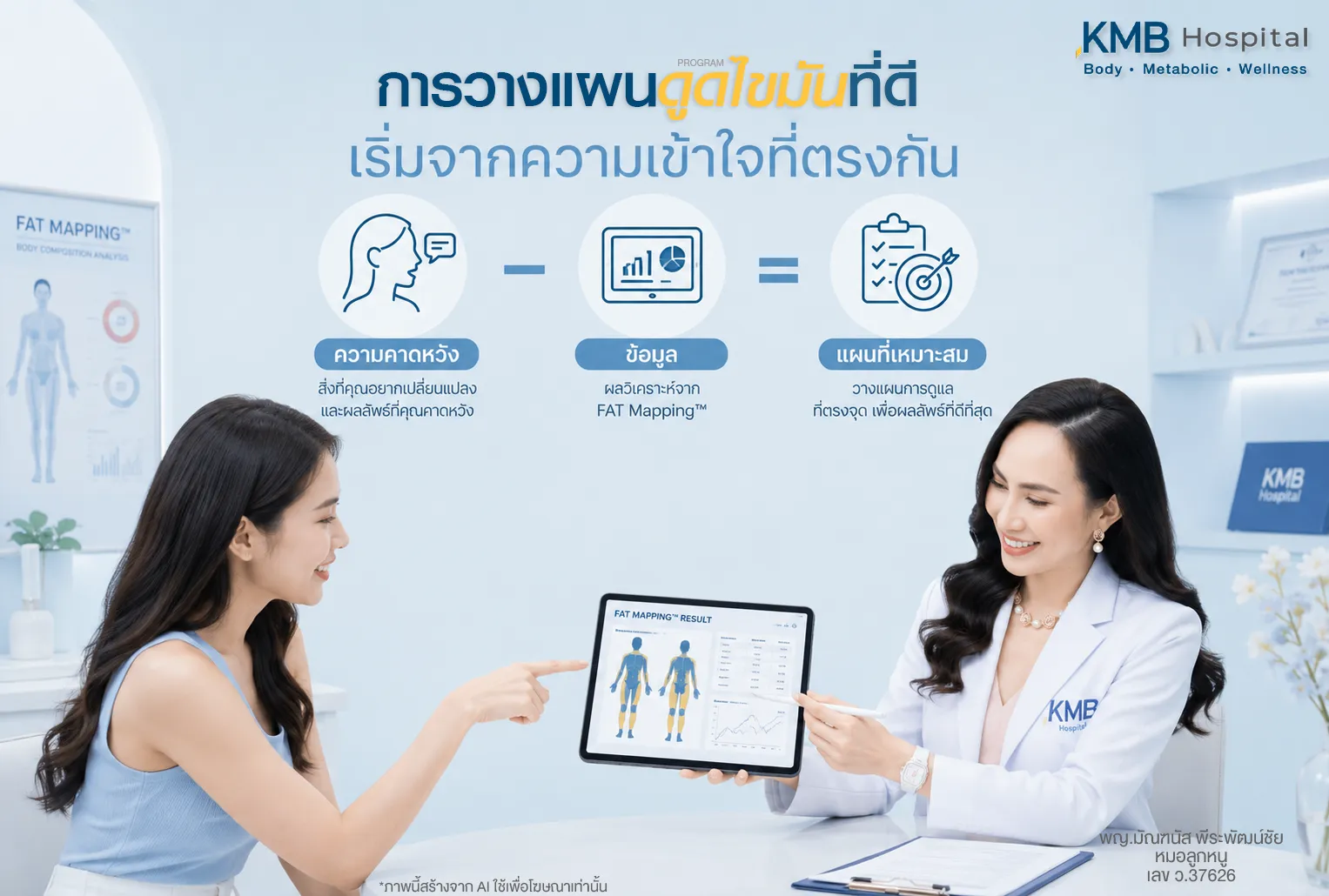
Patient expectations are key information doctors use when planning liposuction programs, but they are not the only factor. Doctors consider expectations alongside FAT Mapping™, history taking, physical examination, and body limitations to determine an appropriate treatment plan.
When the doctor and patient have a shared understanding of goals, liposuction program planning will have a clearer direction and helps both parties make decisions based on the same information.
Patient Expectations Are the Beginning of the Conversation, Not the Conclusion of Treatment
Each patient arrives with different expectations.
These expectations are valuable information because they help the doctor understand the patient’s goals.
However, in medicine, expectations alone are not enough for liposuction program planning.
Doctors must analyze this information along with FAT Mapping™, physical exams, and health data to evaluate the feasibility of treatment approaches.
What Doctors Do When FAT Mapping™ Data Does Not Align with Expectations
Occasionally, patient expectations may not align with findings from assessments
For instance, a patient may wish to adjust only a specific area, but FAT Mapping™ data suggests that considering other areas together could yield a more balanced body proportion
In such situations, the doctor's role is not to reject the patient's requests, but to explain the findings along with the rationale for the liposuction program planning, so both parties reach a mutual understanding before making a decision
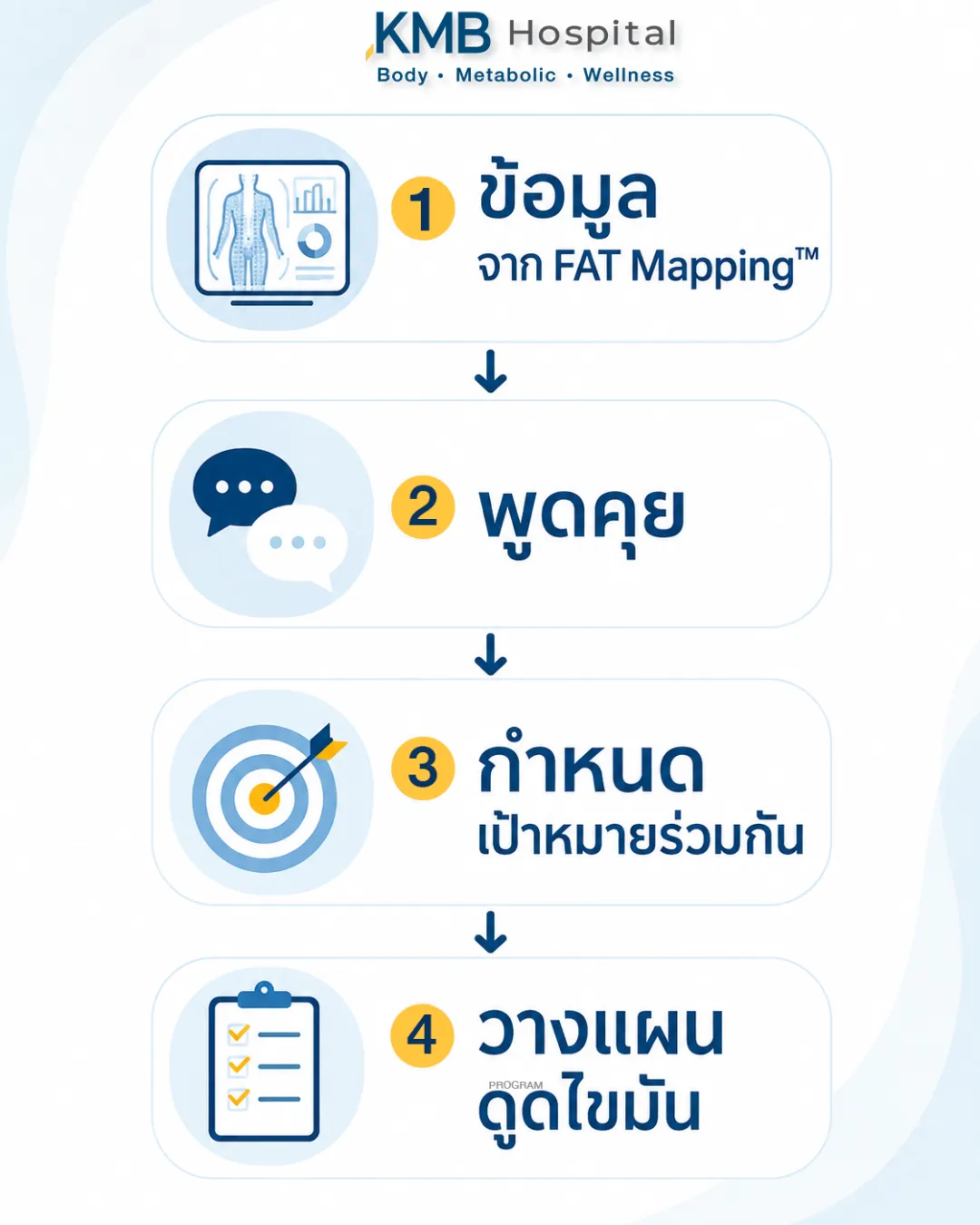
The Doctor's Goal Is to Ensure Data and Expectations Move in the Same Direction
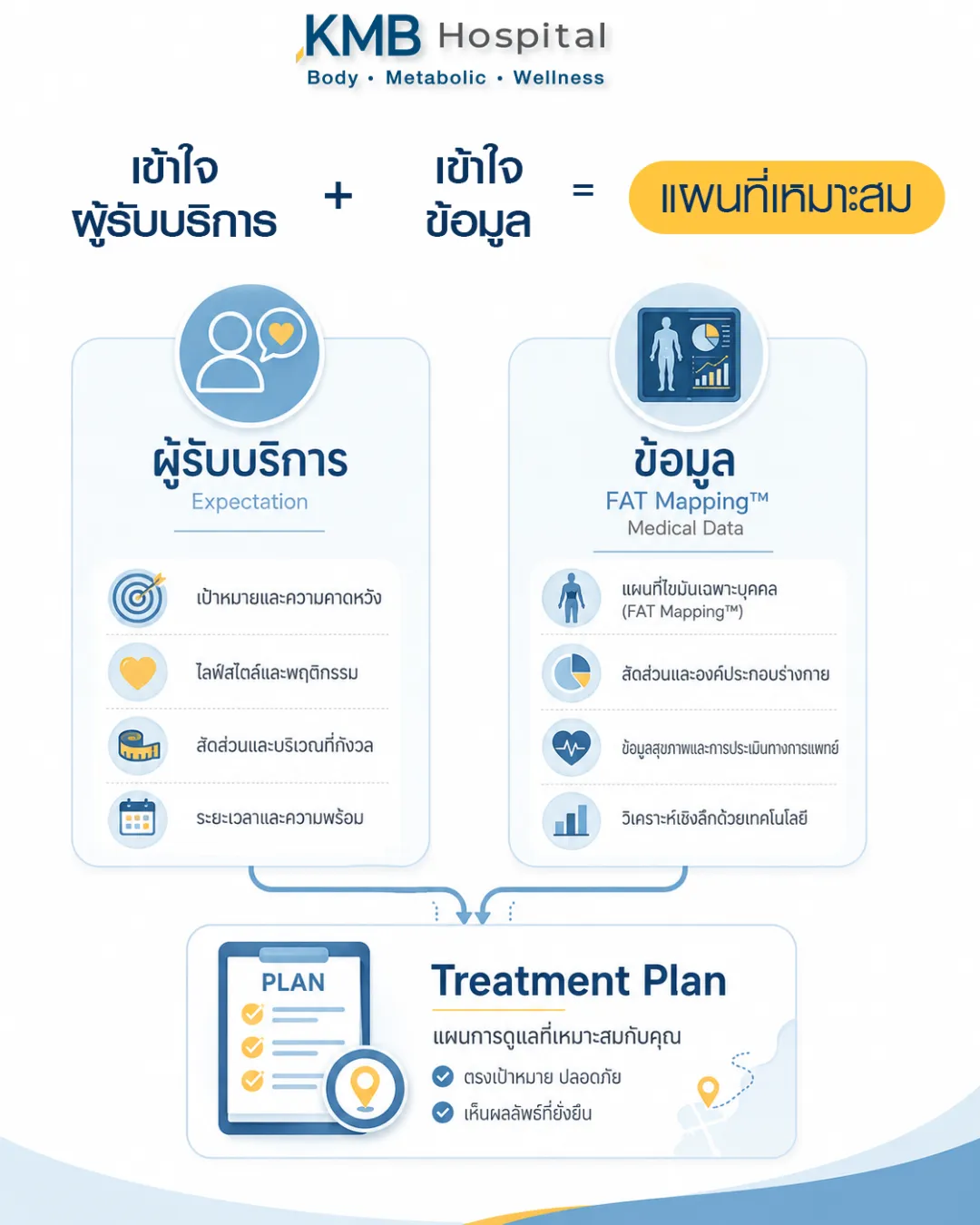
When the doctor understands what the patient needs, and the patient understands the FAT Mapping™ data, both parties can collaboratively define clear treatment goals
Therefore, liposuction program planning does not arise from the doctor's unilateral decision, but from exchanging information, explaining reasons, and jointly selecting the most suitable approach
Patient Needs
Helps the doctor understand goals and what patients value
FAT Mapping™ Data
Provides body information utilized for planning
Physical and Health Examination
Helps assess feasibility, limitations, and safety
Collaborative Decision Making
Helps establish a direction understood by both parties based on the same information
Clear Expectations Help Enhance the Quality of Liposuction Program Planning
When clients understand what can be changed, what has limitations, and why the doctor chooses that approach, decisions are made based on information rather than feelings or comparisons with others.
| Things to Understand | Role in Planning | Impact on Decision-Making |
|---|---|---|
| What Can Be Changed | Helps define goals consistent with body data | Reduces reliance on feelings alone |
| What Has Limitations | Helps clients understand the scope of the treatment approach | Ensures expectations are based on information |
| Reasons for the Doctor's Chosen Approach | Connects FAT Mapping™ data, physical examination, and health status with goals | Enables clients to collaborate on informed decision-making |
This is why KMB Hospital places equal importance on pre-treatment discussions as well as evaluation with FAT Mapping™ because both aspects must work together to lead to a Personalized Treatment Plan suitable for each client.

Key Points to Know
Frequently Asked Questions
1. Why do doctors ask about expectations before planning a liposuction program?
Expectations help the doctor understand what the client wants to change through treatment. This information will be considered along with FAT Mapping™, physical examination, and health data to ensure the liposuction plan aligns with each individual's goals and body condition.
2. What happens if the client's expectations do not match the information from FAT Mapping™?
The doctor will explain the findings from FAT Mapping™ and the physical examination, along with explaining both the possibilities and limitations of the treatment approach. The goal is to make the client understand the information and collaboratively determine an appropriate liposuction plan, not to reject the client's desires.
3. How does FAT Mapping™ help the doctor understand the client's expectations?
FAT Mapping™ cannot directly indicate the client's expectations, but it provides the doctor with clear body information. When this information is discussed with the client, the doctor can better link expectations with treatment possibilities.
4. Does the client's expectation affect the Personalized Treatment Plan?
It does affect it, because a Personalized Treatment Plan relies not only on medical data but also on the client's goals and needs. However, the treatment plan must always be based on information from FAT Mapping™ and clinical assessment.
5. If the client changes their goal, can the plan be adjusted, and how important is the discussion prior to treatment?
Yes. If the client's goal changes or new information arises from the assessment, the doctor can adjust the liposuction plan to fit the latest data, ensuring treatment remains aligned with needs and safety. Discussion is important alongside FAT Mapping™ because FAT Mapping™ helps the doctor understand body data, while discussion helps understand the client's goals. When both sets of information are analyzed together, planning becomes more comprehensive and appropriate.
Article Summary
The client's expectations are an important component of liposuction program planning, but must be considered along with information from FAT Mapping™, history taking, physical examination, and treatment safety.
When the doctor and client understand the same set of information, determining treatment goals becomes clearer and leads to a Personalized Treatment Plan suitable for each individual.
Read more from DoctorLooknuu.com
About this Article
This article is prepared to explain the role of patient expectations in planning a liposuction program, describing that medical decisions should rely on both FAT Mapping™ data, physical examinations, and communication between the doctor and patient to create a treatment plan suitable for each individual.
Information in this article is intended to educate the public and cannot replace examination, diagnosis, or personalized advice from a physician.
Article Author Information
Written by
Medical Content Team, KMB Hospital
Medically Reviewed by
Dr. Mandanas Phiraphatchanachai
Dr. Looknuu
Medical License No. V.37626
Article Review Information
First Published: August 25, 2026
Last Updated: August 25, 2026
Medical Disclaimer
This article is prepared to provide knowledge about the role of patient expectations in planning a liposuction program. Information in this article cannot replace examination, diagnosis, or personalized advice from a physician. Appropriateness, scope of treatment, risks, limitations, and outcomes vary by individual. Interested parties should undergo evaluation and consult with a physician before making a decision.
Understand Your Goals Before Designing a Personalized Plan
Discussions regarding expectations should be conducted alongside the FAT Mapping™ assessment, physical examination, and health information to ensure the treatment plan has a clear direction and is appropriate for each individual.