How do doctors use data from FAT Mapping™ to assess readiness before the liposuction program?
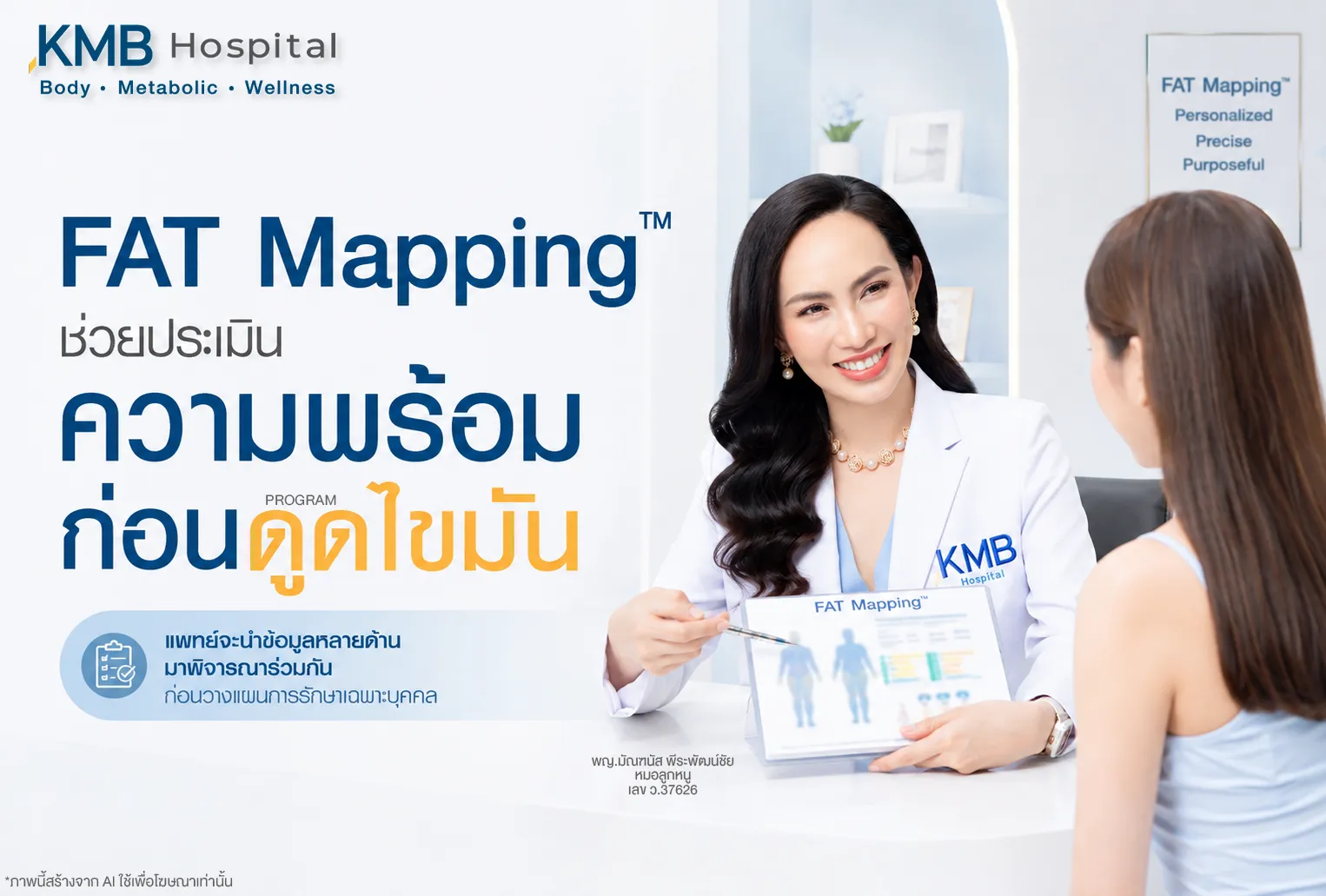
DOMAIN C — CLINICAL ASSESSMENT BEFORE LIPOSUCTION™ | Article Code: FM-C-K06
Category: FAT Mapping™ | Pre-Liposuction Program Assessment | Medical Knowledge
How Doctors Use FAT Mapping™ Data to Assess Readiness Before Liposuction Programs
First Published: August 9, 2026 | Last Updated: August 9, 2026 | Reading Time: 10 minutes
Author: Medical Content Team, KMB Hospital
Medically Reviewed By: Dr. Mandanus Peerapattanchai (Dr. Luknoo) Reg. No. 37626
FAT Mapping™ does not serve to determine whether the client is ready for a liposuction program, but is a tool that helps gather information regarding body shape and body composition so that doctors can consider it together with medical history, physical examination, and health data before evaluating readiness to plan the liposuction program.
Readiness assessment does not rely on data from any single part, but results from analyzing all data together to ensure planning is appropriate for each individual client.
What Does Readiness Before the Liposuction Program Mean?
Many people understand that readiness before the liposuction program refers to having fat in the areas desired for treatment.
However, in reality, doctors assess readiness based on multiple factors combined.
Body Shape and Composition
Helps the doctor see an overview of fat locations, proportions, and relationships between different areas.
Health Information
Helps the doctor consider factors related to safety and planning.
Medical History Review
Helps understand chronic diseases, medications used, and treatment history.
Physical Examination
Helps the doctor evaluate information that cannot be seen with instruments alone.
Client Goals
Helps ensure the treatment plan aligns with individual needs and limitations.
When these pieces of information align, the doctor can then plan the treatment appropriately.
What Information Does FAT Mapping™ Show Doctors?
Data from FAT Mapping™ helps doctors see a systematic overview of body composition.
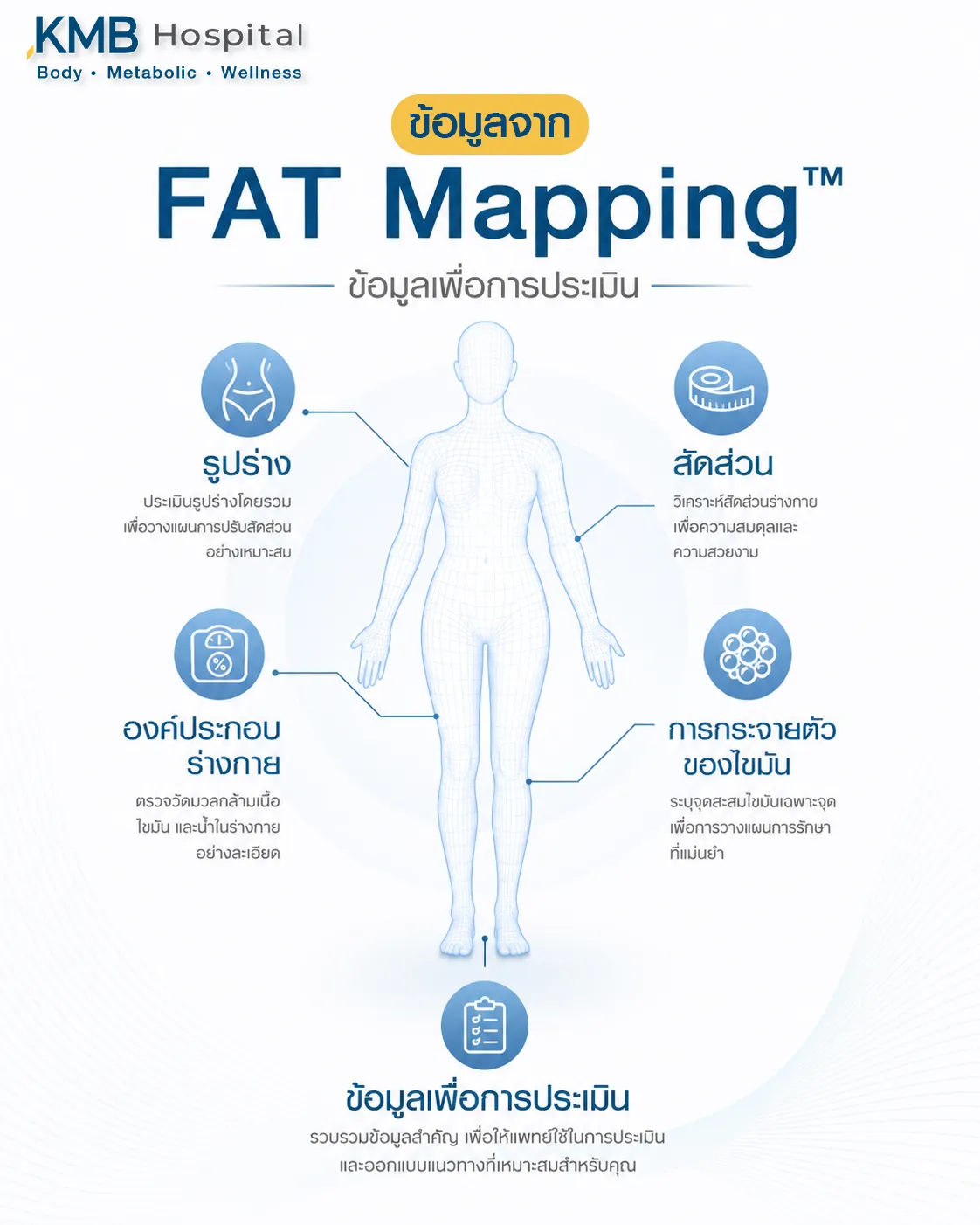
These data points help doctors understand the client's overall picture better, but must always be considered alongside other information.
How do doctors evaluate all information together?
After obtaining information from history taking, physical examination, and FAT Mapping™, doctors will consider the relationship between each aspect of the data together.
| Data Source | Information That Helps Doctors Understand | Application |
|---|---|---|
| History Taking | Health, medications used, treatment history, and related information | Consider which parts of the data need further assessment |
| Physical Examination | Details of the body and observations from the examination | Link external data with health data |
| FAT Mapping™ | Body shape, proportions, fat distribution, and body composition | Helps make the data systematic and provides a broader overview |
| Health Information | Factors related to readiness and safety | Used to support clinical decision-making |
Service recipients may have fat accumulation in the areas requiring treatment, but if health data requiring further assessment is found, or other factors require consideration, doctors may choose additional testing before planning the liposuction program.
Conversely, service recipients with complete and appropriate information may proceed directly to the treatment planning stage.
Why don't doctors rely solely on information from FAT Mapping™?
FAT Mapping™ is a tool that helps organize information.
However, assessing readiness before the liposuction program is a clinical decision, which requires using multiple aspects of data together.
Relying solely on information from FAT Mapping™ may not reflect health information, medical history, or specific limitations of each service recipient.
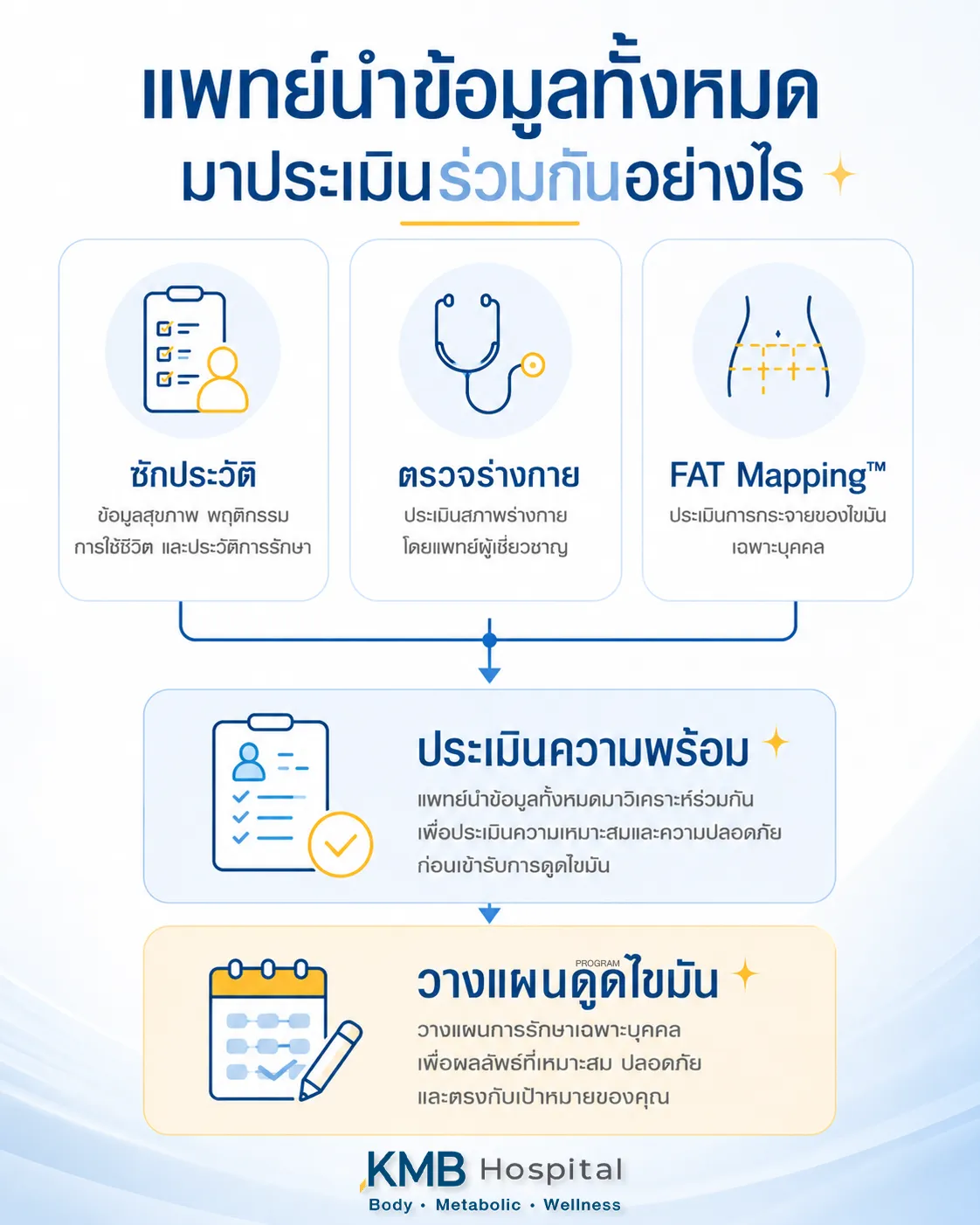
Therefore, this is the reason why doctors must consider all information together before planning treatment.
Connection to Clinical Assessment
FAT Mapping™ helps make information regarding body shape and body composition more systematic
However, readiness assessment prior to liposuction programs still requires medical history, physical examination, and physician judgment together
The goal is to ensure treatment planning is appropriate and considers the safety of each client
Article Summary
Readiness assessment prior to liposuction programs is not solely based on FAT Mapping™ results, but involves considering all data together
When data from medical history, physical examination, FAT Mapping™, and health information are consistent, physicians can then plan appropriate treatment for each client

Key Points to Know
Frequently Asked Questions
1. Can FAT Mapping™ tell if you are ready for the liposuction program?
No. FAT Mapping™ is a tool that helps gather information about body shape and composition. However, assessing readiness for the liposuction program still requires data from medical history, physical examination, and the physician’s judgment.
2. If the FAT Mapping™ result is good, does that mean I can proceed with the liposuction program immediately?
Not necessarily. Even though FAT Mapping™ data is useful for assessment, physicians must still consider health factors, treatment history, and other data together before planning the liposuction program.
3. Why do physicians need to assess through multiple steps before the liposuction program?
Because the liposuction program is not decided by body shape alone. Having complete information allows physicians to plan treatment appropriately for each client and prioritize safety more effectively.
4. If further assessment is needed, does that mean we are not ready for the liposuction program, and does it take a long time?
Not necessarily. Additional assessment is just to collect complete data before deciding; it does not mean the client cannot undergo the liposuction program. The duration depends on each individual's data. If additional assessment is needed, the physician will explain the reasons and steps beforehand each time.
5. Why do clients with similar body shapes receive different readiness assessments?
Because assessment is not based solely on body shape but considers health information, history, physical examinations, and FAT Mapping™ data together, so liposuction program planning may vary.
Read More from DoctorLooknuu.com
About KMB Hospital
KMB Hospital places importance on assessing readiness before the liposuction program, using information from history-taking, physical examination, and FAT Mapping™ together to ensure treatment planning is appropriate for each client and prioritizes safety.
Article Contributor Information
Written By
Medical Content Team, KMB Hospital
This article is created to disseminate knowledge regarding FAT Mapping™, pre-liposuction program assessment, and related medical information, to assist readers in understanding the assessment process and using this information to make decisions jointly with their physician.
Medically Reviewed By
Dr. Mandon Piraapatchai
Mor Look-Noo
Medical License No. W.37626
Founder of KMB Hospital and developer of the FAT Mapping™ concept; has medically reviewed this series of articles to ensure accuracy, alignment with academic standards, and suitability for communication with the general public.
Article Review Information
First Published: August 9, 2026
Last Updated: August 9, 2026
Important Medical Note
This article is created to provide knowledge on utilizing information from FAT Mapping™ and assessing readiness prior to the liposuction program. The information in this article cannot replace examination, diagnosis, or individualized advice from a physician. Readiness, suitability, procedures, risks, limitations, and treatment approaches vary by individual. Patients should fully disclose health status, medical history, and current medications, and comply with recommendations from the physician and healthcare facility.
Evaluate From Multiple Aspects Before Planning Treatment
FAT Mapping™ helps organize data regarding body shape and composition, but assessing readiness must also be combined with history taking, physical examination, and each individual's health information.