How do physicians determine the scope of the liposuction program based on FAT Mapping™ data?
DOMAIN F — KMB HOSPITAL | Article Code: FM-F-K02
Category: FAT Mapping™ | Pre-Liposuction Program Planning | Medical Knowledge
How Physicians Determine Liposuction Program Boundaries Using FAT Mapping™ Data
First Published: August 28, 2026 | Last Updated: August 28, 2026 | Reading Time: 7 minutes
Author: Medical Content Team, KMB Hospital
Medically Reviewed By: Dr. Manthanas Pirapatthanachai (Dr. Lu Nook) License No. V.37626
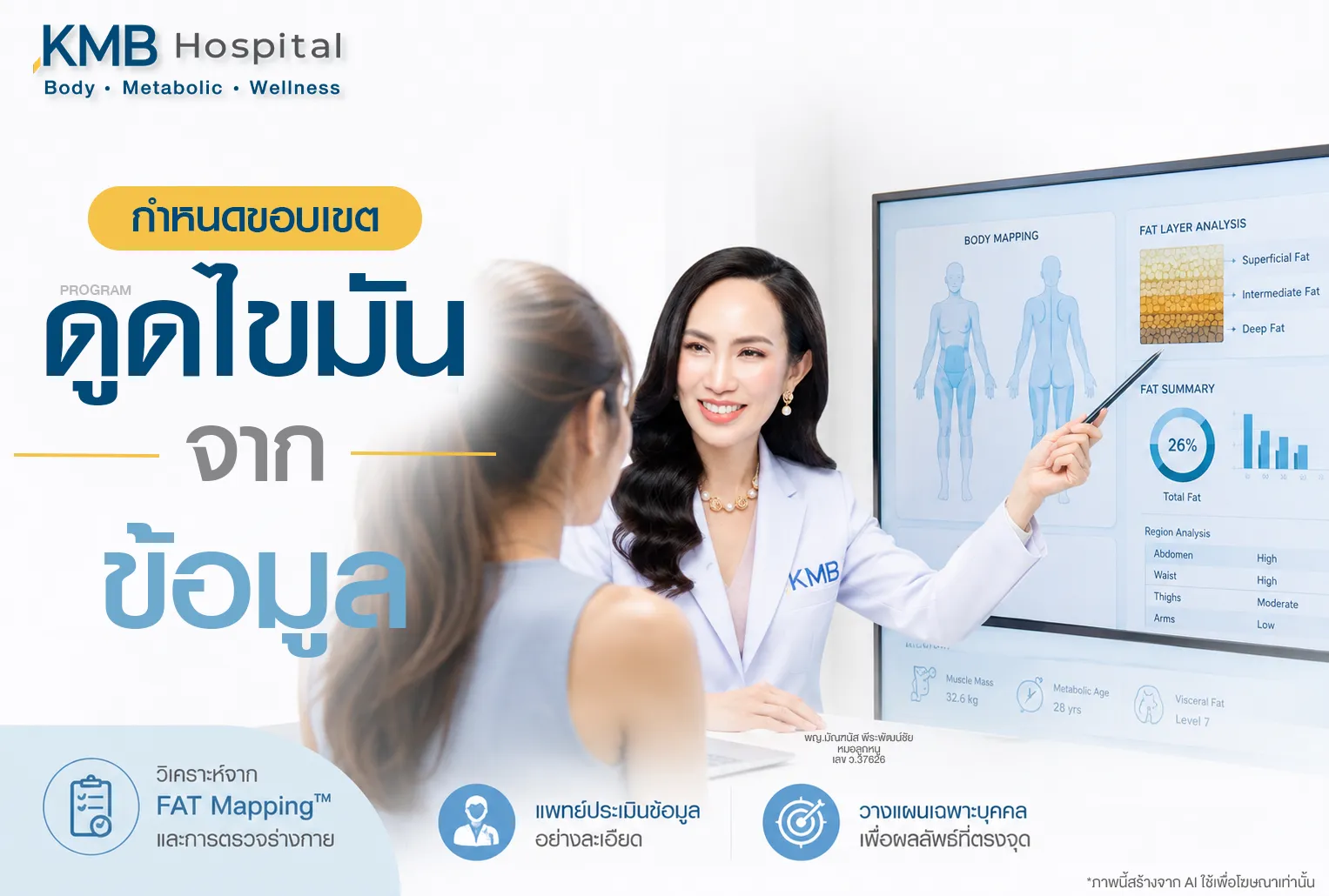
Physicians do not determine liposuction program boundaries solely based on the patient's concerned areas; they use data from FAT Mapping™, physical examinations, and relationships of overall body proportions to determine which areas should be included in the treatment plan and which should not.
Determining boundaries is thus a process of designing a liposuction program plan, not merely designating treatment positions, but rather creating continuity, balance, and appropriateness of the overall body shape.
Liposuction Program Boundaries Don't Start with Lines Drawn on the Body
Many patients assume that determining liposuction program boundaries is the moment the physician draws lines on the body before entering the operating room
However, in reality, those lines seen are simply the "result" of analyzing all data that occurred prior to that
Before drawing even a single line, the physician must understand that
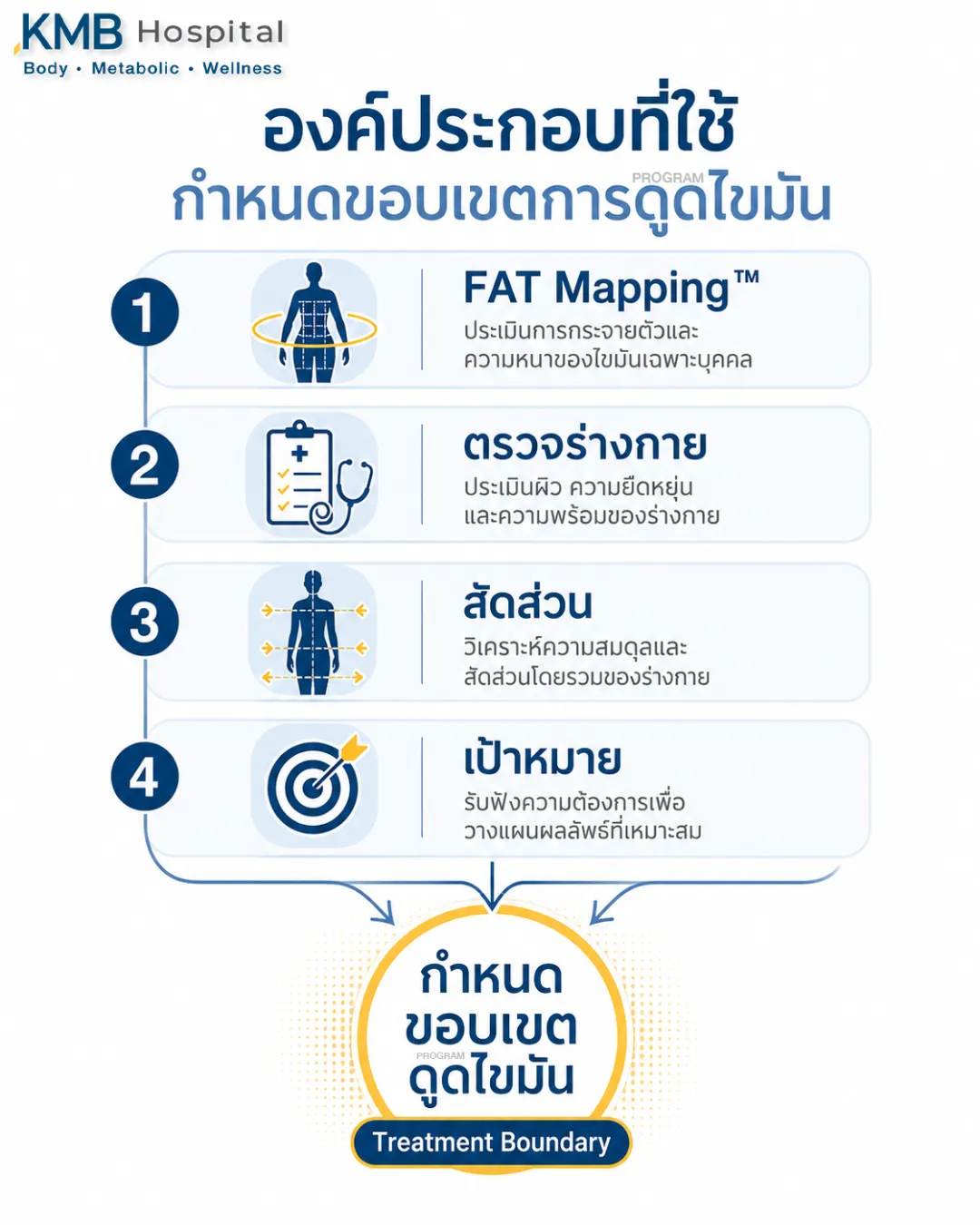
FAT Mapping™ Helps Doctors See the "Continuity" of the Body
When a client points to an area of concern, the doctor does not just look at that spot, but considers where that area connects with other parts of the body.
Waist Flanks
May be related to the abdomen and back.
Upper Arms
May be related to the armpits.
Outer Thighs
May be related to the hips.
FAT Mapping™ helps doctors see these relationships to define the boundaries of the liposuction program that creates a continuous body shape, rather than treating individual points separately.
Doctors Do Not Determine Boundaries Solely Based on FAT Mapping™
Although FAT Mapping™ provides important information, doctors still need to use multiple other pieces of information together, such as:
| Information Used | What Helps the Doctor Understand | Role in Treatment Boundaries |
|---|---|---|
| FAT Mapping™ | Fat distribution and relationships between areas | Helps assess which areas are connected |
| Physical Examination | Actual proportions, skin quality, and tissue | Helps verify suitability of the areas considered |
| Health and Medical History | Client health information and limitations | Ensures boundary definition considers safety |
| Client's Goals | What the client wants to change | Helps connect goals with body data |
All this information will be analyzed together before defining the appropriate liposuction program boundaries for each client.
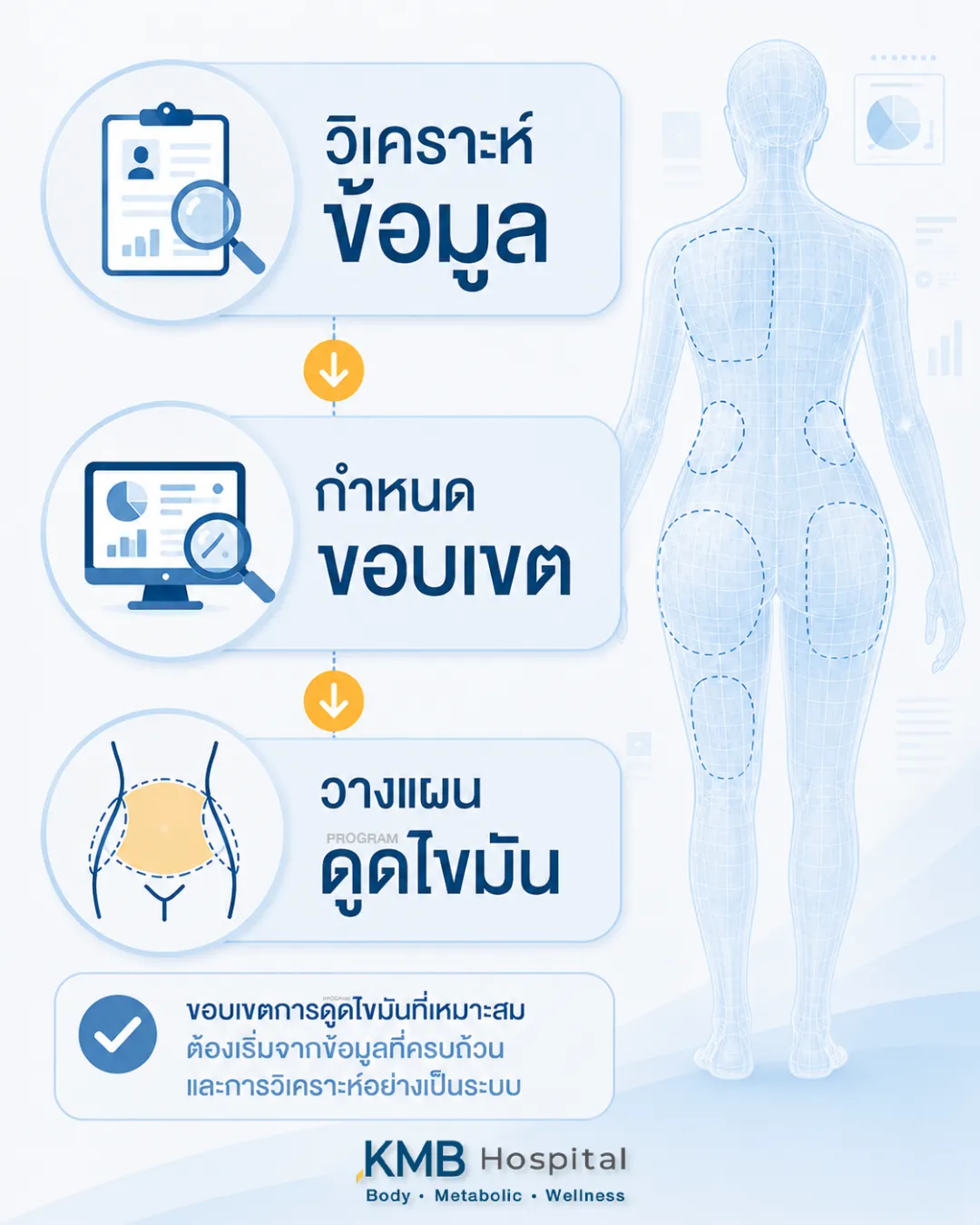
The Appropriate Scope Is Not the Widest Scope
Many people believe that the wider the liposuction program area is defined, the better the results are expected to be
But for medical planning, defining the appropriate scope is more important than defining the widest scope
The goal of treatment is to create a balanced shape, not to have the liposuction program cover the largest area possible
Key Points to Know
Frequently Asked Questions
1. How does the physician define the scope of the liposuction program using FAT Mapping™, and is FAT Mapping™ alone sufficient?
The physician uses information from FAT Mapping™ to understand fat distribution, contour continuity, and the relationship between each area before analyzing this data in conjunction with physical examination, medical history, skin quality, health status, and patient goals. Therefore, FAT Mapping™ alone cannot determine the treatment scope.
2. Why does the liposuction program scope differ for each patient?
Because everyone's data differs. Even if patients have similar body shapes, the results from FAT Mapping™, fat distribution, proportion balance, and physical limitations may not be the same. Therefore, the liposuction program scope must be customized for each individual.
3. What principles does the physician use to decide which areas to include in the liposuction program plan?
The physician considers contour continuity, the relationship between each area, FAT Mapping™ results, safety, and patient goals. If an area affects overall proportion balance, the physician may consider including it in the plan; however, if it is unnecessary, it may not be included in the treatment plan.
4. Does a broader liposuction program scope always yield better results?
Not always. Defining the broadest scope is not the goal of treatment. The physician will select an appropriate scope based on the patient's data to ensure contours are continuous and consistent with treatment goals.
5. Before starting the liposuction program, what should the patient understand regarding the treatment scope?
Patients should know which areas are included in the plan, which are not, the reasons behind the physician's defined scope, and how FAT Mapping™ data influences scope determination. When understanding this information, patients can participate in decision-making regarding the treatment plan based on clearer information.
Article Summary
Defining the liposuction program scope is one of the important steps in designing a treatment plan.
FAT Mapping™ helps physicians understand fat distribution and the relationship between each area, but decision-making does not rely solely on tool data.
Physicians must also analyze data from physical examinations, medical history, skin quality, safety, and patient goals together.
When all information is systematically connected, it is possible to define an appropriate liposuction program scope, explain the reasoning, and align with the patient's overall body shape.
Read more from DoctorLooknuu.com
About this article
This article is created to explain the principles of defining the scope of a liposuction program prior to treatment, detailing the role of FAT Mapping™ in helping physicians determine treatment areas alongside physical examinations, history taking, and clinical data to ensure each patient's liposuction program plan is appropriate.
The information in this article is intended to educate the public and cannot replace examination, diagnosis, or individual advice from a physician.
Article Author Information
Written by
Medical Content Team, KMB Hospital
Medically reviewed by
Dr. Mandonas Pirapatthanai
Dr. LookNuu
Medical Practice License No. W.37626
Article Review Details
First published: 28 August 2026
Last updated: 28 August 2026
Medical Disclaimer
This article is prepared to provide knowledge regarding the delineation of liposuction program scopes and the role of FAT Mapping™. Information in this article cannot replace medical examination, diagnosis, or personalized advice from a physician. Appropriateness, treatment scope, risks, limitations, and outcomes differ per individual. Those interested should undergo evaluation and report complete health information before deciding.
Define Scope Based on Data, Not the Widest Area
FAT Mapping™, physical examination, health, skin quality, and the client's goals must be analyzed together before defining the scope of a personalized liposuction program.