
How does the doctor design a balanced body shape before the fat removal program based on FAT Mapping™ data?
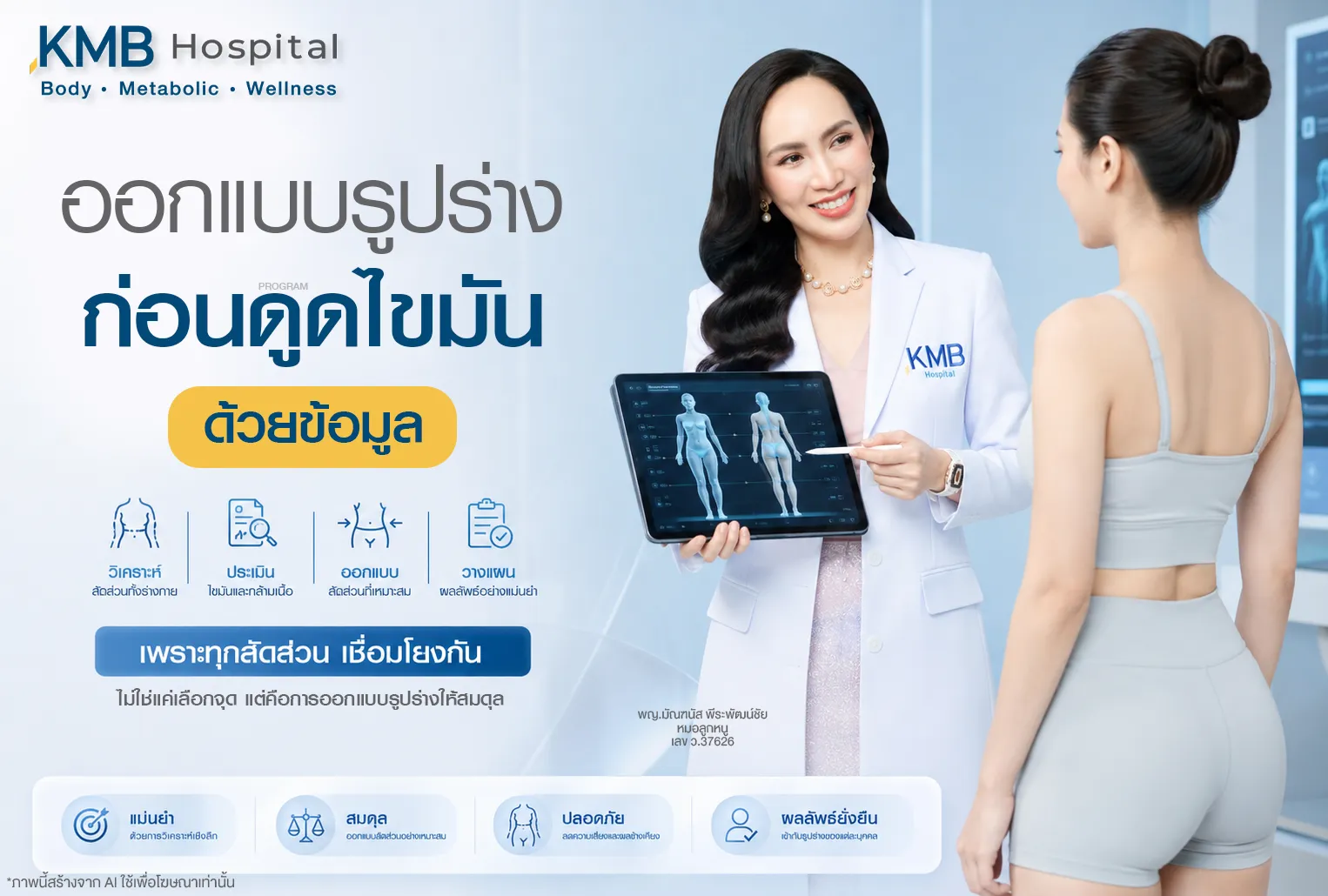
DOMAIN F — KMB HOSPITAL | Article Code: FM-F-K03
Category: FAT Mapping™ | Body Shaping Before Liposuction Program | Medical Knowledge
How Doctors Design Balanced Body Shapes Before the Liposuction Program Using FAT Mapping™ Data
First Published: 28 August 2026 | Last Updated: 28 August 2026 | Read Time: 8 minutes
Author: Medical Content Team, KMB Hospital
Medically Reviewed By: Dr. Mandonas Peerapattanchai (Mom Luknou) License No. ว.37626
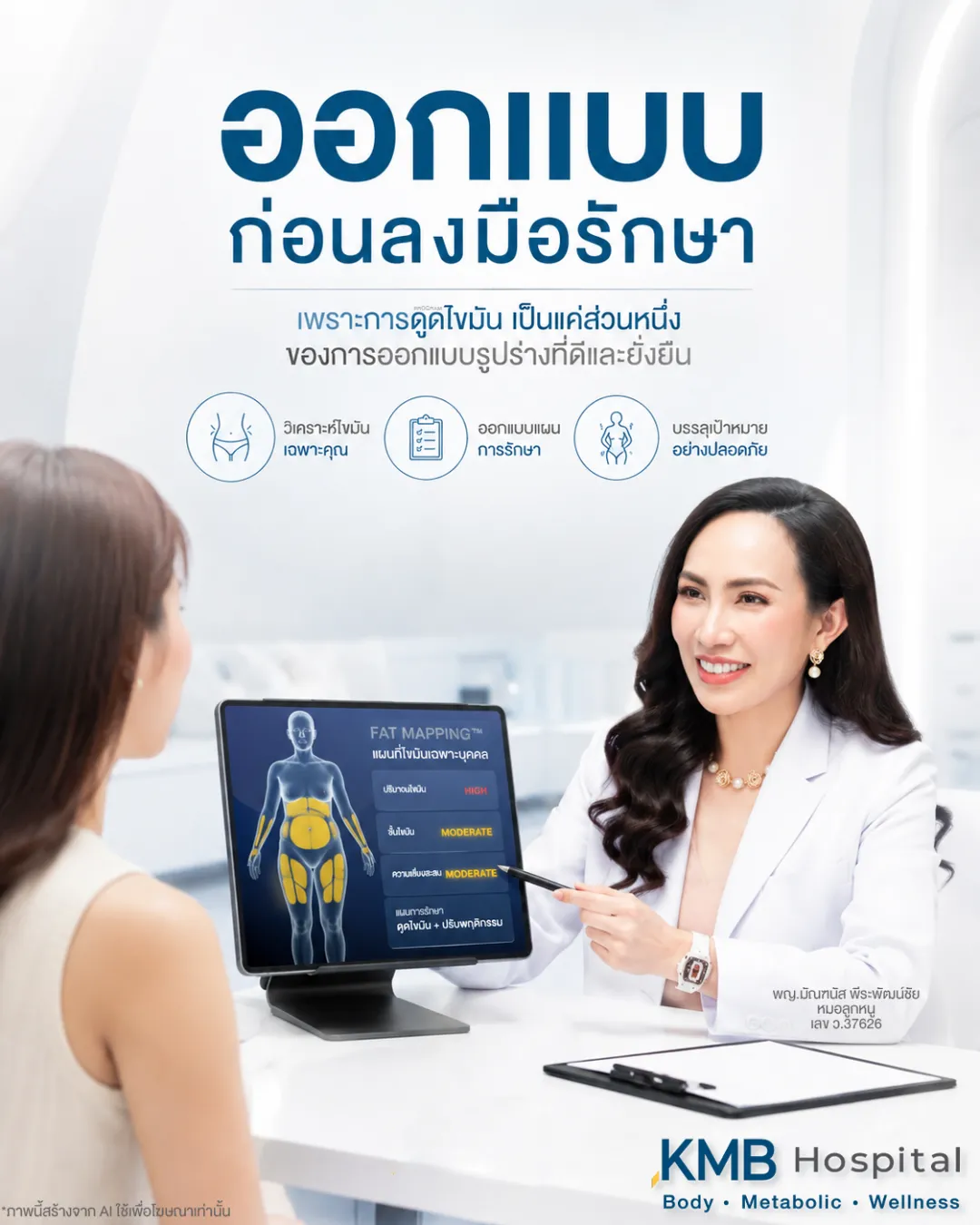
Before the liposuction program, doctors do not design body shapes based solely on spot fat reduction, but utilize data from FAT Mapping™ combined with physical examinations to analyze the relationship of overall body proportions, then design treatment plans to achieve the highest level of balance.
The goal of body shaping is not to make each area the smallest, but to ensure all body parts are continuous, consistent, and appropriate for each client’s structure.
Body Shaping Starts with Viewing the Whole Picture, Not Each Area Individually
Most clients typically start by saying, "I want to reduce my belly" or "I want my upper arms to become smaller."
However, for doctors, planning the liposuction program does not begin with just the single area the client is concerned about.
Doctors begin by viewing the entirety of the body shape because every part of the body is related.
If one area is altered, it inevitably affects the balance of other areas as well.
FAT Mapping™ helps you see proportions, rather than just seeing fat
Many people understand that FAT Mapping™ has the function of merely indicating where fat is located
But in the body contouring process, data from FAT Mapping™ also helps the doctor see
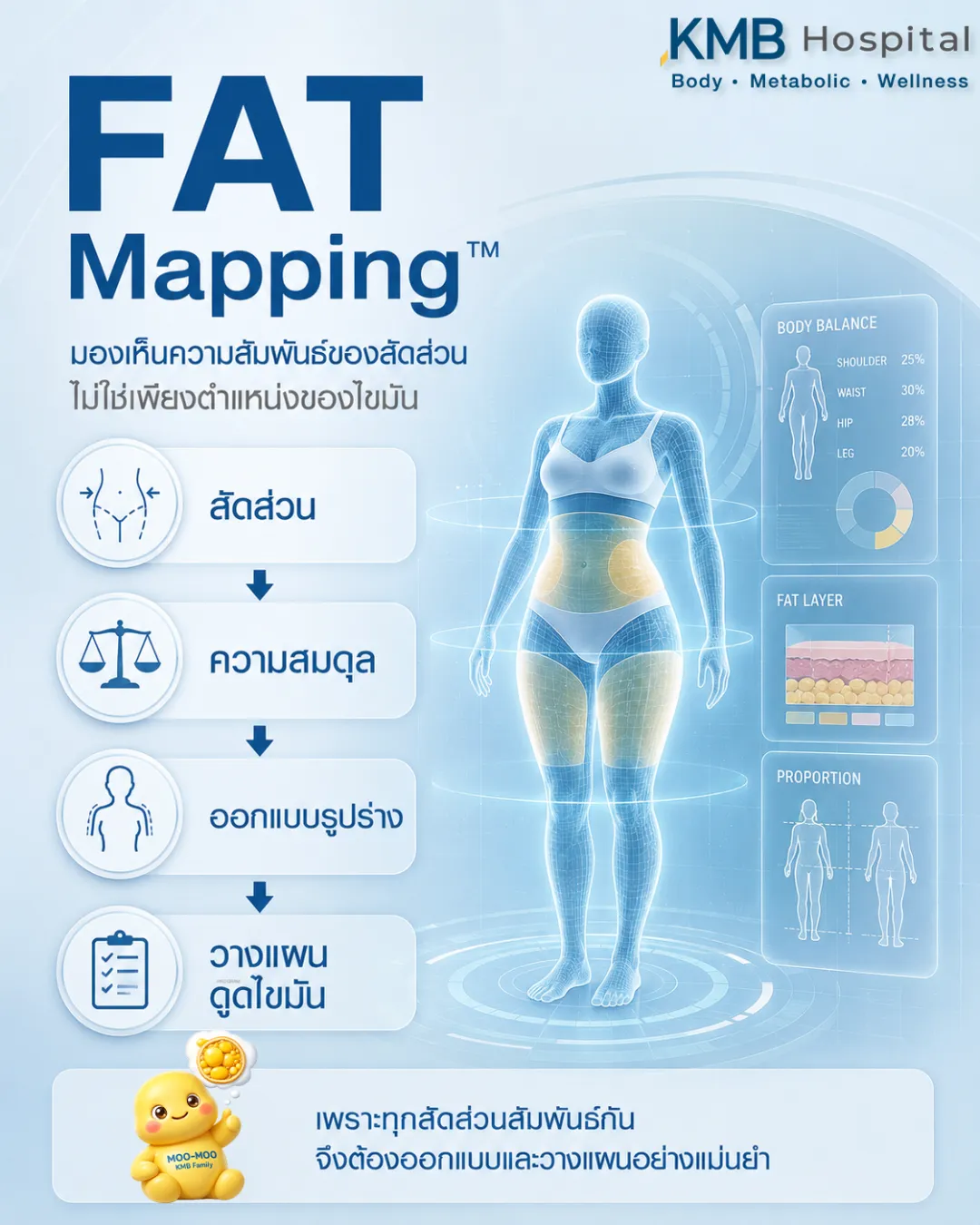
Waist and Abdomen
Continuity of the torso proportions
Upper Arms and Shoulders
Relationship of size and direction of upper proportions
Hips and Thighs
Balance of lower body proportions
Transitions of Each Area
Helps the doctor view the shape as a whole, not separating individual points
This information helps the doctor not just think about “where to plan the liposuction program,” but also consider “if this area is adjusted, how will the overall body shape change?”
Balance Does Not Mean Every Part is Equal
In body contouring, the word “balance” does not mean making every side have the same size
But it means making the proportions of each area connect naturally
| Example Changes | Effect on Visible Proportions | What Doctors Consider |
|---|---|---|
| Waist becomes narrower | Hips may appear more prominent | Relationship between waist, abdomen, and hips |
| Upper arms balanced with shoulders | Overall body shape may look slimmer | Direction of upper arms, shoulders, and upper torso |
| Torso becomes more continuous | Body shape may change without needing to reduce all areas | Continuity and transitions of proportions |
Therefore, doctors do not design based solely on numbers, but start with the relationship of proportions across the entire body
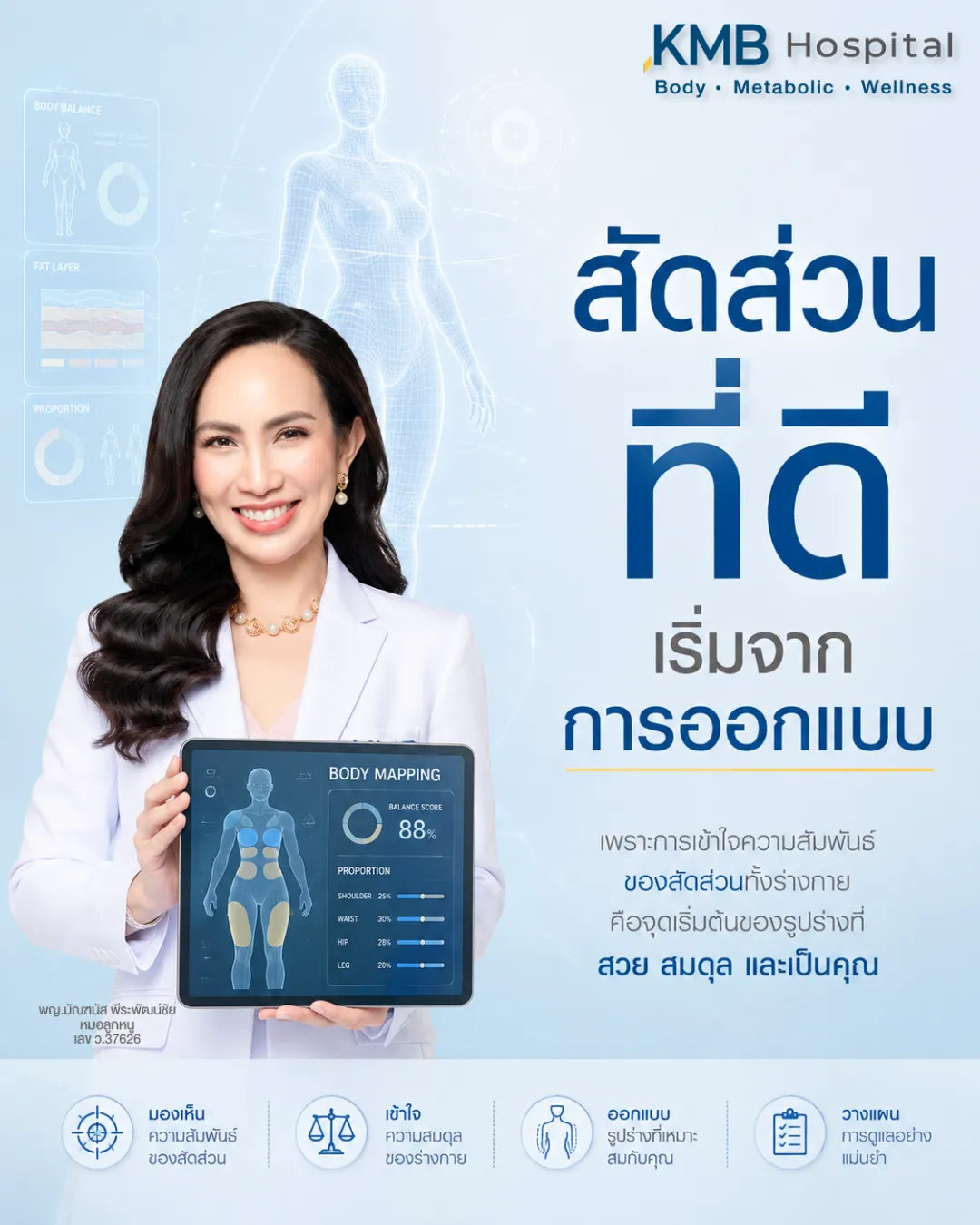
The Goal of Body Contouring is Harmony
Before planning a liposuction program, the physician attempts to answer how the client's body should look harmonious after treatment.
The answer does not stem from feelings, but from connecting data from FAT Mapping™, physical examination, and the client's structure.
FAT Mapping™
Helps visualize fat distribution and the relationship between each area.
Physical Examination
Helps assess actual proportions, skin quality, and structural details.
Medical History and Health
Ensures planning is based on relevant clinical data.
Client Goals
Enables the physician to understand requirements and expectations to be considered together.
For KMB Hospital, good body contouring is not about changing just one point, but making the entire body shape move in the same balanced direction.
Important Points to Know
Frequently Asked Questions
1. How does FAT Mapping™ help doctors design body shapes before the liposuction program?
FAT Mapping™ enables doctors to visualize fat distribution, the relationship between each area, and the continuity of overall body proportions. When this data is analyzed alongside physical examinations, doctors can design a liposuction program path that aligns with each client’s body shape, rather than just reducing fat in specific areas.
2. Why don’t doctors design a liposuction program based solely on the areas the client is concerned about?
Because all areas of the body are interconnected. Even if the client is only concerned about the abdomen, upper arms, or love handles, the doctor must still evaluate the continuity of overall proportions from FAT Mapping™ before defining the liposuction program plan, to ensure the results are more balanced.
3. What does body balance before the liposuction program mean?
Balance does not mean making every side the same size, but rather making each area connect naturally. After the liposuction program, the overall body shape should look harmonious with the client’s structure, rather than changing just any single point.
4. Can clients with similar body shapes use the same pre-liposuction body design plan?
No. Even if external shapes are similar, data from FAT Mapping™, fat distribution, skin quality, body structure, and client goals may differ. Therefore, doctors design personalized liposuction program plans and do not use the same approach for everyone.
5. What information do doctors use to design body shape before the liposuction program, and why is the design important?
Besides FAT Mapping™, doctors also use data from medical history, physical examination, skin elasticity, proportion balance, health, and client goals. All information is integrated before finalizing the plan to help determine appropriate boundaries, volumes, and proportion continuity with clear direction and reasoning.
Article Summary
Designing body shape before the liposuction program is a process where doctors use data from FAT Mapping™ together with physical examination, medical history, and client goals to analyze the relationships of proportions throughout the entire body
The goal of the design is not to make each area the smallest, but to create continuity, balance, and harmony of the overall body shape
When the liposuction program begins with good design, every decision will have data support, and the reasons for treatment approaches can be clearly explained
Read more from DoctorLooknuu.com
About this article
This article is prepared to explain the principles of body design before a liposuction program, detailing the role of FAT Mapping™ in assisting physicians in analyzing the relationship of proportions throughout the body and utilizing this data to design appropriate liposuction program plans for each individual client.
The information in this article is intended for public knowledge and cannot replace medical examination, diagnosis, or individual advice from a doctor.
Article Author Information
Written by
Medical Content Team, KMB Hospital
Medically reviewed by
Dr. Manthanus Perapaphanchai
Dr. Looknuu
Medical License No. ว.37626
Article Review Information
First Published: August 28, 2026
Last Updated: August 28, 2026
Medical Disclaimer
This article is prepared to provide information regarding body shaping design prior to the liposuction program and the role of FAT Mapping™. The information contained herein cannot replace medical examination, diagnosis, or individual advice from a physician. Suitability, treatment scope, risks, limitations, and results vary from person to person. Interested individuals should undergo assessment and provide complete health information before making a decision.
Design Based on the Overall Picture, Before Deciding Area by Area
FAT Mapping™ involves examining the body, health status, and client goals, enabling doctors to visualize the relationship of overall body proportions before planning a personalized liposuction program.