
How does FAT Mapping™ of the abdomen help differentiate the causes of abdominal fat before planning a liposuction program?
Category FAT Mapping™ • Pre-abdominal liposuction program assessment Estimated reading time approx. 7 minutes
FAT Mapping™ Abdomen helps distinguish causes of belly fat before planning a liposuction program
First published August 13, 2026 | Last updated August 13, 2026
Written by Medical Content Team, KMB Hospital
Medically reviewed by Dr. Mandanas Pirapatthanachai (Looknou) License No. 37626
The purpose of FAT Mapping™ of the abdomen is to assist physicians in assessing abdominal components before planning a liposuction program, considering jointly fat distribution, body proportions, skin quality, and physical examination data to understand what causes the protruding abdomen.
This assessment is not used merely to indicate whether there is a lot or little fat, but helps physicians select the appropriate approach for planning the liposuction program suited to each patient's data.
Why does the abdomen require detailed evaluation before the liposuction program?
The abdomen is an area where many clients are concerned, and it is one of the regions most frequently consulted regarding the liposuction program.
However, an abdomen that appears large externally may result from multiple combined factors, not just fat alone.
Therefore, before planning the liposuction program, the physician must evaluate the abdomen systematically to understand which factors contribute to its appearance.
FAT Mapping™ Abdomen Assessment: What is Evaluated?
FAT Mapping™ helps gather information about the abdomen in several aspects, including:
Fat distribution in each area
Continuity of proportions between the abdomen, waist, and torso
Skin quality
Overall body shape characteristics
Information used during the physician's physical examination
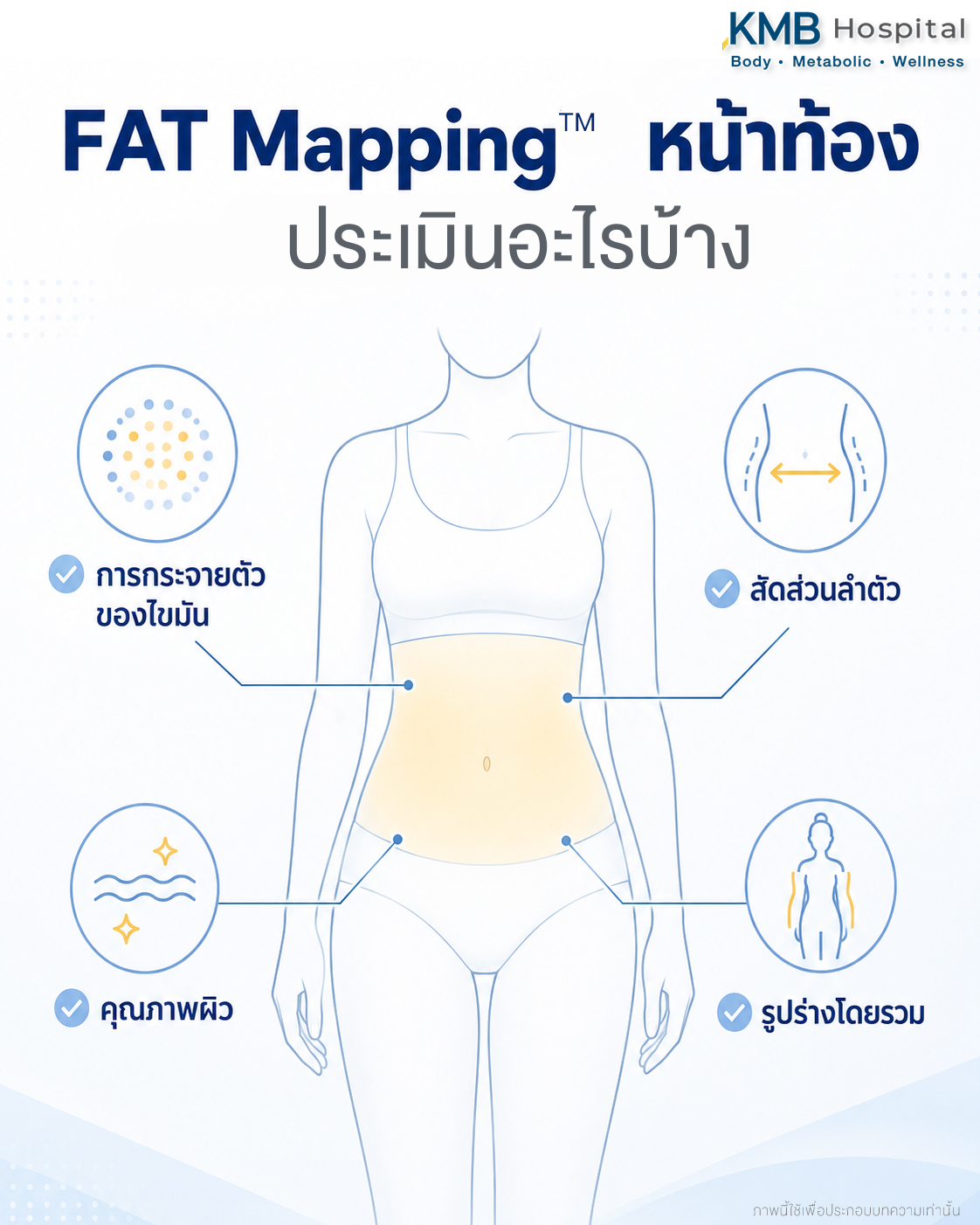
This information makes the pre-liposuction evaluation more comprehensive and enables the physician to explain treatment approaches more clearly.
| Components | What the Information Helps Understand |
|---|---|
| Fat and Distribution | Helps visualize the position and continuity of fat in the abdominal area and surrounding parts |
| Proportions and Shape | Helps assess the relationship between the abdomen, waist, and torso |
| Skin and Physical Examination | Helps supplement information that cannot be concluded from external appearance alone |
Similar-looking abdomens may have different liposuction program plans
Even if two clients have similarly looking abdomens, assessment results may vary.
Because each person has different fat distribution, skin quality, body structure, and goals.
Therefore, doctors cannot use the same treatment plan for everyone; they must consider information from FAT Mapping™, physical examinations, and patient history together before planning the liposuction program.
FAT Mapping™ Is Not a Substitute for Physical Examination
While FAT Mapping™ helps organize abdomen data systematically, it must still be used alongside physical examinations and physician assessments.
Appropriate liposuction program planning therefore arises from linking all aspects of data together, not from any single piece of data alone.
Key Takeaways
Can Abdominal FAT Mapping™ replace a physical examination before the liposuction program?
No. FAT Mapping™ is only part of the assessment before the liposuction program. It must be used in conjunction with medical history, physical examination, and physician evaluation to ensure the most complete information.
Frequently Asked Questions
What is FAT Mapping™ Abdomen?
FAT Mapping™ Abdomen is the process of gathering information regarding fat distribution, proportions, and composition of the abdomen to assist in the assessment before planning a liposuction program, concurrent with a physical examination and medical history taking.
Before the abdominal liposuction program, why should FAT Mapping™ be done?
Because an abdomen that appears protruding externally may be caused by multiple factors, FAT Mapping™ provides doctors with additional information about the abdomen before planning a liposuction program suitable for each individual client.
Can FAT Mapping™ indicate whether an abdominal liposuction program should be done or not?
FAT Mapping™ is data used to aid assessment before the liposuction program but cannot replace a physical examination or the doctor's consideration. The doctor will evaluate all information together before selecting a treatment approach.
Does everyone with a large abdomen necessarily need to undergo the liposuction program?
Not necessary. Having a large abdomen does not mean everyone is suitable for the liposuction program, so assessment via FAT Mapping™ and physical examination should always be conducted first.
Why do people with similar abdomens receive different liposuction program plans?
Although external characteristics may be similar, information from FAT Mapping™, fat distribution, skin quality, body structure, and client goals may differ. Therefore, the doctor must plan the liposuction program specifically for each individual.
สรุปบทความ
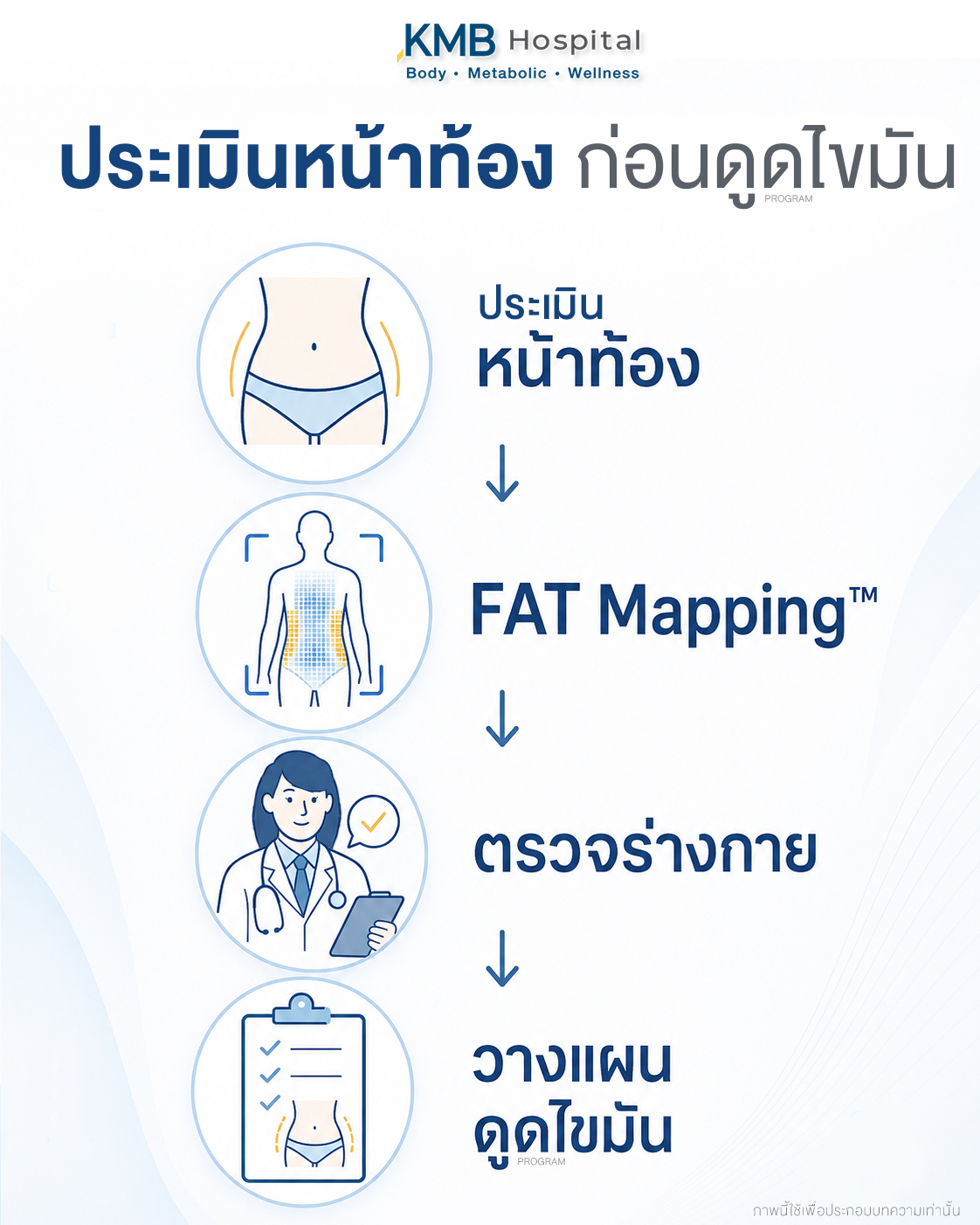
FAT Mapping™ หน้าท้องเป็นส่วนหนึ่งของการประเมินก่อนโปรแกรมดูดไขมัน ที่ช่วยให้แพทย์เข้าใจการกระจายตัวของไขมันและองค์ประกอบของหน้าท้องได้ละเอียดมากขึ้น
เมื่อใช้ร่วมกับการซักประวัติและการตรวจร่างกาย แพทย์สามารถอธิบายเหตุผลของการวางแผนโปรแกรมดูดไขมัน และเลือกแนวทางที่เหมาะสมกับผู้รับบริการแต่ละรายได้อย่างมีข้อมูลรองรับ
เริ่มจากการแยกองค์ประกอบของหน้าท้องให้ชัดเจน
การประเมินช่วยให้แพทย์และผู้รับบริการเข้าใจข้อมูลด้านไขมัน สัดส่วน ผิวหนัง รูปร่าง และผลจากการตรวจร่างกาย ก่อนพิจารณาแนวทางที่เหมาะสมกับแต่ละบุคคล

Related Articles
Articles within KMB Hospital
Read more from DoctorLooknuu.com
About This Article
This article is created to provide knowledge regarding abdominal assessment prior to the liposuction program, and the role of FAT Mapping™ in assisting data collection for treatment planning.
Article Author Information
Written By
Medical Content Team, KMB Hospital
Medically Reviewed By
Dr. Mandanus Perapathanchai
Dr. Looknuu
Medical License No. W.37626
Important Notice Regarding Article Information
The information in this article is intended for public educational purposes and cannot substitute for examination, diagnosis, or personalized medical advice. Appropriate methods, outcomes, and limitations may vary from person to person, and assessment should be conducted before making a decision.
Article Review Information
First published: 13 August 2569 · Last updated: 13 August 2569