How does FAT Mapping™ of the waist and flanks help evaluate the continuity of proportions before liposuction?
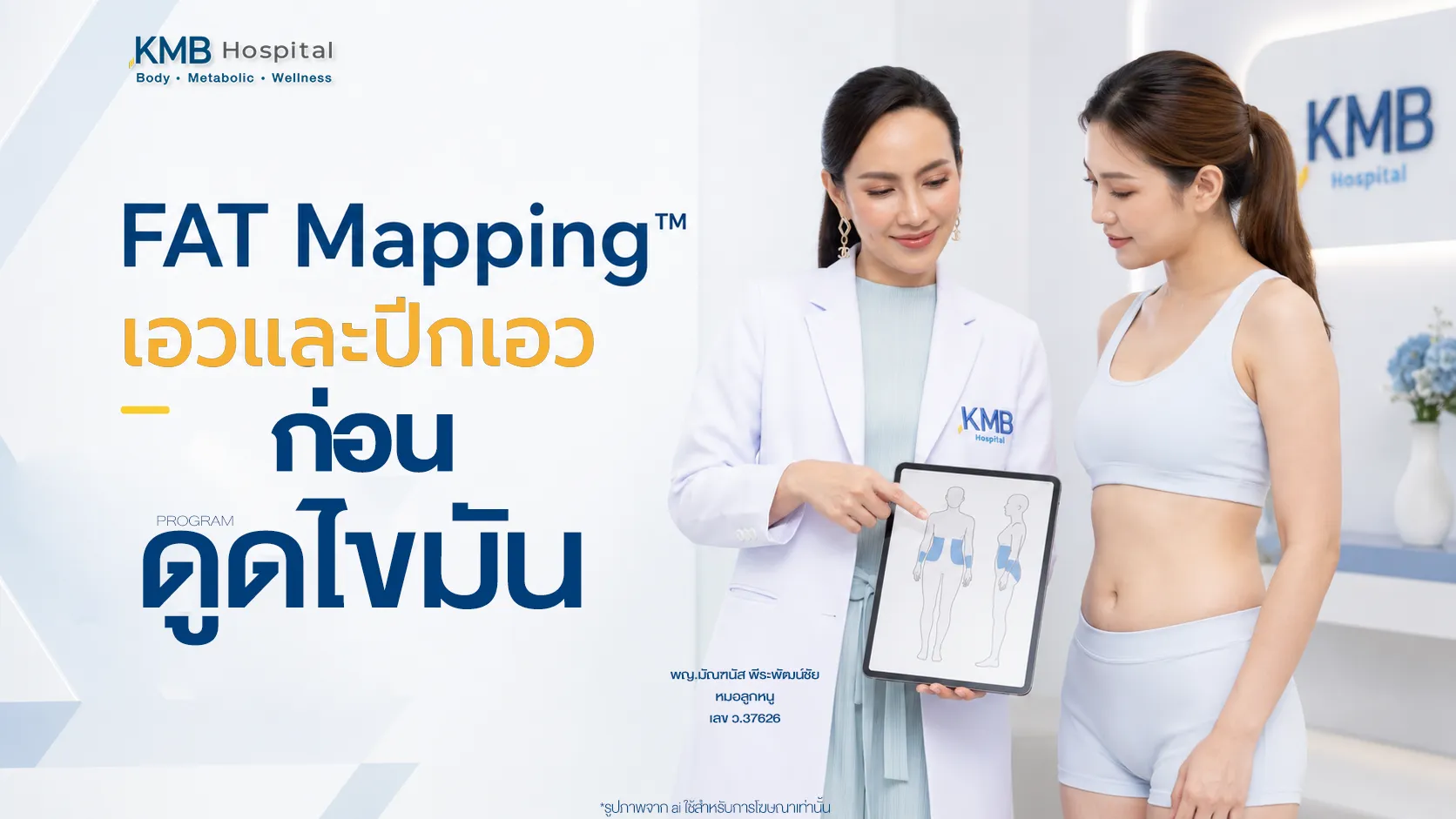
KMB KNOWLEDGE BLUEPRINT™
DOMAIN D — KMB HOSPITAL | Article Code: FM-D-K02
Category: FAT Mapping™ | Pre-Liposuction Assessment | Medical Knowledge
How Does FAT Mapping™ of the Waist and Love Handles Help Assess Proportion Continuity Before Planning a Liposuction Program?
First Published
14 August 2026
Last Updated
14 August 2026
Reading Time
About 7 minutes
Author and Reviewer
Team Medical Content, KMB Hospital
Medically reviewed by Dr. Mandonas Praphachainchai (Luk Noo) License No. W.37626
Main Answer
FAT Mapping™ of the waist and love handles allows doctors to assess the proportion continuity between the abdomen, waist, back, and hips before planning a liposuction program. This uses data combined with physical examination and patient history to ensure treatment planning aligns with each client's body shape.
This assessment does not look solely at the love handles but considers the relationship of the overall body shape to make the liposuction program more continuous and balanced.

Why the Waist and Love Handles Should Not Be Assessed Separately from Other Parts of the Torso
The waist and love handles are areas connecting the abdomen, back, and hips.
When clients consult about a liposuction program, many worry only about the love handles because they feel this area makes the body look thick or lacks curves.
However, assessing only the love handles point may prevent seeing the relationship of the overall proportions.
Before planning a liposuction program, doctors must assess the entire waistline, torso continuity, and connection with surrounding areas to design appropriate treatment approaches suitable for each person's body shape.
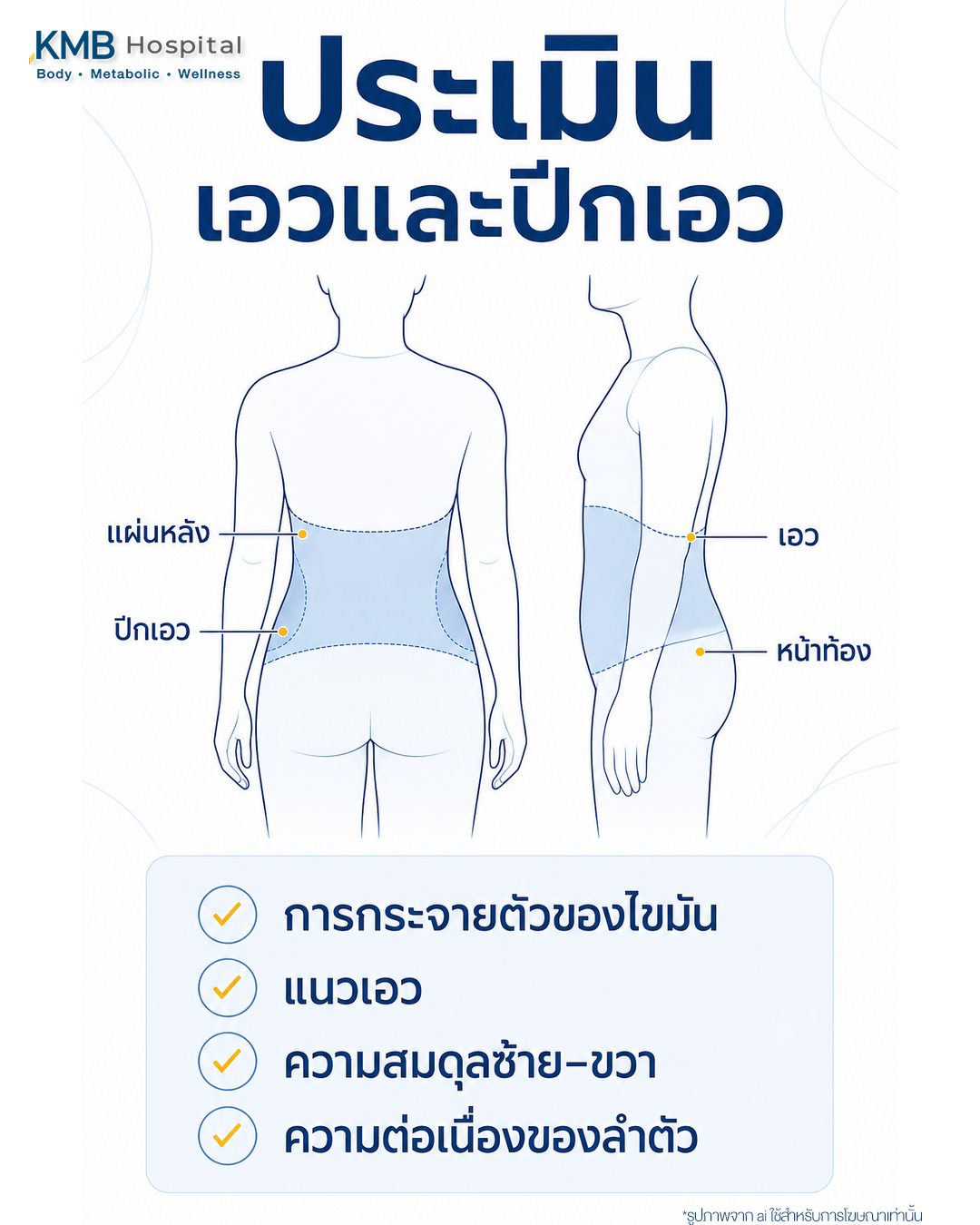
FAT Mapping™ Waist and Flanks: What Is Assessed?
FAT Mapping™ in the waist and flank areas helps gather information across multiple aspects, including:
| Assessment Data | Areas or Relationships Considered |
|---|---|
| Fat Distribution | Waist Circumference |
| Proportion Continuity | Between Abdomen and Back |
| Waist Contour | Overall Waistline |
| Body Shape Symmetry | Left and Right Sides |
| Clinical Examination Data | Used concurrently prior to planning the liposuction program |
This information allows doctors to analyze the overall body structure in greater detail and select a liposuction program planning approach that suits each individual.
Why Does the Body Shape Remain Unbalanced for Some After a Liposuction Program Specific to the Flanks?
Body balance is not determined by the flanks alone.
If the assessment does not account for the continuity between the abdomen, waist, back, and hips, the final overall body shape may not match the client's expectations.
Therefore, doctors utilize data from FAT Mapping™ combined with physical examinations to determine which areas should be assessed together before planning the liposuction program.
How Does FAT Mapping™ Make Planning the Waist and Flank Liposuction Program More Accurate?
FAT Mapping™ is not merely about identifying fat locations, but helps doctors visualize the relationships within the overall body shape.
When used alongside medical history taking and physical examinations, FAT Mapping™ data ensures the liposuction program planning is systematic and makes it easier to explain the rationale behind the treatment plan to the client.
Key Points to Know
View Overall Body Trunk
FAT Mapping™ for the waist and flanks helps physicians assess overall body proportions, not just areas with accumulated fat.
Consider Interconnected Areas
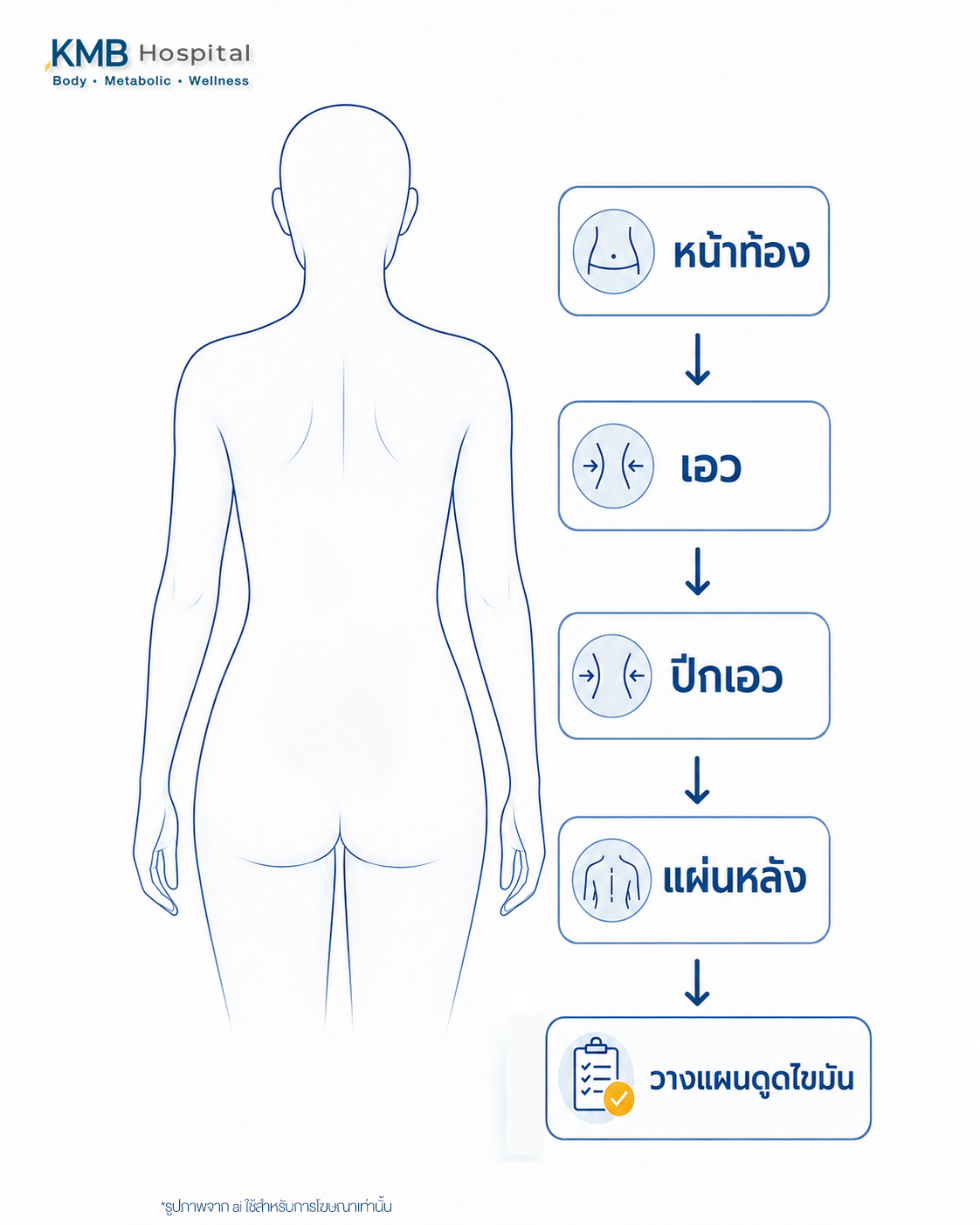
Before performing a waist and flank liposuction program, physicians must consider the relationship of the abdomen, waist, back, and hips together.
Use Information Together
History taking, physical examination, and FAT Mapping™ are information that must be used together before planning a liposuction program.
Individualized Planning
Individuals with similar flanks may receive different treatment plans because body composition and goals are not the same.
Planning Goals
Planning a liposuction program for the waist and flanks aims to make body proportions more continuous and balanced.
Limitations to Understand
FAT Mapping™ cannot replace history taking, physical examination, and physician assessment.
FAT Mapping™ does not guarantee treatment results but helps physicians have more information for assessment.
Frequently Asked Questions
What is FAT Mapping™ Waist and Flanks?
FAT Mapping™ Waist and Flanks is the collection of data regarding fat distribution, proportions, and body shape continuity in the waist and flank areas, utilized for pre-assessment before planning a liposuction program combined with medical history taking and physical examination.
Why is assessment combined with the abdomen and back required before doing a waist and flank liposuction program?
Because the waist and flanks connect to the abdomen, back, and hips.
Assessment together helps the physician see the overall body picture and select an appropriate liposuction program direction that fits the client's proportions better.
How does FAT Mapping™ help plan waist and flank liposuction programs?
FAT Mapping™ helps physicians see data regarding fat distribution, proportion continuity, and body balance, to use this information combined with physical examination before planning the liposuction program.
Is it possible to perform liposuction on the flanks only?
It depends on the assessment results of each individual.
In some cases, physicians may consider the flanks combined with the abdomen, back, or hips to make the body proportions more continuous. Planning must rely on data from FAT Mapping™ and physical examination together.
Why do people with the same flanks receive different liposuction program plans?
Even if external characteristics are similar, fat distribution, skin quality, body structure, and client goals may differ.
Therefore, physicians must evaluate data for each person before planning the liposuction program.
Article Summary
The waist and flanks are areas related to the abdomen, back, and hips. Assessment before a liposuction program should therefore consider the overall body image, not just the single position of concern.
FAT Mapping™ helps collect data regarding proportions and fat distribution, which is then combined with medical history and physical examination to allow physicians to plan liposuction programs appropriately for each client.
Medical Resources
- American Society of Plastic Surgeons: Liposuction Consultation — Information On Patient History, Goals, Health Status, And Physician Assessment Prior To Procedure
- NHS: Liposuction — General Information On Liposuction Programs, Limitations, And Important Considerations
Start with a personalized body shape assessment
To understand the relationship between the abdomen, waist, flanks, back, and hips, it is recommended to undergo an assessment along with history taking and physical examination by a physician before deciding on a liposuction program plan.
Article Author Information
Written by
Medical Content Team, KMB Hospital
Medically Reviewed By
Dr. Mantanous Peeraphatthanachai
Mork Luang Nu
Medical License No. W.37626
Medical Disclaimer
This article is created to provide knowledge regarding waist and flank assessment before a liposuction program, explaining the role of FAT Mapping™ in gathering data to assist in treatment planning. The information in this article is intended to educate the public and cannot replace examination, diagnosis, or individual advice from a physician.
Article Review Information
First Published: August 14, 2026
Last Updated: August 14, 2026