How does FAT Mapping help plan liposuction?
How Does FAT Mapping™ Help Physicians Plan Liposuction Programs?
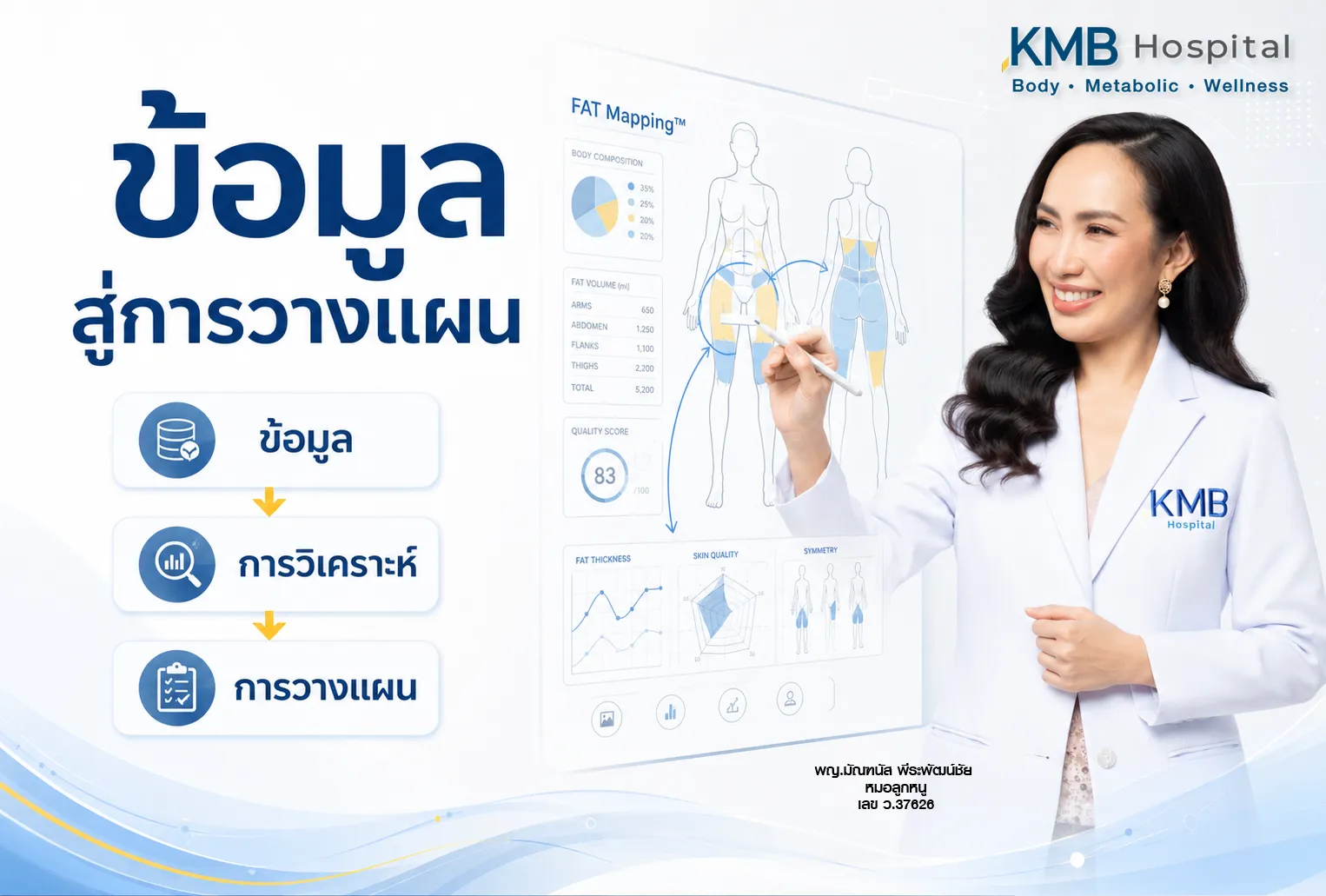
FAT Mapping™ assists physicians in planning liposuction programs by gathering data regarding shape, fat distribution, skin quality, body structure, and patient goals. All information is then connected and analyzed together to design an appropriate treatment plan for each individual.
Liposuction Program Planning Does Not Start with Deciding Which Area to Treat
When speaking of liposuction programs, many people often assume physicians begin by selecting the treatment area. In reality, the first step a physician takes is understanding all the patient's information.
Before determining how to plan, the physician needs to understand first what constitutes the current shape, which factors affect the shape, and what the patient's goal is.
FAT Mapping™ is the starting point for gathering this data before entering the process of connecting information, explaining results, and planning together.
How FAT Mapping™ Transforms Information into a Care Plan
Data from assessments is not used separately part by part but is connected and analyzed together to help answer important questions before planning begins.
Once these questions have answers, the physician can begin explaining data, comparing options, and planning together with the patient.
FAT Mapping™ Does Not Tell Physicians What to Do
Many may assume that once data is complete, FAT Mapping™ will immediately say which liposuction area to treat or how to treat it. However, FAT Mapping™ does not function to decide for the physician.
System's Role
Helps collect relevant data thoroughly and systematically so physicians have more data to evaluate.
Physician's Role
Physical examination, connecting and analyzing data, explaining results, considering limitations, and planning together with the patient.
Therefore, FAT Mapping™ is a clinical decision support tool not a system that selects the approach or replaces the physician's discretion.
How Each Data Component Helps Physicians Plan Liposuction Programs
Data from FAT Mapping™ does not have all parts performing the same function. Each aspect helps answer different questions, and when all data is connected together, physicians see the holistic view of the body more clearly.
| Data Considered | Helps Understand What | Role in Planning |
|---|---|---|
| Shape and Proportions | Helps see the whole picture and relationships between various areas of the body. | Helps planning consider continuity and balance rather than looking at specific points alone. |
| Fat Distribution | Helps understand how fat accumulates, its relationship with specific areas, and how it affects the overall shape. | Helps explanations and planning to be based on assessable data, not just looking at fat amount. |
| Skin Quality | Helps understand skin and tissue characteristics, another component of body shape. | Helps physicians consider skin data together with fat and other components instead of looking at fat volume alone. |
| Body Structure | Helps see characteristics that may change and natural limitations for each individual. | Helps physicians explain possibilities, limitations, and expectations consistent with body data. |
| Patient Goals | Helps understand what matters to each person, even if shapes are similar. | Helps physical data be considered with needs to design a care plan that is individualized. |
Shape and Proportions Help See the Whole Picture
Before planning a liposuction program, physicians consider the overall shape, not just the concerned areas, because changes in one area may affect the balance of the whole body. Understanding overall proportions helps planning consider shape continuity more than specific point viewing.
Fat Distribution Helps Explain the Shape
Fat distribution assessment does not aim just to say if fat is more or less, but helps physicians understand how fat accumulates, its relationship to specific areas, and how it affects the overall shape. This data helps make explanations to patients clearer and helps planning to be based on findings.
Skin Quality Helps Make the Plan More Appropriate
Shape is not created by fat alone. Skin quality is another important component. Assessment of this aspect helps physicians understand tissue characteristics and consider data together with other components instead of considering only fat volume.
Structure Helps See Natural Limitations
Every individual has different body structures. Some characteristics can be changed, while some are natural limitations. Understanding structure helps physicians explain planning possibilities and helps patients have understanding consistent with their own data.
Goals Help Make Planning Individual
Even if two patients have similar shapes, goals may differ. Some want to feel confident in clothing, some want proportional shapes, and some want to solve specific area issues. Body data must be considered together with each individual's goals to ensure the care plan aligns with the patient's needs.
How Physicians Connect Information
The core of FAT Mapping™ is not having a large amount of data, but connecting all aspects of information together.
Physicians do not just see "this area has fat" and stop. They consider together whether this area's shape relates to other parts, what skin quality is like, if structure affects the shape, and what the patient's goal is.
Data in each aspect is not the whole answer but pieces of the answer. When all data parts are connected together, an understanding that can be used for individualized care planning is formed.
FAT Mapping™ does not just add more data, but helps each data aspect connect together until an understanding forms that can actually be used for planning.
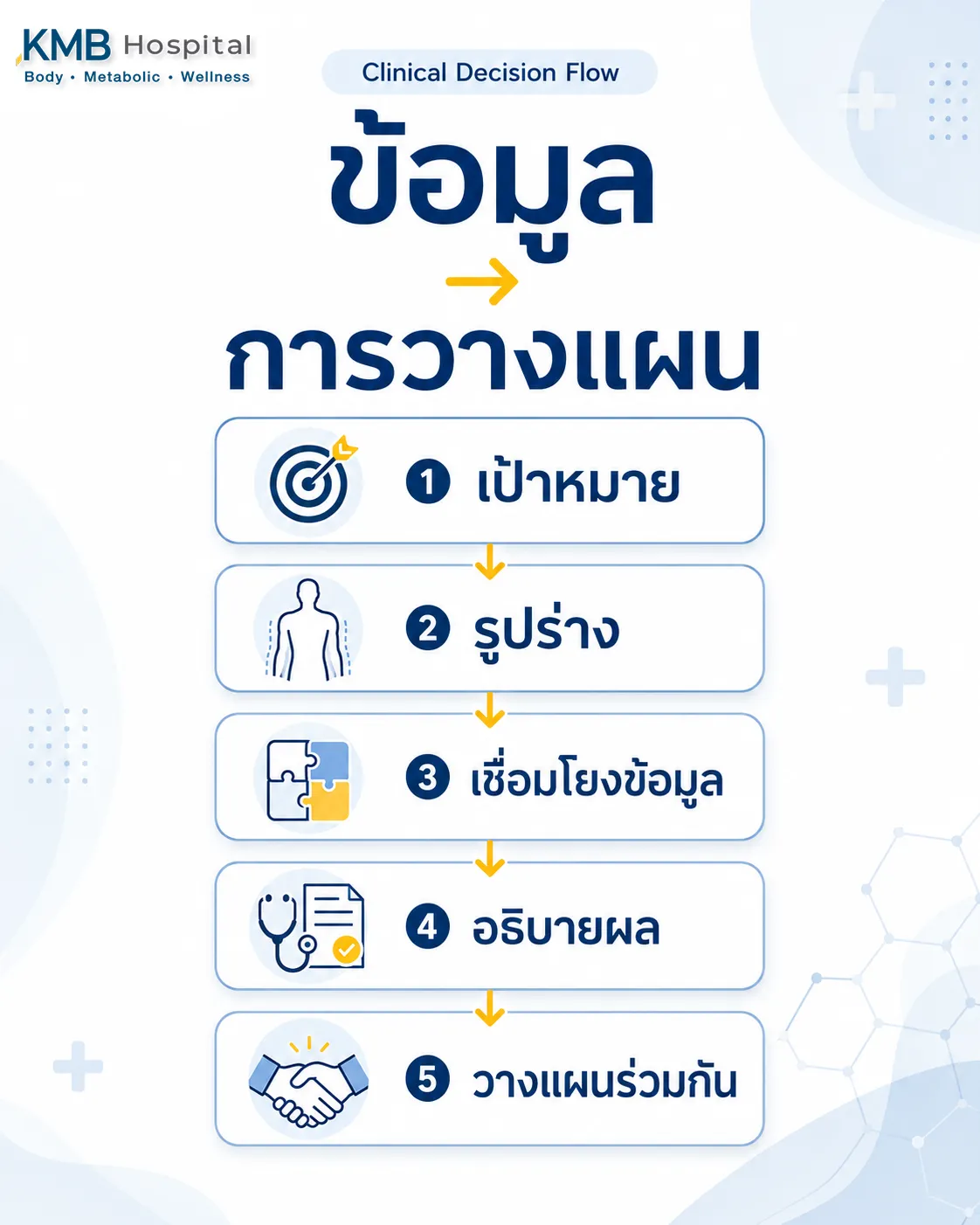
Sequence of Connecting Information to Planning
Understand Goals
Listen to patient concerns, changes desired, and priorities.
Assess Shape and Proportions
Understand the overall picture, continuity, and relationship between different body areas.
Connect Information
Consider fat, skin, and structure data together, not in separate parts.
Explain Findings Together
Explain findings, possibilities, limitations, and reasons for choices to ensure mutual understanding.
Plan Care Together
Use all data to consider approaches suited to body, goals, and limitations of each individual.
Why Information Integration Matters More Than Having Lots of Data
Today, data collection is easier than ever before, with tools, images, numbers, and data from various sources. But having a lot of data does not always mean better care planning.
What is more important is understanding how each data part relates. For example, if we only know fat accumulates on the abdomen but do not understand body proportions, skin quality, or the patient's goal, that single data part may not be enough for planning.
Conversely, when all aspects of data are integrated together, physicians can explain the full body picture much more clearly and help the patient understand the reasons for the proposed approach easier.
FAT Mapping™ Supports Decisions, Does Not Decide for the Physician
FAT Mapping™ is not a system that automatically selects the treatment approach, nor does it have the function to say yes or no to liposuction programs.
The function of FAT Mapping™ is to support physician decisions by collecting and connecting body-related data systematically.
Afterwards, the physician considers all data together with physical examination, health history, patient goals, and other relevant factors before planning care together.
Therefore, FAT Mapping™ is part of the clinical decision process, not something that performs the role of the physician.
Summary
FAT Mapping™ helps physicians plan liposuction programs by gathering data regarding shape, fat distribution, skin quality, body structure, and patient goals. Then, all data is connected and analyzed together.
Each data aspect does not replace the other but complements them, allowing physicians to see the holistic body picture and explain care approaches based on complete information.
The value of FAT Mapping™ does not lie in having a large amount of data, but in connecting all data together into a care plan appropriate for each individual.
Key Points to Know
FAT Mapping™ helps physicians consider multiple components before planning liposuction programs.
Planning does not consider only concerned areas but also proportion relationships.
Shape, fat, skin, structure, and goals must be considered jointly.
FAT Mapping™ supports data but does not decide or select approaches for the physician.
The appropriate approach comes from discussion between the physician and the patient.
Brief Summary
FAT Mapping™ is an assessment system that helps physicians gather and connect data about shape, fat distribution, skin quality, body structure, and patient goals before using all data for liposuction program planning. Systematic data integration helps planning to be based on comprehensive understanding and supports shared decision-making between physician and patient.
Frequently Asked Questions
Can FAT Mapping™ tell which area should have a liposuction program?
FAT Mapping™ is responsible for gathering and connecting data to assist planning. Selection of the care approach occurs from consideration together between physician and patient.
Do physicians use FAT Mapping™ data alone for planning?
No. FAT Mapping™ data is part of the assessment. Physicians also consider physical examination, health history, and other factors together before planning.
Why assess multiple components? Can we not look only at fat?
Each individual's shape is created by multiple components together. Considering only fat in one aspect may not reflect the whole picture. Integrating data from multiple aspects helps planning be more comprehensive.
Read More in the FAT Mapping™ Knowledge Series
Articles on KMB Hospital Website
Articles by DoctorLooknuu
Author and Reviewer Information
Medical License Number ว.37626
Medical References
- American Society of Plastic Surgeons. Liposuction Consultation. Information regarding goal discussion, health history, risk factors, alternatives, expected results, and complications to consider before planning.
- Chia CT, Neinstein RM, Theodorou SJ. Evidence-Based Medicine: Liposuction. Plast Reconstr Surg. 2017;139(1):267e–274e. doi:10.1097/PRS.0000000000002859.
- American Society of Plastic Surgeons. Plastic Surgeons Outline Liposuction Principles for Patient Safety and Good Outcomes. Emphasizes importance of pre-treatment assessment, planning, realistic expectations, communication, and post-procedure care.
Start with Mutual Understanding of Information Before Planning
If still unsure if concerned shape relates to fat, skin, structure, or multiple factors together, physician assessment helps discuss data, options, limitations, and expectations suited to each individual more clearly.