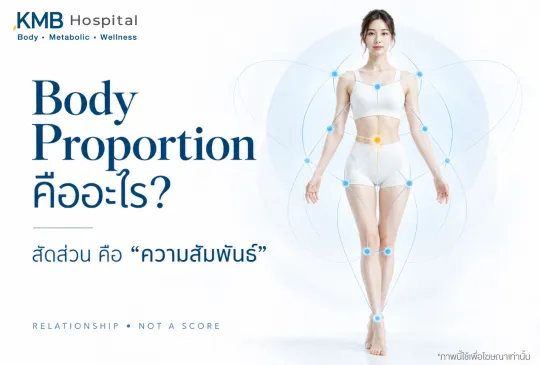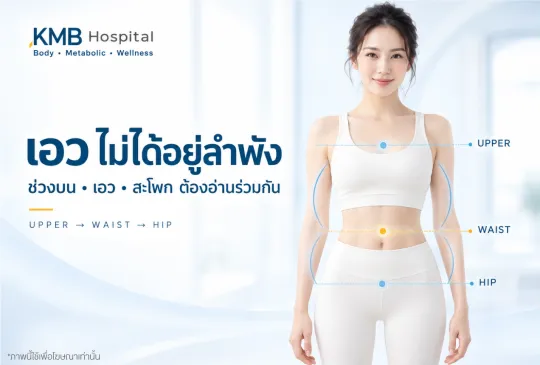
What is Body Design? Why is body contouring important before liposuction?
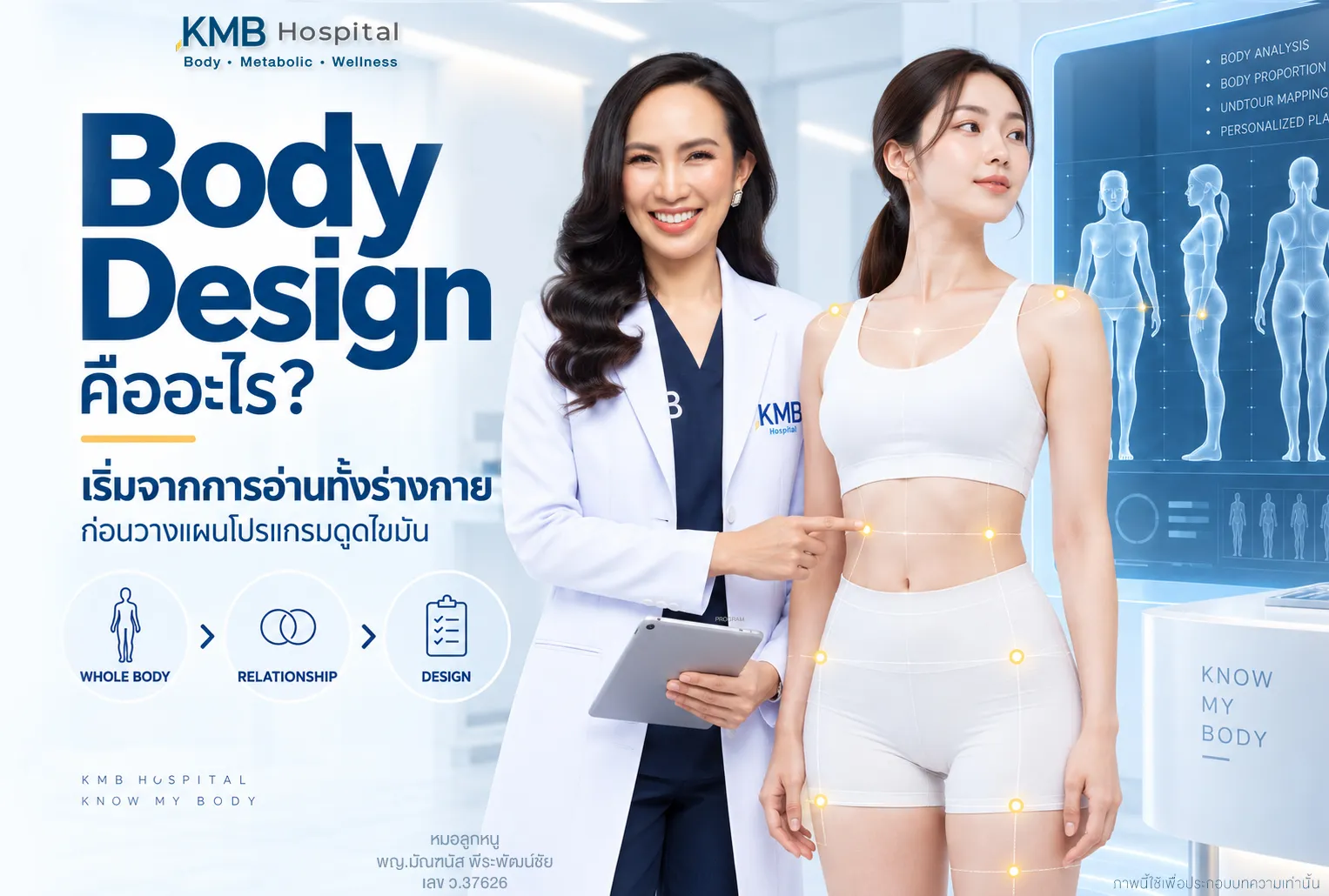
What is Body Design? Why is shaping your body important before a liposuction program?
First Published: October 28, 2026 | Last Updated: November 4, 2026 | Reading Time: Approx. 8–10 minutes | Category: Body Design & Body Proportion | Author: Medical Content Team, KMB Hospital Medical Reviewer: Dr. Manthanas Peerapatchai (Dr. Looknu) Lic. No. 37626
Body Design is a concept for assessing and planning body shape based on the “interconnectivity of the entire body,” rather than focusing solely on where there is more or less fat, and it is not about defining what the most beautiful shape is.
Before planning a liposuction program, physicians must consider multiple factors together, including original structure, fat distribution, skin quality, muscles, the proportions of adjacent areas, and each individual's goals, to distinguish what can be adjusted through fat reduction and what arises from other components of the body.
Table of Contents
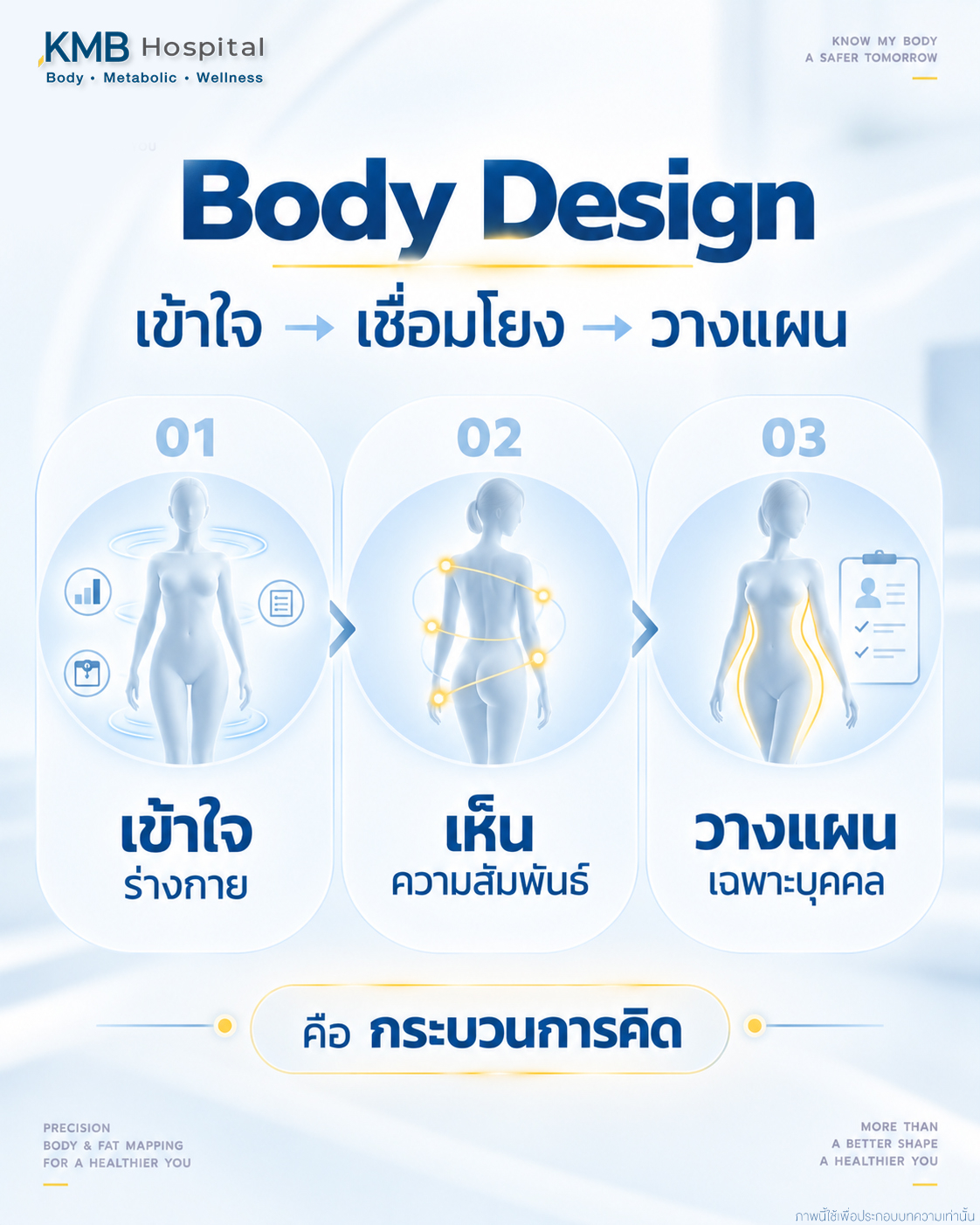
What is Body Design
The term Body Design in this series is used to describe the thought process before planning body contouring. It is not about drawing a desired figure and trying to make everyone’s body look the same; rather, it starts with asking:
Because everyone’s body has different foundations, two people might have similar weights, similar abdominal fat, or similar arm sizes, but when looking at their whole body, their shapes might be clearly different.
The differences could be in shoulder width, torso length, waist position, pelvic structure, fat distribution, skin quality, or the relationship between one area and another. Therefore, Body Design does not begin with “How many CCs of fat should be removed?” but starts with, “If we change this area, how will that change relate to other parts of the body?”
Body design is not about defining “what figure is beautiful”
Body Design should not act as a standard that says everyone should have the same waist, the same small arms, or the same proportions, because the definition of “proportionate” must be considered based on that individual’s original body. A person with wide shoulders and a person with narrow shoulders might require different waist proportions. A person with a wide pelvis and one with a narrow pelvis might not look the same even after fat reduction in the same area. The goal of design is not to change everyone to fit a single template, but to understand:
Body shape is not created by fat alone
When observing body shape externally, what we see is the result of multiple overlapping components.
1. Body Structure
Such as:
- Shoulder width
- Torso length
- Ribcage shape
- Pelvic structure
- Bone and joint alignment
- Length proportions of arms and legs
These elements are the “fundamental frame” of the body and are not things that a liposuction program can change.
2. Fat Distribution
Everyone’s fat does not accumulate in the same positions.
Some accumulate fat in the frontal abdomen, some predominantly around the waist and flanks, some extend to the back, while others may have localized fat in the upper arms, thighs, knees, or calves.
A liposuction program plays a role in reducing localized fat and adjusting the body contour, but it is not a treatment for obesity or a replacement for overall weight management.
Therefore, simply seeing “fat” is not enough for design; one must look at where that fat is located, where it continues, and how it affects overall proportions.
3. Skin Quality and Elasticity
After fat volume decreases, the skin must adapt to the new contour.
Elasticity, thickness, laxity, and skin quality are all parts of the assessment before planning.
Information from the American Society of Plastic Surgeons states that skin elasticity affects how well the skin adapts to the contour after fat reduction, and individuals with lax skin or reduced elasticity may need to consider other care methods alongside the physician’s assessment.
This is another reason why body design cannot be thought of based solely on “fat.”
4. Muscles and Deeper Tissues
Some body features are not caused entirely by subcutaneous fat.
For example, a prominent abdomen may involve multiple elements, or the size of an area may be related to muscles and the original structure.
The key is to distinguish beforehand what is fat that can be reduced and what is not a target for a liposuction program.
5. Relationships Between Areas
The body has no real boundaries between the “abdomen,” “waist,” “flanks,” “back,” or between the “thigh,” “knees,” and “calves.”
Each area continues into one single silhouette.
Changing one area may make the eyes perceive the proportions of adjacent areas differently. This is one of the hearts of Body Design.
Why look beyond the fat before a liposuction program
Suppose someone comes in for a consultation because they feel they have a “large abdomen.” If one looks only at the abdomen, the answer seems simple: assess how much fat is in the abdominal area. But when looking at the whole body, it may be found that the silhouette the patient feels is not quite right relates to:
In another person, the main issue might truly be the abdomen, but the original waist might already be quite defined. These two people should not be planned using the same formula just because they said the same phrase: “I want to reduce my abdomen.” Likewise, with the upper arms, looking only at the arm circumference may not be enough if one does not also look at the relationships with the shoulders, armpits, torso, and skin quality.
Removing the most fat does not mean the best fitting shape
One understanding that should be separated is:
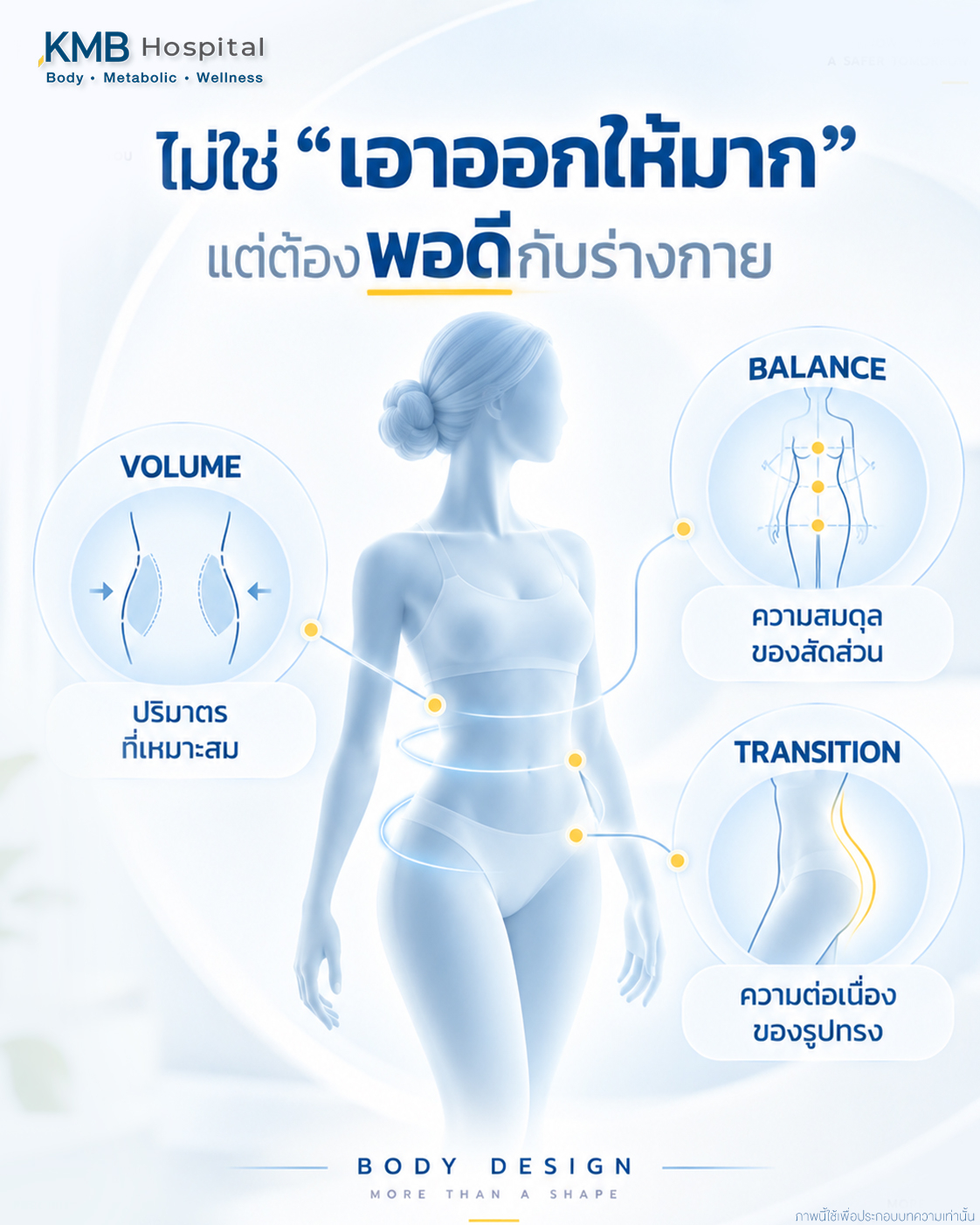
These two are not always the same thing. Body shaping planning should not aim to reduce every area as much as possible, as one must still consider the continuity of the contour, tissue thickness, skin quality, and the proportions of surrounding areas. In areas where skin support is reduced, removing too much fat may make existing laxity or unevenness more prominent. Therefore, a balance must be struck between fat reduction and the skin’s response.
Thus, the concept of Body Design is not “remove as much as possible,” but rather “reduce in positions and amounts that are appropriate for that person’s structure.”
What should physicians assess before body design
Assessment before planning should look at multiple aspects together:
Areas of concern to the individual
Begin by listening to where the person sees issues, what they want to change, and what truly bothers their confidence.
Because the points the patient identifies as “problems” are key information for design, but it does not necessarily mean those points are the sole cause of the silhouette seen.
Proportions of the whole body
Physicians must look at the relationship of the concerned area to adjacent parts, including the front, side, and back views, as some imbalances are only visible from certain angles.
Location and fat distribution patterns
Must assess where fat is accumulated, how it is continuous, and what parts tend to be fat that can be planned for reduction.
Skin quality
Assess elasticity, laxity, stretch marks, thickness, and tissue characteristics, as these influence the planning of the contour after fat volume reduction.
Structure and non-fat components
Must distinguish what the visible contour is caused by. If the main components are not caused by fat, increasing the amount of fat removed via liposuction will not solve the root cause of that shape.
Health and readiness before treatment
Liposuction is a medical procedure, so health, underlying diseases, medications, medical history, and safety-related factors must be assessed before making a treatment decision.
Individual assessment of the patient is the key foundation for selecting suitable candidates for liposuction, as is setting realistic goals.
How do Body Design, FAT Mapping™, and GLAM differ
All three are connected, but they are not the same.
FAT Mapping™ — Helping us “see and understand data before designing”
FAT Mapping™ is the Assessment Foundation of the KMB system. Its duty is to help gather data on fat accumulation patterns, proportions, and related components to incorporate with the physician’s exam and evaluation.
Body Design — Helping answer “From the data seen, how should we plan”
Once data exists, Body Design is the stage of interpreting body relationships.
It doesn’t just ask, “Where is the fat?” but also asks:
- “How does this fat relate to the silhouette?”
- “If we adjust this, how will adjacent areas look?”
- “What should be preserved so as not to lose the original proportion?”
This is the role of WHY / DESIGN.
GLAM — It’s about “HOW / PROCEDURE”
Once assessed and the physician determines that a liposuction program is a suitable option, it proceeds to selecting treatment approaches and techniques.
Therefore, the order of thinking should not start with techniques first, but should start with Assessment → Understanding → Design → Treatment Planning.
Simple examples of Body Design thinking
Abdomen
Not just asking “Is there a lot of belly?” but also seeing:
How the abdomen relates to the waist
How the waist connects to the flanks
How the flanks continue to the back
What kind of skin quality exists
And what the original torso structure is like
Upper Arms
Not just seeing “how many centimeters big the arm is” but considering:
Shoulder lines
Fat positions
Front-to-back of the upper arm
Area near the armpits
Side torso
And skin quality
Thighs
Not just seeing if thighs are large or small, but looking at the relationships of:
Hips → Thighs → Knees → Calves
Because all together they create the line of the leg.
These examples will be explained in detail in subsequent chapters.
What Body Design helps with and what it doesn’t
Body Design helps provide a clearer framework for planning, helping physicians and evaluatees communicate on the same page regarding:
- What causes the concerns
- Which parts can be planned for adjustment
- Which parts are original structure
- Which areas should be assessed together
- What kind of goals are possible
- What the body limitations of each person are
But Body Design is not a rigid outcome-prediction tool.
Post-treatment results still depend on original structure, tissue response, skin quality, the body’s healing process, post-procedure care, and individual-specific factors.
Therefore, it cannot be guaranteed that the body will turn into any specific shape with certainty.

What Dr. Looknu would like to leave you with
Before asking, “Where should I have a liposuction program done?”, try changing the question to:
Because when we understand the root cause of the contour first, we will start to separate what is fat, what is skin, what is muscle, what is structure, and what is the relationship of many parts together. Body shaping design is not a competition to see who can take out more fat.
But it is about planning what should be changed, what should be preserved, and what is truly suitable for that person’s body.
Frequently Asked Questions about Body Design
Is Body Design a procedure or a type of tool?
No. Body Design in the context of this series is a framework for body assessment and planning before choosing a treatment approach, not the name of a tool or procedure.
Are Body Design and Body Contouring the same?
They are not entirely the same. The term Body Contouring is a broad term used for adjusting the contour or body shape using various methods, whereas Body Design in this series refers to the stage of understanding and planning proportion relationships before selecting a treatment method.
If I have localized fat, can I just treat that spot?
Some people may be suitable for localized treatment, but an overall assessment should be performed first because the area perceived as a problem may relate to adjacent areas or other elements besides fat.
Why assess the whole body when I only want to do the abdomen or upper arms?
Because what the eyes perceive are proportions and silhouettes, which arise from the relationship of many areas. Seeing the big picture helps the physician understand how changing one spot might affect the perception of other parts.
Can Body Design guarantee that the post-treatment shape will be exactly as designed?
Results cannot be guaranteed in a specific form. Body Design is a planning tool; actual results depend on anatomy, tissue quality, individual response, treatment approaches, and post-treatment care.
Next Chapter
Now that we understand that Body Design does not look at just the fat-heavy spots, but must look at the relationships of the entire body.
The next question is: If we are only worried about one spot, why must the physician assess other parts of the body as well?
Further reading
- Before a liposuction program, why must physicians assess the whole body, not just the fat-heavy areas?
- How do body shape, proportions, and Body Contour differ in planning a liposuction program?
Assessment Foundation
DoctorLooknuu Companion
Medical Reference
The original text references information from the American Society of Plastic Surgeons (ASPS) regarding skin elasticity, skin adaptation to contours, and considering the balance between fat reduction and skin quality.
Note for Website Team: If you wish to include reference URLs, use verified source links from the Medical/SEO team before publishing; do not create URLs or DOIs yourself.
Want to understand body shape before planning?
Assessment should begin from real body data—structure, fat, skin, proportions, and individual goals—to help ensure that the liposuction program planning is based on appropriateness and realistic limitations.
Article Information
Medical Content Team, KMB Hospital
Dr. Manthanas Peerapatchai (Dr. Looknu)
Medical License No. 37626
Important notes about information in this article
This article is produced for educational purposes regarding the concepts of assessment and body planning and cannot replace individual medical exams, diagnosis, or advice from a physician.
The suitability of a liposuction program, treatment methods, treatment scope, and expected results vary by individual. You should receive a health, body structure, fat, and skin quality assessment by a physician before making any decisions.
Article Review History
Initial Version: Body Design & Body Proportion
First Published: October 28, 2026
Last Updated: November 4, 2026
Last Medical Review: November 4, 2026
Medical Reviewer: Dr. Manthanas Peerapatchai (Dr. Looknu) Lic. No. 37626