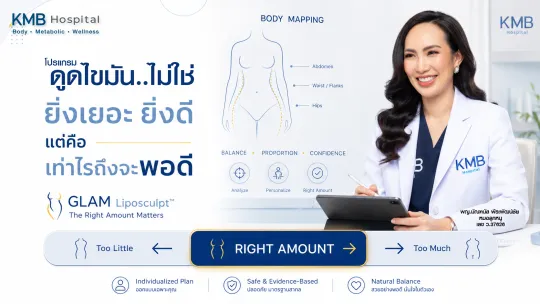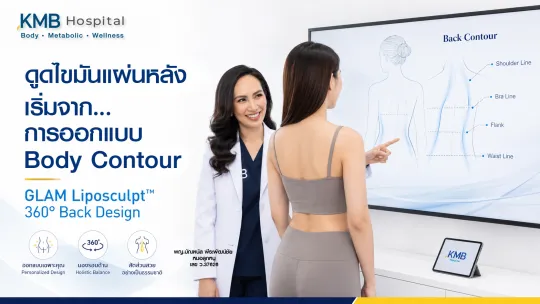
Which liposuction area is most suitable? A compilation of popular areas people choose and how to choose for your body type.
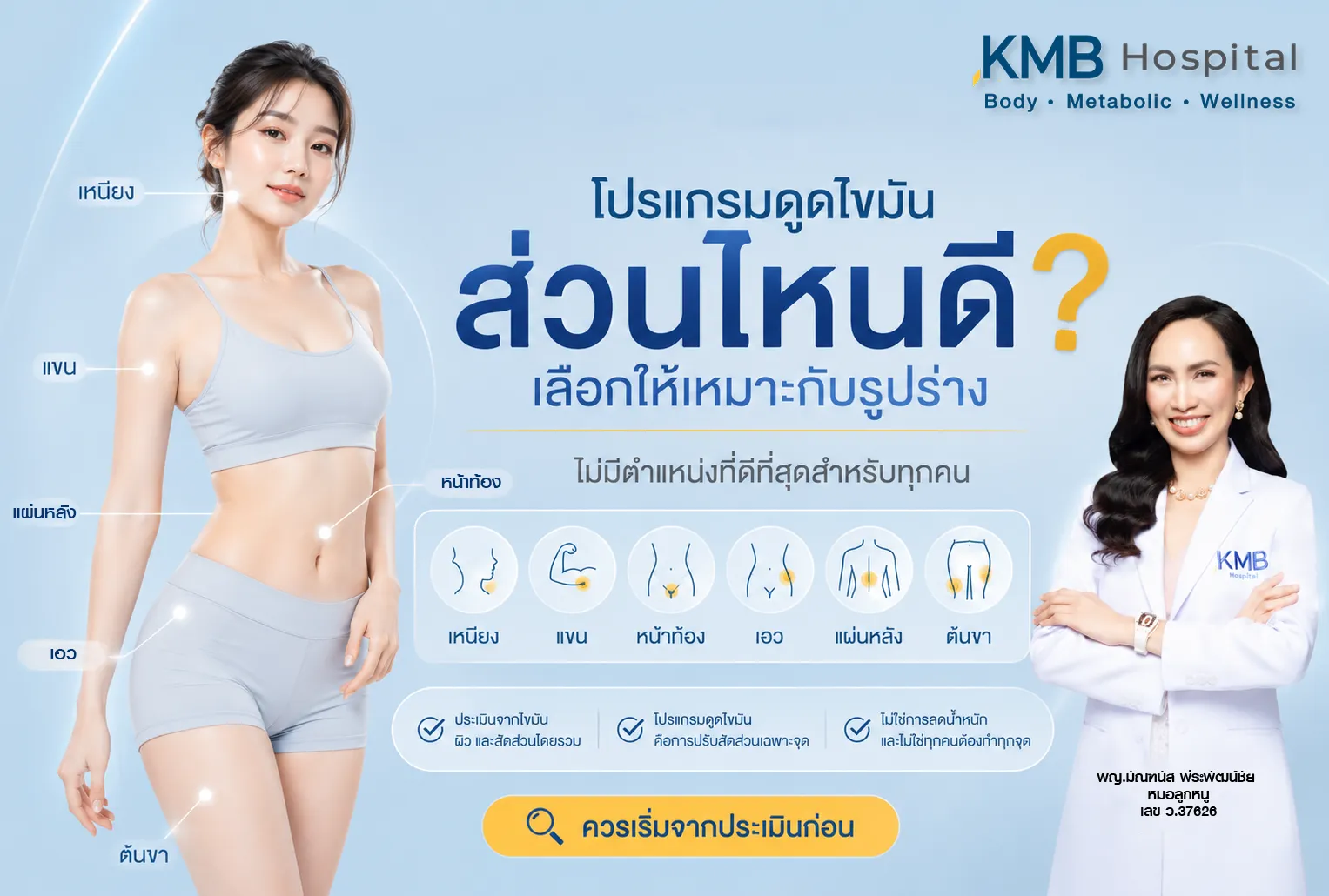
Which Liposuction Area is Best? Popular Positions People Choose and How to Select to Suit Your Body Shape
There is no single best liposuction area for everyone, as each person differs in accumulated fat, body shape, skin, and goals. The positions most often assessed include the abdomen, waist, upper arms, double chin, back, thighs, and side hips. Selecting an area should begin with evaluating where the fat is located, whether it is real subcutaneous fat, how elastic the skin is, if your health is ready, and if you want to adjust specific proportions rather than expecting liposuction to be a weight loss method.
Which Liposuction Area is Best?
Which Liposuction Area is Best should be chosen from positions with real subcutaneous fat accumulation that affects proportions, such as abdomen, waist, upper arms, double chin, back, or thighs. This must be evaluated alongside skin quality, weight, basic health, and expectations. Liposuction is suitable for adjusting specific proportions, not as a weight loss method or for directly addressing significant skin laxity.
How to choose a liposuction position that suits your body shape?
Choosing a liposuction position should start by asking, "Is the main problem caused by fat?" rather than choosing based on reviews or price of any single position. If the problem comes from local fat accumulation and the skin has reasonable elasticity, that position may be suitable for assessment. However, if the main problem is skin laxity, muscles, body structure, or overall body fat, a different planning approach may be needed.
Why there is no single answer to which liposuction area is best
Many people become interested in liposuction programs from the most visible spots, such as a protruding belly, unclear waistline, big arms, distinct double chin, or bulging fat on the back. However, from a medical standpoint, the point of greatest concern may not always be the spot to treat first, as body shape problems can have different causes.
Some people have specific local fat accumulation, some have lax skin alongside it, some have high general body fat, and some have muscle structure or posture that makes proportions look unbalanced. So the more important question than "Which area to treat?" is "Which position is the main problem and which position will help the overall body shape look more balanced after assessment?"
What is Liposuction and what problems is it suitable for?
Liposuction is a specific proportion-adjusting procedure using medical tools to reduce fat accumulation under the skin in appropriate areas. The main goal is not to lose a lot of weight but to help adjust or contour the body's shape in positions with local fat.
There are many areas that can be assessed, such as the abdomen, waist, hips, thighs, upper arms, double chin, back, or flanks. However, the choice of which position to treat depends on a real assessment, not just trends or review images alone.
Popular positions often assessed in liposuction programs
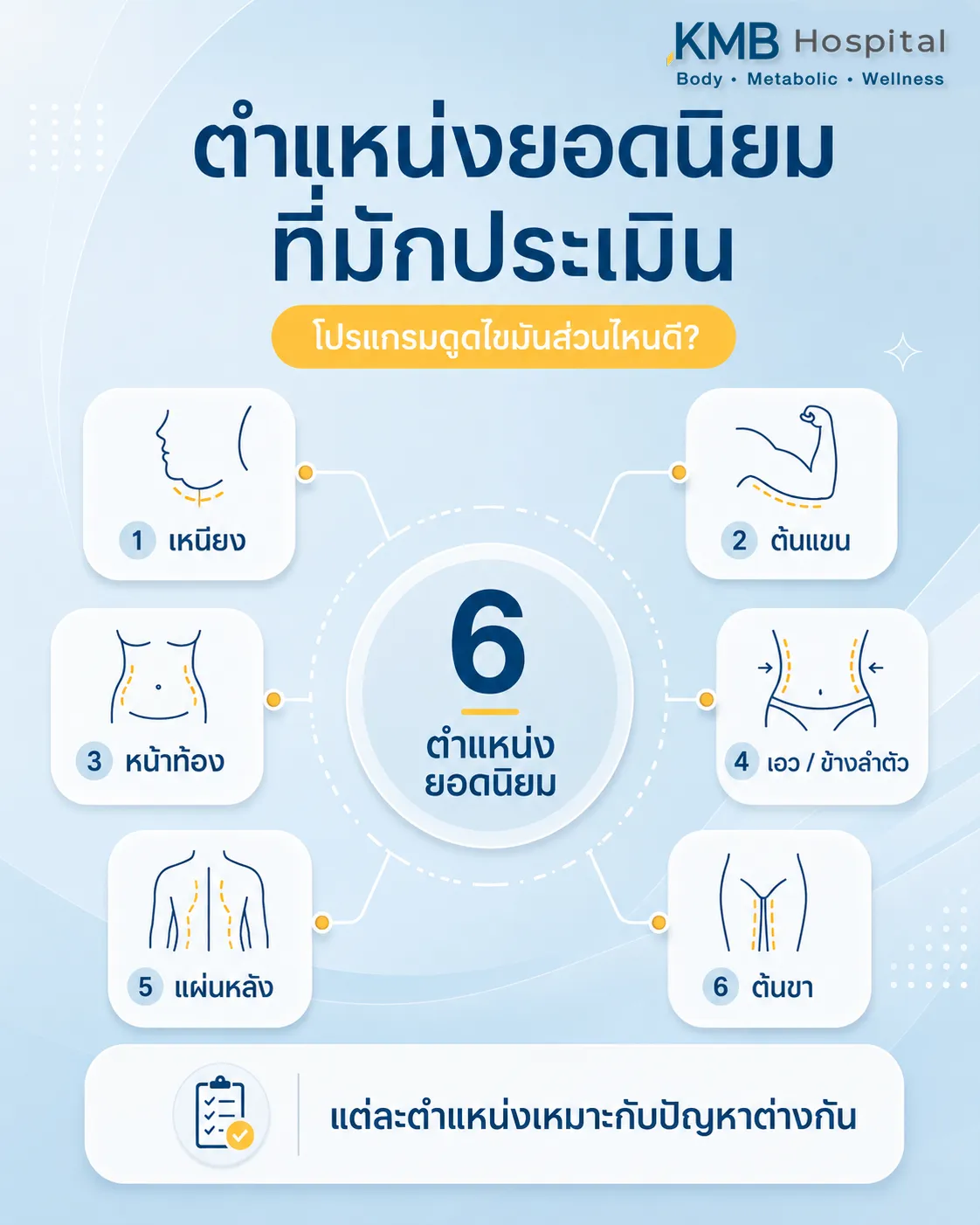
The areas listed below are regions where clients often inquire or undergo assessment, but it does not mean everyone is suitable for all positions. A doctor should always assess the fat, skin, health, and proportion continuity first.
1. Abdomen
Suitable for assessment in cases with fat accumulation in the upper abdomen, lower abdomen, or around the navel. However, if there is a lot of loose skin, abdominal muscle separation, or high visceral fat, liposuction alone may not be enough.
2. Waist and Flanks
Suitable for those with fat accumulation around the waist, flanks, or back waist, making the waistline unclear. Assessment often needs to be combined with the abdomen and back to ensure continuous proportions.
3. Upper Arms
Suitable for those with fat accumulation around the upper arms, making arms look thick when touching the body or raising the arm. However, if skin is very loose or has low elasticity, skin care approaches should also be considered.
4. Double Chin and Jawline
Suitable for cases with mainly submental or double chin fat. However, if the problem is from a small chin bone, loose skin, or neck muscles, other assessment approaches may be needed.
5. Back and Bra Strap Fat
Suitable for those with fat accumulation in the back, bra strap area, or flapping lip fat. Assessment should look at the scapula line, skin, fascia, and continuity with the waist and flanks.
6. Thighs and Side Hips
Suitable for assessment in those with fat accumulation in the inner thigh, outer thigh, or side hips. However, care must be taken regarding uneven skin, skin sagging, and the overall balance of leg proportions.
Comparison table of popular liposuction positions
| Position Often Assessed | Suitable for What Problems | Things to Watch Out for Before Deciding |
|---|---|---|
| Abdomen | Fat accumulation in upper abdomen, lower abdomen, or around the waist | Must distinguish subcutaneous fat from visceral fat, skin laxity, and abdominal muscles |
| Waist and Flanks | Vague waistline, flanks, back waist fat | Should be assessed with the abdomen and back to ensure continuous proportions |
| Upper Arms | Fat accumulation around arms, arms look thick when raised or against the body | If skin is very loose, liposuction alone may not fully tighten the arms |
| Double Chin | Fat under the chin, jawline unclear due to fat layer | Must distinguish from skin laxity, chin structure, and neck muscles |
| Back | Bra straps, flapping fat under bra, thick upper back | Must consider fascia, scapula lines, and posture-related creases |
| Thighs | Fat in inner thigh, outer thigh, or side hips | Must watch out for uneven skin and balance of leg proportions |
Where should you start the liposuction assessment?
Start from positions that...
- Have clear local fat accumulation
- Hinder proportions or daily dressing
- Weight is relatively stable but that area's fat is prominent
- Doctor assessed it as mainly subcutaneous fat
- That position helps the overall body shape look more balanced
Delay or Assess Thoroughly First If...
- Want to lose a significant amount of weight
- Have much skin laxity or obvious excess skin
- Have chronic diseases that are not well controlled
- Expect that doing one position will change the entire shape
- Choosing a position only because of promotions or others' reviews
Conclusion: The most suitable position is not the one "most people do," but the one the doctor assesses as true fat problems and where care aligns with the individual's body shape, health, and expectations.
Why should you evaluate fat before selecting an area?
Assessment before liposuction helps distinguish whether the problem seen is caused by subcutaneous fat, deep fat, skin laxity, muscles, or body structure. If assessed incorrectly, the wrong position may be chosen matching the cause, resulting in outcomes not meeting expectations.
For KMB Hospital, the concept of pre-planning assessment, such as FAT Mapping™, makes communication with the doctor clearer on where the fat is, how much quantity there is, and which position to address first, making the planning more suitable for each individual.
Read More: Why evaluate fat before liposuction? How FAT Mapping™ helps plan body shaping
When might liposuction not be the main solution?
Liposuction can reduce specific local fat in suitable cases but does not solve all body shape problems. If the main cause is not subcutaneous fat, other methods may need to be planned together, or it may not be suitable for the procedure at that time.
- High Visceral Fat: Especially a hard belly or one that pushes out from inside. Health maintenance and weight management may need to be started together.
- Severe Skin Laxity: Liposuction reduces fat but does not remove excess skin.
- Muscles or Body Structure as the Main Cause: E.g., separated abdominal muscles, prominent shoulder blades, or posture that makes proportions look unbalanced.
- Health Not Ready: E.g., uncontrolled chronic diseases or risk factors that need assessment first.
- Overly High Expectations: E.g., wanting to change body shape entirely from one position, or expecting no swelling, no scars, or immediate results.
What does the outcome after liposuction depend on?
The outcome after liposuction does not depend on the chosen position alone, but on many factors such as original fat volume, skin quality, skin elasticity, treated position, techniques used, basic health, and post-procedure care.
Factors Related to the Body
- Thickness of the fat layer
- Skin quality and elasticity
- Existing skin laxity or stretch marks
- Overall proportions and body structure
Factors Related to Care
- Wearing compression garments as recommended
- Wound care and follow-up symptoms
- Weight control after the procedure
- Rest and avoiding heavy activity in the initial period
Read More: How much can liposuction change the body shape? What factors affect liposuction outcomes?
How should reviews be used in decision-making?
Reviews help see the real experiences of service receivers, but should not be used as a guarantee of outcomes because everyone's fat, skin, health, and recovery vary differently. Therefore, choosing a position should use reviews as supplementary information, not the main reason for decision-making.
What to Look for in Reviews
- Which fat positions had problems before treatment
- Was fat and skin assessed before treatment?
- Are the timeframes after treatment specified clearly in the review?
- Is there an explanation that results vary between individuals?
Things Not to Use for Judgment
- Choose a position solely because you saw reviews of others
- Expect to get results like those in review photos
- Believe the term "results visible immediately" or "no risks"
- Make decisions based on price without real fat assessment first
Not sure which liposuction area is best? Start with an assessment
If you are unsure whether to start with the abdomen, waist, upper arms, double chin, back, or thighs, assessment with the medical team will provide a clear picture of whether the main problem is real fat and which position should be planned for first.
Schedule Fat Position Assessment with the Medical Team
Outcomes differ per individual, depending on fat characteristics, skin quality, basic health, techniques used, and post-care.
Q&A Frequently Asked Questions About Which Liposuction Area is Best
Q: Which Liposuction Area is Best?
A: There is no best position for everyone. You should choose from positions with real subcutaneous fat accumulation that affects proportions, which the doctor has assessed as suitable for each person's body shape, skin, health, and expectations.
Q: Which liposuction position do people often choose?
A: Positions often assessed frequently include the abdomen, waist, flanks, upper arms, double chin, back, and thighs, but suitability depends on the assessment of fat, skin, health, and overall proportions.
Q: Is abdominal liposuction suitable for everyone with a belly?
A: Not always. A belly can be caused by subcutaneous fat, visceral fat, loose skin, or abdominal muscles. If the belly is caused by visceral fat or significant skin laxity, liposuction alone may not fully meet the need.
Q: Can I choose multiple positions at once?
A: Some cases can assess multiple positions together, but it must weigh health status, fat volume, safety, procedure duration, and recovery time. Do not choose multiple positions just to change body shape quickly.
Q: What must be assessed before selecting a liposuction position?
A: Fat position, fat layer thickness, skin quality, elasticity, basic health, medications in use, proportion balance, and expectations should be assessed before deciding.
Articles worth reading next
Medical Sources
- American Society of Plastic Surgeons: Liposuction candidates plasticsurgery.org
- American Society of Plastic Surgeons: Liposuction risks and safety plasticsurgery.org
- Mayo Clinic: Liposuction overview, skin elasticity, risks and limitations mayoclinic.org
- MedlinePlus Medical Encyclopedia: Liposuction overview and body areas medlineplus.gov