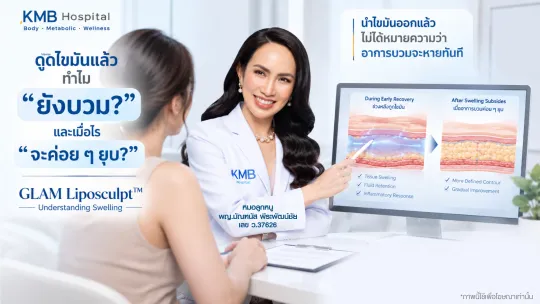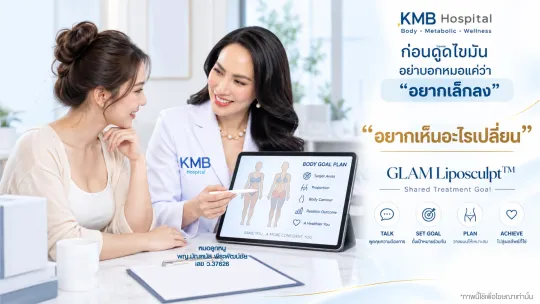
Why assess body fat before the liposuction program? How does FAT Mapping™ help plan body shaping?
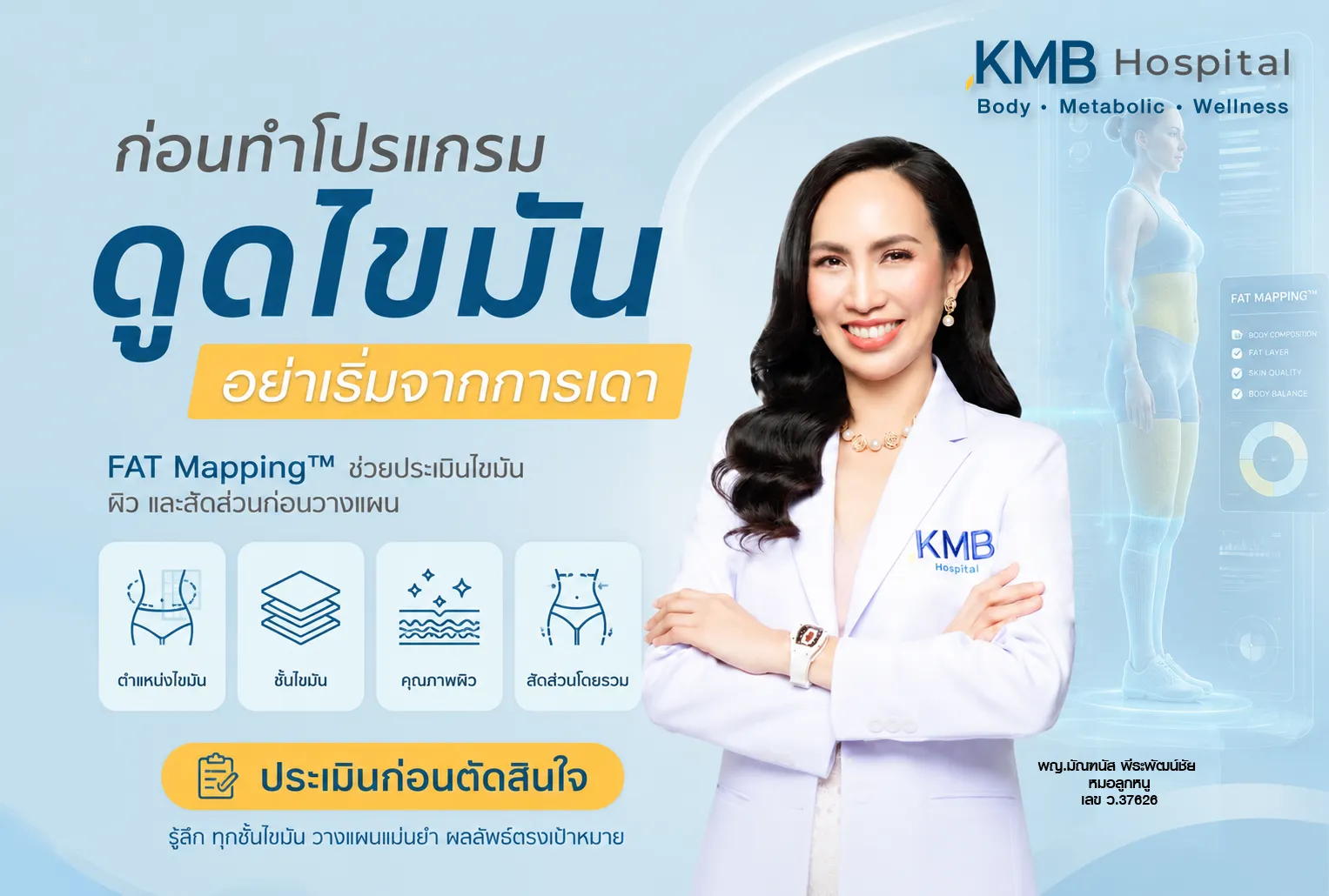
Why Evaluate Fat Before Liposuction? How Does FAT Mapping™ Help Plan Body Contouring?
Fat evaluation before liposuction helps the doctor understand where fat is accumulated, whether it is subcutaneous fat, how elastic the skin is, and which positions should be planned first. FAT Mapping™ is an assessment method for proportions and fat layers by KMB Hospital that provides more data for planning targeted liposuction programs, reduces guessing, and explains limitations before making a decision, without guaranteeing results or replacing the doctor's specific diagnosis.
Why Evaluate Fat Before Liposuction?
Fat evaluation before liposuction is important because it helps distinguish which layer the concerned fat is in, whether it is subcutaneous fat suitable for shaping, how elastic the skin is, and which positions should be planned first. FAT Mapping™ helps the doctor have more data for assessment, reduces guessing, and helps the service recipient understand limitations, risks, and reasonable possible outcomes.
How Does FAT Mapping™ Help Plan the Liposuction Program?
FAT Mapping™ is a pre-liposuction assessment guideline by KMB Hospital that looks at the overall proportions, fat position, fat layer thickness, skin quality, and the relationship of surrounding areas to help plan where to start, which positions may not be suitable for liposuction programs alone, and how to clarify expectations about results before making a decision.
Why is evaluating fat before liposuction important
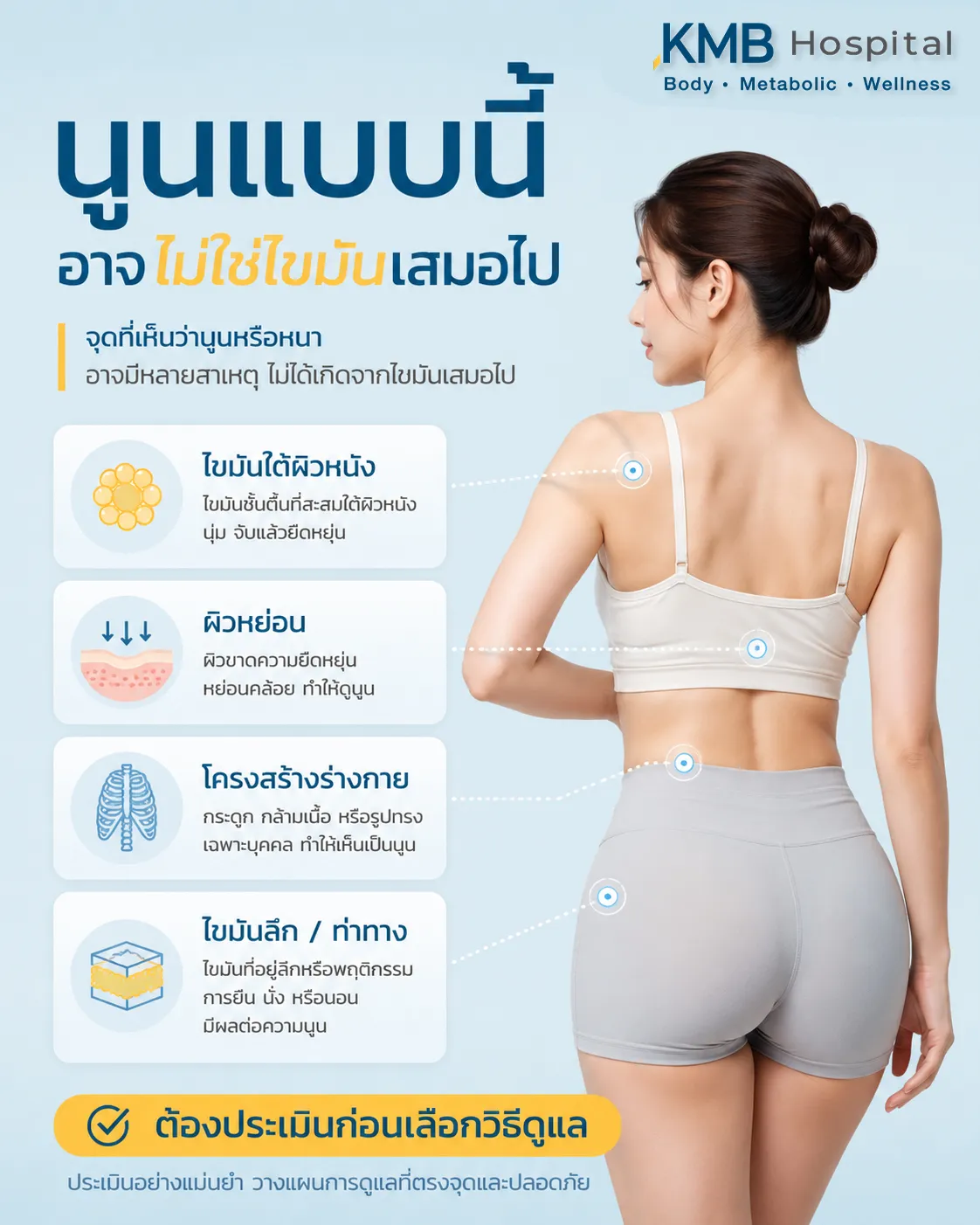
Many people start to be interested in liposuction programs from clear points, such as a bulging tummy, big arms, double chin, narrow waist, or bulging fat on the back. But prominent areas do not always mean it is fat suitable for liposuction because the visible body shape may be caused by subcutaneous fat, deep fat, sagging skin, muscles, posture, or body structures together.
If you start planning from guessing, it may lead to choosing the wrong position, for example, thinking the tummy is caused by subcutaneous fat, but actually, there is abdominal fat or sagging skin together, or thinking the big upper arm is due to fat alone, but there is also sagging skin and reduced skin elasticity. Pre-assessment makes the communication between the doctor and the service recipient clearer.
What is FAT Mapping™?
FAT Mapping™ is KMB Hospital's proportion and fat assessment guideline before a liposuction program, aiming to see which position of the body problem is caused by fat, the fat layer characteristics, how elastic the skin is, and how different positions link with the overall body shape.
The goal of FAT Mapping™ is not to say that everyone must do a liposuction program, but to help see more decision-making information about who may be suitable for assessing which position, who should delay, who should care for health or skin together, and who should adjust expectations before planning.
Why should you not choose positions just by looking with the eyes
Looking with the eyes may help see the concerned points but cannot tell completely which layer the fat is in, whether the skin is ready, or what the bump is actually caused by. Choosing liposuction positions solely from external images has a risk of not matching the cause.
1. Bumps like fat but may be sagging skin
Low elasticity skin may cause folds or unevenness even if fat is not thick. If fat is reduced without assessing skin, it may not meet all needs.
2. Bulging tummy may not be all subcutaneous fat
Some cases may have abdominal fat or muscle factors together, which targeted liposuction programs do not solve these causes directly.
3. One position may not be the best starting point
Sometimes the position that should be assessed first may be a side position, such as waist, sides, or back, to make the overall body shape look continuous.
What does FAT Mapping™ evaluate?
Assessment in each case may vary according to body condition and doctor's judgment. Generally, FAT Mapping™ helps the medical team and service recipient talk on more systematic data.
1. Fat Position
See where fat is accumulated, such as tummy, waist, upper arms, double chin, back, or thighs, and which positions are the real main problems.
2. Fat Layer Thickness
Helps see how thick the specific fat is and whether it is suitable for planning a liposuction program.
3. Skin Quality
Evaluate elasticity, sagging skin, stretch marks, or skin that may have limitations on smoothness after procedure.
4. Continuity of Proportions
See how one position connects with another, such as tummy with waist, waist with back, or arms with armpits.
5. Basic Health
Evaluate medical history, current medications, allergy history, and factors that may increase risk during the procedure.
6. Expectations
Help explain what possible results are, what the liposuction program can help with, and what may not be the goal of this procedure.
Before Fat Evaluation vs After Evaluation with FAT Mapping™
| Issue | If Not Evaluated | When Evaluated with FAT Mapping™ |
|---|---|---|
| Position to Perform | Often selected from visible points or most concerned points | Helps see which positions are real fat problems and should be planned first. |
| Understanding of Fat | May think all bumps are fat suitable for liposuction programs. | Helps distinguish subcutaneous fat, sagging skin, and related factors. |
| Expectations | May expect that after doing, body shape will change like reviews. | Helps explain limitations and possible results according to each body. |
| Position Planning | May look at points separately without seeing the overall proportions. | Helps see body continuity, such as tummy, waist, sides, and back. |
| Safety | May look only at desire to do or price. | Helps assess basic health, readiness, and risks before procedure. |
Who should evaluate fat before liposuction?
Should undergo assessment if...
- Not sure where fat is really accumulated
- Have many concerned points, such as tummy, waist, arms, double chin, or back.
- Lose weight but specific fat remains.
- Fear choosing wrong positions or doing it does not match the problem.
- Want to understand limitations before deciding.
Should delay or consult doctor in detail before if...
- Expect liposuction programs to help reduce large weight.
- Have much sagging skin or clear excess skin.
- Have medical disease that is not well controlled.
- Decide only based on reviews or promotions.
- Not ready to take care of self after procedure.
Summary: FAT Mapping™ is suitable for people who want to start from real body data, not starting from guessing which position to do.
How does FAT Mapping™ help plan body contouring?
FAT Mapping™ helps liposuction program planning become more systematic, not just looking at the worried points by the patient, but looking at the relationship of the overall body shape. For example, if worried about the tummy, may need to assess the waist and sides together. Or if worried about the back, may need to look at the side back, under bra, and back waist together.
- Helps choose main positions: States which points are fat problems that should be planned first.
- Helps set priorities: If there are many positions, helps choose where to start.
- Reduces false expectations: Explains which problems are due to fat and which may be about skin or structure.
- Helps plan safety: Assess basic health and limitations before procedure.
- Helps plan after procedure: Prepare for compression garments, wound care, symptom follow-up, and long-term body care.
What FAT Mapping™ should not overcommunicate
To provide straightforward information consistent with medical communication guidelines, FAT Mapping™ should be explained as "an evaluation to help plan", not a tool that guarantees results or says everyone is suitable for a liposuction program.
Should not communicate that
- After evaluation, results will be 100% according to the picture.
- Know for sure how much will change after doing.
- Can do for everyone without limitations.
- No risk, no swelling, or no wounds.
- Replaces doctor assessment completely.
Should communicate that
- Helps doctors have more data for planning.
- Helps distinguish initial fat, skin, and proportion problems.
- Helps explain limitations before deciding.
- Results depend on each person.
- Must be used with history taking and medical assessment.
How should reviews and results be viewed?
Reviews help see real service recipient experiences but should not use reviews as a guarantee of results because each person has different fat positions, skin quality, basic health, and recovery. Pre-assessment helps understand which reviews are close to our problems or not.
What should be viewed from reviews
- Before doing, what fat position problems existed.
- Was fat and skin assessed before doing.
- Is the time after review clearly specified.
- Is there a note that results differ per person.
Things that should not be used as a judgment
- Expect to get results like people in review pictures.
- Choose position only because many reviews.
- Believe words like immediate results or no risk.
- Decide based on price without real fat assessment.
Want to know where to start, start with FAT Mapping™
If you are not sure whether the main problem is due to fat, skin, or body structure, the FAT Mapping™ assessment will help the doctor and service recipient see the picture together more, before planning a targeted liposuction program.
Schedule FAT Mapping™ Assessment with Medical Team
Results differ per person, depending on fat position, skin quality, basic health, technique used, and post-procedure care.
Q&A Common Questions about FAT Mapping™ Before Liposuction
Q: Why evaluate fat before liposuction?
A: Because bumps or proportions worried about do not always come from subcutaneous fat. Assessment helps distinguish whether it comes from fat, sagging skin, muscles, structure, or deep fat to plan more according to the cause.
Q: What is FAT Mapping™?
A: FAT Mapping™ is KMB Hospital's proportion and fat assessment guideline before a liposuction program to see fat position, fat layer thickness, skin quality, proportion continuity, and factors to consider before planning.
Q: Can FAT Mapping™ tell which part should be done?
A: Helps doctors have data for assessment to see which positions are real fat problems and which positions should be planned first. But decision must consider along with health, skin quality, safety, and each person's expectations.
Q: If evaluated and not suitable for liposuction program, what to do?
A: The doctor may recommend taking care of health, weight, skin, or choose other directions that are more suitable at that time because some problems do not come from subcutaneous fat or may have health and safety limitations.
Q: Does FAT Mapping™ guarantee results after liposuction program?
A: It is not a guarantee of results but an evaluation to help plan and explain limitations before deciding. Real results depend on original fat, skin quality, health, techniques used, and aftercare of each person.
Articles to read next in the Liposuction Program cluster
Medical References
- American Society of Plastic Surgeons: Liposuction candidates plasticsurgery.org
- American Society of Plastic Surgeons: Liposuction risks and safety plasticsurgery.org
- Mayo Clinic: Liposuction overview, skin elasticity, risks and limitations mayoclinic.org
- Cleveland Clinic: Liposuction recovery and postoperative care my.clevelandclinic.org