Why is fat distribution uneven? How does FAT Mapping™ help assess before liposuction | KMB Hospital
Category FAT Mapping™ • Fat Distribution • Pre-Liposuction Program Assessment | Reading time approx. 9 minutes
Why is fat distributed differently? Topic FAT Mapping™ uses to help assess before the liposuction program
First published 2 August 2026 | Last updated 2 August 2026 | Written by Medical Content Team, KMB Hospital | Medically reviewed by Dr. Mantanus Pirapatsenchai (Dr. Luk Khun)
Summary Answer
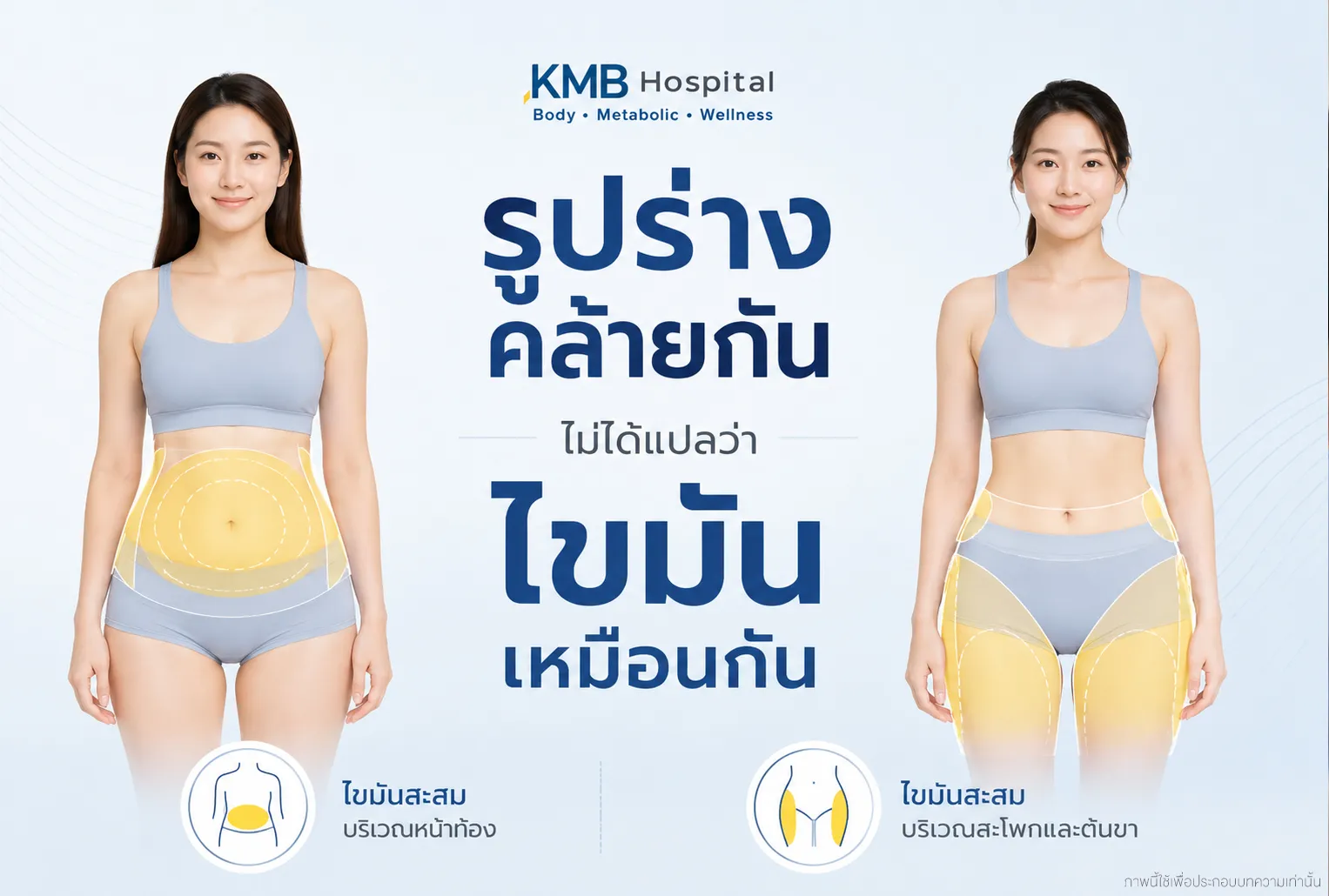
People with similar weights or body shapes may have significantly different fat distributions because fat accumulation is influenced by genetics, hormones, age, gender, and lifestyle.
Before performing FAT Mapping™ and planning the liposuction program, doctors must assess where fat accumulates, how it is distributed, and whether other components are involved, not just considering external appearance.
Table of Contents
What Is Fat Distribution?
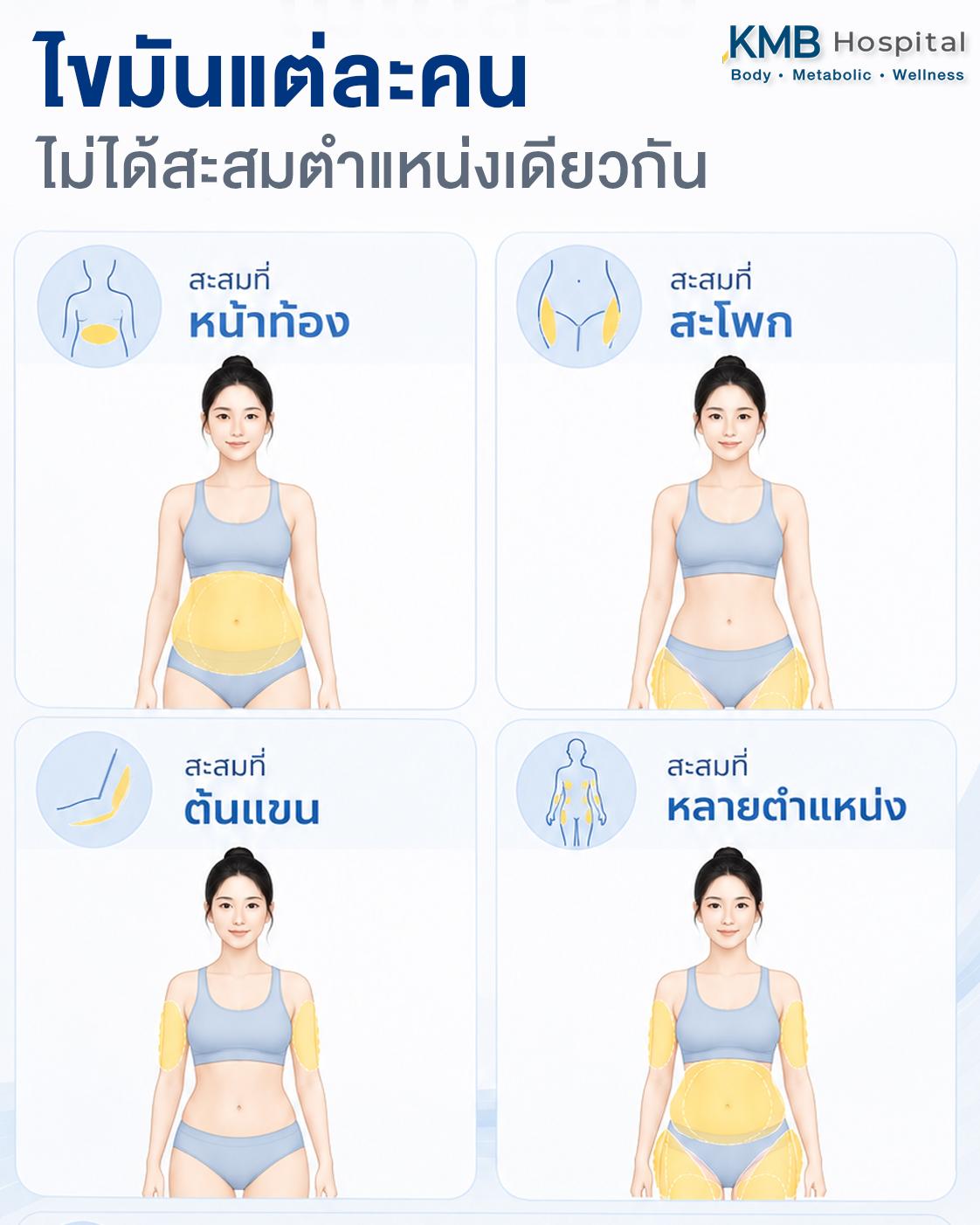
Fat distribution refers to the locations where the body chooses to store fat in each area.
While everyone has subcutaneous fat, the prominent locations where fat accumulates may vary significantly.
Some accumulate fat in the abdominal area.
Some accumulate in the hip area.
Some have prominent fat on the upper arms.
Some have more fat in the double chin area than elsewhere.
These patterns are natural individual differences and do not indicate that anyone takes better or worse care of their health.
What Determines the Location of Body Fat?
There isn't just one factor that determines fat distribution, but rather multiple factors working together, including:
Genetics
Genetics influence the tendency of where fat accumulates, so people in the same family may have similar body shapes or fat accumulation points.
Hormones
Hormones affect fat accumulation in specific areas. Many women tend to accumulate fat around the hips and thighs, whereas many men tend to accumulate more fat in the abdomen. However, such patterns are merely tendencies, not universal rules.
Age
As individuals age, body composition changes. Fat may begin to accumulate more in the torso region while muscle mass decreases.
Lifestyle
Diet, exercise, sleep, and stress all impact changes in body composition. While they don't dictate all fat locations, they contribute to changes in quantity and accumulation patterns.
Why do people with the same weight appear different?
Body weight is simply a cumulative number of the body
It does not indicate where the fat is located, how much muscle there is, the amount of subcutaneous fat, or whether there is visceral fat
People with the same weight of 60 kilograms may have distinctly different body shapes
| Weight numbers do not indicate | Examples of differences that may be found |
|---|---|
| Fat accumulation location | Some have small waists but large hips, some have prominent bellies |
| Body composition | Some have large upper arms, some have distinct jowls, or have different muscle mass |
This is why doctors do not rely solely on weight numbers when assessing body shape
How does fat distribution affect the assessment before the liposuction program?
Before planning the liposuction program, the doctor must answer the crucial question: Where is the fat accumulated?
Because each area may vary in thickness, fascia, skin quality, and tissue composition
Two clients with similarly sized abdomens may have entirely different assessment plans
Therefore, fat distribution is one of the key data points doctors use to inform planning prior to the liposuction program
Can fat distribution change throughout a lifetime?
Yes
Fat distribution is not constant throughout life but can change according to age and various factors.
Weight gain or loss
Aging
Hormonal changes
Pregnancy
Exercise
Daily lifestyle habits
Therefore, the body shape of the same person at ages 20, 40, and 60 may differ, even if their weight is similar.
Why does fat accumulate more in certain areas?
Many observe that although weight increases overall, certain locations appear to change significantly more, such as the abdomen, flanks, upper arms, thighs, hips, and double chin.
This is caused by each area having different numbers of fat cells, different responses to hormones, different blood circulation, different connective tissue structures, and different relationships with muscles and skin.
Thus, fat accumulation at each location varies.
Why do some people accumulate fat only in the abdomen?
Fat accumulation in the abdomen is a common pattern. However, a larger abdomen does not necessarily mean it is all subcutaneous fat.
A physician must distinguish whether it is subcutaneous fat, visceral fat, accompanied by abdominal wall issues, accompanied by sagging skin, or a combination of multiple factors.
This is why two patients with similar abdomens may be evaluated differently.
Why do some people accumulate fat on the hips and thighs?
In many women, fat tends to accumulate more in the hips and thighs than the torso. Such characteristics are primarily related to hormonal and genetic influences.
However, not all women have the same fat accumulation pattern. Some accumulate more in the abdomen, some in the upper arms, and some in multiple areas simultaneously.
Therefore, gender alone cannot predict fat location.
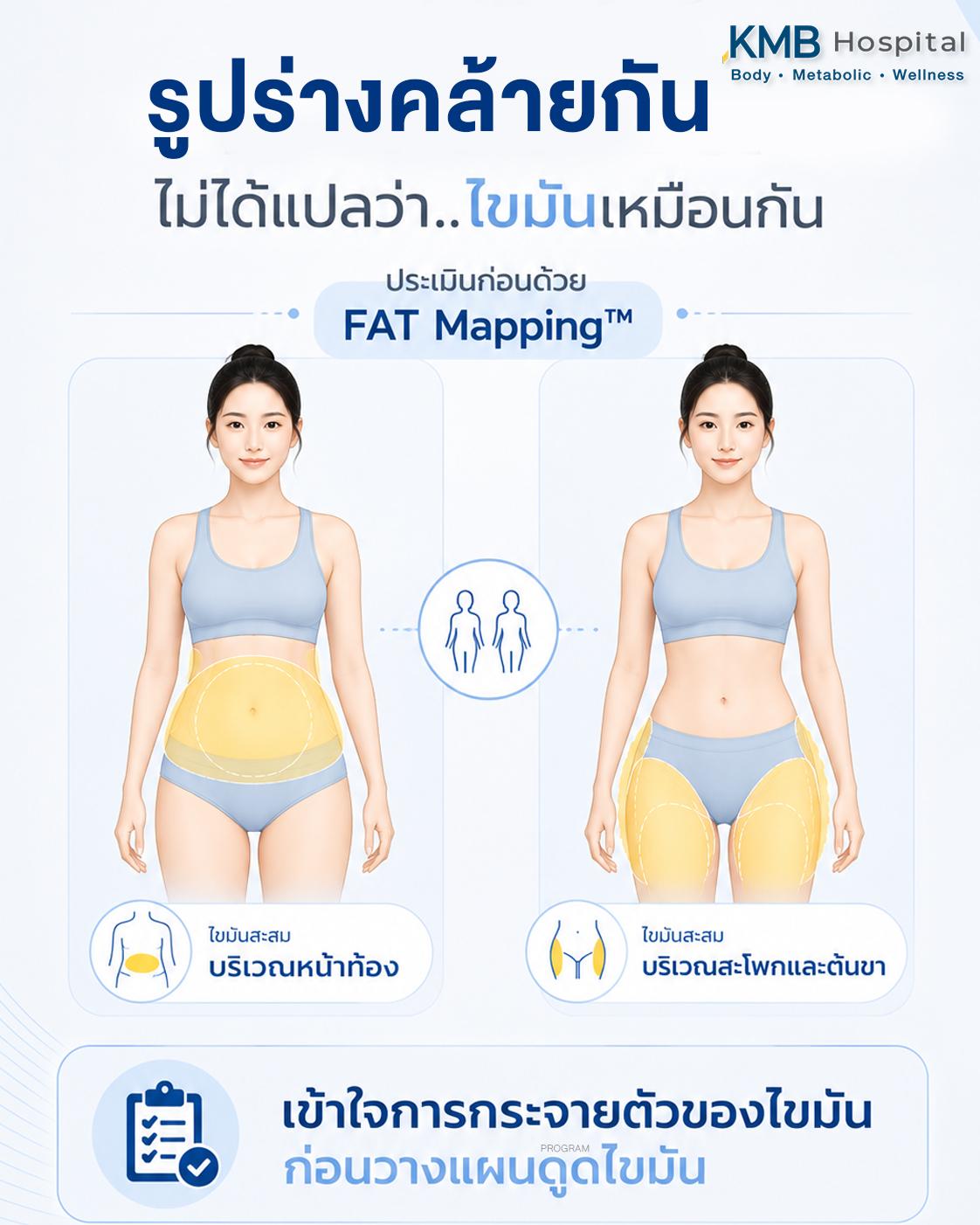
Why are similar body shapes evaluated differently?
This is one of the most important questions in Domain B because many people believe same shape = same liposuction treatment, but this is not the case in medicine
Two clients may have the same weight, similar height, and similar waist measurements
The First Person
Thick subcutaneous fat
Good skin elasticity
Minimal fibrous tissue
The Second Person
Minimal subcutaneous fat
Includes visceral fat as well
Fibrous tissue is quite tight
Skin starting to sag
Although external appearances may be similar, internal conditions can differ significantly
How do doctors evaluate fat distribution?
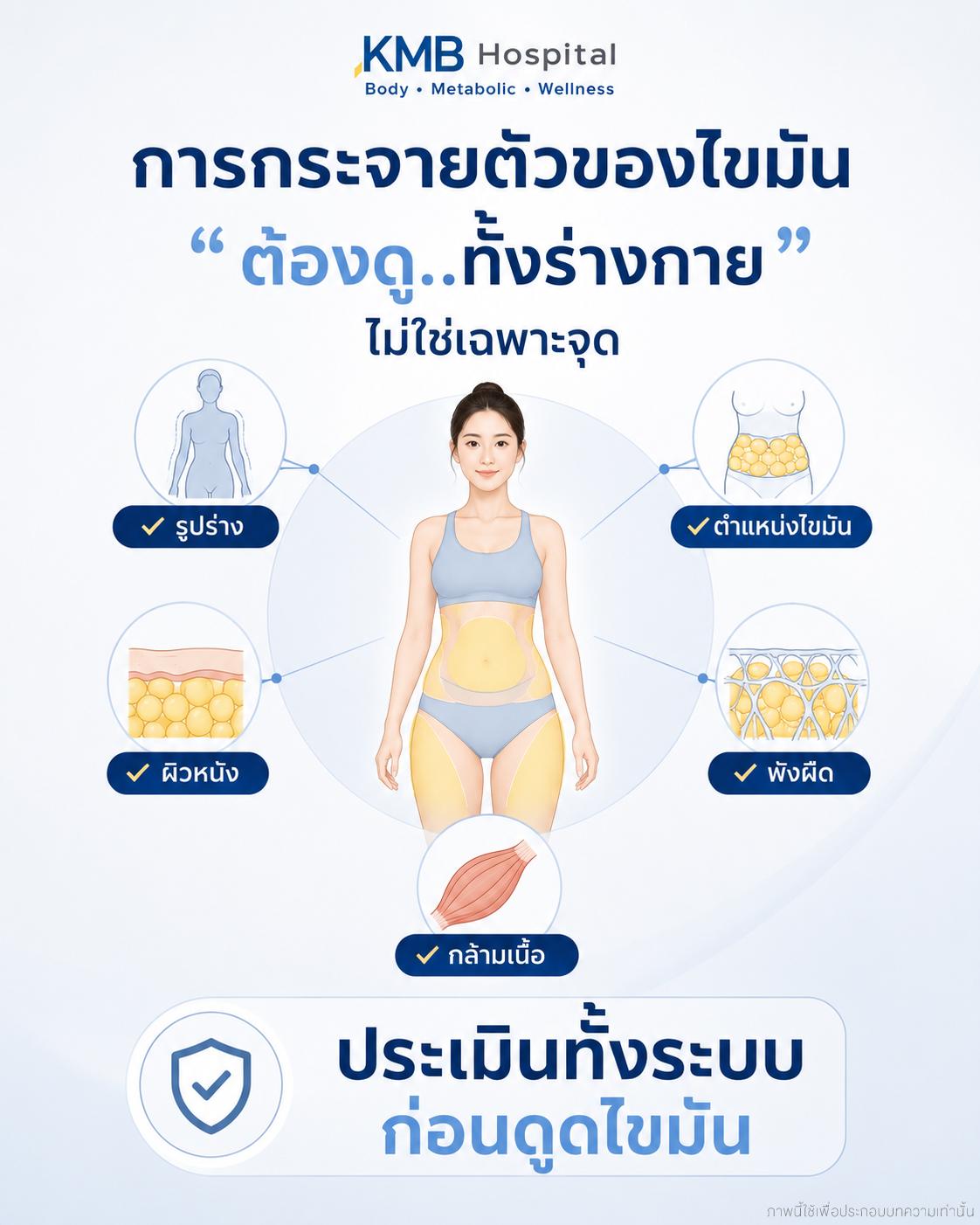
The evaluation is not done by looking at just one position, but evaluates the overall picture of the entire body, by considering
Overall Body Shape
Look at the proportions of the torso, arms, legs, and body balance
Fat Distribution
Check which areas fat accumulates in, whether it is distributed evenly or accumulated in specific spots
Body Contour Continuity
Evaluate whether the transition of each area is natural and if there are any bulges or abnormal creases
Tissue Quality
Consider the skin, fibrous tissue, muscles, and tissue elasticity together
Body Composition
Including muscle mass, subcutaneous fat, visceral fat, health history, and the client's goals
All these evaluations help doctors understand what causes the visible body shape and how to plan accordingly
How does fat distribution relate to FAT Mapping™?
Fat distribution is a major reason why doctors cannot plan a liposuction program based solely on external appearance
Clients who appear similar may have different fat locations, skin quality, fascia, and body composition
Therefore, FAT Mapping™ helps collect data on fat distribution and body composition to assist evaluation alongside physical examination and physician judgment, before planning a liposuction program appropriate for each individual
How does FAT Mapping™ help assess fat distribution?
FAT Mapping™ helps gather data regarding fat location and distribution, along with body composition, to support pre-liposuction planning combined with the physician's physical examination
Article Summary
Fat distribution is the result of multiple factors working together, including genetics, hormones, age, and lifestyle. Therefore, even if weight or external appearance is similar, each person has different fat accumulation locations
Before planning a liposuction program, doctors must evaluate fat locations alongside skin, fascia, muscles, and all body composition. FAT Mapping™ supports the collection of this data to aid in personalized planning combined with physical examination and physician judgment
Key Takeaways
Frequently Asked Questions
Why do people in the same family accumulate fat similarly?
Genetics affect fat distribution tendencies, so people in the same family may have similar fat accumulation points. However, lifestyle also affects body shape and composition.
Do women and men have different fat distribution patterns?
Generally, there are differences due to hormonal influence, but gender alone cannot predict fat locations because each individual has unique characteristics.
Does having the same weight mean fat is in the same locations?
No. People with the same weight may have significantly different fat, muscle, and body composition distributions.
Does weight loss cause fat to reduce at all locations simultaneously?
Not always. Fat in each area responds differently to energy changes, so they may not decrease at the same time.
Why must a doctor view the whole body shape before the liposuction program?
Because body contouring must consider the balance of the entire body, not just the single area where the client is concerned.
Related Articles
Fat distribution varies from person to person
Evaluation should consider fat location, skin, fascia, muscle, health, and goals together to help make planning suitable for each individual
References
- Ibrahim MM. Subcutaneous and Visceral Adipose Tissue: Structural and Functional Differences. Obesity Reviews. 2010.
- Karpe F, Pinnick KE. Biology of Upper-Body and Lower-Body Adipose Tissue. Nature Reviews Endocrinology. 2015.
- Guyton & Hall. Textbook of Medical Physiology. Latest Edition.
- Gray's Anatomy. The Anatomical Basis of Clinical Practice. Latest Edition.
- Endotext. Adipose Tissue Biology and Body Fat Distribution.
- American Society of Plastic Surgeons. Patient Education Resources.
Related Articles
About KMB Hospital
KMB Hospital provides services for body care, weight loss, and liposuction programs, focusing on systematic pre-treatment assessments to help physicians understand fat locations, body composition, and the suitability of treatment planning for each individual.
Article Author Information
Written by
Medical Content Team, KMB Hospital
Medically Reviewed by
Dr. Mantanas Peerapatthanachai
Dr. Looknuu
Medical License Number ว.37626
Important Note on Article Information
This information is created for general knowledge purposes and cannot replace examination, diagnosis, or advice from a physician. The suitability of FAT Mapping™, liposuction programs, or other treatment approaches must be evaluated by a physician on an individual basis.
Article Revision History
Version 1.0 · First Published August 2, 2026 · Last Updated August 2, 2026 · Status Publication Ready