Why is FAT Mapping required before liposuction?
Why Do FAT Mapping™ Before Liposuction Program?
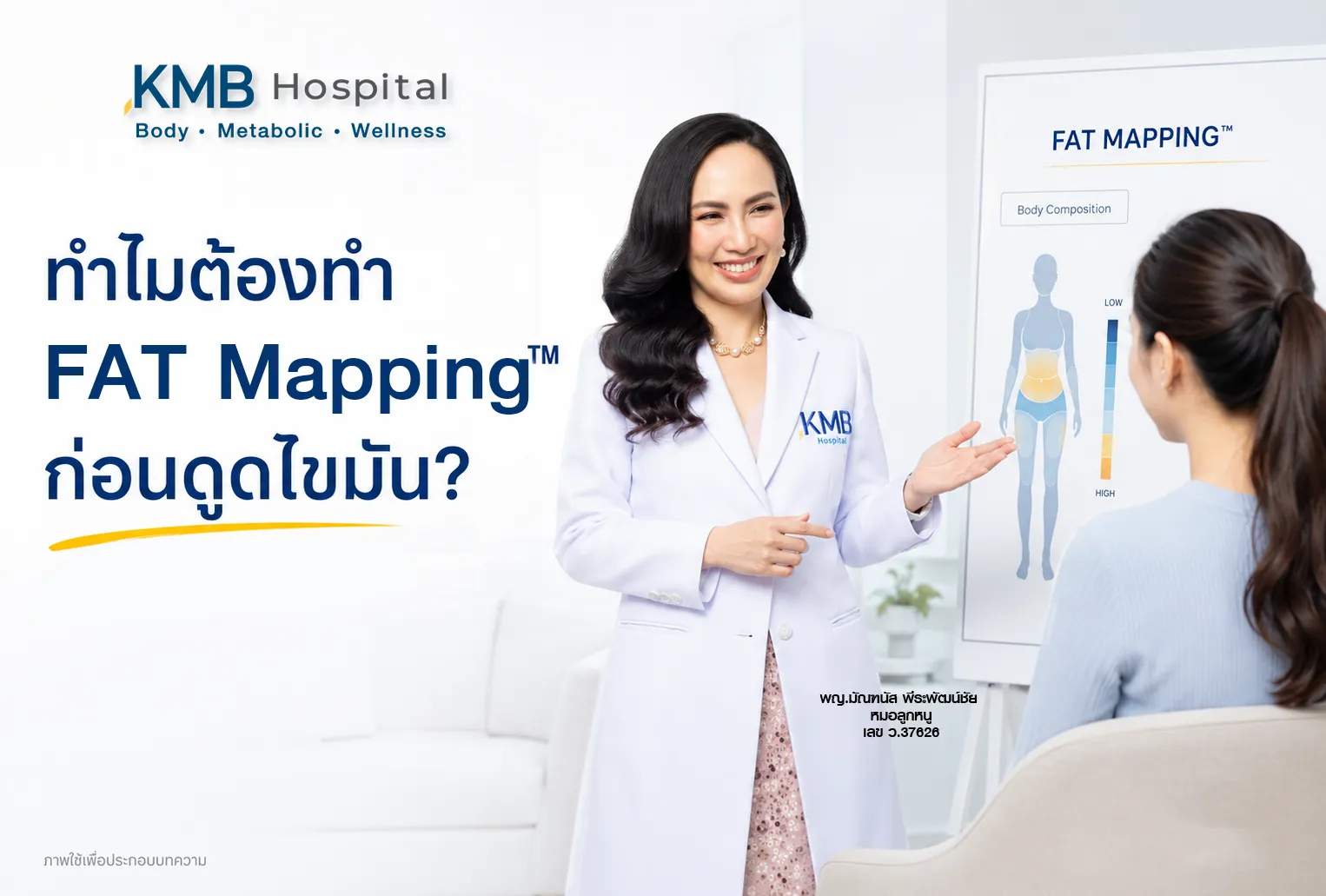
FAT Mapping™ helps doctors understand each individual's body before starting to plan the liposuction program, by evaluating body shape, fat distribution, skin quality, structure, and patient goals, so planning is based on information rather than guesswork from appearance alone.
Many Start with the Wrong Question
When patients come for the liposuction program consultation, the first question heard often is:
"Doctor, where do I need to get suctioned?"
But for doctors, the first question isn't "Where to suction?" but rather "What causes this body shape?"
Even if two people have similarly large bellies, the cause might differ completely. Some have subcutaneous fat accumulation; some have loose skin too; some have different abdominal structures; or some have multiple factors simultaneously.
If the root cause is not understood, rushing to determine a treatment plan could lead to seeing only the "visible problem" without understanding the "underlying cause of the problem."
Reasons Why FAT Mapping™ Should Come Before Liposuction Program Planning
Pre-treatment assessment is not designed to make procedures more complex, but to ensure every decision is data-supported.
FAT Mapping™ helps doctors gather information from various aspects and connect all data together before designing an appropriate treatment approach for each individual.
The role of FAT Mapping™ is not just to "choose where to suction," but to understand the body before deciding how to plan.
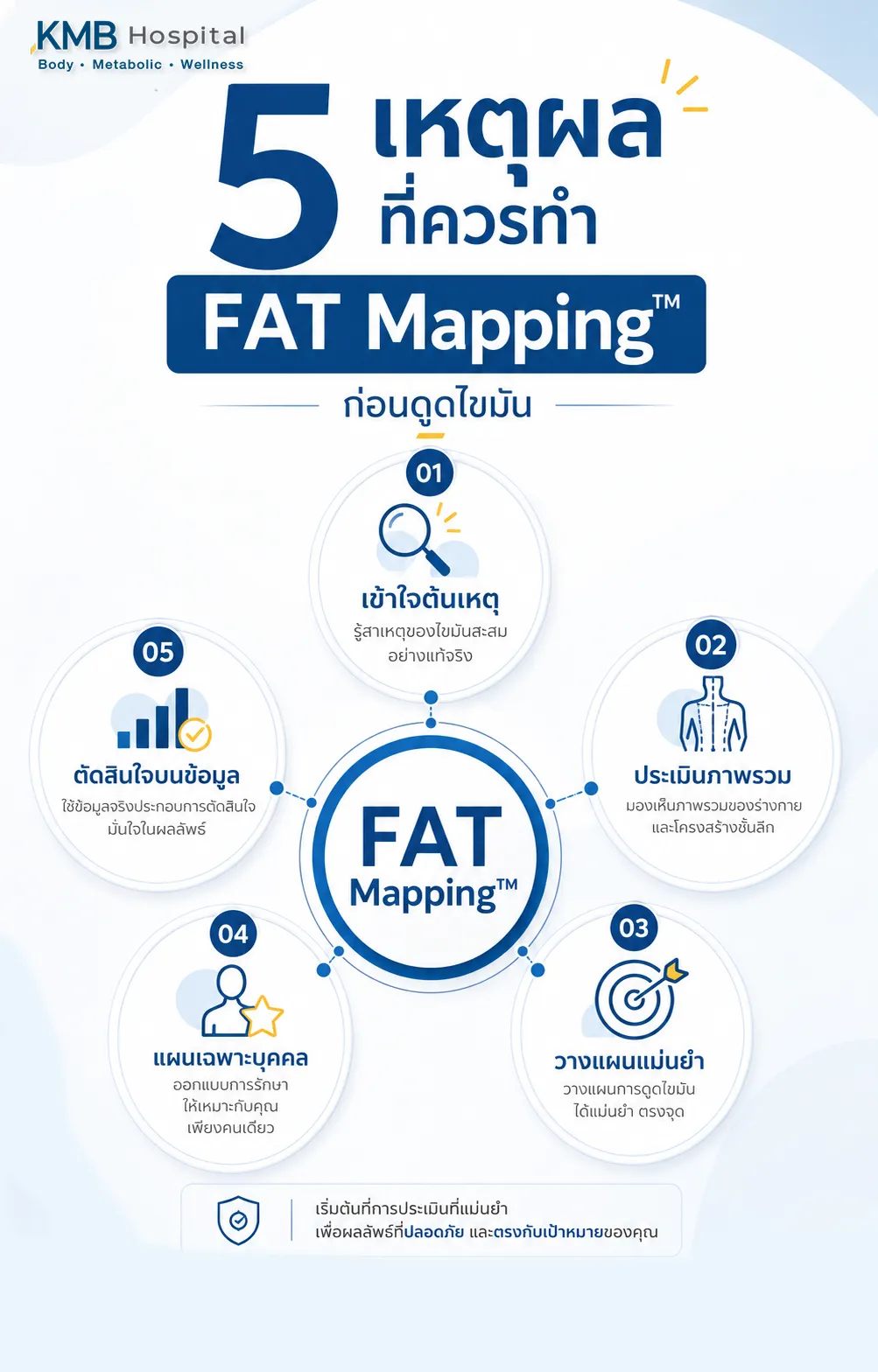
5 Key Reasons to Perform FAT Mapping™ Before the Liposuction Program
If you intend to undergo a liposuction program, pre-treatment assessment is still a step that provides more data support for planning. FAT Mapping™ is not developed to add steps, but to add "understanding" before doctors and patients make decisions together.
To Understand the Root Cause of Body Shape
Body shape seen externally does not always reveal the cause. Two people may have similarly large bellies, but the first has subcutaneous fat accumulation, while the other has loose skin along with fat, or may have different abdominal wall structures.
Without understanding the root cause, planning may begin from the "effect" rather than the "cause." FAT Mapping™ helps doctors understand the components behind the body shape before planning begins.
To Assess the Body as a Whole
The human body is not segmented; the abdomen links to the waist, the waist links to the back, the upper arm relates to the shoulder, and the thigh links to the hips.
Considering only the worried area might cause one to miss the relationship of the overall body shape. FAT Mapping™ assesses the whole body to make planning more balanced.
To Define the Scope of Planning Appropriately
After all data is assessed, the doctor will see which areas should be considered together, which might affect overall proportions, and which areas may not need planning at this time.
The goal of FAT Mapping™ is not to increase the number of treatment areas, but to help planning be appropriate to each individual's body shape.
To Create a Personalized Plan
Even if two people look similar, their goals may differ. Some want to feel confident in clothing, some want to make the waist look defined, and some want to solve specific area issues.
FAT Mapping™ relies not only on body data but also on patient goals, expectations, and priorities, so that the co-designed plan matches each person's requirements.
To Ensure Decision-Making is Based on Data
FAT Mapping™ doesn't say to "do the liposuction program" or "don't do the liposuction program," but helps both the doctor and patient have enough data to make decisions together.
In some cases, assessment data supports planning a liposuction program, while in others, it may be found that another approach is more appropriate, or care should be prioritized differently. The purpose is not to put everyone into the same treatment, but to make decision-making as informed as possible.
How FAT Mapping™ Helps Doctors and Patients Decide
Information Clinicians Consider Together
The doctor's role isn't just to choose a treatment method, but to understand all data first. FAT Mapping™ helps doctors gather data from various aspects and consider it together.
| Data Assessed | What Helps Provide Further Understanding |
|---|---|
| Body Shape and Proportions | Overview and relationships between different areas of the body |
| Fat Distribution | Positions and accumulation characteristics to consider together |
| Skin Quality | Skin factors that may affect planning and expectations |
| Body Structure | Factors that may make body shape appear different even with similar fat levels |
| Previous Treatment History | Existing data to consider before designing new approaches |
| Goals and Expectations | Patient priorities, plus pros and cons of each approach |
How It Helps Doctors Decide
When data is analyzed together, doctors can more clearly explain pros, cons, and approaches suitable for each individual.
FAT Mapping™ does not decide for the doctor, but supports doctor decisions with more comprehensive data.
How It Helps Patients Decide
Treatment decisions should stem from understanding, not just feeling. When understanding what causes the body shape, what factors are most influential, and what are the pros and cons of different approaches, conversations with the doctor become a mutual exchange of information.
FAT Mapping™ allows patients to participate more in planning and make decisions based on a mutual understanding with the doctor.
What Happens If You Do Not Do FAT Mapping™ Before the Liposuction Program?
This question has no "Yes" or "No" answer, as pre-treatment assessment approaches may differ per hospital and doctor's discretion.
However, the core principle of liposuction program planning is to understand the patient's body as much as possible before beginning planning.
If decision-supporting data is less, doctor-patient conversations might rely on current data assessments, but with systematic assessment, the resulting data helps explain, compare options, and plan together more clearly.
FAT Mapping™ is Part of the Planning Process, Not a Guarantee of Results
FAT Mapping™ helps gather and analyze data before treatment, but is not a tool to guarantee results.
Body care results also depend on many factors, including:
Thus, detailed assessment is merely the "start" of planning, not a guarantee that results will be the same for everyone.
Summary
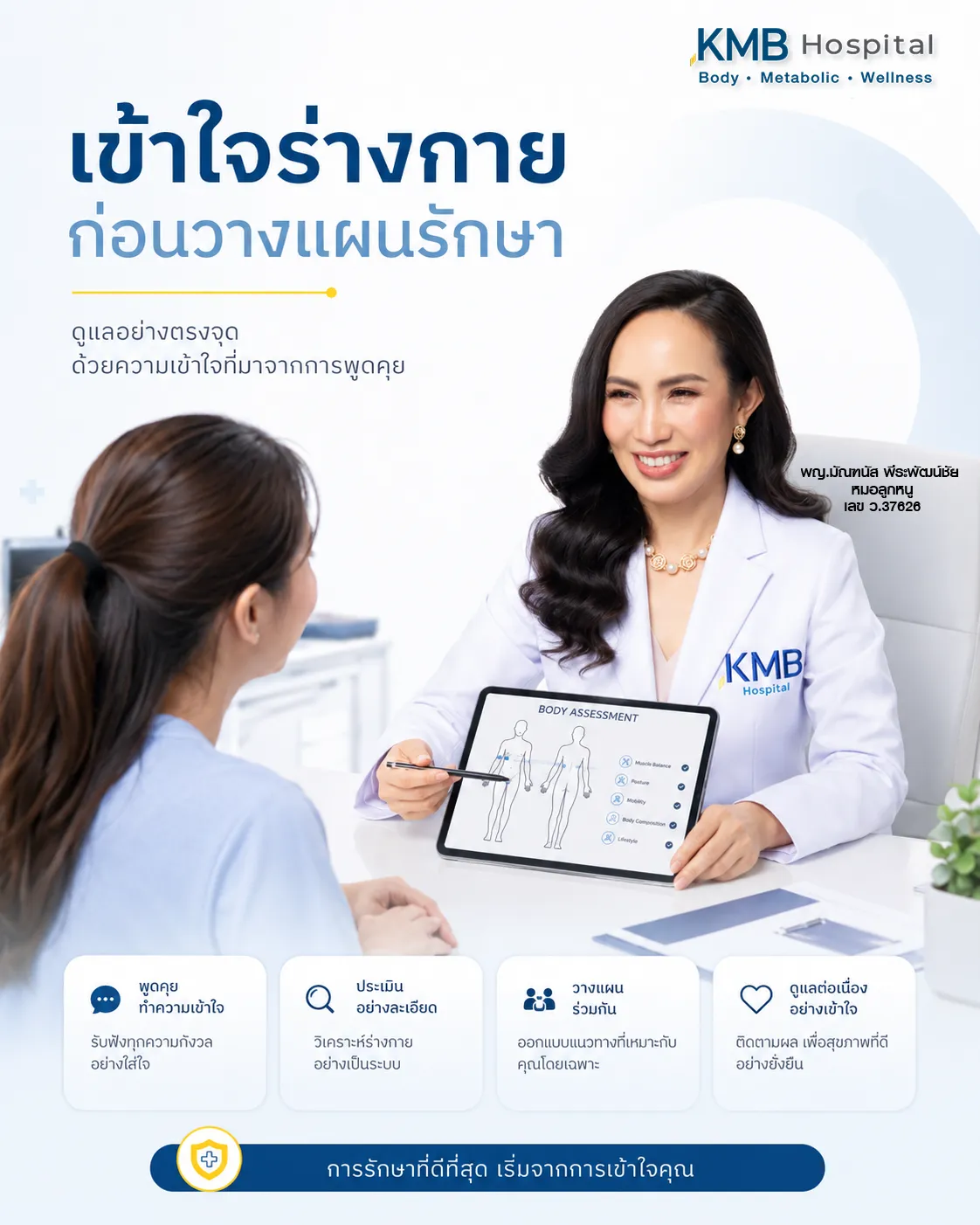
FAT Mapping™ is an assessment system that helps doctors understand patients' bodies before planning a liposuction program, considering body shape, fat distribution, skin quality, structure, and individual goals together.
This assessment is not to add treatment steps, but to give doctors and patients enough information to discuss and design appropriate care plans together.
The heart of FAT Mapping™ is not telling which treatment to do, but helping decisions be based on understanding rather than guessing from appearance alone.
Key Points to Know
Becauses it allows for comprehensive body understanding
Considers body shape, skin, structure, and goals together
Thus should be assessed per individual
Both doctor and patient participate in decision-making
Assessment is part of the planning process only
Summary Brief
FAT Mapping™ is a pre-liposuction program assessment step that helps doctors gather and analyze data on patient body shape, fat distribution, skin quality, structure, and goals before planning care together. Resulting data helps make decisions more reasoned and supports designing treatment approaches appropriate for each individual.
Frequently Asked Questions
Is FAT Mapping™ Necessary for Everyone Wanting to Do the Liposuction Program?
Assessment approaches depend on the doctor's discretion and each hospital's care model. However, having data before planning helps discussions and decisions be clearer.
Does FAT Mapping™ Make the Liposuction Program Safer?
FAT Mapping™ is part of pre-treatment assessment, helping doctors have more data for planning. But safety also depends on many factors, including assessment, treatment techniques, medical team, and pre- and post-treatment care.
Do I Have to Do the Liposuction Program Immediately After FAT Mapping™?
Not necessary. The purpose of FAT Mapping™ is to help understand the body before choosing an appropriate approach. Deciding when or which method to treat should be a joint decision between the doctor and patient.
Continue Reading in the FAT Mapping™ Knowledge Series
Articles on KMB Hospital Website
Related Articles from Dr. Looknuu
Article Information and Medical Review
Medical License No. W.37626
Medical Sources
- American Society of Plastic Surgeons. Liposuction Consultation. Discusses health assessment, goals, treatment history, options, expected outcomes, and risks before procedures.
- American Society of Plastic Surgeons. Liposuction Risks and Safety. Information on risks, limitations, and importance of talking with doctors before deciding.
- Chia CT, Neinstein RM, Theodorou SJ. Evidence-Based Medicine: Liposuction. Plast Reconstr Surg. 2017;139(1):267e–274e. doi:10.1097/PRS.0000000000002859.
Start by Understanding the Body Before Planning
If unsure if the body concerns relate to fat, skin, structure, or multiple factors together, assessment by a doctor helps discuss appropriate options, limitations, and expectations for each individual more clearly.