Why is there still swelling after the GLAM Liposculpt™ procedure, and when will the swelling subside?
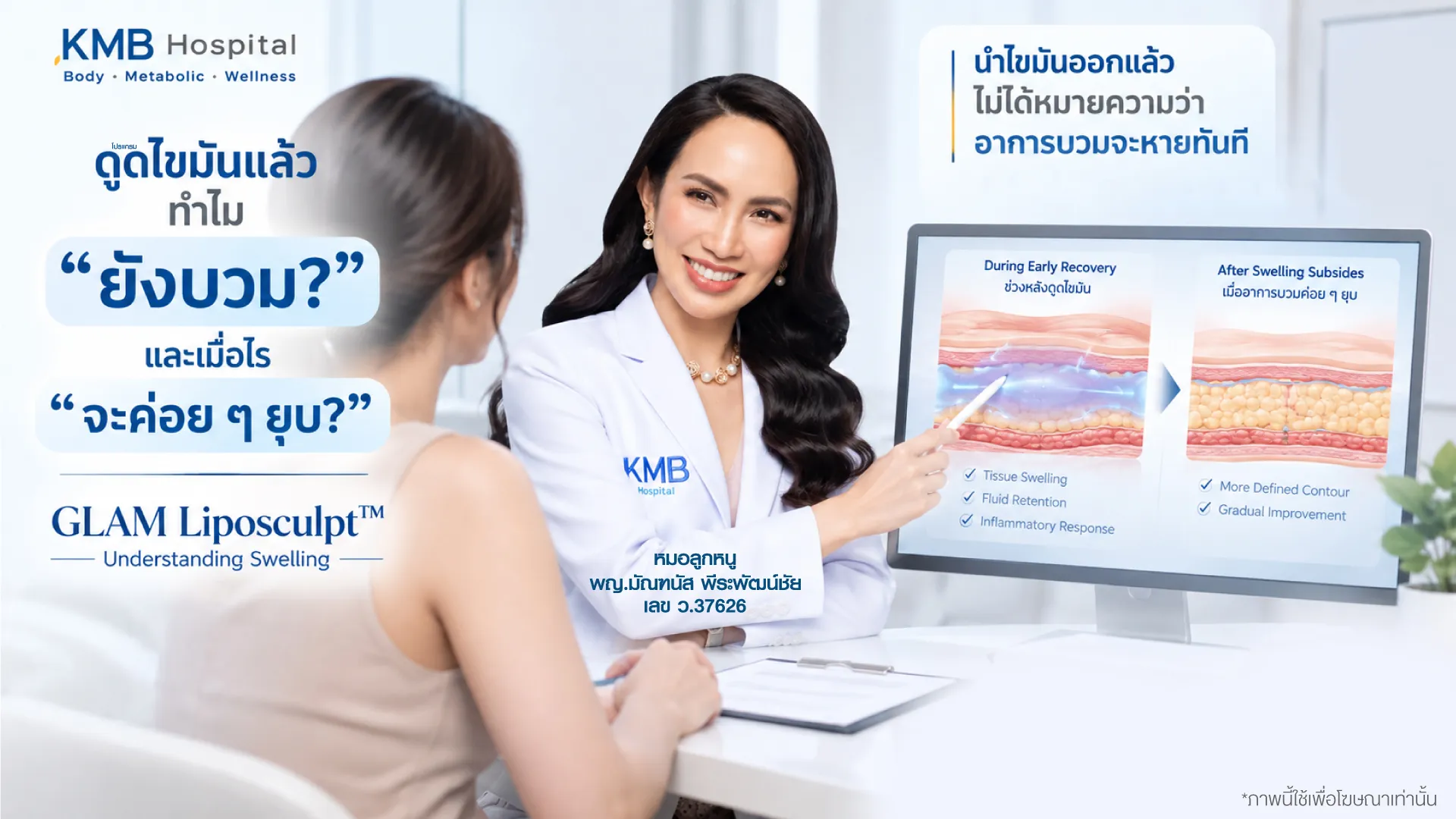
Why is there still swelling after GLAM Liposculpt™ and when will it subside?
Swelling after GLAM Liposculpt™ occurs as a response of the tissue to the treatment and the accumulation of fluid during the recovery phase. Therefore, it is possible for the treated area to appear swollen, tight, or not show the expected contour immediately at first.
Category: Post-liposuction care and seeing results
First published: 9/29/2026 Last updated: 9/29/2026
Swelling after GLAM Liposculpt™ occurs as a response of the tissue to the treatment and the accumulation of fluid during the recovery phase. Therefore, it is possible for the treated area to appear swollen, tight, or not show the expected contour immediately at first.
Swelling does not subside at the same time or take the same amount of time for everyone; it depends on the area and extent of the liposuction, the body's response, health, and tissue healing. Therefore, do not use others' recovery duration as a benchmark for your own.
"Liposuction is done, why is it still swollen?"
This is a question patients often ask the doctor.
Some expect that once the fat is removed, the area should become smaller immediately.
However, after liposuction, the body is not just dealing with the removed fat.
The tissue in the treated area is responding and undergoing a healing process, so temporary swelling, tightness, bruising, or changes in skin sensation can occur.
Therefore, what you see in the mirror at first is not the Final Contour that can be used to judge the results immediately.
What causes swelling after liposuction?
After liposuction, the tissue in the treated area will react to the procedure.
The body enters a repair and recovery process, which can lead to fluid accumulation in the tissue and swelling.
Additionally, in the beginning, there may be changes in the tissue around the treated area, causing it to feel tight, firm, or different to the touch than before the procedure.
It does not mean
"The fat is still the same"
And it does not automatically mean
"Liposuction didn't work"
The important thing is to monitor how the symptoms are changing throughout your Recovery Journey.
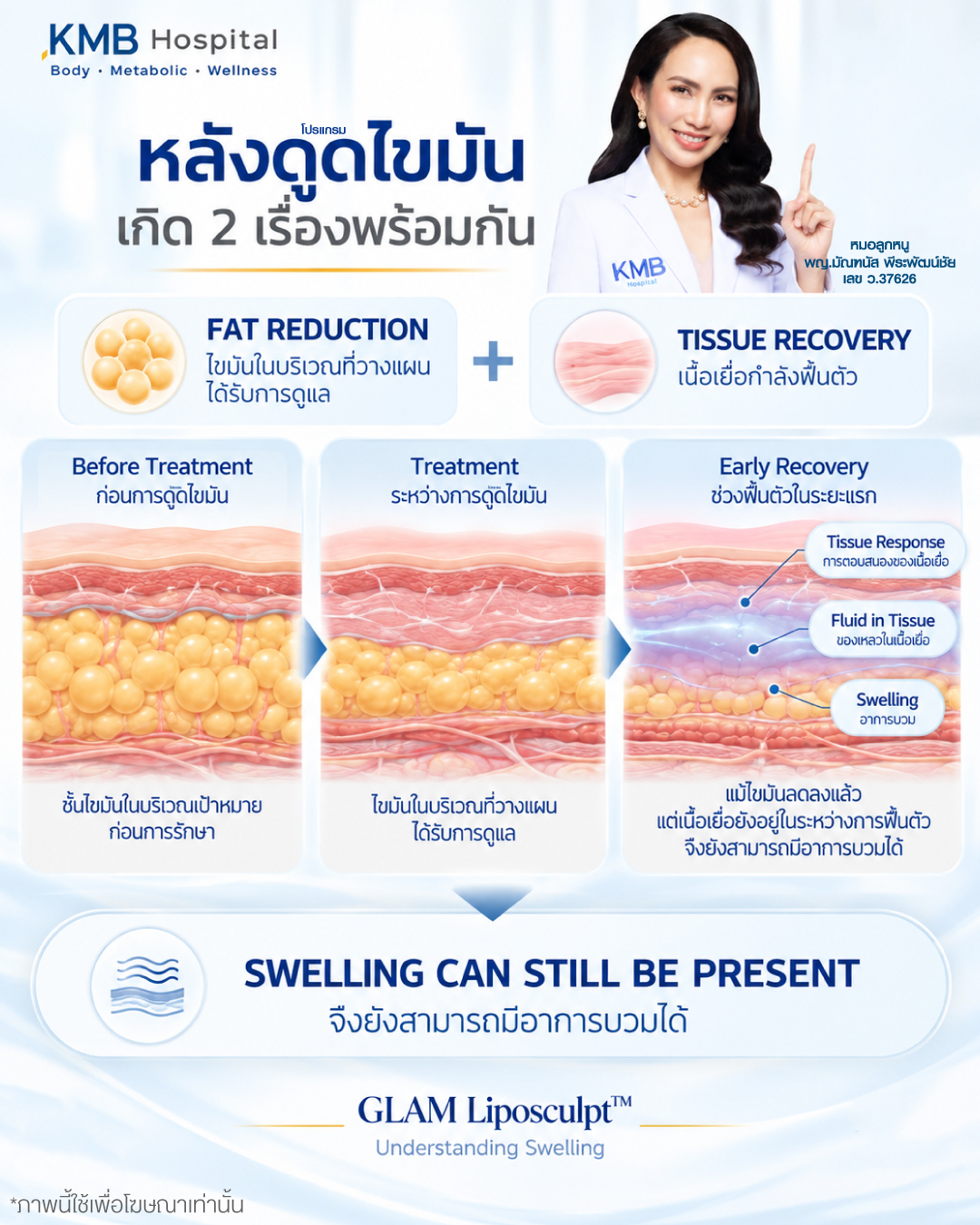
Why does it look more swollen later than on day one?
Another thing that confuses many people is: "It wasn't very swollen on day one, why is it more swollen the next day?"
Swelling after liposuction does not necessarily need to decrease in a straight line immediately after the procedure.
During the initial period, the body still has tissue responses and fluid changes in the treated area.
Therefore, it is possible for the appearance of swelling at different times to be inconsistent.
This is why looking at your shape on one single day and comparing it to the first day can cause unnecessary worry. What you should look at is the recovery trend, along with other symptoms and the advice of the treatment team.
Swelling does not subside equally in all areas
Even if you have liposuction in multiple areas at once, each area does not necessarily recover in the same way.
One reason is that each area has different structures, tissues, movement, and extent of treatment.
Therefore, if one area seems to subside faster than others, it does not automatically mean the areas that are still swollen have a problem. You must look at the context of each position together.
Why do two people having the same liposuction have different levels of swelling?
Because recovery is a personal matter.
Even if two patients have liposuction in the same area, there are many factors that differ, such as:
- Extent of the liposuction
- Characteristics and response of the tissue
- Overall health
- Movement and daily routine
- Post-treatment care
- Individual body response
Therefore, seeing someone else "subside faster than me" does not necessarily mean your recovery is abnormal. Evaluation should look at your own body's changes and compare them with what the doctor predicted based on your treatment extent.
"Subsided" and "Settled" are not the same thing
This is another very important point.
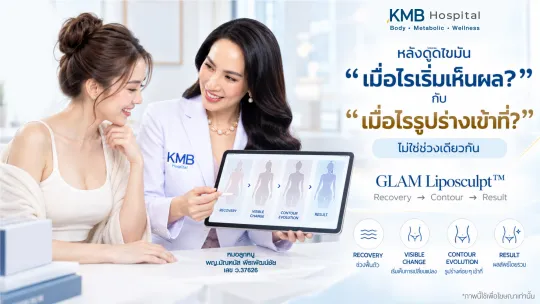
When the swelling starts to go down, the patient will begin to see their body contour more clearly.
However, starting to see the shape does not mean that shape is the final result, because after the swelling goes down, the tissue can still continue to adjust.
Therefore, the Recovery Journey is not Swelling → Subside → Finish, but closer to Swelling → Tissue Recovery → Contour Change → Result. Understanding this sequence will help you not to judge the results too early.
So when will the swelling go down?
This question has no single answer in terms of days for everyone.
Swelling usually changes according to the recovery stage, but the speed and characteristics of the decrease vary according to the area, extent of treatment, and each individual's body.
"In what direction are the symptoms changing?"
If the recovery is proceeding as the treatment team expected, it will be followed up according to the plan.
However, if the symptoms change in a way that is different from what was advised, or if there are other symptoms that cause worry, you should contact the treatment team for an evaluation. Do not wait for the number of days you read on the internet.
Don't use "swelling" to judge results too early
After liposuction, what you see in the mirror at the beginning can change a lot.
Some days you may feel that the shape looks clearer, some times you may feel more tight or swollen, and some areas may change faster than others.
These are the reasons why GLAM Liposculpt™ views post-liposuction care as a Recovery Journey, not a judgment of results from a single day's snapshot.
"Am I pretty yet?"
"How is the body recovering?"
As recovery proceeds, we will evaluate the Body Contour at the appropriate time.
Key points to know
- Swelling after liposuction is part of the tissue response and healing process that can be found after treatment.
- Swelling does not necessarily need to subside in a straight line every day, and each area may change at different times.
- Starting to subside does not mean the shape is settled, because the tissue can still adjust.
- Do not compare who "subsided faster" because the extent of liposuction and the Recovery Journey of each person are different.
- Do not try to rush the swelling to go down with methods not recommended by the treatment team.
- If symptoms differ from what the treatment team explained, or there are changes that cause concern, contact the treatment team for an evaluation.
"Less swollen yesterday, more swollen today" - does it mean there is a problem?
Imagine a patient looking in the mirror in the morning and feeling, "It seemed to have subsided yesterday, why does it look more swollen today?"
The first thing to understand is that post-liposuction recovery does not necessarily have to be a straight line where every day must look smaller than the day before.
The nature of swelling can change according to the recovery phase, as well as the activities and body response of each person.
Therefore, the change from one day to the next alone should not be used to judge whether the result has a problem.
The doctor will look at many things together, such as the nature of the symptoms, position, changes compared to the previous period, and whether there are other symptoms involved.
Uneven swelling on both sides: Should you be worried immediately?
After liposuction, some patients may notice that one side looks more swollen than the other, or one area subsides faster than another.
Differences between the two sides can occur while the tissue is healing, but you should not conclude for yourself whether it is normal or abnormal based only on what you see.
What you should do is observe how the symptoms change and compare them with the advice received from the treatment team.
If the difference increases significantly, happens suddenly, or there are other symptoms that cause concern, contact the doctor for an evaluation.
Want to subside fast? Don't try every method you see on the internet
When feeling swollen, patients often search for ways "How to make it subside fast?" and may find a lot of advice on Social Media.
Some recommend massage, some recommend compression, some recommend various tools or products.
But after liposuction, the tissue is still in the recovery phase, and what works for one person may not be suitable for another.
Therefore, you should not add massage, pressure, heat, cold, tools, or any products to the treated area yourself without advice from the medical team.
"to recover appropriately according to the condition of the tissue in each phase."
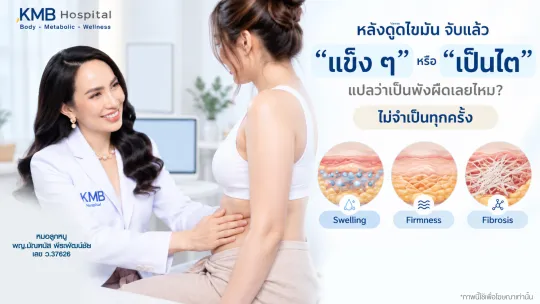
Is swelling the same as hardening or fibrosis?
You should not use these terms interchangeably.
Swelling is related to tissue and fluid changes during the recovery period.
While feeling hard, like a nodule, or feeling a lump when palpated, may be related to tissue changes of another nature and must be considered according to the time since treatment, position, and detected characteristics.
Therefore, if a patient feels, "At first it was swollen, but now it is starting to feel hard," do not rush to conclude for yourself what it is.
Let the treatment team evaluate which Recovery Stage you are in and how to take care of it.
Frequently Asked Questions
Why is it still swollen after GLAM Liposculpt™?
After liposuction, the treated area will enter a recovery process, and there can be fluid accumulation in the tissue combined with the body's response, making that area look swollen or tight initially.
Swelling does not automatically mean that the fat is still the same or the liposuction did not work, because the shape at this stage is still influenced by the Recovery Process.
How many days does it take for swelling to subside after GLAM Liposculpt™?
There is no single number of days for everyone. The duration depends on the area and extent of the liposuction, tissue characteristics, health, and each individual's body response.
Instead of using figures from others as a criterion, look at your own change trend and follow the results according to the doctor's plan.
Why does swelling after GLAM Liposculpt™ look increased on some days and decreased on others?
Recovery does not necessarily need to change in a straight line every day. The nature of the swelling can change according to the Recovery phase and individual factors.
Therefore, you should look at the overall picture and trend of the symptoms rather than judging from one day to another. If there are changes that differ from the advice or cause concern, contact the treatment team for an evaluation.
Is uneven swelling on both sides after GLAM Liposculpt™ abnormal?
It cannot be judged from the unevenness alone. Because tissue on each side can recover differently initially.
However, if the difference is clear or increases rapidly, or there are other symptoms, contact the treatment team instead of waiting. Let the doctor evaluate based on the actual symptoms.
Should I massage or do anything to make the swelling subside faster after GLAM Liposculpt™?
You should not start massage, pressure, cold/heat application, or use tools on the liposuction area yourself just because you want it to subside faster.
Methods of care and appropriate timing can vary according to the area and the recovery of each individual, so you should follow the personal advice of the doctor and the treatment team.
Are swelling after GLAM Liposculpt™ and hardening or fibrosis the same thing?
Not exactly the same.
Swelling and the feeling of tissue hardness can occur in different Recovery contexts, and separating the causes requires considering the time, position, palpable characteristics, and other symptoms.
If you start feeling hardness, or find a lump, let the treatment team evaluate it, and you can read more in the article about hardening and fibrosis after liposuction specifically.
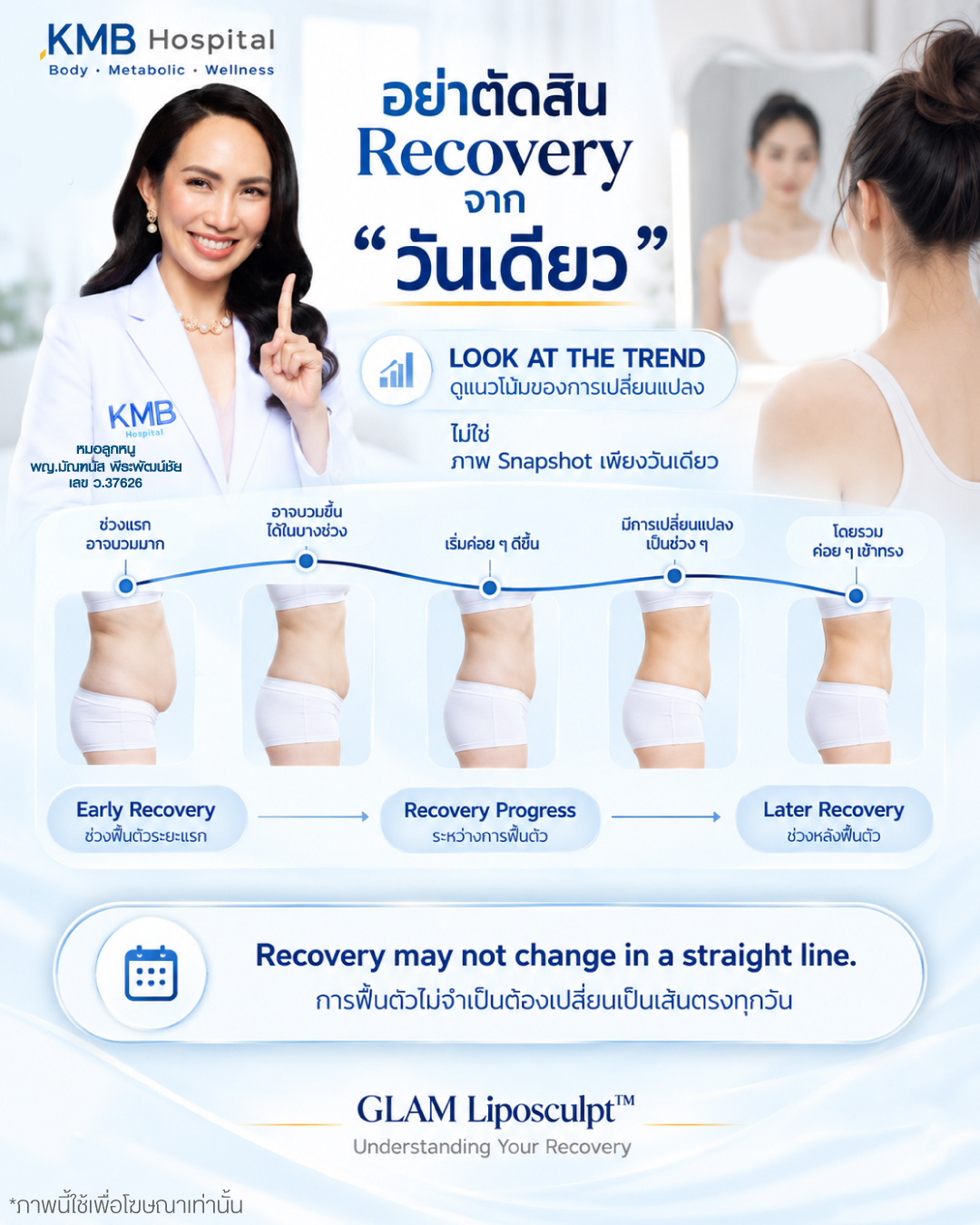
Article Summary
After GLAM Liposculpt™, the fact that the treated area is still swollen initially does not mean the result is abnormal or that the fat has not decreased.
The body is in a Recovery Journey and the tissue is still changing.
Swelling may not decrease in a straight line, each area may subside at different times, and two people having liposuction in the same area do not necessarily subside at the same time.
The important thing is not just to ask, "Has it subsided today?" but to look at "In what direction are the symptoms changing?"
As the swelling gradually changes, the tissue will enter the next Recovery Stage, and the Body Contour will gradually become clearer in order.
However, if there are symptoms that differ from what the treatment team advised, or changes that cause concern, contact the treatment team for an evaluation. Do not wait for the number of days you read from other sources.
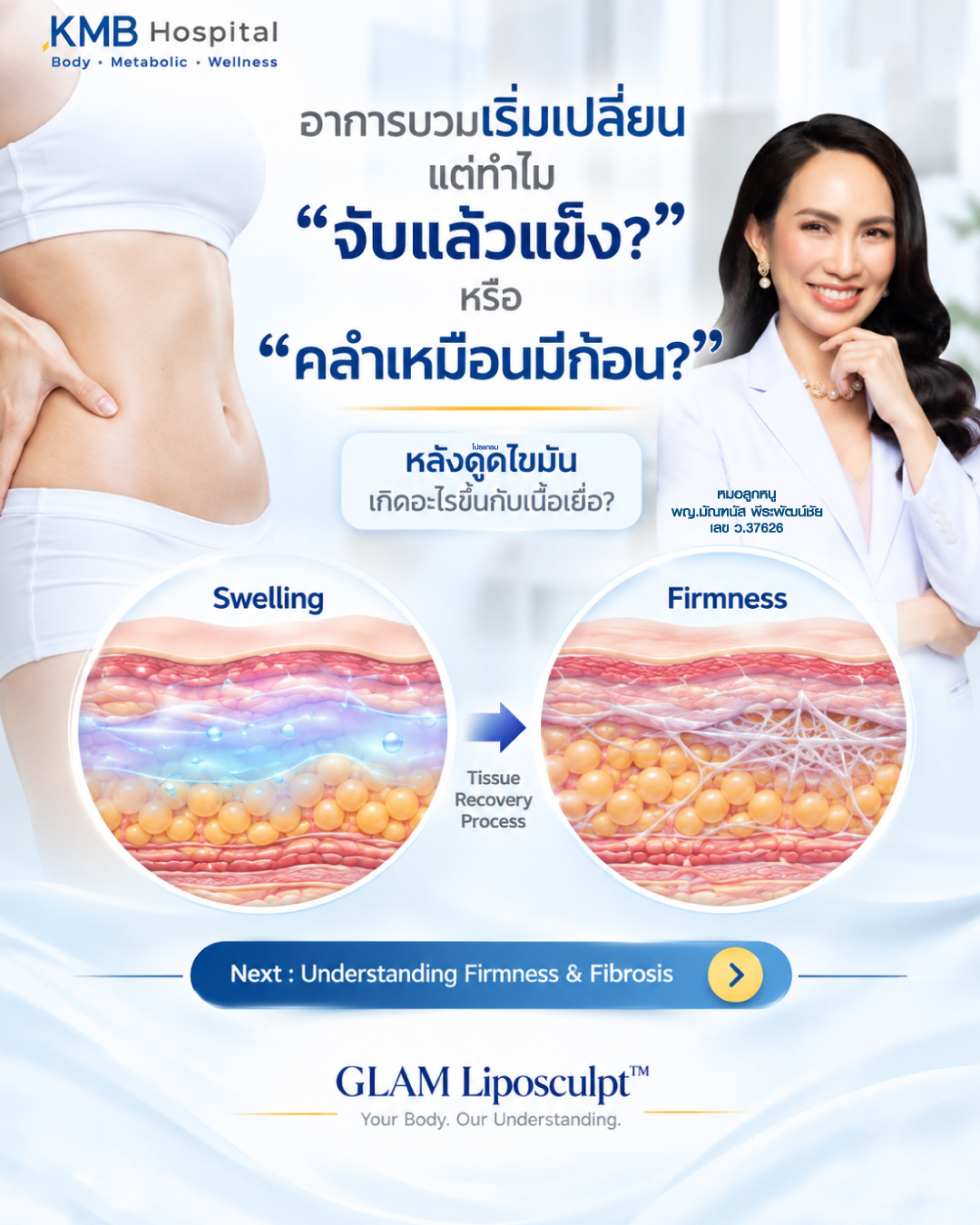
Read more from DoctorLooknuu.com
About this article
This article explains an overview of swelling after GLAM Liposculpt™, from the causes related to tissue response and healing, the differences in symptoms in each area and person, to the reasons why you shouldn't use a fixed number of days or compare your recovery with others.
Post-liposuction symptom care should follow the personalized advice of the doctor. If there are changes different from the advice or if you have concerns, contact the treatment team for an evaluation.
The information in this article is for educational purposes only and cannot be used as a substitute for an examination, diagnosis, or personalized advice from a doctor.
Medical Sources
The original copy did not specify any additional medical references, so no references were added that were not in the original text.
Information for understanding and personalized care
The information in the article is for educational purposes and cannot replace examination, diagnosis, or personalized medical advice. Recovery and swelling differ according to area, extent of treatment, tissue characteristics, health, and individual response. If symptoms change in a way that differs from the instructions or causes concern, you should contact the treatment team for an evaluation.
Worried that your swelling is different from what it should be?
Swelling after liposuction can change according to the Recovery Stage and differs in each person. If there are changes that differ from the instructions of the treatment team, or if there are other symptoms that cause concern, you should contact the team overseeing the case for an evaluation.