
Does Working Late Affect the Gut Microbiome?
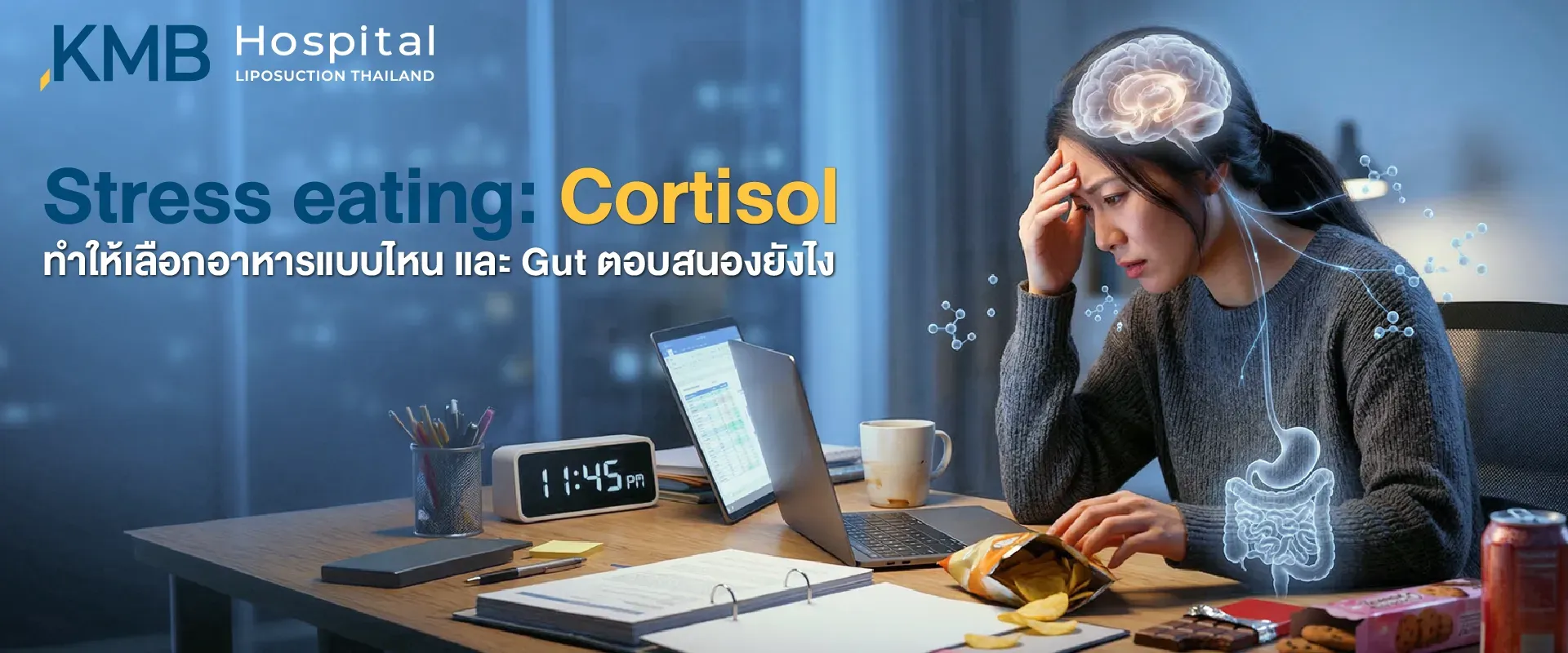
Stress Eating: How Cortisol Shapes Food Choices and How the Gut Responds
Answer-first:
Stress eating is not caused by cortisol alone. It results from the interplay between the reward system, circadian rhythm, sleep disruption, and behavioral context. In healthy individuals, there is currently no high-quality evidence confirming that a temporary rise in cortisol by itself directly determines a preference for high-sugar or high-fat foods.
Table of Contents
Introduction
Many people notice that:
- Stress leads to constant snacking
- Heavy workloads trigger sugar cravings
- Extreme fatigue leads to choosing more fatty foods
The explanation you often hear is, “The stress hormone (cortisol) makes you hungry.”
In reality, however, changes in food choices under stress result from the reward system + circadian rhythm + behavioral context more than from any single hormone.
1️⃣ How Big a Role Does Cortisol Play?
In cases of pathological hypercortisolism, such as Cushing’s syndrome, a genuine increase in appetite can indeed be observed.
But in healthy individuals:
- A cortisol spike is usually a physiological response
- Levels rise and fall according to the circadian rhythm
- There is no evidence that a temporary elevation alone directly determines macronutrient preference
Cortisol may therefore act as a permissive modulator rather than a sole driver.
There is currently no high-quality human evidence demonstrating that cortisol elevations alone determine macronutrient preference independent of behavioral and contextual factors.
Read more about the role of cortisol at What Cortisol Really Is in Everyday Life, Not Just the “Stress Hormone”
2️⃣ Reward Circuitry: The Core Mechanism of Stress Eating
Under stress, changes in the reward system are commonly seen, such as:
- Increased amygdala activation
- Increased dopamine signaling
- Increased motivation toward calorie-dense foods
Neuropsychiatry research consistently supports the idea that stress increases hedonic eating in humans—that is, the brain assigns greater “reward” value to high-energy foods.
Read more about the systems of hunger and craving at True Hunger vs. Craving: How to Tell Them Apart Through the Gut–Hormone Axis
3️⃣ Does Everyone Eat More?

Not always, because the human stress response has at least two patterns.
1) Hyperphagic response
- Eating more
- Greater craving for high-sugar / high-fat foods
2) Hypophagic response
- Loss of appetite
- Eating less
The response varies depending on:
- Personality and psychology
- Metabolic status
- Dieting history
4️⃣ The Circadian Layer: A Hidden Accelerant
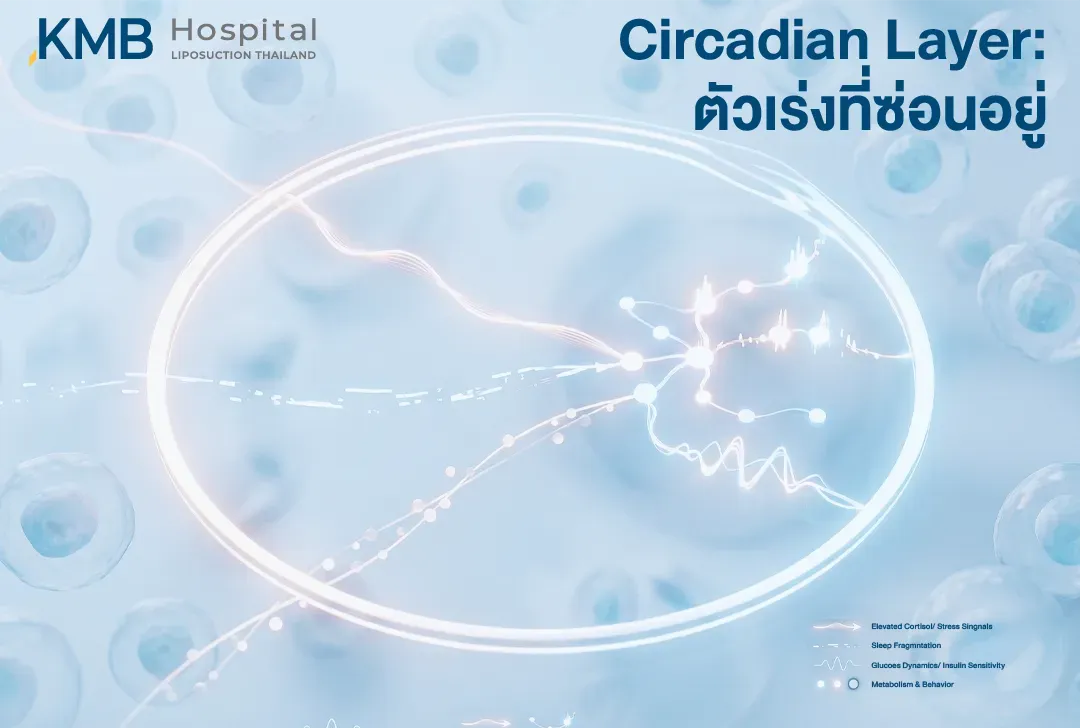
Chronic stress is often accompanied by:
- Staying up late
- Insufficient sleep
- Eating outside biological timing
Circadian disruption increases:
- Reward sensitivity
- Appetite dysregulation
- Glucose fluctuation
Stress eating is therefore usually the result of stress + sleep disruption + timing disruption, not the result of cortisol alone.
Read more at Circadian Rhythm: How the Body Clock Connects the Gut and Hormones
and Lack of Sleep Makes You Hungry: The Leptin↓ Ghrelin↑ Mechanism and Its Link to the Gut
5️⃣ So How Does the Gut Respond?

Stress affects:
- Gut motility
- Visceral sensitivity
- Low-grade inflammatory signaling
- Microbiome composition (at the level of emerging evidence)
When dietary patterns change, such as:
- Increased high sugar intake
- Increased ultra-processed food
This may be associated with:
- Changes in microbial diversity
- Shifts in inflammatory tone in certain contexts
Nevertheless, there is still no evidence of a causal chain confirming that “cortisol → microbiome → food craving” operates directly in healthy individuals.
Gut changes appear to be a secondary and context-dependent effect instead.
Read more at Why Bacterial Diversity Matters More Than Taking a Single Strain
6️⃣ The Stress Eating Cycle
Stress eating can be described as a feedback loop as follows:
Stress → Increased reward activation
Reward activation → Increased high-calorie intake
Diet shift → Altered gut signaling
Circadian disruption → Increased appetite dysregulation
This is a feedback loop system, not a linear hormone pathway.
FAQ
Q1: Why do I crave sweets when I’m stressed?
Stress can increase reward sensitivity in the brain, making hedonic eating more prominent and driving greater cravings for sweet or high-energy foods.
Q2: Does cortisol directly make you choose fatty or sugary foods?
In healthy individuals, there is no high-quality evidence confirming that a temporary rise in cortisol by itself directly determines macronutrient preference.
Q3: Does everyone who is stressed eat more?
Not always. Some people have a hyperphagic response and eat more, while others have a hypophagic response, losing their appetite and eating less.
Q4: Does the gut change because of stress eating?
Changes in dietary patterns, such as eating more sweets or ultra-processed food, may be associated with changes in gut signaling and the microbiome in certain contexts, but this is not yet linear causal proof.
Key Takeaways
- Choosing high-energy foods under stress is genuinely observed in humans
- The core mechanism is the reward system rather than cortisol alone
- The stress response includes both eating more and eating less
- Circadian disruption and sleep play an important role
- The gut changes according to dietary patterns and context more than being directly controlled by cortisol
Recommended Further Reading
- What Cortisol Really Is in Everyday Life, Not Just the “Stress Hormone”
- Why Does Stress Make Your Belly Bigger? Is Cortisol Really Involved?
- True Hunger vs. Craving: How to Tell Them Apart Through the Gut–Hormone Axis
- Circadian Rhythm: How the Body Clock Connects the Gut and Hormones
- Lack of Sleep Makes You Hungry: The Leptin↓ Ghrelin↑ Mechanism and Its Link to the Gut
References
- Sinha R, Jastreboff AM. Stress as a common risk factor for obesity and addiction. Biol Psychiatry. 2021;90(10):647-649. doi:10.1016/j.biopsych.2020.12.015
- Adam TC, Epel ES. Stress, eating and the reward system. Physiol Behav. 2020;224:112915. doi:10.1016/j.physbeh.2020.112915
- Broussard JL, Van Cauter E. Disturbances of sleep and circadian rhythms. Physiol Rev. 2021;101(2):505-541. doi:10.1152/physrev.00019.2020
Content Information
Written by: Medical Content Team, KMB Hospital
Reviewed by: Clinical Governance Committee, KMB Hospital
Published: 9 March 2026
Last updated: 9 March 2026