How does FAT Mapping™ for the male chest help differentiate the causes of breast enlargement before planning a liposuction program?
KMB KNOWLEDGE BLUEPRINT™
DOMAIN D — REGIONAL FAT MAPPING™ | Article Code: FM-D-K08
Category: FAT Mapping™ | Science of Fat | Pre-Liposuction Assessment
How FAT Mapping™ Helps Differentiate Causes of Enlarged Male Chest Before Planning a Liposuction Program
First Published: August 20, 2026 | Last Updated: August 20, 2026 | Read Time: 7 Minutes
Author: Medical Content Team, KMB Hospital
Medical Review By: Dr. Mandanus Pirapattanachai (Dr. Luknu), License No. W.37626
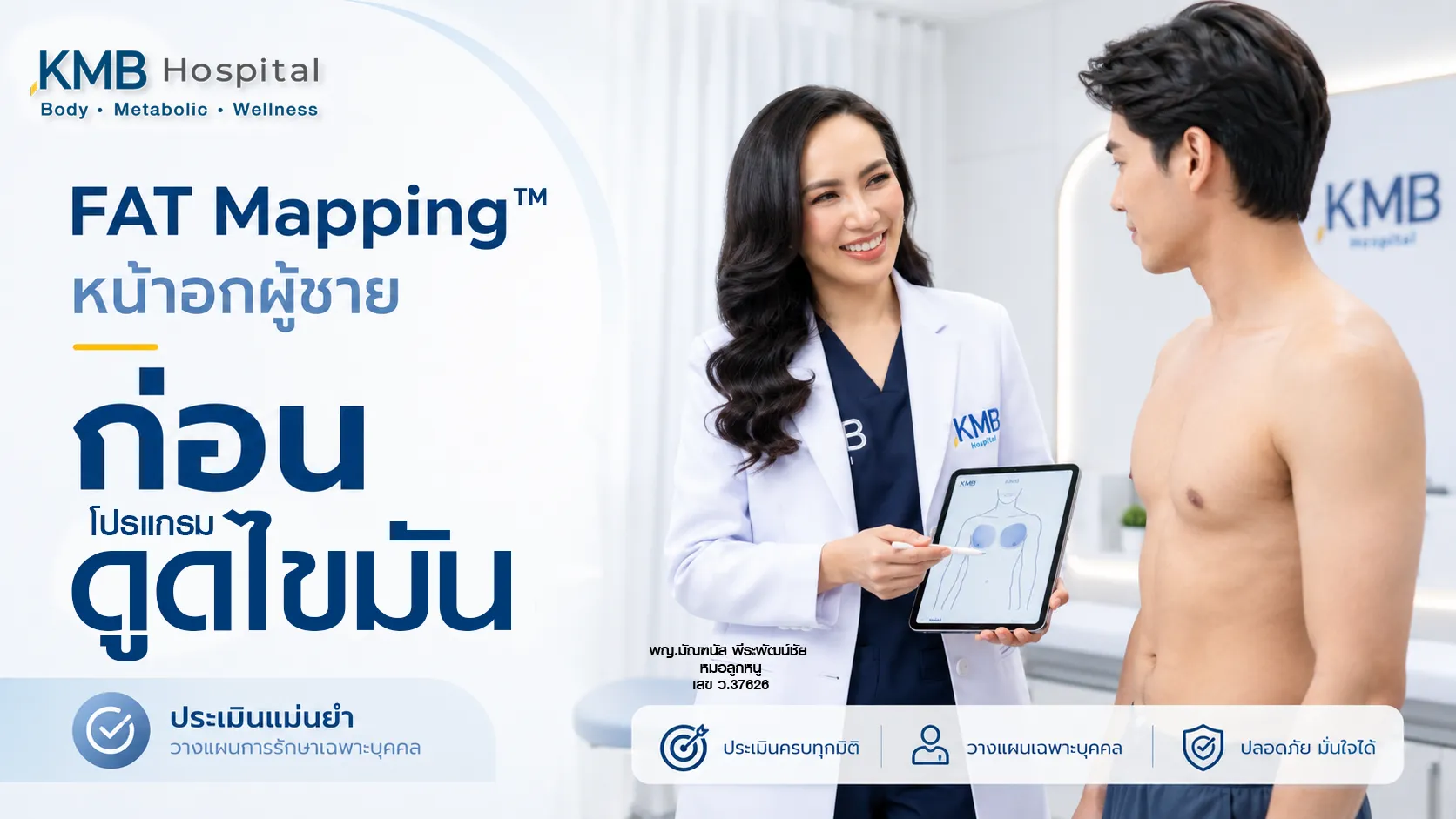
Male Chest FAT Mapping™ helps physicians gather data on fat distribution, chest balance, and relationships with surrounding areas before using this information alongside patient history and physical examination to plan an appropriate liposuction program.
Not all enlarged-looking male chests have the same cause. Therefore, before planning a liposuction program, physicians must evaluate systematically to understand the components of the problem in each case and select a treatment approach suitable for the patient's information.
Why Must Men's Chests Be Evaluated Before Planning a Liposuction Program?
Many men consult because they feel their chest is larger than desired, affecting confidence in dressing or daily life.
Many assume that if a chest looks enlarged, the cause is fat, and liposuction should be the answer for all cases.
However, medically, pre-planning evaluation for a liposuction program is important because men's chest characteristics may be influenced by multiple combined factors, not just fat distribution alone.
FAT Mapping™: What Does It Assess for Men's Chests?
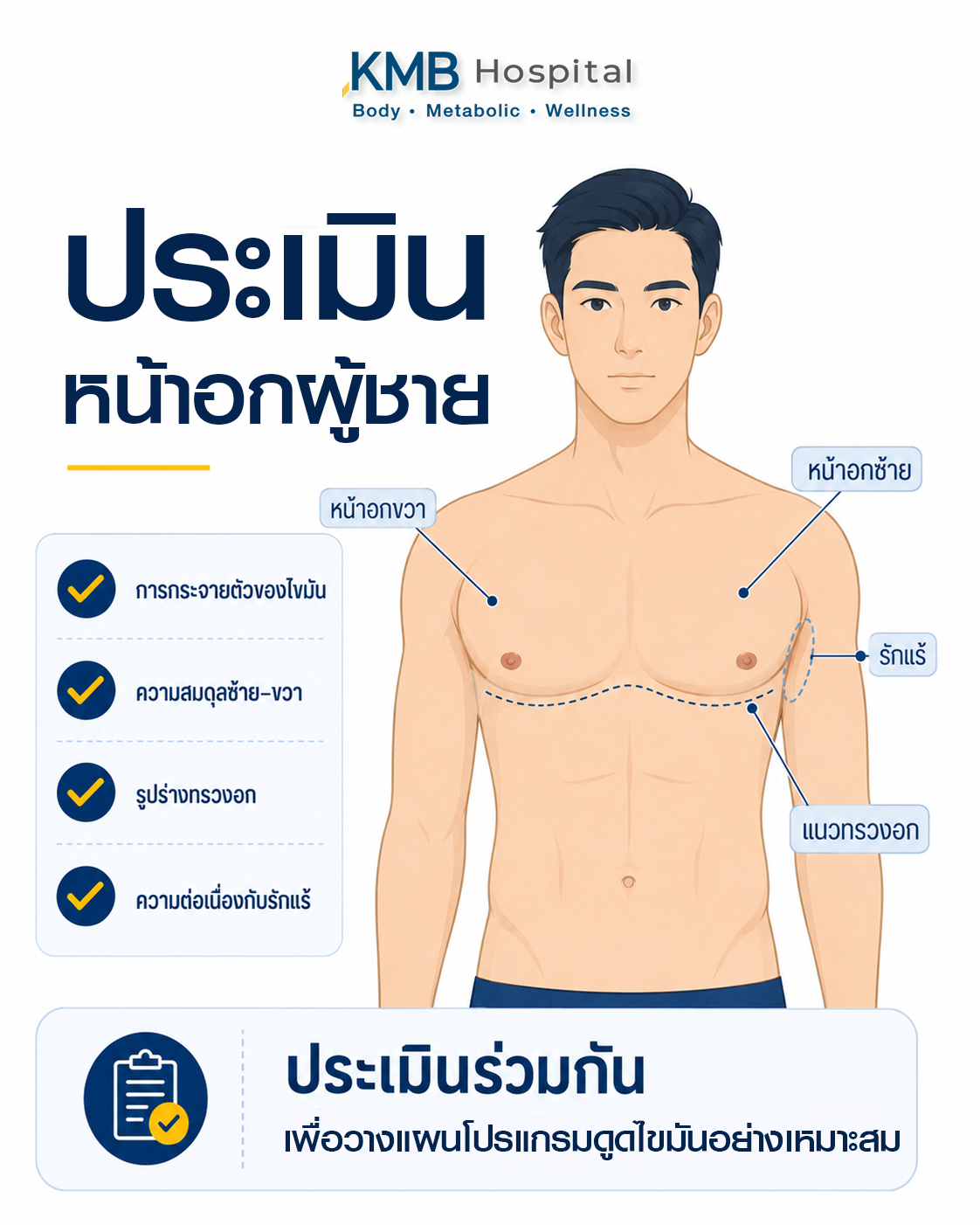
Men's chest FAT Mapping™ helps gather key information across several aspects to be used in conjunction with history taking and physical examinations
| Information Assessed | What the Information Helps Physicians Understand |
|---|---|
| Fat Distribution | Characteristics and location of chest fat, including continuity with nearby areas |
| Left–Right Balance | Differences between the two sides of the chest that should be considered prior to individualized planning |
| Continuity with Armpit and Torso | Relationship between the chest and armpit, chest wall line, and overall upper body shape |
| Overall Ribcage Shape | Overall view of the ribcage that cannot be explained solely by observing fat volume |
| Data Supporting Physical Examination | Data used alongside history taking, physical examination, and physician assessment before selecting a treatment direction |
This data allows physicians to assess chest characteristics in greater detail and utilize it when planning liposuction programs tailored to each client.
Why Men with Similar Large Chests May Not Receive the Same Plan
Even if clients have similar chest characteristics, assessment results may vary.
Physicians therefore do not rely merely on external observation or comparing with other clients, but use FAT Mapping™ data along with physical examination to formulate personalized treatment plans
How does FAT Mapping™ make the planning of male chest liposuction programs more systematic?
FAT Mapping™ allows breast area information to be organized systematically and can be rationally integrated with medical history taking and physical examination.
When the physician has complete information, explaining the liposuction program approach becomes clearer. The client can understand their own data and participate in deciding on a treatment approach based on the findings.
Key Points to Know
FAT Mapping™ helps gather multiple aspects of information before planning liposuction.
Similar external appearances do not mean the cause or internal data are the same.
History taking, physical examination, and FAT Mapping™ play complementary roles.
Clients with similar chests may receive different treatment approaches.
The goal is to select approaches suitable for each person's data, not using the same format for everyone.
Article Summary
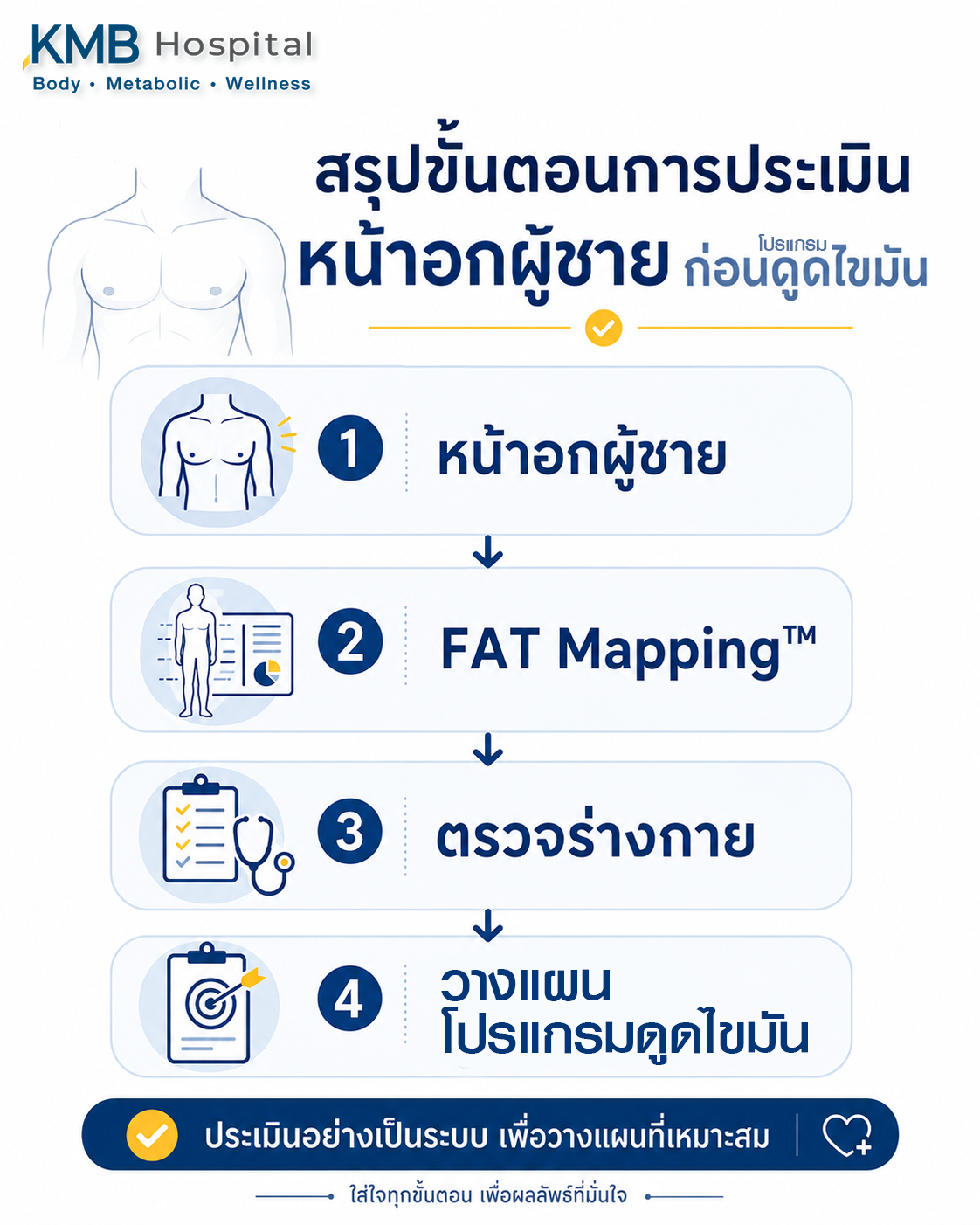
FAT Mapping™ for Male Chest helps physicians assess fat distribution, chest balance, and relationship with surrounding areas before planning liposuction programs.
When used together with history taking and physical examination, data from FAT Mapping™ makes liposuction program planning more systematic and helps clients understand the rationale for treatment approaches based on findings.
Frequently Asked Questions
1. What is Male Chest FAT Mapping™, and why should it be assessed before planning?
Male Chest FAT Mapping™ is a process of collecting information regarding fat distribution, chest shape, chest balance, and relationship with surrounding areas to aid assessment alongside physical examination.
This assessment is important because enlarged male chests may not result solely from fat distribution, so physicians should have more information than external observation before choosing a direction.
2. Can FAT Mapping™ determine if one should undergo the male chest liposuction program?
FAT Mapping™ is data used for assessment but cannot replace physical examination or medical discretion. The physician will integrate data from history taking, physical examination, health, and chest characteristics to evaluate before choosing a treatment approach.
3. Does every man with an enlarged chest need to undergo the liposuction program?
No. Before planning, the physician will assess FAT Mapping™, physical examination, health history, and chest characteristics together to select an appropriate approach for each individual.
4. Why do men with similar chests receive different plans, and can FAT Mapping™ replace physical examination?
Although external appearances may be similar, fat distribution, chest balance, body composition, and health data may differ, so assessment must be done on an individual basis.
FAT Mapping™ cannot replace history taking, physical examination, or physician judgment, but it is partial data that helps make planning more systematic.
5. If you have previously undergone the male chest liposuction program, should you be re-evaluated?
In many cases, re-evaluation is recommended because tissue information, shape, and fat distribution may change after treatment. Re-assessment helps the next plan be based on current data.
FAT Mapping™ enables physicians to view chest data systematically and explain treatment rationale more clearly, though it does not guarantee treatment outcomes.

Related Articles in KMB Hospital
Read more from DoctorLooknuu.com
Medical Resources
- American Society of Plastic Surgeons. Liposuction Consultation. Information on evaluating goals, health status, medical history, risk factors, alternatives, and limitations prior to treatment planning
- American Society of Plastic Surgeons. Gynecomastia Surgery Consultation. Information on evaluating the male chest and consulting prior to selecting a treatment approach
- StatPearls Publishing. Gynecomastia. NCBI Bookshelf. Discusses evaluation of enlarged male chest and variations in tissue composition that may be involved
About This Article
This article was created to educate on male chest evaluation prior to the liposuction program, describing the role of FAT Mapping™ in gathering information to assist with treatment planning
The information in this article is intended for educational purposes and cannot replace medical examination, diagnosis, or personalized advice from a physician
Creator and Reviewer Information
Medical Practice License No. 37626
Understanding Chest Composition Before Planning
If you are unsure whether the chest features causing concern relate to fat, chest balance, or other components, a physician evaluation helps provide clearer understanding of relevant information, limitations, and appropriate options for each individual.