What does the doctor base the planned amount of fat to be suctioned on?
KMB KNOWLEDGE BLUEPRINT™
DOMAIN F — REGIONAL FAT MAPPING™ | Article Code: FM-F-K04
Category: FAT Mapping™ | Science of Fat | Pre-Liposuction Assessment Program
What Information Do Doctors Use to Determine the Amount of Fat to Suction?
Published on: August 29, 2026 | Last Updated: August 29, 2026 | Read Time: 8 minutes
Author: Medical Content Team, KMB Hospital
Medically Reviewed by: Dr. Mantanus Peraphatchai (Dr. Luknu) License No. V.37626
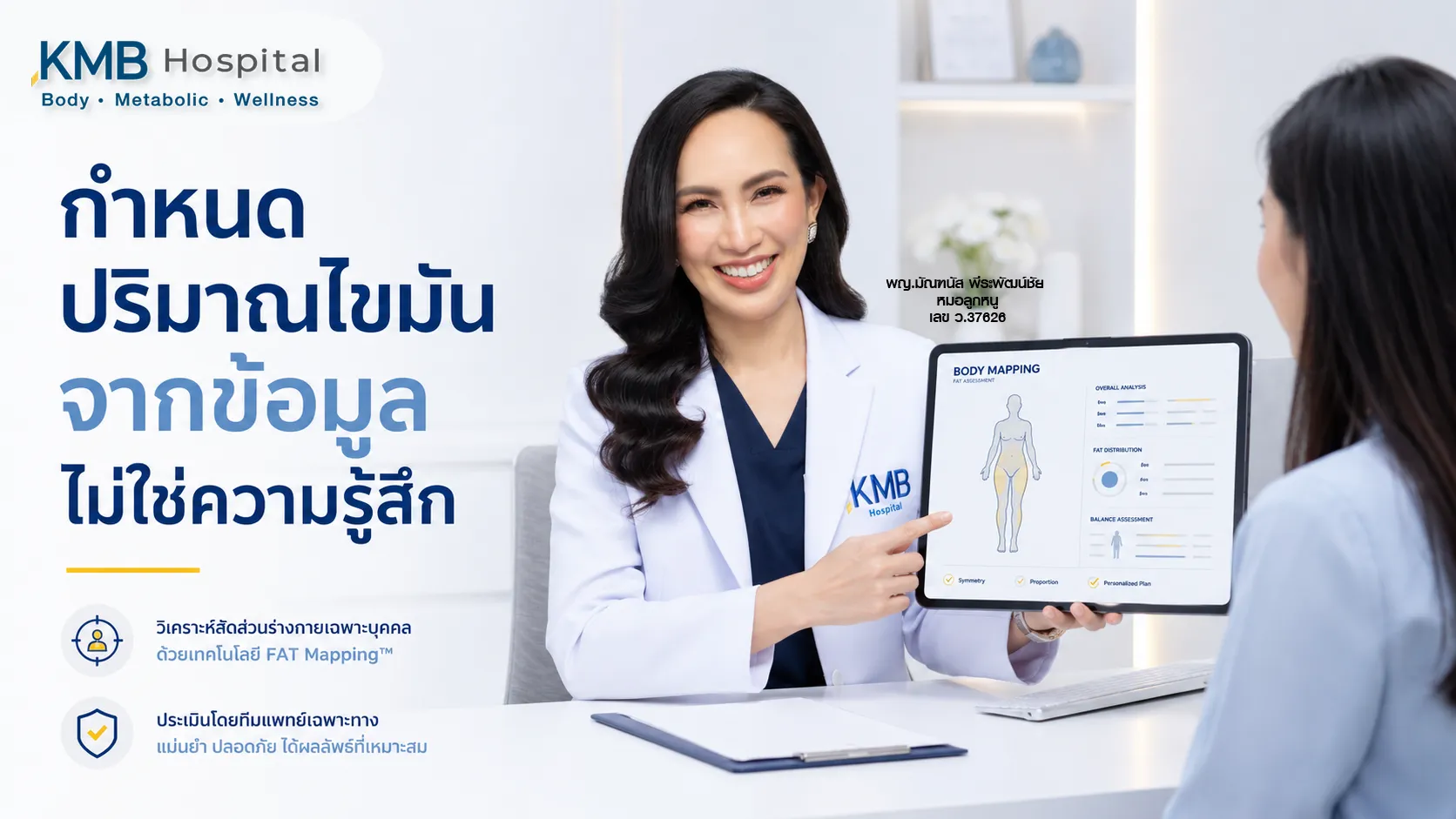
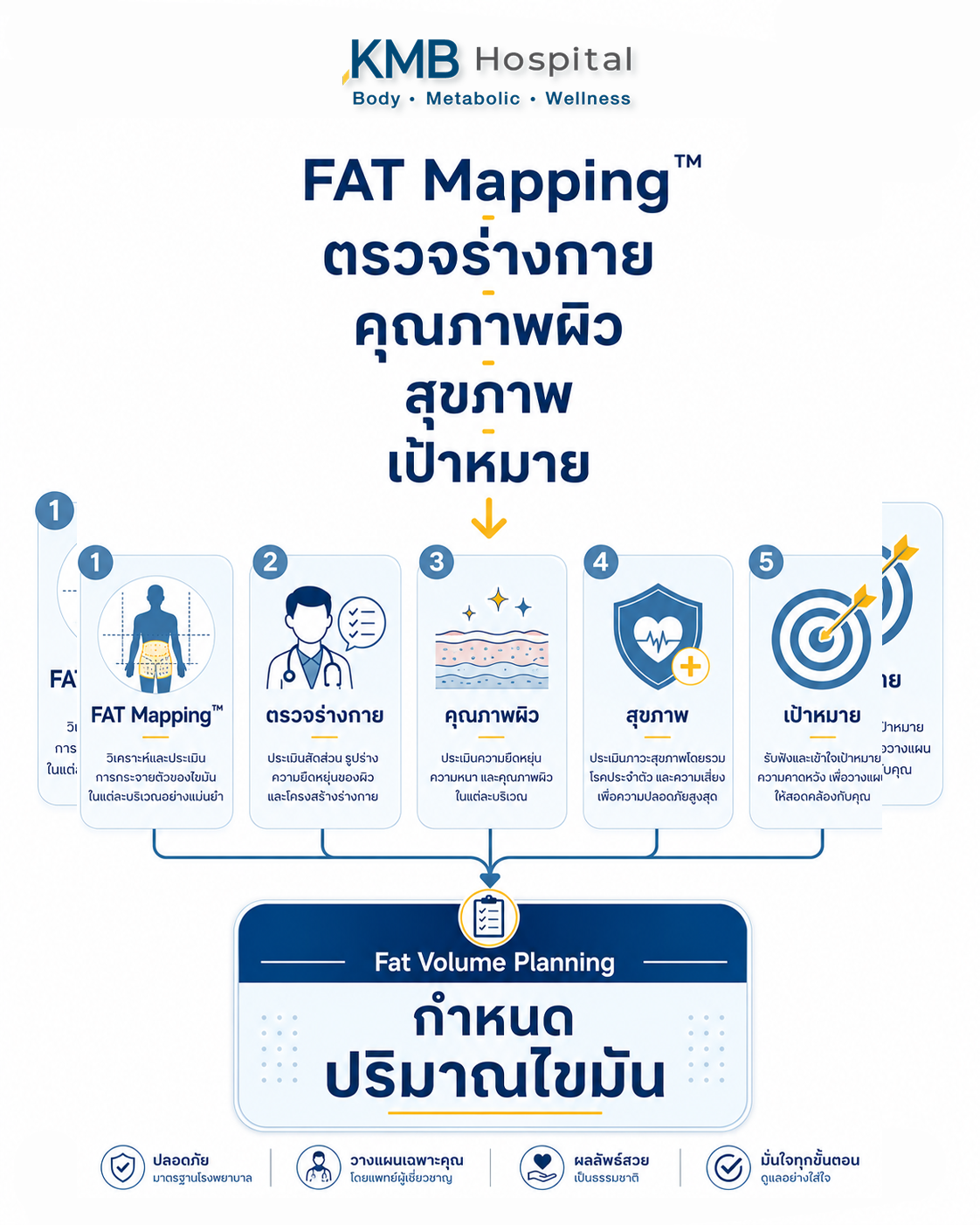
Doctors do not determine the amount of fat to be suctioned based solely on numbers, but analyze data from FAT Mapping™, physical examination, fat distribution, body shape balance, skin quality, health status, and client goals together before planning the liposuction program.
The goal of determining the fat amount is not to remove as much as possible, but to determine the appropriate amount suitable for the individual's body shape, safety, and desired results.
Appropriate Fat Volume Is Not One Number for Everyone
Many clients understand that a good liposuction program involves removing as much fat as possible
But in reality, doctors do not start with the question:
"How many cc can be suctioned out"
Doctors start with a more important question, which is:
"How much fat volume is suitable for this client's body"
Because even if two clients have similar body shapes, data from FAT Mapping™, body structure, skin quality, and health readiness may differ significantly.
FAT Mapping™ Helps Doctors Assess Fat Distribution, Not Just Volume
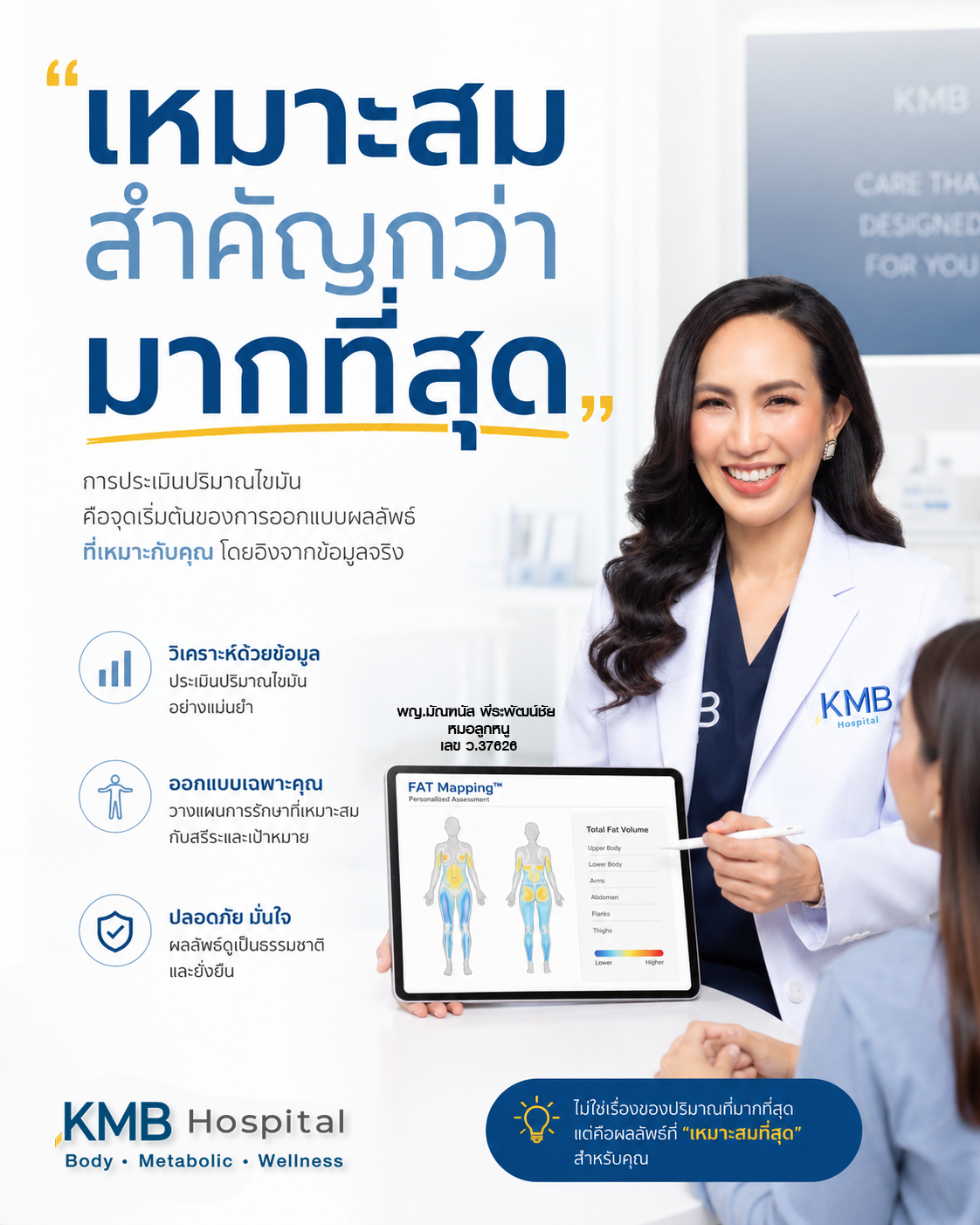
FAT Mapping™ does not just show how much fat there is, but helps doctors see multiple aspects together.
These pieces of data help doctors evaluate how the overall body shape will change if the fat volume in each area changes, which is why FAT Mapping™ plays a role in determining fat volume before treatment begins.
What information does the doctor use to determine the volume of fat to be suctioned?
Before starting the liposuction program, the doctor will consider multiple aspects together, including:
| Information used for planning | Role in determining the volume of fat |
|---|---|
| Results from FAT Mapping™ | Helps visualize the distribution of fat and the relationship of various areas with overall proportions |
| Physical Examination | Helps the doctor assess body information combined with results from FAT Mapping™ |
| Fat Distribution | Helps show which areas affect body shape and continuity of proportions |
| Skin Elasticity and Quality | Is additional information the doctor considers before determining the volume |
| Continuity of Proportions | Helps ensure the determination of volume for each area aligns with the overall body shape |
| Health and Readiness | Is important information used to decide on suitability and safety |
| Treatment Goals | Helps the plan align with what the patient desires and body data |
| Scope of the Designed Liposuction Program | Used to link all information before determining the appropriate fat volume in each area |
When all information is connected, the doctor can then determine the appropriate fat volume for each patient, considering both outcomes and safety simultaneously.
The doctor's goal is to create balance, not to reduce the volume to the maximum
In planning the liposuction program, the key question is not
"How much can be sucked out?"
but is
"What volume is appropriate for the patient's body shape?"
Because removing too much fat, or not aligning with body proportions, may not meet the goals of overall body design.
For doctors, determining the volume of fat is part of designing the treatment plan, not setting targets based solely on numbers.
Key Points to Know
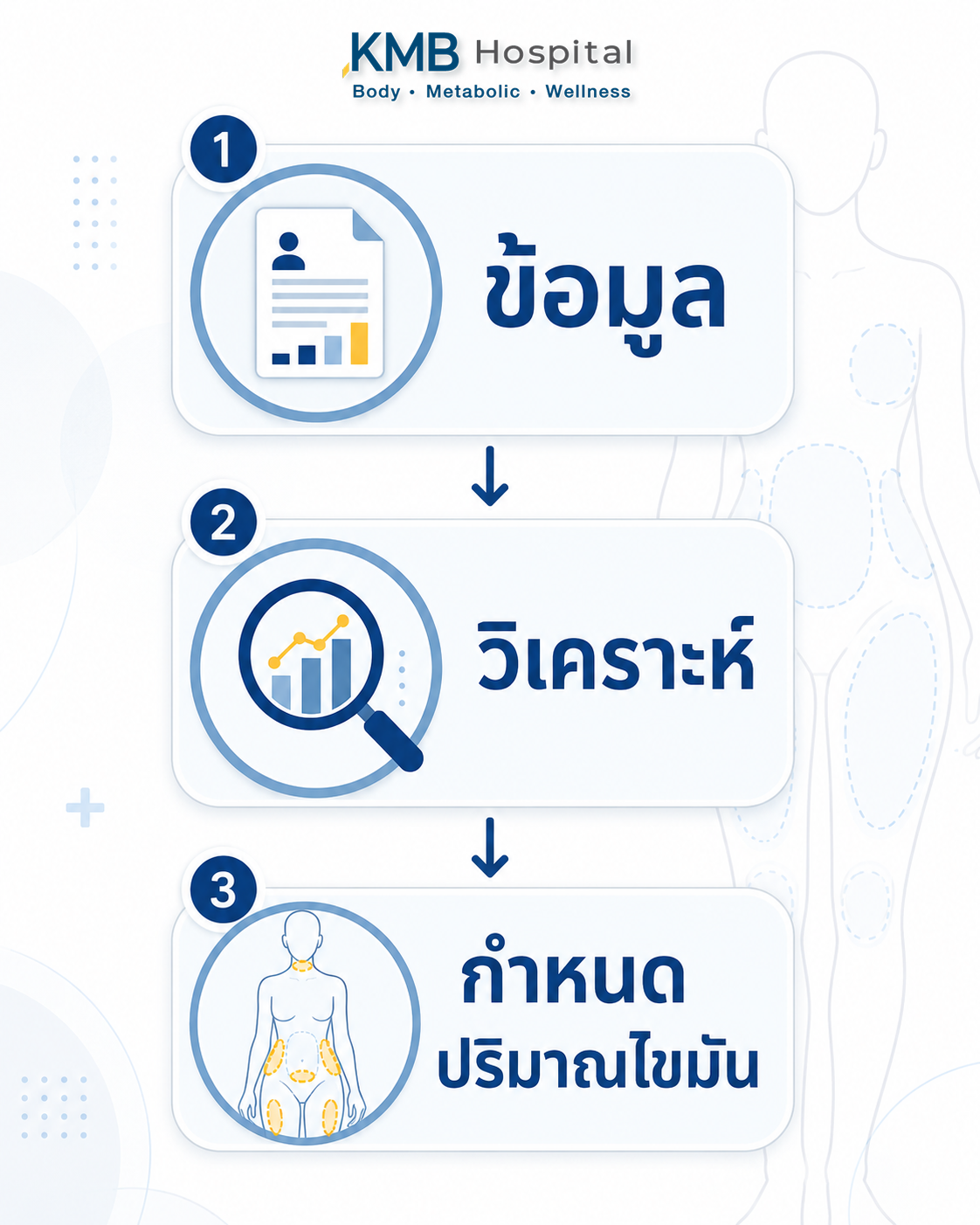
Doctors must consider body and health data together
Helps understand fat locations and proportion relationships before planning
Data from multiple aspects must be analyzed together before determining quantity
Because individual body data is not the same
Determining quantity is part of customizing personal body shape design
Frequently Asked Questions
1. How does the doctor determine the amount of fat to be suctioned from FAT Mapping™?
FAT Mapping™ allows the doctor to understand the location and pattern of fat distribution, including the relationship of each area to the overall body shape. However, the doctor will analyze information from FAT Mapping™ combined with a physical examination, skin quality, and health information before determining the appropriate amount of fat to suction for each patient.
2. Why doesn't the doctor determine the fat amount based solely on the cc count?
The cc count is just one number in the planning process. Before determining the fat amount, the doctor must consider whether that amount aligns with body proportions, skin elasticity, and treatment goals. Therefore, the goal is not to remove the maximum amount, but to determine the appropriate amount for the patient.
3. Can patients with similar FAT Mapping™ results use the same amount?
Not always. Even if FAT Mapping™ results are similar, body structure, skin quality, health status, and patient goals may differ. Therefore, the doctor determines the amount of fat to suction on an individual basis, not using the same number for everyone.
4. Does skin quality affect the determination of fat amount, and can the doctor adjust the amount if information changes?
Yes. In addition to information from FAT Mapping™, the doctor also evaluates skin quality, tissue elasticity, and proportion continuity together.
If information from FAT Mapping™, the physical examination, or patient goals changes, the doctor can review and adjust the amount of fat to suction to suit the latest information. This is part of planning an individualized liposuction program.
5. How does determining the fat amount affect the outcome design?
Appropriate amounts of fat help the liposuction program align with body proportions and are part of overall body design. Rational determination of the amount makes the plan explainable by data and helps the patient understand the treatment concept more clearly.
Article Summary
Determining the amount of fat to suction is a process of analyzing multiple aspects of data together.
FAT Mapping™ helps doctors understand fat distribution and proportion relationships, while physical examinations, skin quality, health, and patient goals allow for determining the appropriate amount of fat for each individual.
For KMB Hospital, liposuction program planning does not focus on removing the maximum amount of fat but prioritizes creating body balance, safety, and designing outcomes consistent with the patient's information.
Related Articles at KMB Hospital
Read more from DoctorLooknuu.com
Medical Resources
- American Society of Plastic Surgeons. Liposuction Consultation. Emphasizing the importance of evaluating goals, health, treatment history, risk factors, alternatives, and expectations before treatment.
- Chia CT, Neinstein RM, Theodorou SJ. Evidence-Based Medicine: Liposuction. Plast Reconstr Surg. 2017;139(1):267e–274e. doi:10.1097/PRS.0000000000002859.
- Kaoutzanis C, Gupta V, Winocour J, et al. Cosmetic Liposuction: Preoperative Risk Factors, Major Complication Rates, and Safety of Combined Procedures. Aesthet Surg J. 2017;37(6):680-694. doi:10.1093/asj/sjw243.
About This Article
This article aims to explain the principles of determining the volume of fat to be suctioned before starting treatment, detailing the role of FAT Mapping™, physical examination, and clinical data to assist doctors in designing suitable liposuction programs for each individual.
The information contained in this article is for educational purposes only and does not substitute medical examination, diagnosis, or personalized advice from a physician.
Article Information
Medical License No. 37626
The Right Amount Starts with Complete Information
If you want to know how fat volume should be considered when planning a liposuction program, a doctor's evaluation helps understand fat distribution, skin quality, health, goals, and limitations relevant to each individual more clearly.