
Why Eating Something Sweet Makes You Immediately Want More: Hormones or Gut Bacteria
Why Some People Immediately Want More After Eating Something Sweet: Hormones or Bacteria?
The experience of “eating something sweet and immediately wanting more” does not come from willpower alone; it involves physiological mechanisms across several systems.
In general, it can be explained through 2 main circuits.
- The fast circuit: glucose–insulin dynamics and reward circuitry
- The background circuit: microbiome and gut–brain signaling
Research in metabolic physiology reports that a post-meal glucose dip may predict hunger and subsequent eating behavior better than the peak glucose level.
Meanwhile, the microbiome may act as a background modulator of the system rather than an instant craving trigger.
Table of Contents
1️⃣ The Fast Circuit: How a Glucose Dip Makes You Want to Keep Eating
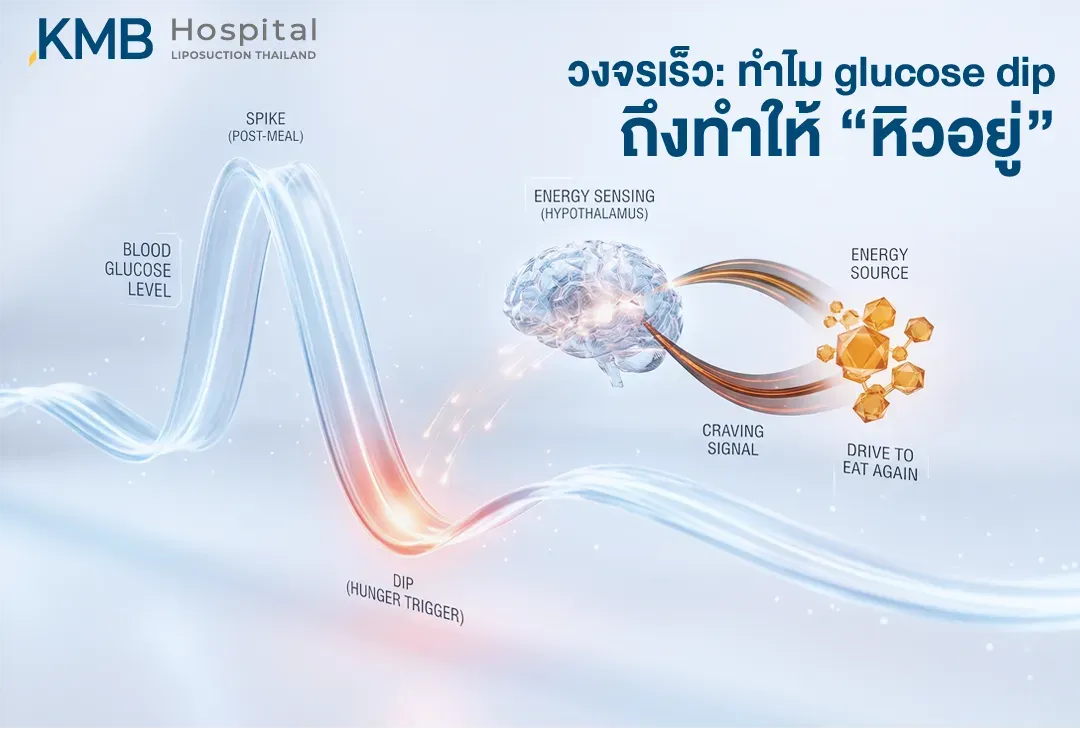
After eating rapidly absorbed foods, such as sweets or refined carbohydrates:
- blood glucose rises quickly
- the body releases insulin
- in some people a glucose dip occurs within 2–3 hours
Research in personalized nutrition has found that a glucose dip can predict hunger and the amount of energy subsequently eaten better than the glucose peak.
When the brain senses a drop in the energy signal, the system prompts you to seek out more carbohydrate.
This mechanism is linked to insulin sensitivity and each individual’s response to food.
2️⃣ The Reward System: Wanting Is Not the Same as Hunger
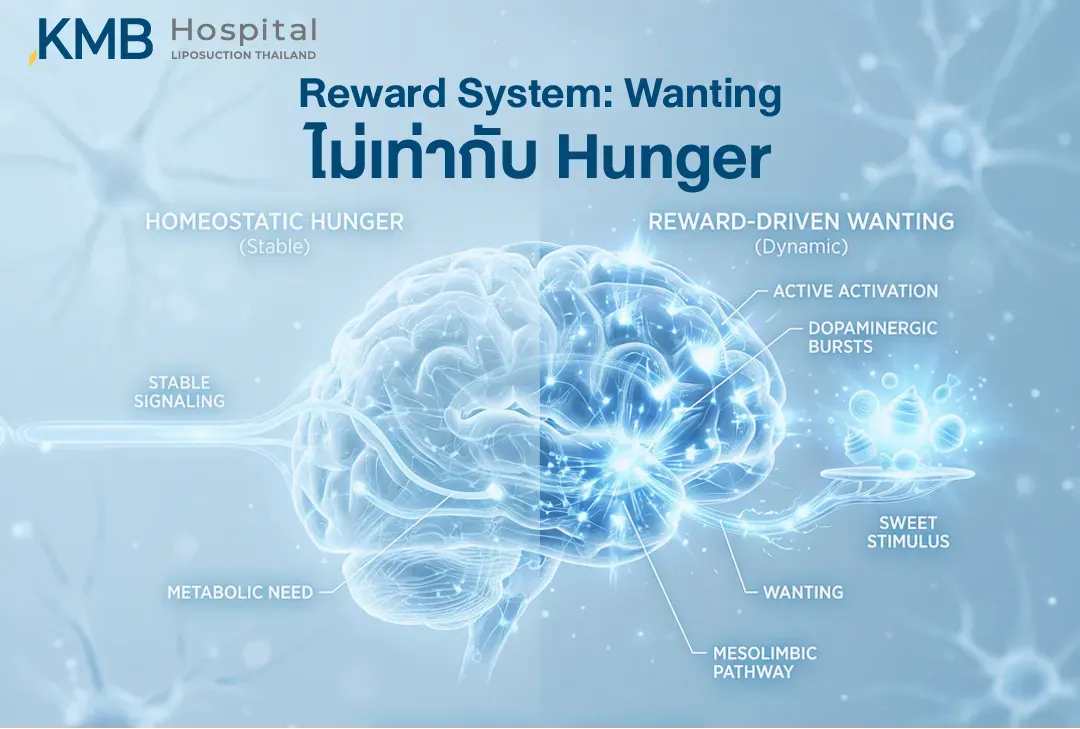
Sweet foods can activate the brain’s reward system, such as:
- dopaminergic signaling
- mesolimbic reward pathway
- incentive salience
This system relates to wanting, which is not the same as true hunger.
Therefore, continuing to eat may sometimes arise from a reward loop rather than an actual lack of energy.
The difference between these two systems is explained further in the article true hunger vs. craving.
3️⃣ Sleep and Stress Make This Circuit Stronger
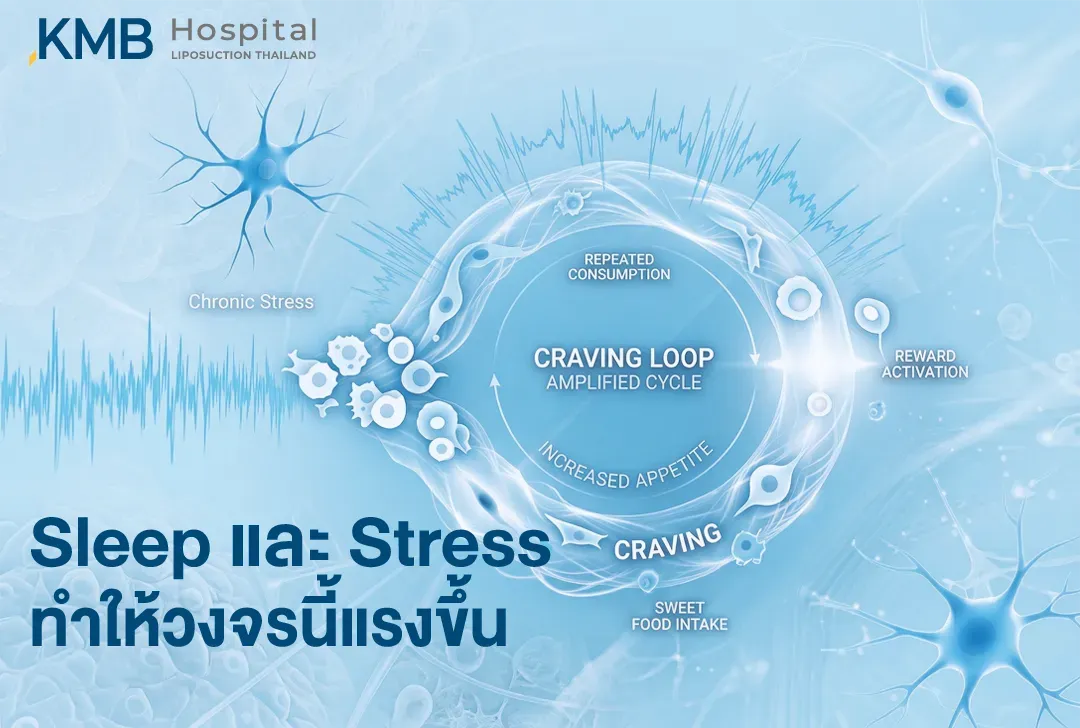
Systematic reviews on sleep restriction report that:
- insufficient sleep increases appetite
- it increases reward sensitivity to food
- it increases craving for sweet and energy-dense foods
So on days when you:
- sleep too little
- are stressed
- work late
the “eat sweets and want more” circuit may become stronger.
This mechanism involves neuro-metabolic interactions, including circadian rhythm.
4️⃣ Is the Microbiome Involved in Sugar Craving?
A common question is whether gut bacteria make us addicted to sugar.
Reviews on the gut–brain axis propose that the microbiome may be involved through:
- microbial metabolites
- inflammatory signaling
- satiety hormone modulation
- gut–brain communication
However, most human research remains associational rather than causal evidence.
As such, the microbiome may function as a background susceptibility modulator rather than an instant craving trigger.
5️⃣ Why Some People Experience More Craving
The post-prandial response to a meal varies greatly between individuals.
Contributing factors include:
- sleep quality
- stress level
- prior meal composition
- circadian timing
- baseline insulin sensitivity
Thus, “eating sweets and wanting more” is a phenotype that arises from multiple systems working together.
6️⃣ A 2-Circuit Model of Sugar Craving
The fast circuit (0–3 hours)
Glucose spike → insulin → glucose dip → craving
Level of evidence: Strong
The background circuit (days to weeks)
Diet pattern → microbiome shift → inflammatory tone → craving susceptibility
Level of evidence: Emerging
FAQ
Why can’t I stop after eating something sweet?
In some people, a post-meal glucose dip can trigger hunger, while the brain’s reward system increases the urge to eat again.
Do bacteria make you addicted to sugar?
There is no causal evidence in humans confirming that the microbiome can trigger craving immediately.
Does insufficient sleep really increase craving?
Research reports that insufficient sleep increases appetite and reward sensitivity, making cravings more likely to occur.
Key Takeaway
The experience of “eating something sweet and wanting more” may arise from several systems working together, such as:
- a post-meal glucose dip
- reward circuitry in the brain
- sleep and stress physiology
- microbiome modulation
However, these mechanisms are a network interaction, not a single cause.
References
- Di Vincenzo F, et al. Gut microbiota, intestinal permeability and systemic inflammation in metabolic disorders. Intern Emerg Med. 2024;19(2):xxx–xxx. doi:10.1007/s11739-023-03374-w.
– Review describing the role of the intestinal barrier in systemic inflammation and metabolic disease.
- Jian E, et al. The metabolic endotoxemia and gut microbiota: implications for inflammation and metabolic disorders. J Endocrinol Metab. 2025;xx(x):xxx–xxx. doi:10.1152/ajpendo.00355.2025.
– An article discussing LPS translocation from the gut and the related TLR4/NF-κB pro-inflammatory cascade.
- Chakaroun RM, et al. Gut-microbiota permeability-inflammation interactions in metabolic disease. Front Physiol. 2020;11:1380713. doi:10.3389/fphys.2024.1380713.
– A summary of evidence from human/model studies on gut permeability and immune response.
- Jobe M, et al. Translocation of bacterial debris and metabolic endotoxemia in insulin resistance: mechanisms and consequences. Int J Obes (Lond). 2022;46(9):xxxx–xxxx. doi:10.1038/s41366-022-01193-1.
– Presents associational evidence between bacterial translocation, metabolic endotoxemia, and insulin resistance.
- Del Cornò M, et al. Endotoxins and metabolic endotoxemia in obesity-associated disorders. Biomolecules. 2026;16(2):226. doi:10.3390/biom16020226.
– Coverage of gut dysbiosis, endotoxemia, chronic inflammation, and metabolic disorders.
Hospital Authority
KMB Hospital focuses on evaluating outcomes after liposuction programs fairly and over time, for care that is safe, reassuring, and respectful of each patient’s body.
Content Information
Written by: Medical Content Team, KMB Hospital
Reviewed by: Clinical Governance Committee, KMB Hospital
Published: 23 March 2026
Last updated: 23 March 2026