
What is fibrous tissue in the fat layer?
KMB KNOWLEDGE BLUEPRINT™
DOMAIN B — THE SCIENCE BEHIND FAT MAPPING™ | Article Code: FM-B-K20
The Science of Fat for Pre-Liposuction Program Assessment
Article 20 | Article 6 of DOMAIN B
Category: FAT Mapping™ | Fibrous Septa in Fat Layer | Pre-Liposuction Program Assessment
What Are Fibrous Septa in the Fat Layer, and How Do They Affect Liposuction Program Planning?
First Published: August 2, 2026 | Last Updated: August 2, 2026 | Reading Time: Approximately 18 minutes
Author: Medical Content Team, KMB Hospital
Medically Reviewed By: Dr. Mandanus Pirapattanachai (Dr. Looknuu) License No. W.37626
Key Takeaways Before You Read
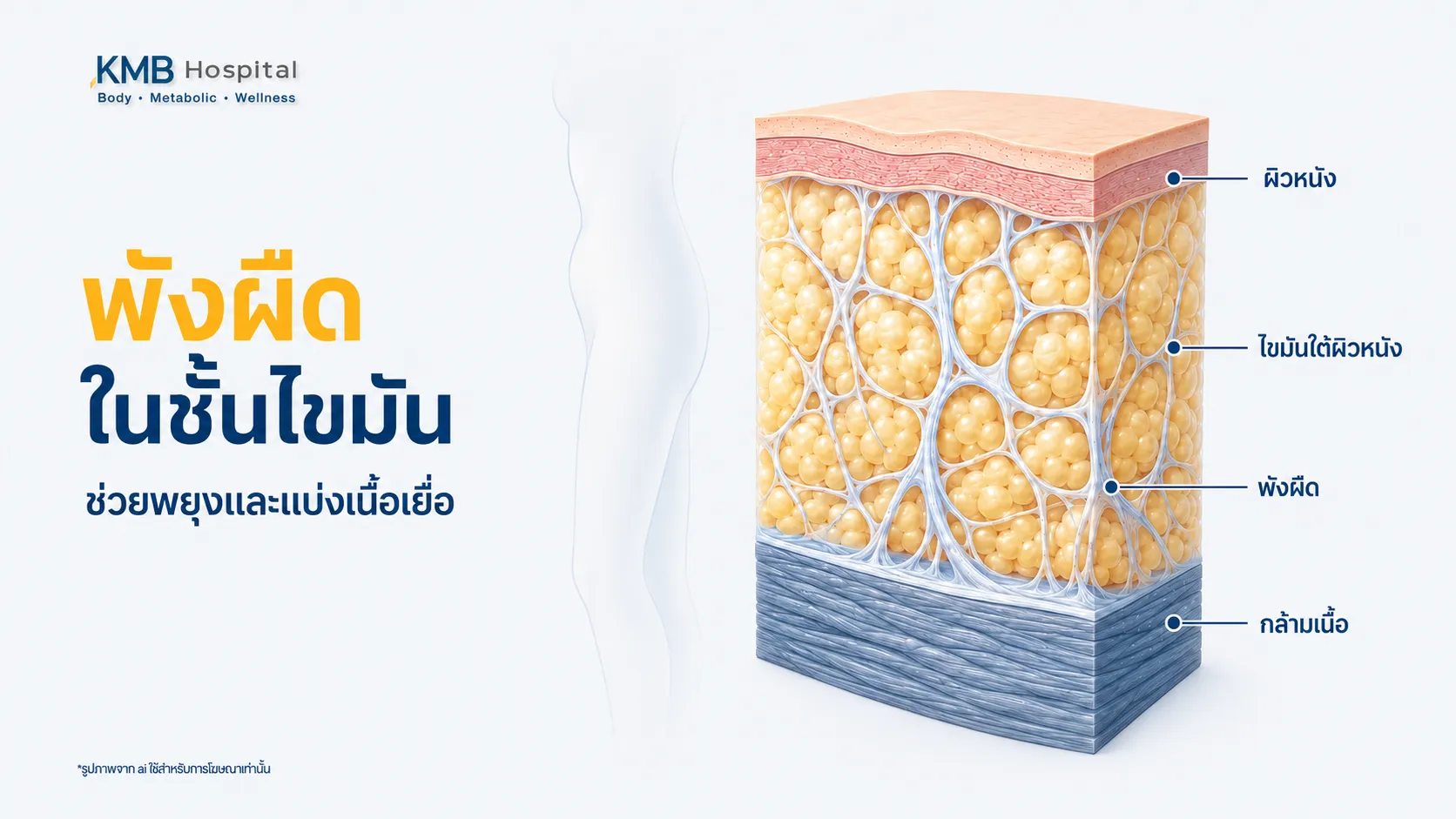
Fibrous septa in the fat layer are networks of connective tissue interwoven within subcutaneous fat. They function to divide fat tissue into clusters or compartments, support the skin, attach the skin to deeper structures, and help transmit force between tissue layers.
Natural fibrous septa are not abnormalities nor entirely scar tissue, but part of the body's normal anatomy. Characteristics such as density and fiber direction can vary by area, including the abdomen, thighs, back, upper arms, or double chin. In the abdominal region, the fibrous structure divides subcutaneous fat into superficial fat, fascial layer, and deep fat. Within the fat, fibers help subdivide adipocytes and anchor the skin to deeper layers.
Before conducting FAT Mapping™ and planning the liposuction program, doctors must assess whether the tissue is soft or firm, how mobile it is or if it is adhered, and whether there are natural fibrous septa alongside changes from surgery, inflammation, or previous liposuction programs. These characteristics may affect access to the fat layer, tissue uniformity, and planning limitations.
FAT Mapping™ helps organize information regarding fat, fibrous septa, skin, and surrounding structures, but cannot replace history taking, physical examination, and clinical judgment in treatment planning.
What Are Fibrous Septa in the Fat Layer?
Fibrous septa, or Fascia, is a term used to describe connective tissue distributed throughout the body. Its functions include wrapping, dividing, supporting, and connecting various structures together.
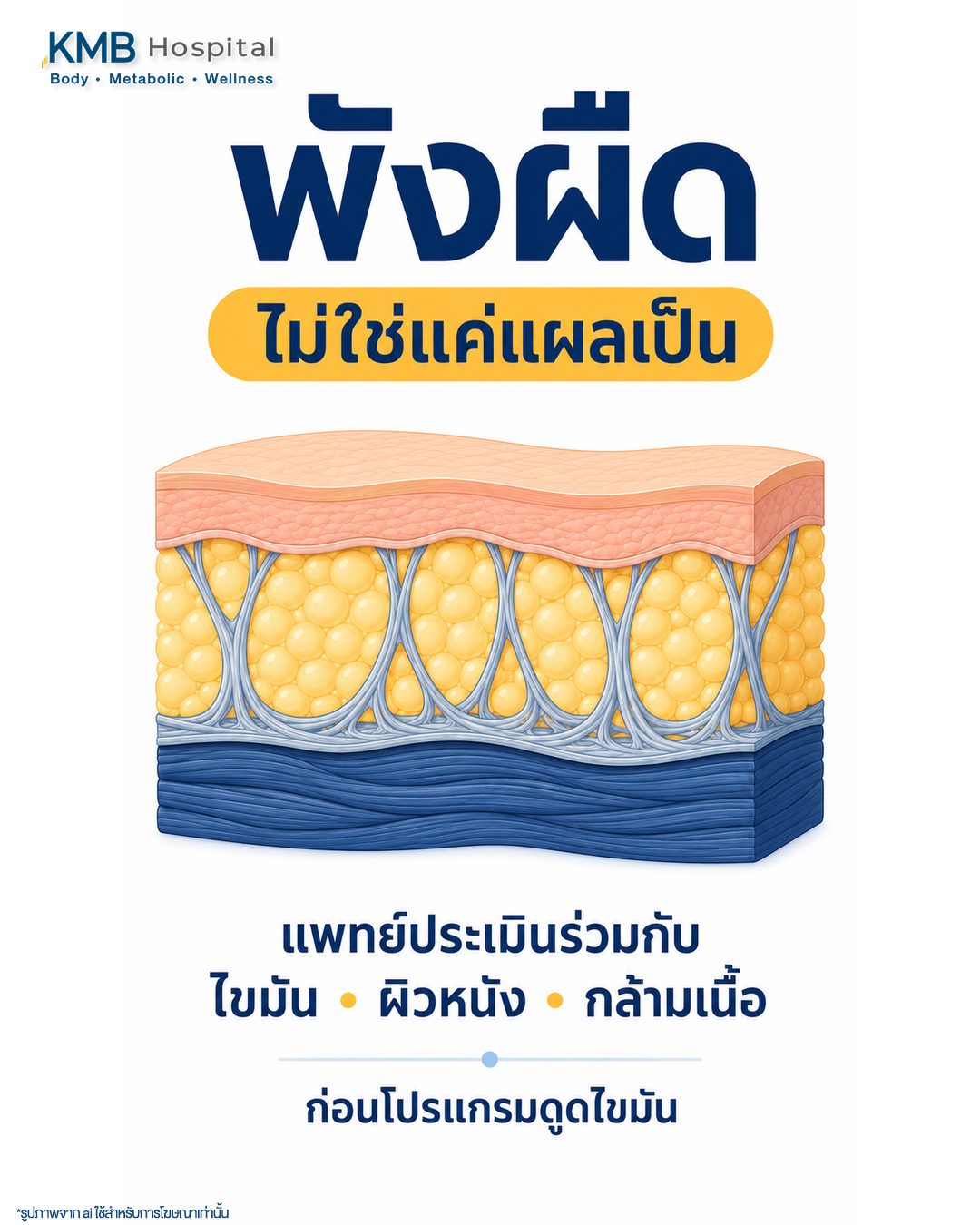
In the subcutaneous fat layer, fibrous septa are not found as single sheets but can appear in forms such as:
- Thin tissue sheets that divide fat into levels
- Fibers spanning through the fat layer
- Anchor points from skin to deep fascia
- Septal walls dividing adipocytes into clusters or small compartments
These structures prevent skin from separating too freely from deeper layers and allow tissues to withstand force, move, and adapt along with the body.
Anatomical studies of the abdomen show that subcutaneous tissue can be divided into superficial fat, fascial layer, and deep fat. The superficial fat has fibers dividing it into smaller fat groups, while the fascial layer consists mainly of collagen and elastic fibers.
Therefore, the term "fibrous septa in the fat layer" refers to a system of connective tissue interwoven and connected within fat, and does not always imply abnormal masses or scars.
What Are the Functions of Natural Fibrous Septa?
Natural fibrous septa are part of the body's normal structure and perform multiple functions together.
1. Help Divide and Organize Fat Layers
Fibrous fibers divide adipocytes into clusters or small compartments, preventing fatty tissue from moving freely as a single mass.
In many areas, septa also divide subcutaneous fat into superficial and deep parts, though the clarity of these divisions varies across different body positions.
2. Anchor Skin to Deeper Structures
Some fibers connect from the skin through the fat layer to the underlying fascia or structures, functioning like a anchoring system with both strength and flexibility.
This network allows the skin to move with the body while maintaining position and relationship with lower structures. Studies on skin anchoring systems show these fibers are distributed throughout subcutaneous fat with varying patterns depending on muscles, blood vessels, nerves, and body regions.
3. Help Absorb and Transmit Force
Fibrous septa help distribute pressure, tension, and shear forces between skin, fat, and muscle.
This property allows tissues to move with the body without separating or shifting apart excessively.
4. Support Blood Vessels, Nerves, and Subcutaneous Structures
The superficial fascial layer is not only composed of collagen fibers but relates closely to blood vessels, nerves, and sub-subcutaneous structures. Anatomical studies indicate superficial fascia helps organize fatty tissue and envelops blood vessels and small nerves in certain areas.
5. Contribute to Tissue Firmness and Surface Texture
The quantity, thickness, direction, and adhesion of fibrous fibers contribute to the different textures felt in each tissue area.
Some areas may be soft and highly mobile, while others are firmer, more adhered, or show clearer folds.
This is one reason why similar fat volumes may yield different external appearances.

How Do Natural Fibrous Septa Differ From Scars?
The term "fibrous septa" is often used collectively, causing confusion between natural structures and tissue resulting from repair or injury.
| Aspect | Natural Fibrous Septa | Scars or Repair Tissue |
|---|---|---|
| Characteristics | Normal body component, present in subcutaneous tissue and around various structures from birth | Occurs when the body repairs tissue after injury, surgery, inflammation, or certain procedures |
| Function or Process | Divides and organizes tissue layers, supports skin and fat, connects structures, and helps absorb/distribute force | New collagen creation and reorganization occurs during the repair process |
| Effect on Tissue Appearance | Varies in density and direction according to the anatomy of each region | Some areas may become thicker, harder, adhered, or less mobile compared to original tissue |
Therefore, natural fibrous septa and scar tissue fibrosis are not the same thing, despite sharing connective tissue and collagen components.
Distinguishing this is important for pre-liposuction program assessment, as patients without prior treatments may have firm tissue due to normal anatomy, while those who have undergone surgery or liposuction may have changes from the repair process involved.
How Do Fibrous Septa Arise After Liposuction or Procedures?
When tissue is injured by surgery or a procedure, the body initiates the inflammatory and repair processes.
During recovery, the following may occur:
Some changes may gradually decrease according to the recovery process, but in some cases, fibrous tissue or unevenness may persist longer, especially when other factors are involved.
Reviews of complications for high-definition liposuction programs report temporary soft tissue fibrosis, and another set of complication studies report lump-like fibrosis occurrence in some clients. However, rates and definitions differ between studies, so figures should not be directly used to predict risks for individuals.
Those who have previously undergone liposuction may have tissue structures different from those who have never received treatment. Thus, subsequent assessments must prioritize treatment history, previous areas, techniques used, time elapsed since the procedure, and current tissue characteristics.
Does Firm Tissue Always Mean Abnormal Fibrous Septa?
Not Always
Tissue firmness may result from various factors, including:
Fibrous septa in different parts of the body have different structures. For example, the thigh area has superficial septa that organize fat and relate to blood vessels and nerves under the skin, while deep septa relate more to muscles.
Therefore, sensing tissue as "hard" or "firm" is insufficient to conclude it is abnormal fibrous septa. Doctors must consider location, history, duration of occurrence, accompanying symptoms, and characteristics of all tissue layers.
Why Are Fibrous Septa Different in Each Area?
Although all body areas have fibrous septa as components, their characteristics are not all the same.
Each position has different functions in movement, force absorption, and structural support, resulting in differences in septa thickness, density, and fiber arrangement depending on the region.
| Region | Original Characteristics or Role of Fibrous Septa |
|---|---|
| Abdomen | Has a fibrous septa system that divides fat into multiple levels |
| Upper Arm | Has fibrous septa that anchor skin to muscle, making tissue movement different from the abdomen |
| Back | Usually has relatively firm fibrous septa adhering more to lower structures |
| Thighs and Hips | Have numerous fibrous septa directions dividing fat into small compartments and helping support force from walking and movement |
Thus, even with similar fat volume, the sensation upon palpating tissue and the appearance characteristics may vary significantly.
How Do Fibrous Septa Affect Skin Smoothness?
Skin does not sit directly on fat but connects to fat through numerous fibrous fibers.
When fibrous septa have differing arrangements or unequal firmness, external skin characteristics may accordingly differ, such as smooth skin, wavy skin, undulating texture, dimples in certain spots, or greater tightness compared to adjacent areas.
These characteristics do not arise from fat alone, but from the relationship between
Skin • Fibrous Septa • Subcutaneous Fat • Lower Structures All Together
Does Previous Treatment History Affect Fibrous Septa?
Yes, it can affect
When the body experiences injury, surgery, or inflammation, it enters the natural tissue repair process.
During this time, the body creates new collagen and rearranges fibers, which may cause the tissue in that area to differ from its original state.
Examples of history doctors should inquire about include:
- Previously had liposuction program
- Previously had surgery in the same area
- Previously had accidents
- Previously had infections
- Previously had injections of certain substances
- Previously had procedures causing tissue inflammation
This information helps doctors understand whether tissue firmness arises from normal structure or from post-changes.
How Do Doctors Assess Fibrous Septa Before the Liposuction Program?
Assessing fibrous septa does not rely on examination alone but involves gathering data from multiple aspects.
1. History Taking
Ask about surgeries, liposuction programs, injuries, and previous treatments.
2. Assess Body Shape
Check if skin is smooth, have indentations, folds, or asymmetry.
3. Palpate Tissue
Assess firmness, softness, mobility, adhesion, and continuity of tissue layers.
4. Evaluate with Other Components
Doctors must consider subcutaneous fat, skin, muscle, overall shape, and health history together, as no single piece of data can explain all tissue.
Are There Limitations to Palpating Fibrous Septa?
Yes
Although palpation helps doctors perceive tissue firmness well, it still cannot accurately separate all components.
For example, tissue felt as firm may come from natural fibrous septa, post-surgery fibrous septa, muscle, compartmentalized fat, swelling, or inflammation.
Therefore, palpation is only part of the assessment, not the final conclusion.

Link to Pre-Planning Assessment
How Do Fibrous Septa Relate to FAT Mapping™?
Fibrous septa are one component causing two clients with similar fat volume to feel different in tissue sensation and body shape.
Therefore, FAT Mapping™ helps gather data about fat, skin, and tissue components to support assessment combined with the doctor's physical examination.
Understanding fibrous septa before treatment also helps doctors explain limitations, suitability, and manage client expectations more clearly.
Article Summary
Fibrous septa in the fat layer are the body's natural structures that help divide, support, and connect subcutaneous tissue, not necessarily abnormalities or scars as many assume.
Characteristics of fibrous septa vary across different body regions and among individuals, meaning some tissue areas are soft, some are firm, or elasticity differs, even with similar fat volumes.
Additionally, fibrous septa can change after surgery, liposuction programs, inflammation, or injury, making tissue structures different from their original state.
Therefore, before planning the liposuction program, doctors must assess fibrous septa along with fat, skin, muscle, and all body components, not just considering fat volume alone.
FAT Mapping™ helps support the evaluation of tissue structure and fat distribution to ensure the liposuction program planning suits each client under the doctor's physical examination and clinical judgment.
Important Points to Know
Frequently Asked Questions
1. Are Fibrous Septa in the Fat Layer Scars?
Not entirely. Natural fibrous septa are part of the body's normal structure. Fibrous septa occurring after surgery or inflammation result from the tissue repair process and differ in characteristics from natural fibrous septa.
2. Does Everyone Have the Same Fibrous Septa, and Do They Affect Shape?
No. Thickness, density, and arrangement of fibrous septa vary according to body position, age, genetics, and previous treatment history.
They can affect shape because they relate to firmness, skin adhesion, and tissue arrangement, thus contributing to external shape smoothness, softness, and continuity.
3. Does Firm Tissue Mean Liposuction Cannot Be Done?
Cannot conclude. Firmness may arise from natural fibrous septa, muscles, inflammation, or other factors. Doctors must evaluate with other data before planning.
4. Can Fibrous Septa Occur After the Liposuction Program?
Tissue changes can occur during the repair phase, which is part of the natural recovery process. However, the characteristics and level of changes differ for each individual.
5. How Does FAT Mapping™ Help Assess Fibrous Septa?
FAT Mapping™ helps gather data about the structure of fat and surrounding tissue to support assessment combined with physical examination, health history, and clinical judgment. It is not used solely for diagnosis or treatment determination.
Related Articles on KMB Hospital Website
The URLs below are placeholders for the website team to replace with actual links once the destination articles are published
Read More from DoctorLooknuu.com
The URLs below are placeholders for the website team to replace with actual links once the destination articles are published
References
- Stecco C, Macchi V, et al. The Fascia: The Forgotten Structure. International Journal of Anatomy.
- Benjamin M. The fascia of the limbs and back. Journal of Anatomy.
- Stecco A, et al. Anatomy and Function of the Superficial Fascia. Surgical and Radiologic Anatomy.
- American Society of Plastic Surgeons. Patient information on liposuction.
- Guyton & Hall. Textbook of Medical Physiology. Latest Edition.
- Gray's Anatomy. The Anatomical Basis of Clinical Practice. Latest Edition.
About KMB Hospital
KMB Hospital provides body contouring, weight loss, and liposuction programs, prioritizing systematic pre-treatment assessment to help doctors understand fat, fibrous septa, skin, and body composition structures before planning appropriate treatment for each client.
Start With a Systematic Structure Assessment
If you wish to know how fat, fibrous septa, skin, and muscle affect planning, consult a doctor for an individualized assessment. Understand suitability, limitations, risks, and realistic expectations before deciding.
Article Production Information
Written By
Medical Content Team, KMB Hospital
Medically Reviewed By
Dr. Mandanus Pirapattanachai
Dr. Looknuu
Medical License Number W.37626
Medical Disclaimer
This article is prepared for general knowledge purposes and does not replace diagnosis, physical examination, or personalized advice from a physician. Suitability, limitations, risks, outcomes, and recovery periods for the liposuction program vary by individual. Interested parties should undergo assessment and consult a doctor before deciding to receive services.