
How Fasting Affects Hunger Hormones: Why Some People Feel Ravenous on IF While Others Adapt
How does fasting affect hunger hormones? This article explains ghrelin, leptin, insulin, cortisol, and the circadian rhythm, including why some people feel very hungry in the early stages of IF.

Why Women Become More Carb-Sensitive With Age: How Hormones, Muscle, and Sleep Play a Role
Some women after age 40 feel more sensitive to carbohydrates—for example, feeling sleepy after eating starchy foods or gaining belly fat easily. This article explains the roles of estrogen, muscle mass, sleep, and fat distribution in metabolism.

What Is Metabolic Flexibility: Why Some Bodies Switch Between Carbs and Fat More Efficiently
Metabolic flexibility is the body's ability to switch between using glucose and fat according to physiological conditions. This article explains its relationship with insulin sensitivity, the mitochondria, muscle, sleep, stress, and the microbiome.
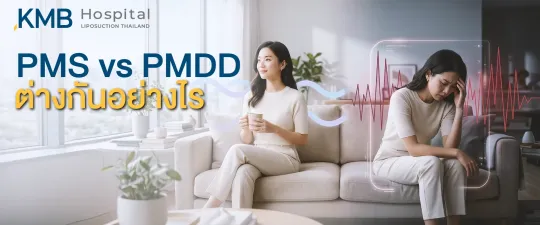
PMS vs PMDD: What's the Difference, Symptoms and Hormones
PMS and PMDD differ in the severity of their symptoms and their impact on mood, both of which are linked to hormonal fluctuations.

What Type of Abdomen Is Suitable for a Liposuction Program
What type of abdomen is suitable for liposuction? Understand the key factors—fat structure, skin, and FAT Mapping—for safe planning tailored to each individual.
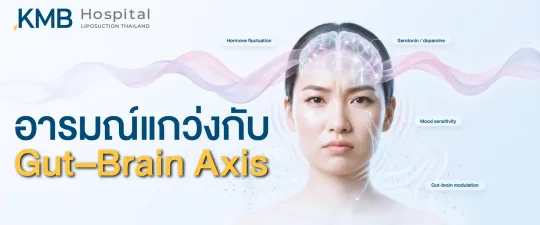
Do Mood Swings Involve the Gut–Brain Axis?
Mood swings during the menstrual cycle are usually caused by changes in estrogen and progesterone that affect serotonin and the nervous system, with the gut–brain axis potentially acting to modulate the sensitivity of the emotional system.

Why It Gets Harder for Women in Their 30s to Build Muscle
Many people in their 30s feel that it has become harder to build muscle, but in reality the hormonal changes at this age are still very small. Sleep, stress, protein intake and activity pattern have more impact than age.

Perimenopause and a Growing Belly: Is It Hormonal Change or Does Lifestyle Matter More?
During perimenopause, fat distribution may shift from the hips toward the abdomen, but sleep, physical activity, and muscle mass affect belly fat more than hormones alone.
Is Menstrual-Cycle Acne Related to Gut Inflammation?
Premenstrual acne is most often related to androgen fluctuation and increased sebum production, while gut–inflammation may play an indirect role but is not the primary cause.
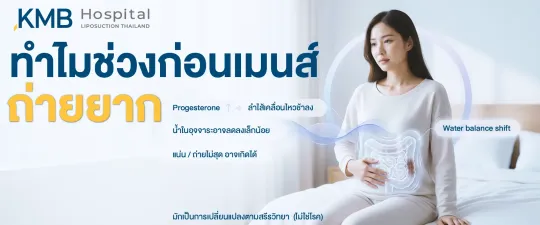
Why Bowel Movements Are Harder Before Your Period: Does Progesterone Really Slow the Gut?
Why is it harder to pass stool before menstruation, with harder stools or abdominal fullness? This article explains the role of progesterone, bowel motility, water balance, and the behaviors that affect bowel movements.

Why You Crave More Carbs Before Your Period
Why do sugar cravings increase before menstruation? This article explains the roles of estrogen, progesterone, and the reward system, along with the metabolic changes that occur during the late luteal phase.

Premenstrual Bloating: Caused by Progesterone or Dysbiosis?
Why do bloating, abdominal fullness, or slower bowel movements occur before menstruation? This article explains the role of progesterone, intestinal motility, and the difference between hormonal physiology and dysbiosis.